



Editorials
Gay Travel in Jordan: Law vs. Reality
The honest LGBTQ+ guide to Petra, Wadi Rum's luxury desert camps, and what travellers need to know before they visit.
Jordan occupies an unusual position in the Middle East for LGBTQ+ travellers. Homosexuality has been decriminalised in Jordan since 1951, making it one of the few countries in the region where same-sex activity is not explicitly illegal.
That legal fact matters, and it is more than most of its neighbours can offer. But the gap between decriminalisation and acceptance is wide, and anyone considering Jordan deserves an honest account of both sides of it.
What the Law Actually Says
Same-sex sexual activity was illegal in Jordan under British Mandate law until 1951, when Jordan drafted its own penal code that did not criminalise homosexuality. That is the good news, and it is meaningful in context.
The more complicated reality is what surrounds that legal baseline. Despite the absence of explicit laws that criminalise same-sex relations, the combination of vague morality laws, public hostility, and the absence of legal protection gives license to security forces and private individuals to target LGBTQ+ people. In practice, vague provisions around “morality” and “indecent acts” have been used to target LGBTQ+ people, including a 2014 case in which Jordanian authorities arrested 10 gay men and women attending a private reception.
The government’s position has hardened in recent years. According to Human Rights Watch, Jordan’s cybercrime and morality laws have been used to persecute LGBTQ+ activists, with security forces forcing several to shut down their organisations and flee the country. In 2023, the Minister of Interior stated publicly that Jordan “has not and will never endorse any charter or protocol acknowledging homosexuals” and that the government would seek to prosecute anyone attempting to organise LGBTQ+ gatherings.
A 2019 Arab Barometer survey found that 93% of Jordanians believed homosexuality should not be accepted by society. That number reflects a social reality that exists independently of the legal framework and shapes the daily experience of LGBTQ+ people in the country far more than any statute.
For Jordanian LGBTQ+ citizens, life is genuinely difficult. The absence of a criminal law does not translate into safety, and the pressure from family, community, and the state operates through social and extralegal channels that the penal code cannot capture. Travelling here as a well-resourced foreign visitor puts you in a fundamentally different position to the locals, and that distinction is worth holding onto throughout your trip.
Why People Go Anyway
None of the above stops a significant number of LGBTQ+ travellers from visiting Jordan each year, and the reasons are not difficult to understand.
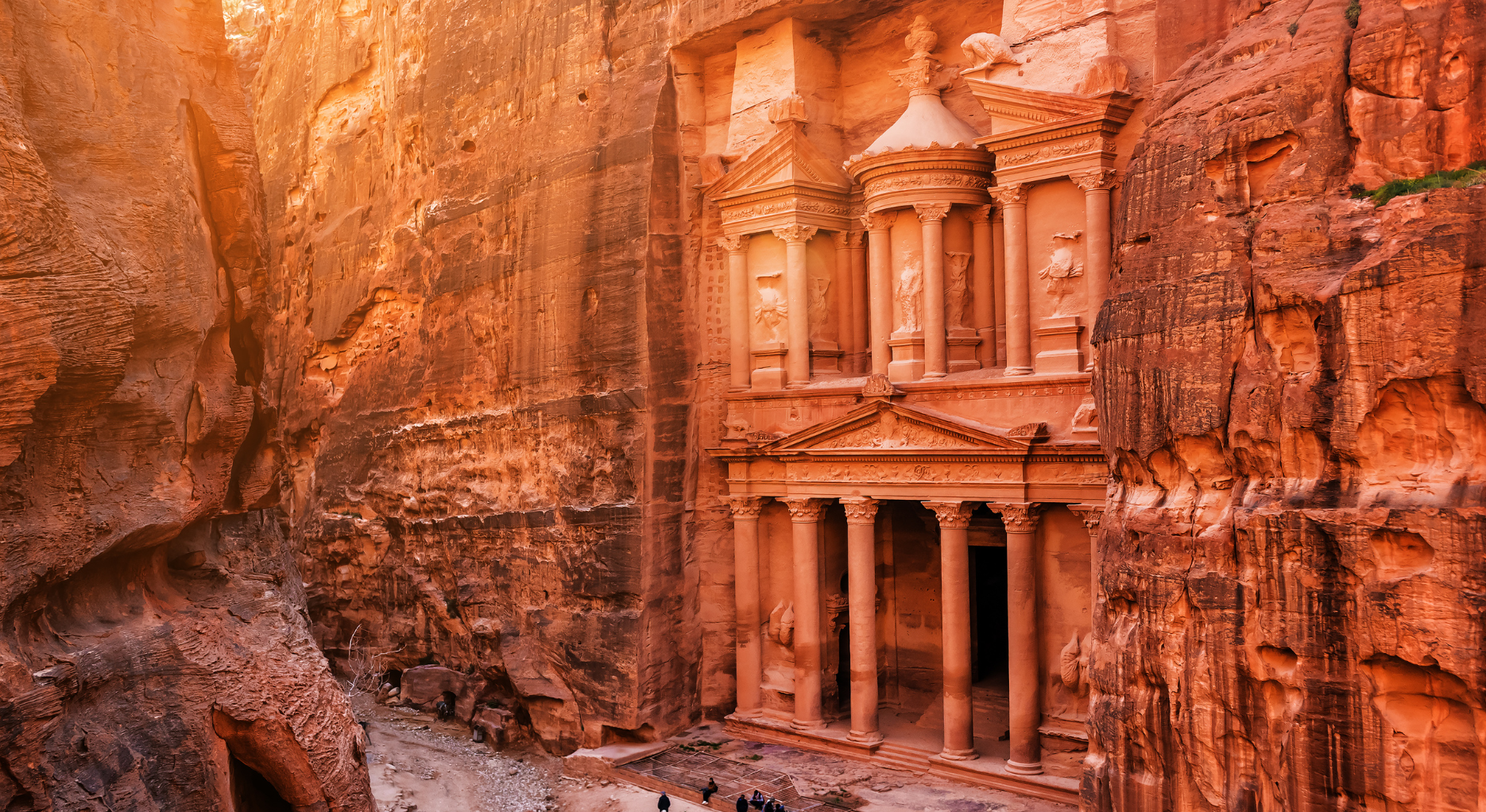
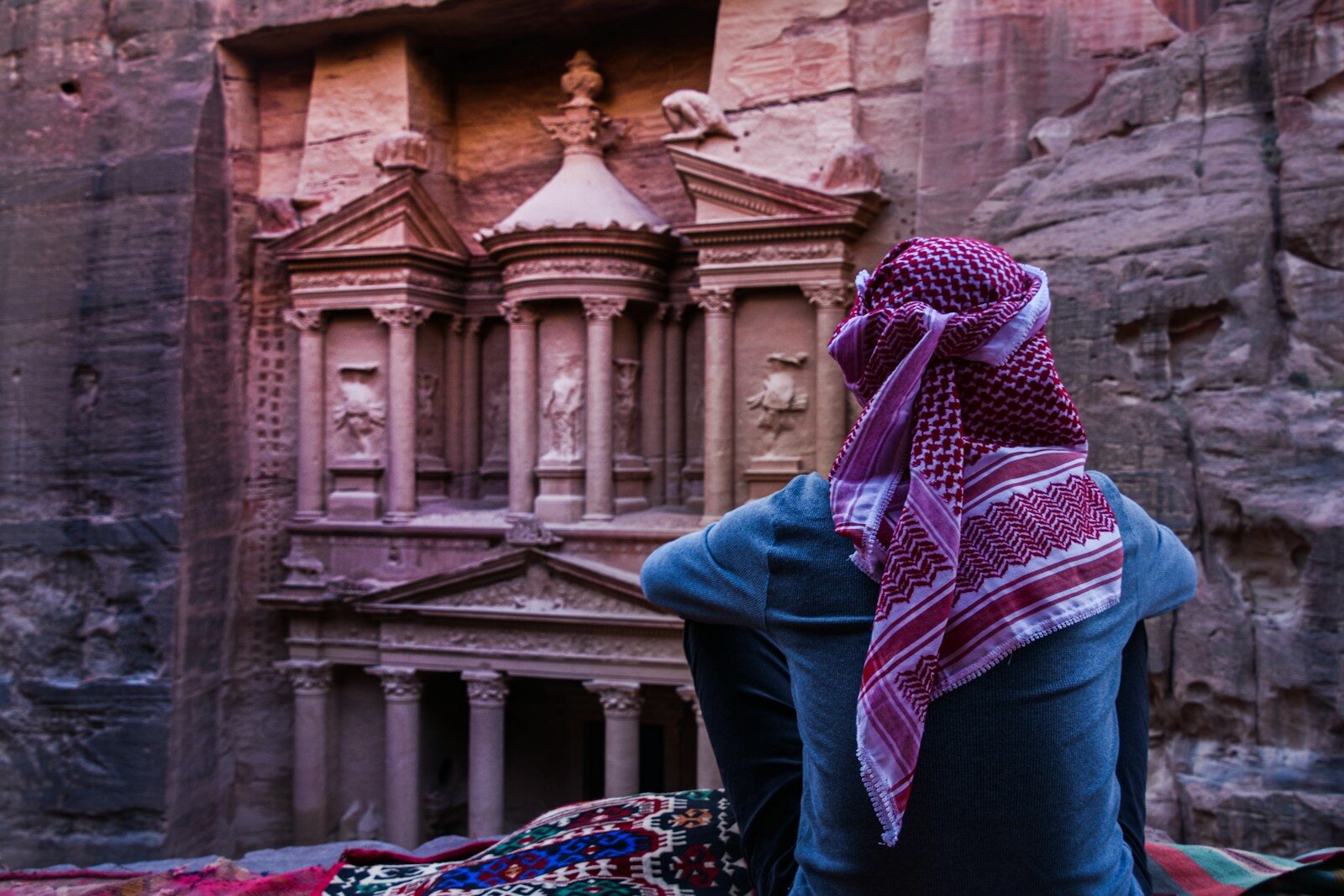
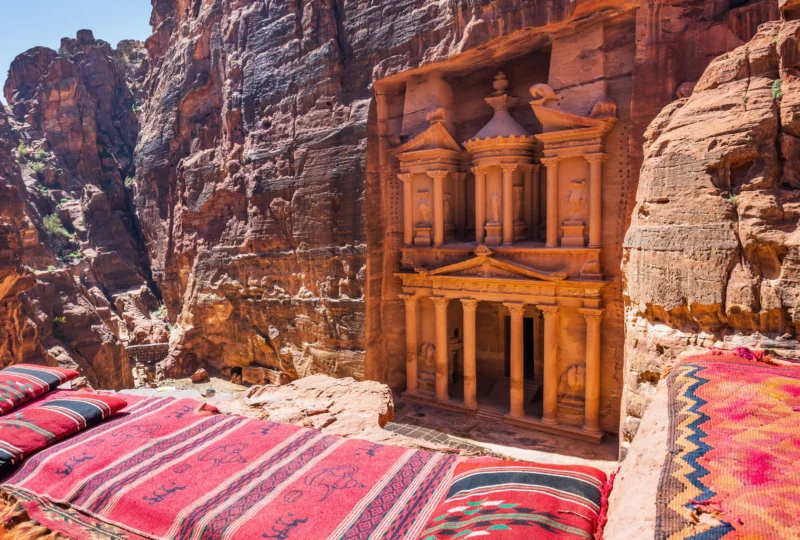
Petra is one of the most extraordinary archaeological sites on Earth. The ancient Nabataean city carved into rose-red sandstone cliffs in southern Jordan has no direct equivalent anywhere in the world. The approach through the Siq, a narrow gorge a kilometre long with walls rising 80 metres on either side, delivers the Treasury facade at the end with an impact that photographs consistently fail to prepare you for. The site extends for kilometres beyond that first reveal: the Street of Facades, the Royal Tombs, the Monastery reached by 800 rock-cut steps above the main city. A single day is not enough, and most visitors who give it two wish they had given it three.
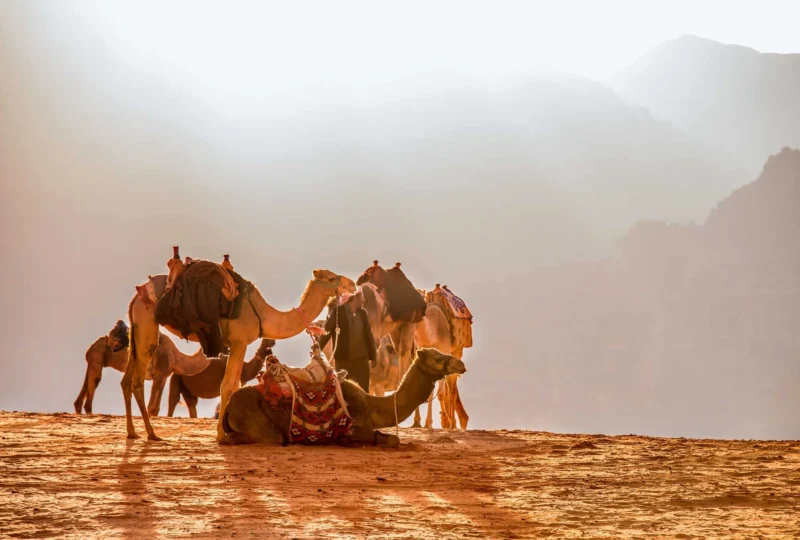
Wadi Rum is the other non-negotiable. The largest desert valley in Jordan, a UNESCO World Heritage Site of sandstone mountains, red sand plains, and rock formations carved by water and wind over millions of years, Wadi Rum has been a film location for Lawrence of Arabia, The Martian, Dune, and Rogue One for the straightforward reason that it looks like nowhere else on Earth. The scale of it only becomes apparent on the ground.
These are bucket-list destinations in the truest sense: places that exist on a level above the question of whether the surrounding country is straightforwardly welcoming. LGBTQ+ travellers have been visiting Petra and Wadi Rum for decades, and the experiences they return with reflect what those places are rather than the political context around them.
Tell us how you like to travel. We will shape the trip around it.
Request a quote →The Luxury Desert Experience
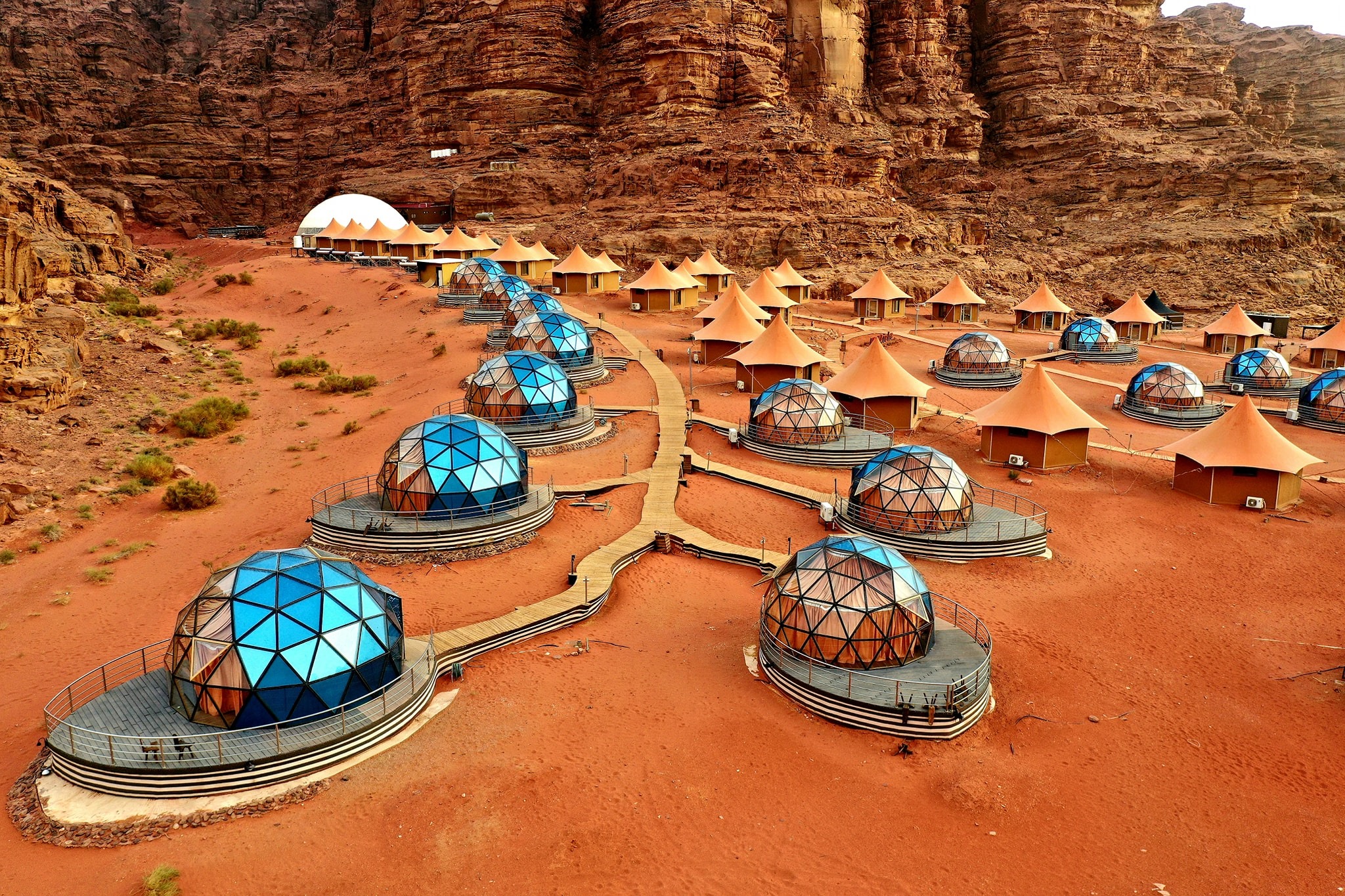
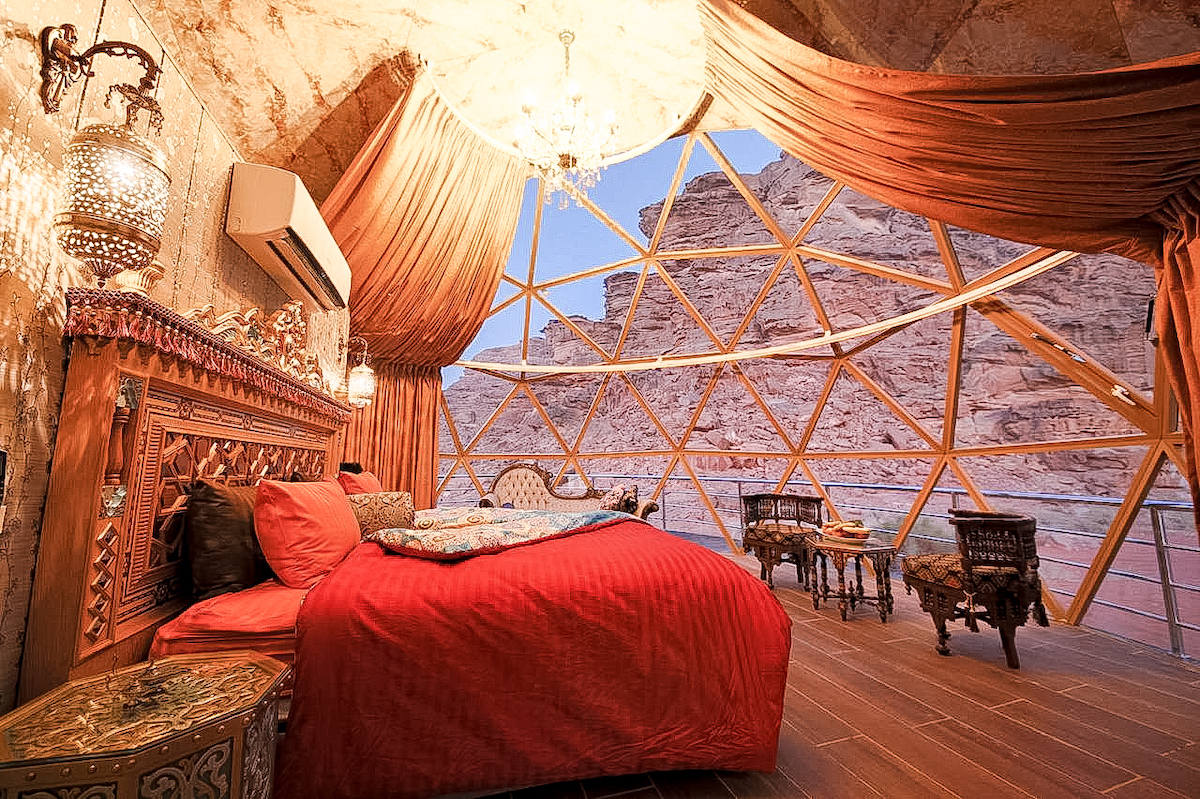
The glamping infrastructure in Wadi Rum has developed significantly over the past decade, and the top end of it is genuinely impressive. Private bubble tents with panoramic floor-to-ceiling windows facing the desert, glass ceilings for stargazing from bed, private terraces, and Bedouin dinners prepared over open fire under an unobstructed night sky: Wadi Rum’s best camps deliver an experience that is difficult to place in any conventional hospitality category.
Sun City Camp and Memories Aicha Luxury Camp are among the most established operators at the higher end, with private tent configurations, curated Jordanian cuisine, and jeep and camel excursions into the protected area. The UFO and Bubble Luxotel properties offer the distinctive dome and bubble tent formats that have made Wadi Rum one of the most recognisable glamping destinations in the world.
For LGBTQ+ couples, the private nature of the best camps is part of their appeal. A bubble tent in the desert is a self-contained world, and the remoteness of Wadi Rum means the experience is defined by the landscape rather than the social dynamics of a hotel or resort. We work with a small number of vetted camp operators and can ensure your stay is arranged with the discretion the destination requires. 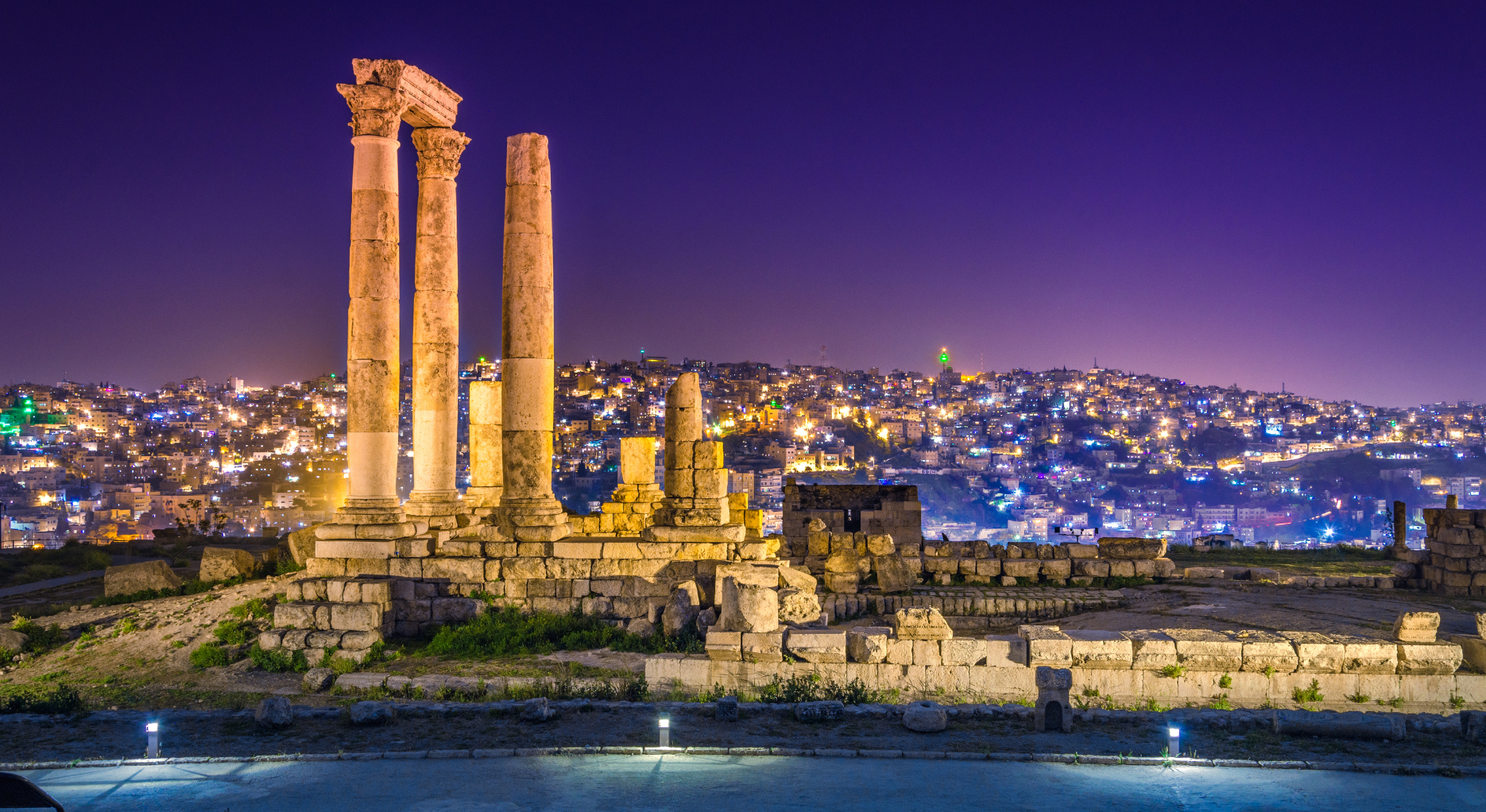
Amman: The Most Livable Version of Jordan for LGBTQ+ Travellers
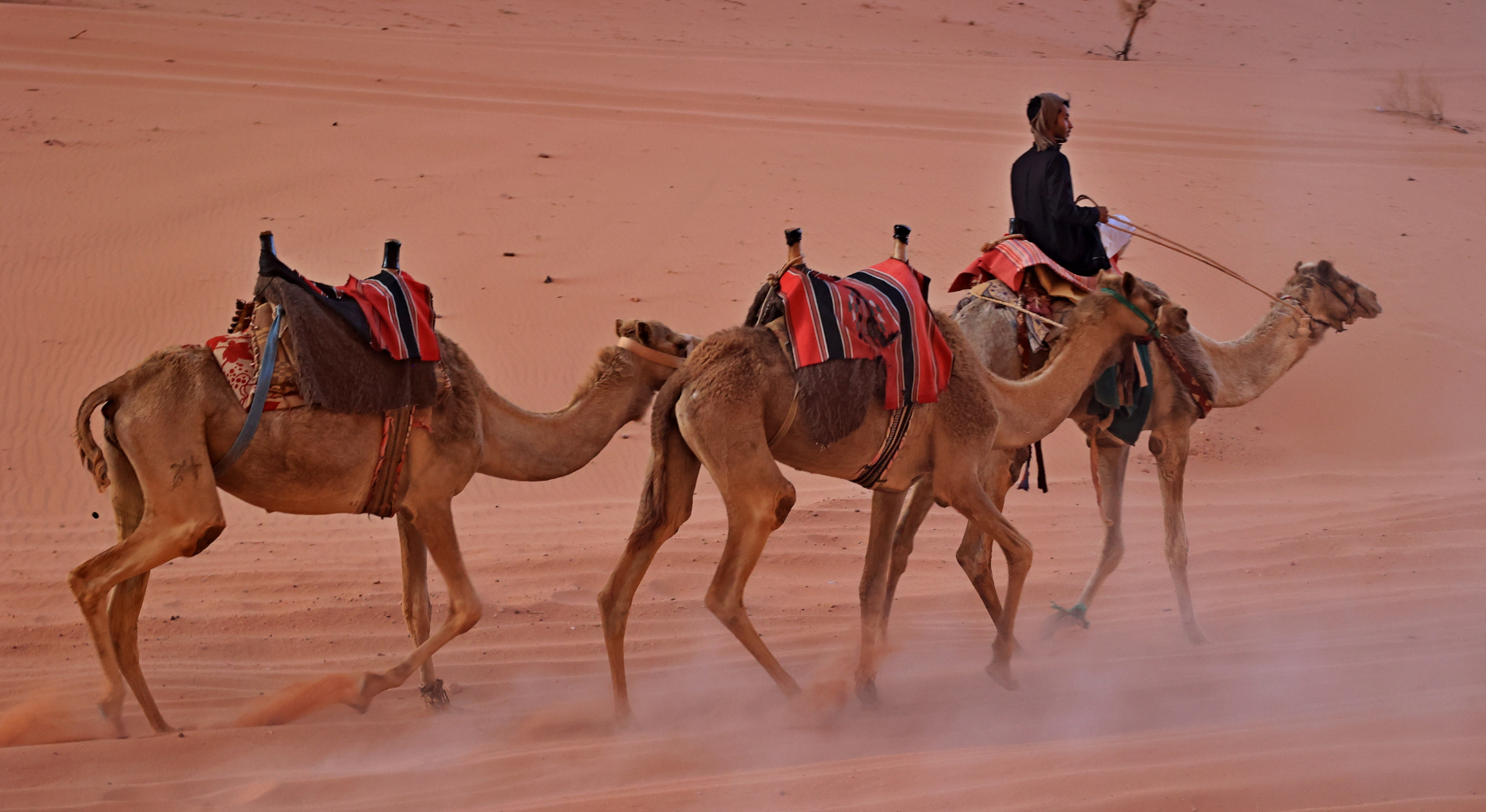
The capital is the most internationally oriented city in the country and the place where the gap between Jordan’s legal position and its social reality is narrowest. Amman has a discreet but present collection of bars, cafes, and restaurants that have become known among LGBTQ+ expats and international visitors as welcoming spaces. None of this constitutes an open gay scene in any Western sense, and it should not be approached as one. The welcome is low-key, the signage nonexistent, and the expectation of discretion consistent throughout.
What Amman offers LGBTQ+ travellers is a cosmopolitan, relatively liberal urban environment where moving through the city without incident is entirely realistic, provided the standard rules apply. Public displays of affection are inadvisable for any couple regardless of sexuality.
The city has genuine substance beyond its function as an airport gateway. The food scene is excellent, the Roman theatre and the Jordan Museum justify time, and the day trip to the Dead Sea, the lowest point on Earth and one of the most surreal swimming experiences available anywhere, is an easy addition to any itinerary built around Petra and Wadi Rum.
Combining Jordan With Other Destinations
Jordan pairs naturally with several neighbouring destinations for travellers building a wider regional itinerary. Egypt connects directly, with flights from Amman to Cairo making a combined Petra and Nile itinerary entirely practical. The Dead Sea sits within easy reach of Amman and can anchor an additional night on either end of a Jordan trip. Aqaba, Jordan’s Red Sea resort town on the Gulf of Aqaba, offers some of the finest diving in the region and a relaxed coastal setting that contrasts sharply with the desert interior.
For travellers wanting to extend further, Turkey makes a logical pairing, with direct flights between Amman and Istanbul, and a cultural and historical depth that sits alongside Jordan’s without repetition.
Should You Go?
Jordan is not a destination for LGBTQ+ travellers who want social freedom, a visible gay community, or any sense of the open welcome that exists in parts of Europe and North America. The government’s position on LGBTQ+ rights is explicit and hostile, the social attitudes are conservative, and the protections that exist are thin and inconsistently applied.
What Jordan offers is different: two of the most extraordinary archaeological and landscape destinations in the world, a hospitality culture that is warm toward international visitors, and a luxury desert experience that exists nowhere else on Earth. LGBTQ+ travellers who visit do so with eyes open, with discretion as a baseline, and with the right properties arranged in advance.
We can help you build a Jordan itinerary that ensures every property and operator has been vetted specifically for LGBTQ+ guests. Get in touch with one of our luxury travel experts to start the conversation.
New to Out Of Office?
We are a luxury travel company for LGBTQ+ travellers. Everything we sell is tailor-made, planned by one named member of our team throughout, and nothing on this site is a fixed package unless it says so.
Where exclusivity meets inclusivity
Ten years, hundreds of five-star reviews, and a team who will tell you when a destination is not right for the trip you have in mind.
The hard part is not finding a beautiful place. It is finding the right one for you.
Every property we suggest is handpicked by our team. Twenty minutes with a specialist will tell you which ones are worth your time.
Stellar service. Stellar products. Stellar people and it gets so much better when you pick up the phone and call.
Anthony S.
Super client centred service. From first contact I have had warm, efficient, friendly and flexible service.
John
I’m confident in giving Out Of Office a 5-star review! They are one of the leaders in this space without a doubt.
Tiberiu
We plant trees for every booking
For every booking made with Out Of Office we commit to planting trees in your name to help reduce the impact of travel on future generations. You'll even get a link to see where your trees are planted in the world via our partner Ecologi.

We donate to Rainbow Railroad with every booking
Rainbow Railroad helps LGBTQ+ people escape state-sponsored violence and persecution. A donation goes with every trip we sell, funded by us and never added to your price.

Start Planning Your Trip
Tell us where you would love to go, when you are thinking of travelling and what kind of trip you have in mind. One of our LGBTQ+ travel specialists will create a tailor-made itinerary designed around your destination, style and preferences.
One named specialist, first enquiry to homecoming. No call centre, and nothing is charged until you decide to book.