4 days tailor made from $3,320 pp
From $3,320 pp

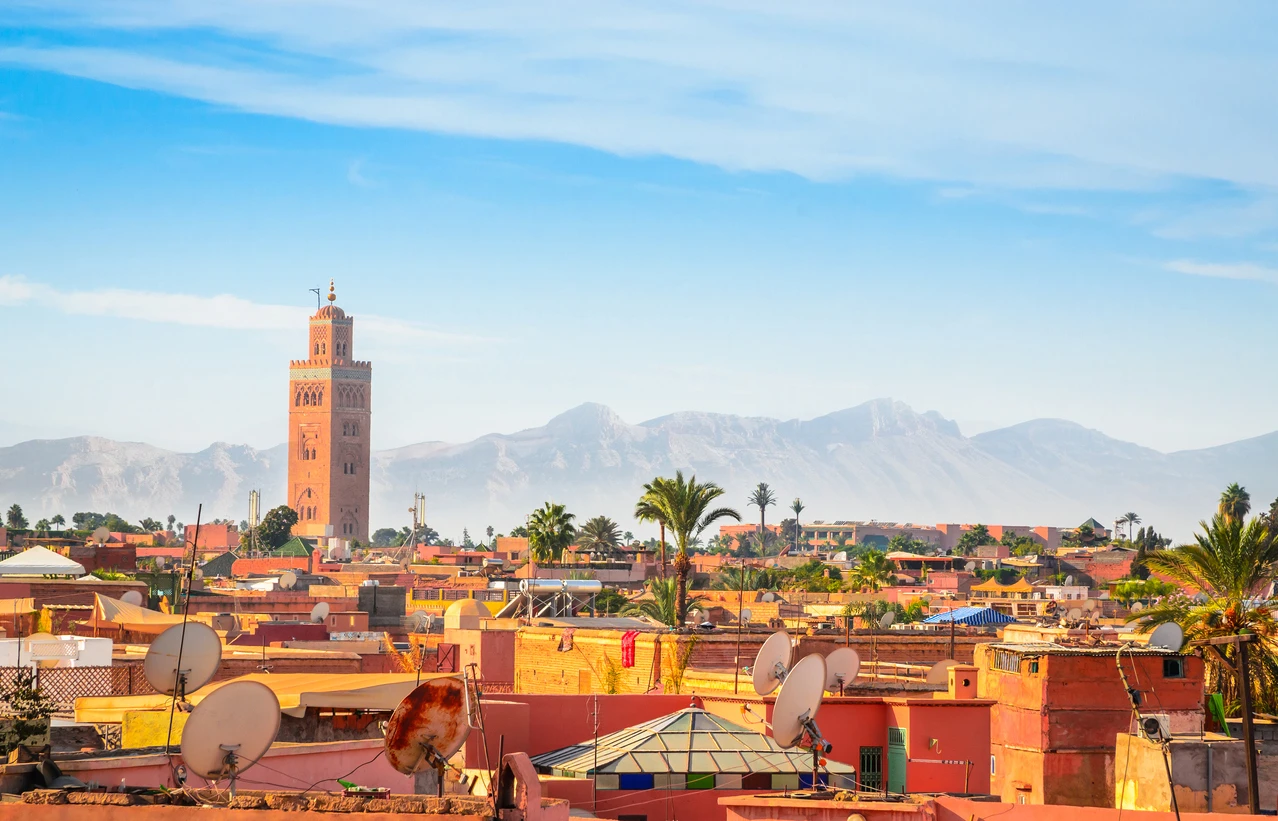
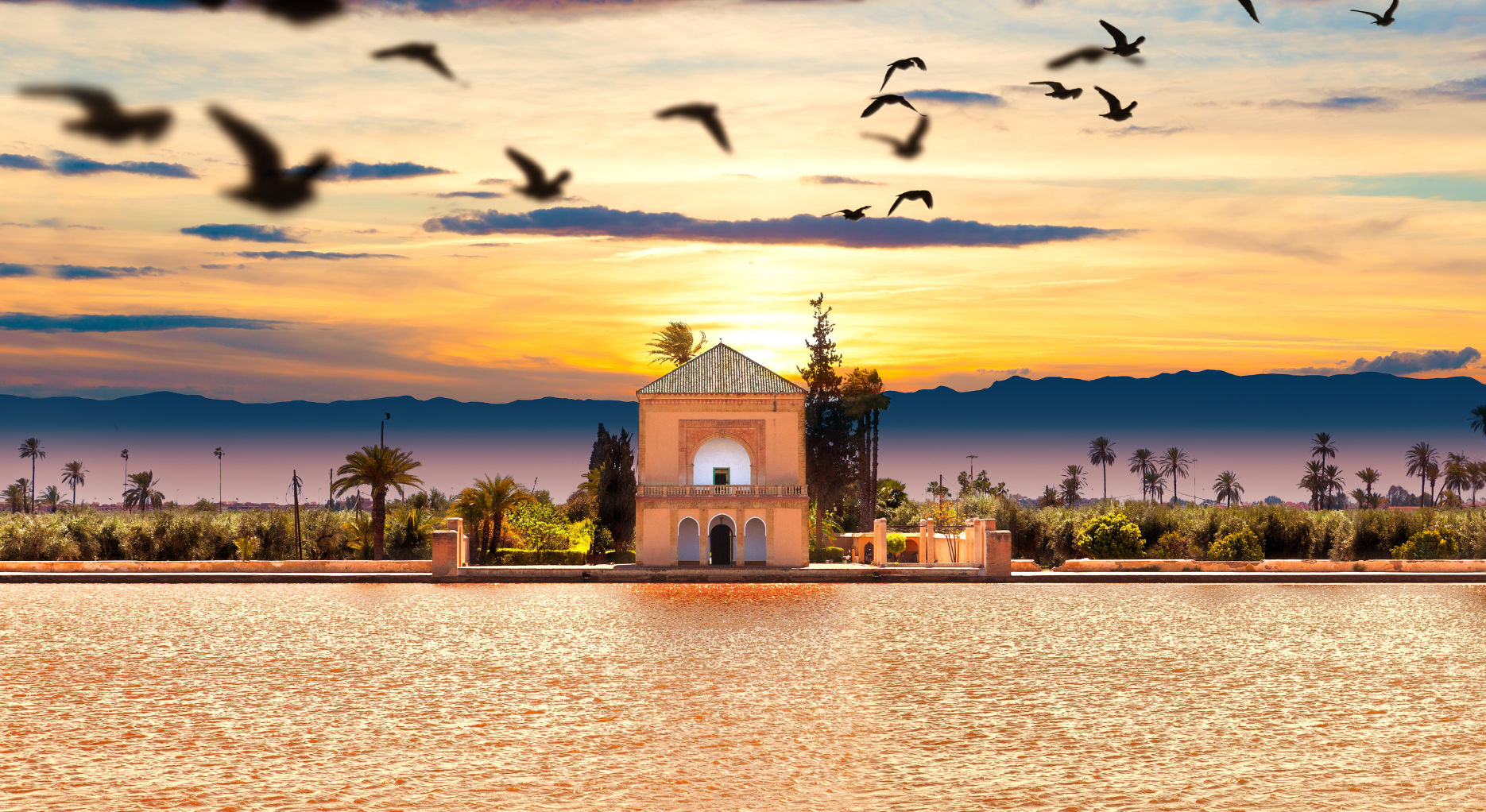
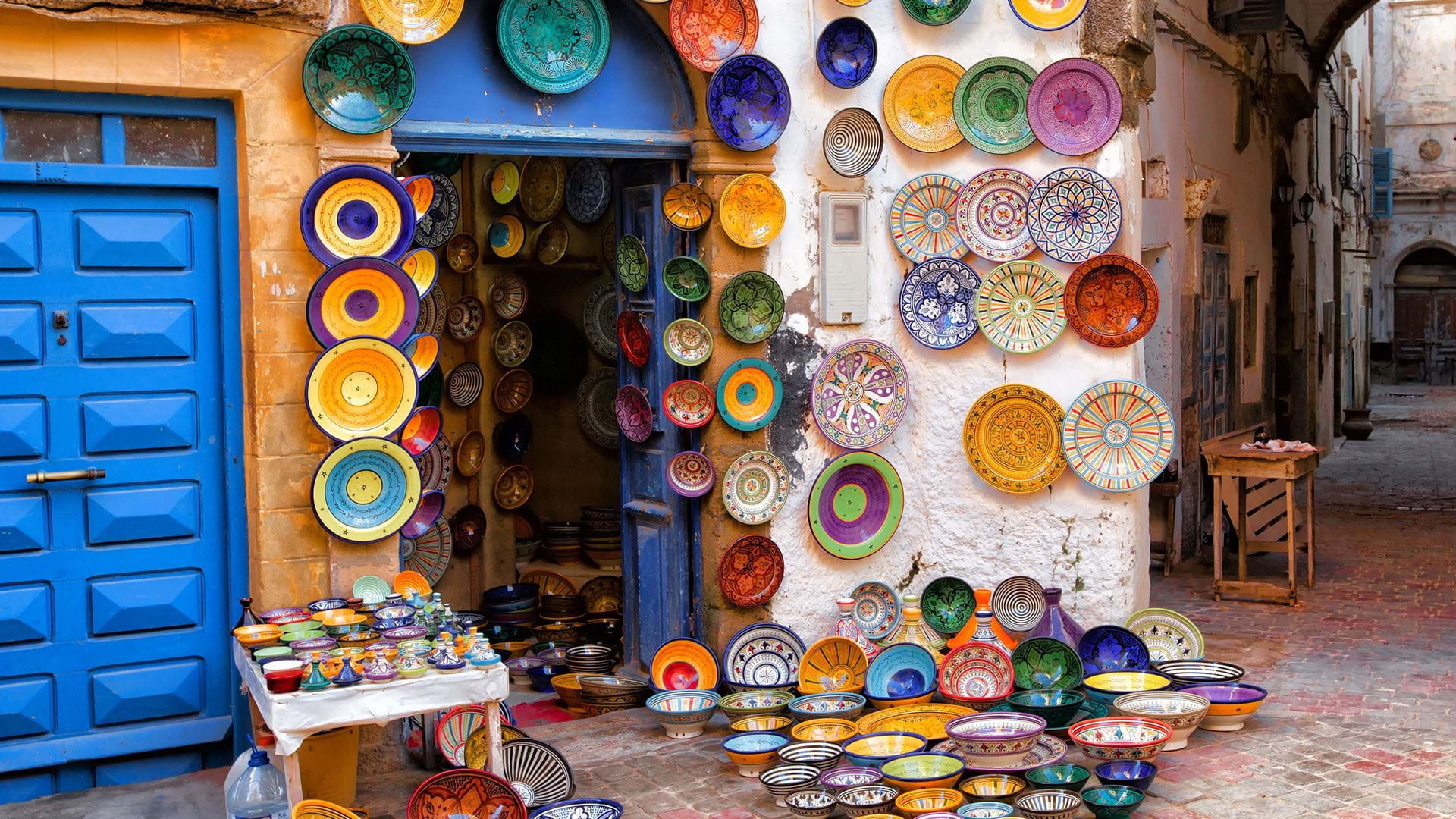
Morocco is unlike any other place, and nowhere makes that clearer than Marrakech: a city shaped by centuries of trade, scholarship, and craftsmanship that makes a total claim on the senses from the first moment. Essaouira, three hours west on the Atlantic coast, is its quieter counterpart: a UNESCO-listed port town where trade winds come off the sea, the ramparts are painted white and blue, and the pace drops to something close to ease. Few contrasts in North African travel are as satisfying or as well-matched.
This eight-day trip travels between the two cities, with an overnight in the High Atlas Mountains.
In Marrakech, you’ll stay at Riad Capaldi, an authentically restored seven-room riad in the heart of the medina, before spending a night at Kasbah Tamadot: Sir Richard Branson’s three-Michelin-starred retreat in the Atlas foothills, an hour south of the city. In Essaouira, L’Heure Bleue Palais, a Relais & Châteaux property built into a restored 18th-century palace on the medina walls, provides the coastal base.
The trip closes with two nights at La Mamounia Palace, a send-off of real grandeur that puts the full journey in perspective.
Many LGBTQ+ travelers have visited Morocco for decades and found it a surprisingly open place, particularly in cities where international guests are part of the fabric of daily life.
A private transfer from Marrakech Menara Airport delivers you to the medina, a 10-minute drive that crosses into a different world at the city gates.
Riad Capaldi sits near Medersa Ben Youssef, close enough to the souks to feel the city’s energy and far enough inside the old walls to leave it behind when the door closes. Seven rooms and suites, each individually decorated with Moroccan antiques and hand-woven textiles, are arranged around a central courtyard with a plunge pool. Your day here begins with a rooftop breakfast in the morning sun.
The evening is yours. The riad team can recommend where to eat or arrange a reservation at one of the medina’s better tables. The souks are best approached at dusk, when the light shifts and the pace of trade slows slightly into something more navigable.
Two full days to move through Marrakech at whatever pace suits you.
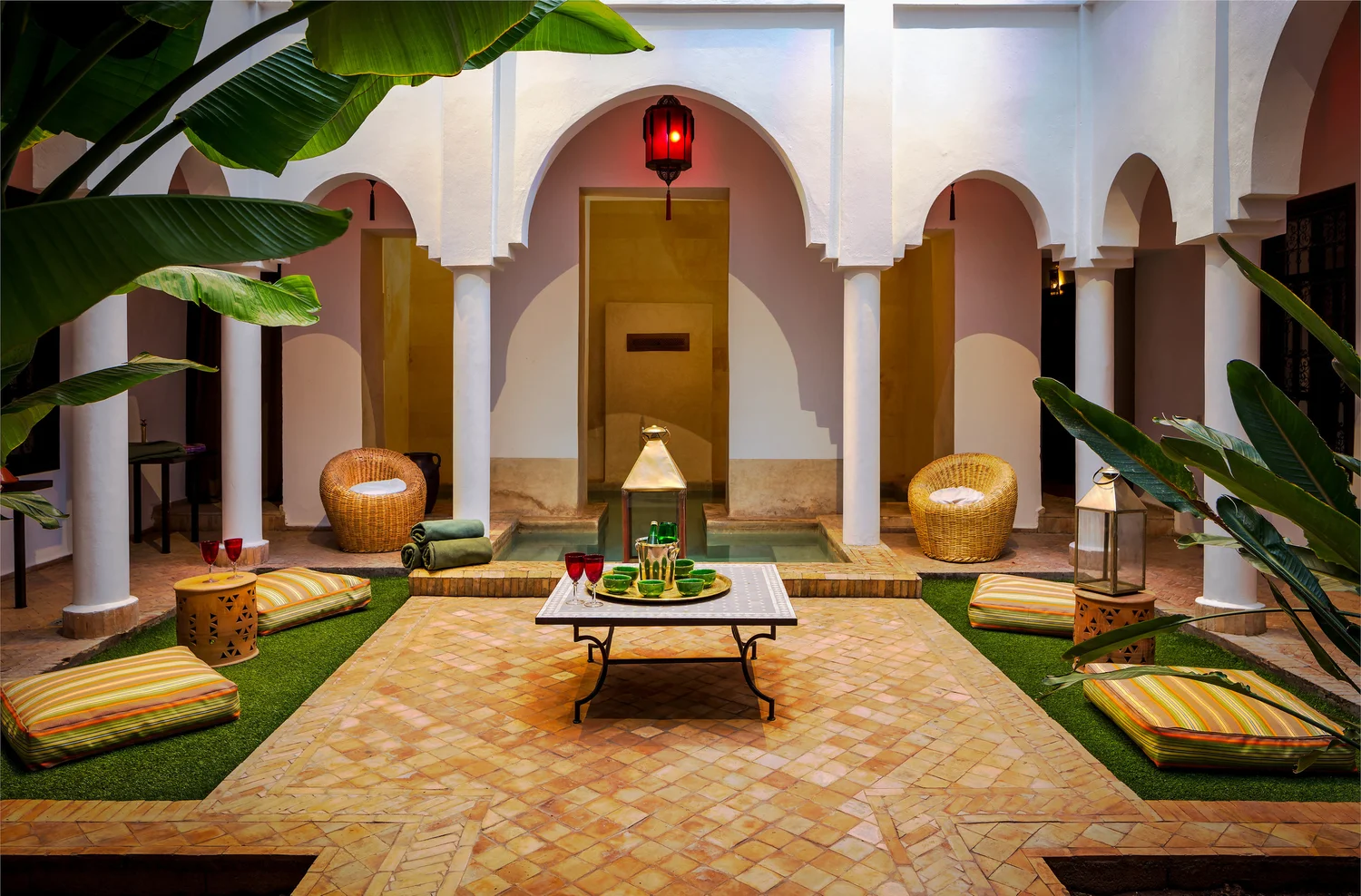
Jardin Majorelle, the cobalt-blue botanical garden created by French painter Jacques Majorelle and later restored by Yves Saint Laurent, earns a full, unhurried morning.
The YSL Museum next door is one of the more considered fashion institutions in the region and, for LGBTQ+ travelers, carries an additional resonance: Saint Laurent lived openly in Marrakech for much of his adult life, and the garden and museum stand as a quiet, lasting expression of that.
The Bahia Palace and Saadian Tombs are well worth the afternoon, when the main sites thin out and the light softens.
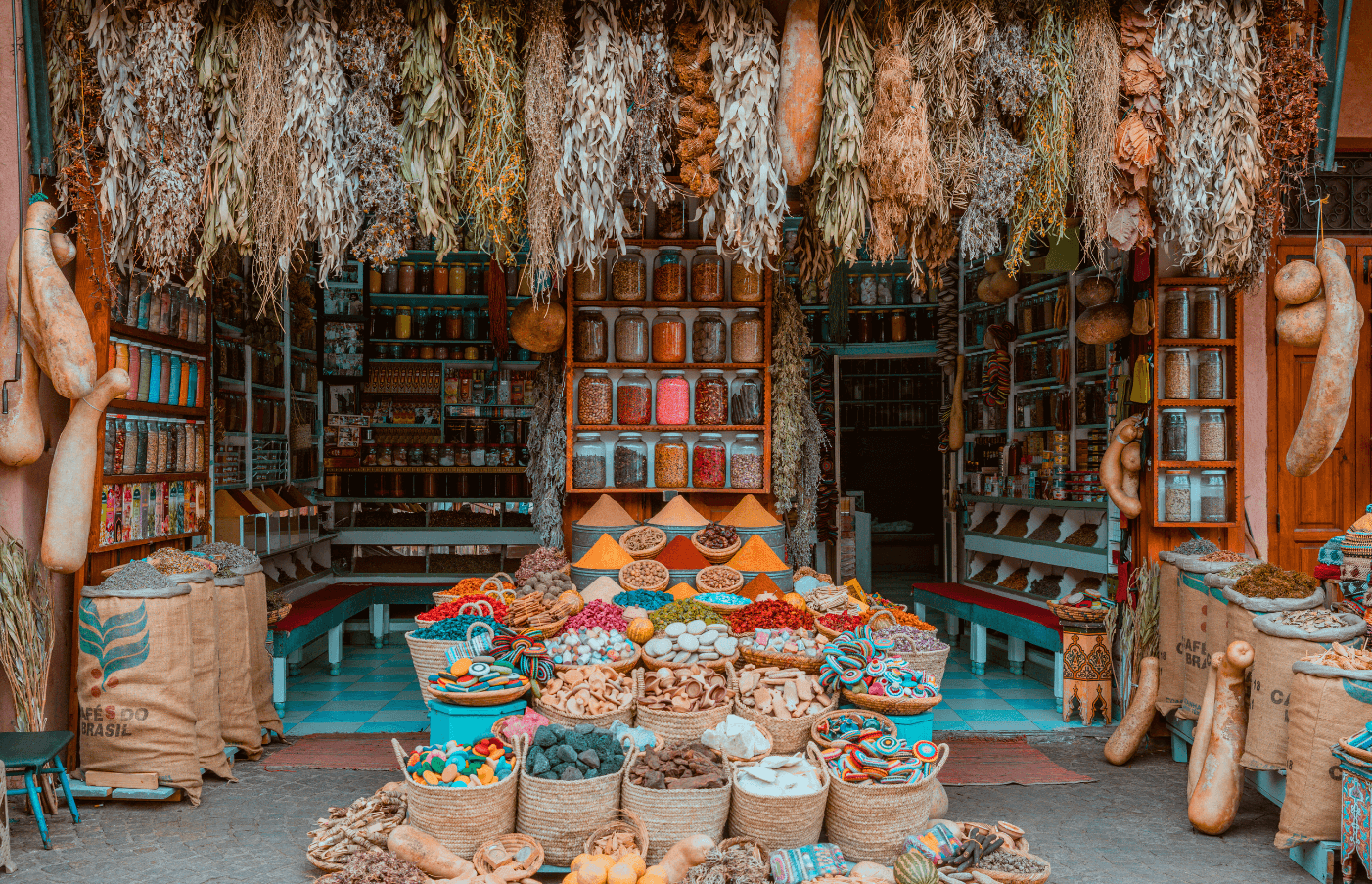
The souks around Rahba Lakdima and the Mellah are best explored without a fixed plan. Spice merchants, leather workers, weavers, and coppersmiths operate much as they have for centuries, and a private guide arranged through the riad opens up workshops and ateliers that don’t appear on any map.
Set aside one afternoon for the hammam. A private treatment at one of Marrakech’s better bathhouses, a traditional black soap scrub followed by steam and massage, functions as both ritual and reset after the sensory intensity of the medina.
Evenings here are best spent at a leisurely pace: a cocktail on a rooftop, dinner at a candlelit riad restaurant, the call to prayer drifting across the city as the sky turns deep blue.
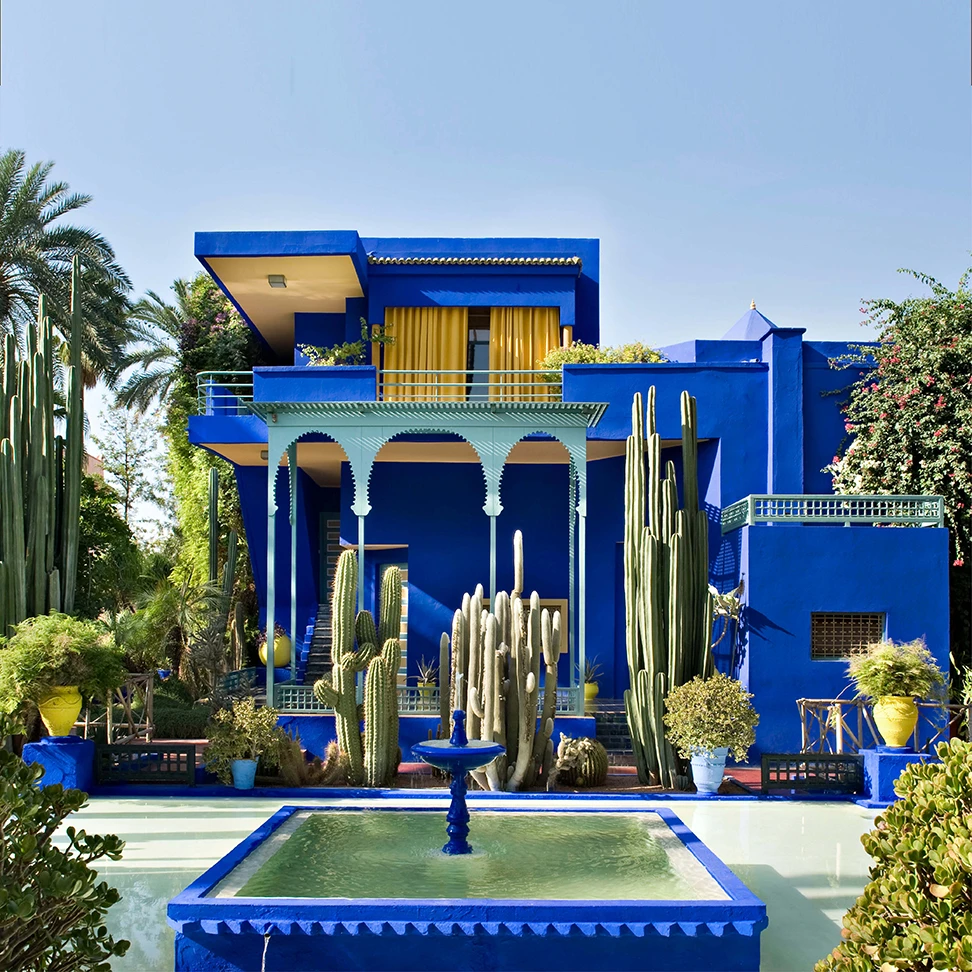
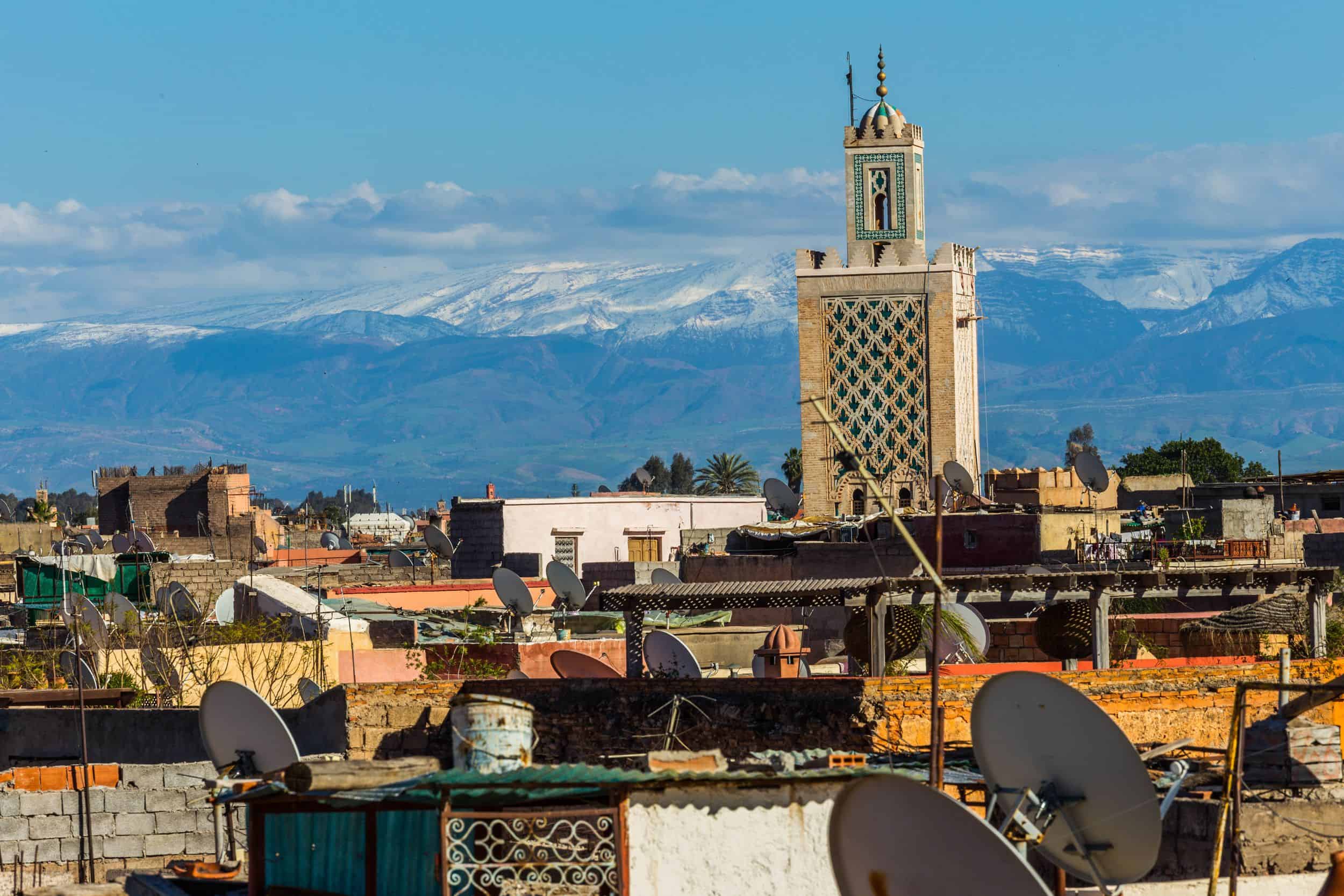
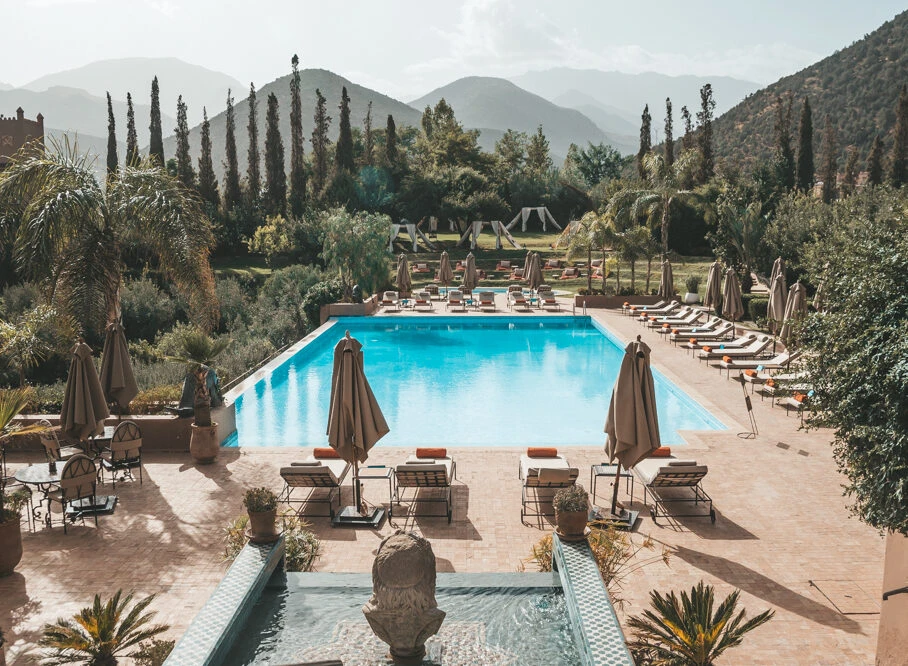
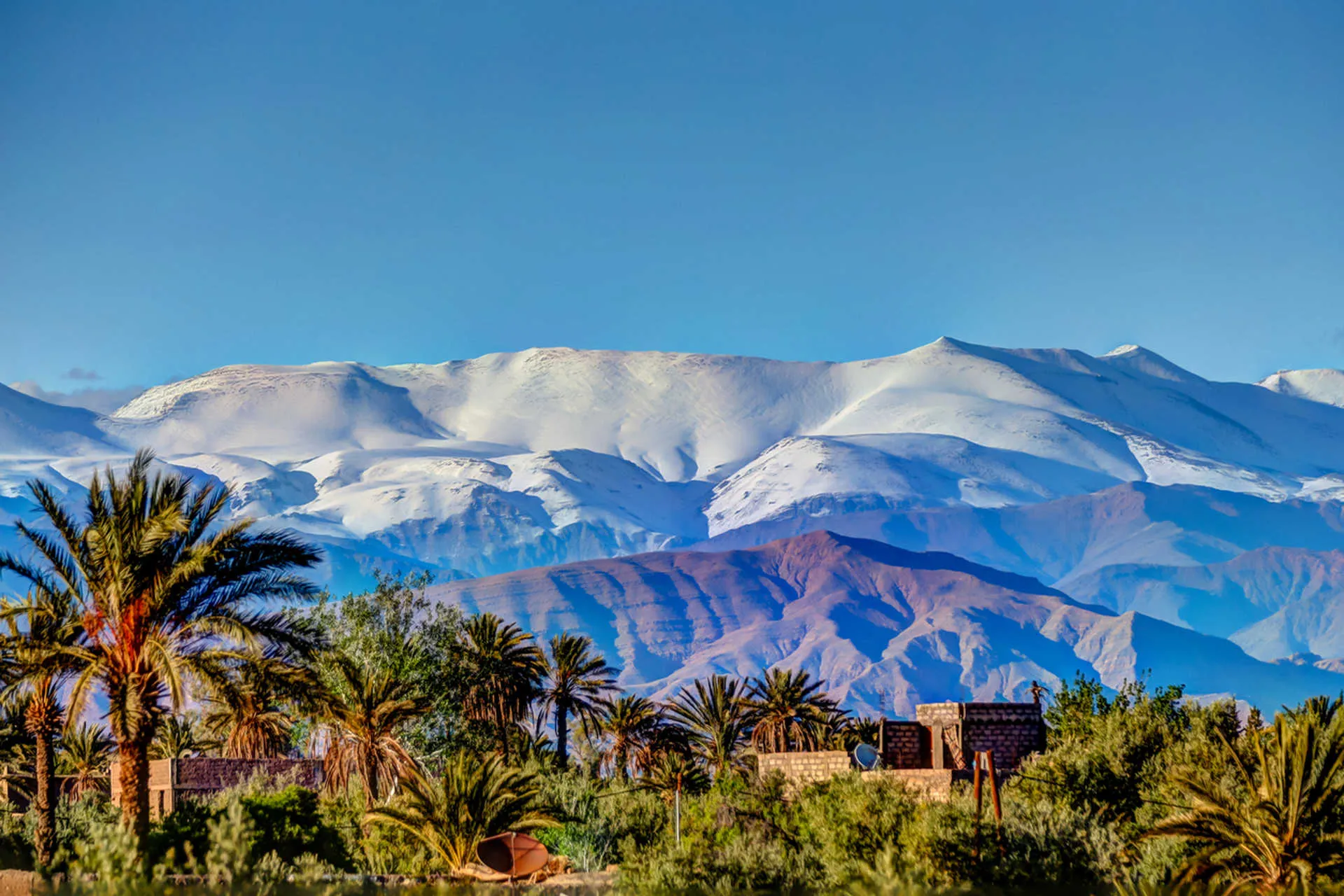
A private car heads south through the Oukaimeden foothills toward the High Atlas mountains. The shift is abrupt and welcome: terracotta walls replace pink city plaster, mountain villages appear along the valley road, and Kasbah Tamadot emerges on a hillside above the Asni valley with views that reach toward Mount Toubkal, the highest peak in North Africa.
Sir Richard Branson acquired the property in 1998, a former governor’s residence that he discovered on one of his ballooning expeditions over Morocco. It now holds three Michelin Keys and a place on TIME’s World’s Greatest Places list. The 37 rooms, riads, suites, and luxury Berber tents are individually decorated with antiques and textiles sourced from across Morocco and further afield, and the infinity pool looks directly at the peaks. Tea ceremonies with the hotel’s tea master, Mohammed, have become one of the property’s quieter traditions: an unhurried ritual that pairs well with the altitude and the view.
This is a one-night stop designed for decompression before the coast. A guided walk into the Atlas foothills is the right use of an afternoon.
Dinner at Asayss, the hotel’s restaurant that opened after Kasbah Tamadot’s restoration following the 2023 earthquake, is the fitting way to close the day.
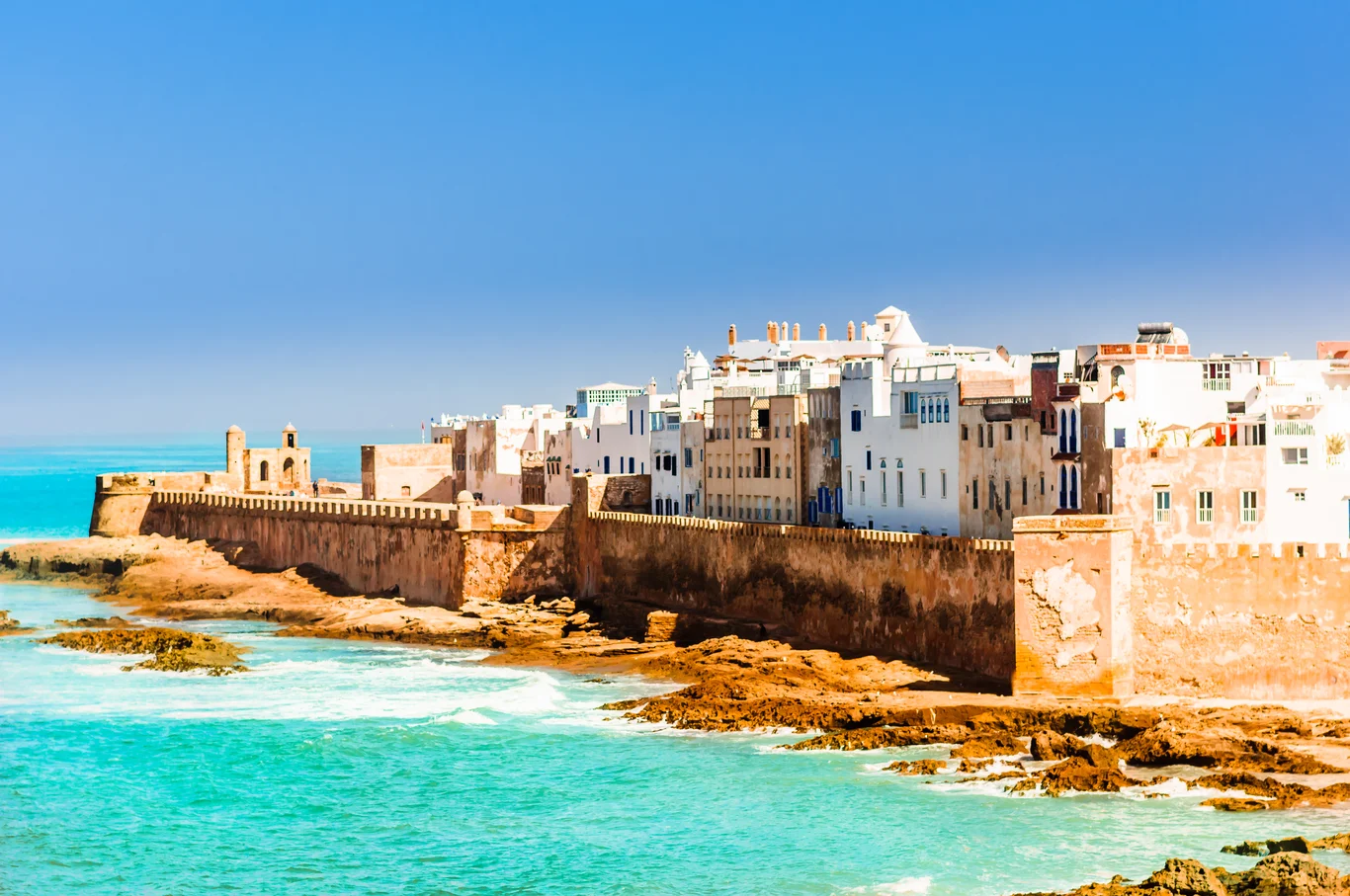
The drive from the Atlas to Essaouira takes around three hours, crossing the Haouz plain through agricultural land and argan groves before the Atlantic comes into view on the horizon. Essaouira arrives as a genuine change of register: cooler than Marrakech, brushed by Atlantic trade winds, its blue-and-white medina walls dropping toward a working port that carries the smell of salt and fresh catch.
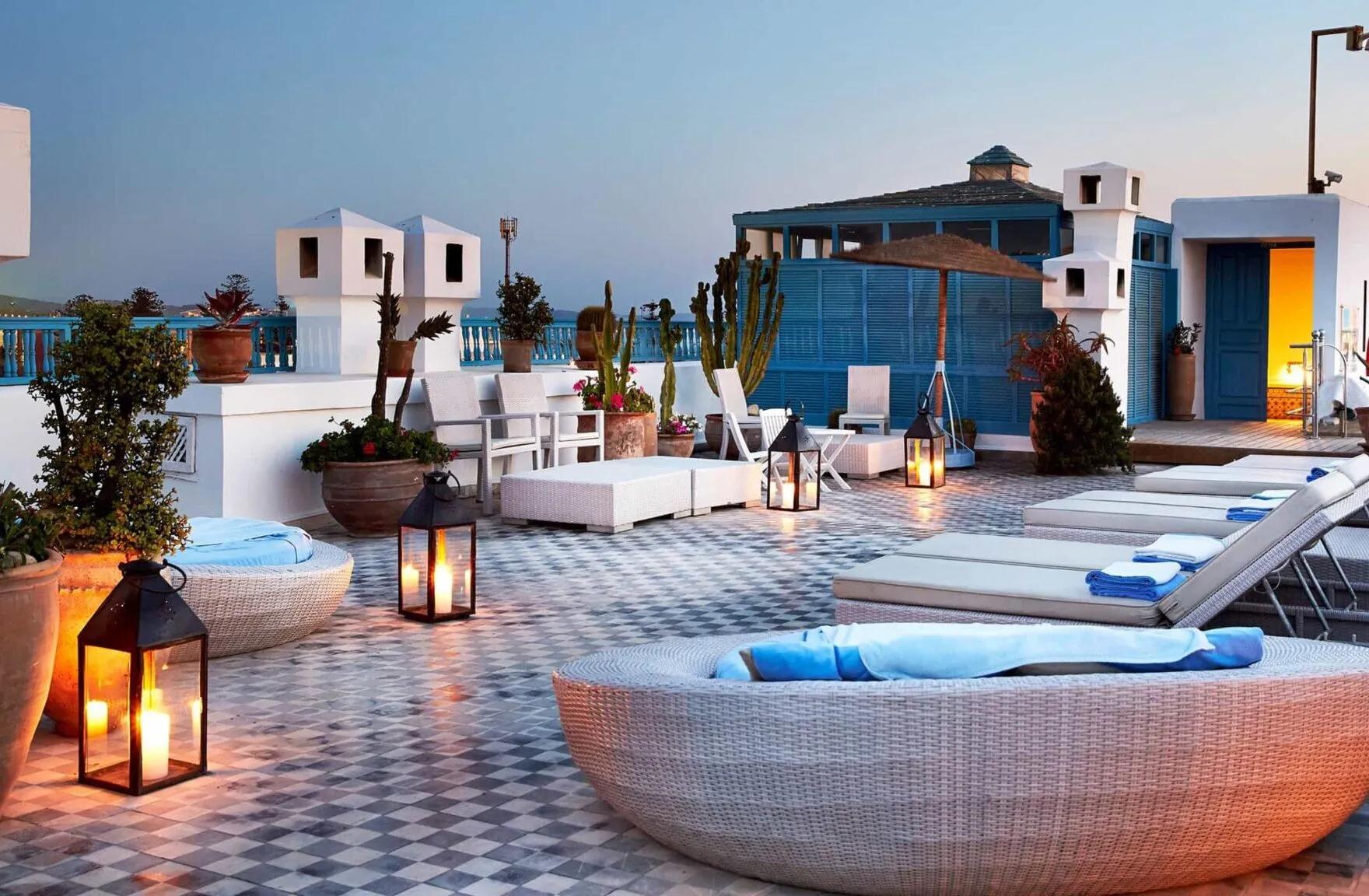
L’Heure Bleue Palais is a restored 18th-century palace at the entrance to the medina. As a Relais & Châteaux property with 33 rooms and suites arranged around a traditional patio courtyard, it feels like the right scale for a coastal wind-down.
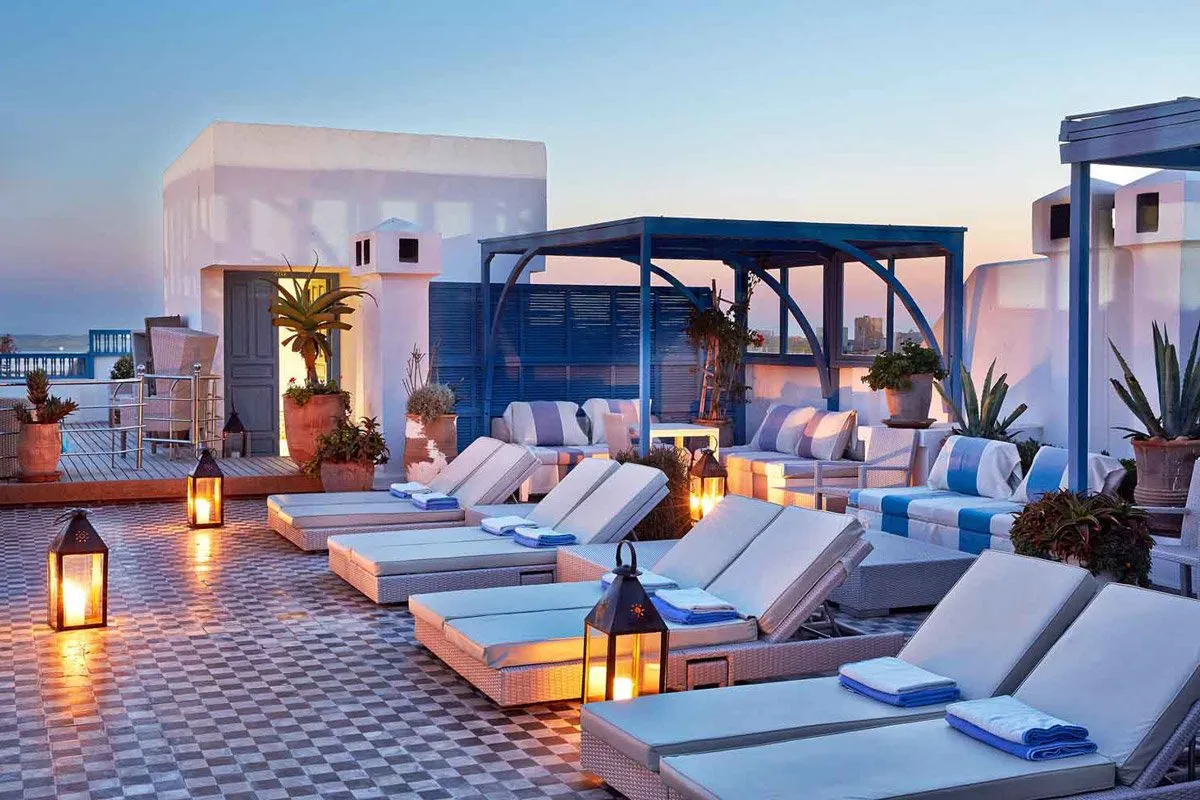
The rooftop terrace holds a heated pool with views across the medina rooflines and out to sea. The English Lounge bar, complete with a piano and fireplace, is a setting destined for a slow evening drink.
Check in, have lunch on the terrace, and spend the first afternoon doing very little. Essaouira invokes an air of ultimate relaxation.
Essaouira was shaped by trade; the port served as a commercial hub connecting sub-Saharan Africa, the Arab world, and Europe for centuries, and its architecture reflects that layered history in the Moorish arches, Portuguese-era ramparts, and pale blue paintwork that has become the town’s most recognizable feature.
The medina is UNESCO-listed and compact enough to navigate on foot without a guide, though the hotel can arrange one for anyone who wants the historical depth.
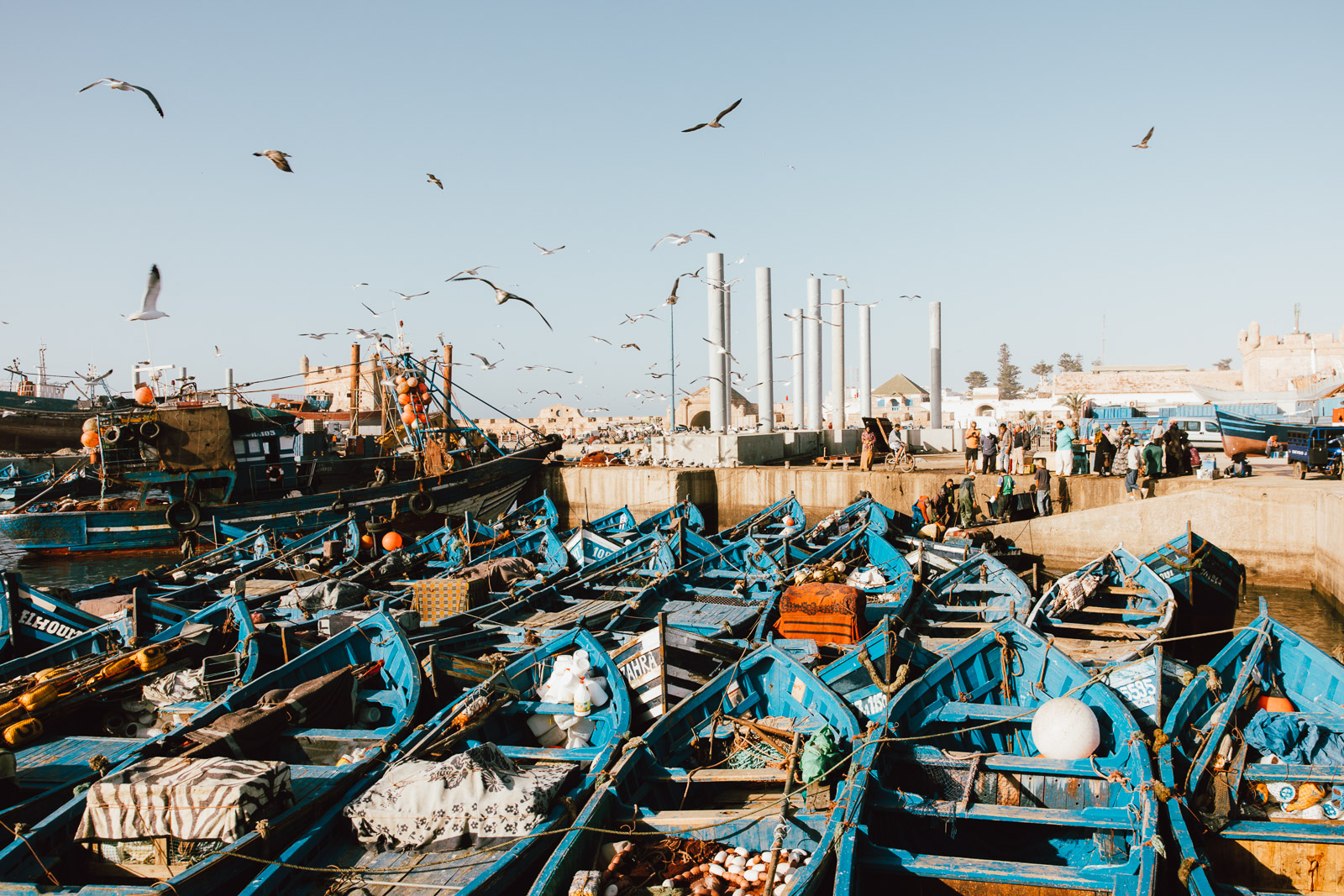
The Skala de la Ville, the sea-facing rampart lined with cannons above the Atlantic, is one of the better viewpoints on Morocco’s coast. The fishing port below it still operates in the early hours, and the catch that comes in at dawn becomes the grilled seafood served at quayside stalls by midday: one of the most straightforward and satisfying meals anywhere in the country.
The souks here are slower and less pressured than those in Marrakech, with a concentration of thuya wood craftsmen whose inlaid boxes and boards are among the better souvenirs to bring home from Morocco.
For the second day in Essaouira, the hotel’s argan oil experience offers a half-day journey to a women’s cooperative to see traditional argan production, followed by an argan-based hammam ritual at the hotel’s spa and a cooking class with the head chef.
Essaouira has long drawn a particular kind of traveler. Jimi Hendrix spent time in the nearby village of Diabat in 1969, and the town has kept that reputation for a windswept, quietly independent creative atmosphere. The Gnaoua and World Music Festival, held each June, brings international musicians to the ramparts and port for a week of outdoor performance that fills the medina with an entirely different energy.
Evenings here are spent at the hotel’s two restaurants or venturing further into the medina to one of the independent tables around Rue Youssef El Fassi.
A private transfer returns you to Marrakech in time for a late morning check-in at La Mamounia.
One of the most decorated hotels in the world, it is the right way to close a trip like this. The property takes its name from the gardens gifted by Sultan Mohammed Ben Abdallah to his son, Prince Mamoun, in the 18th century.
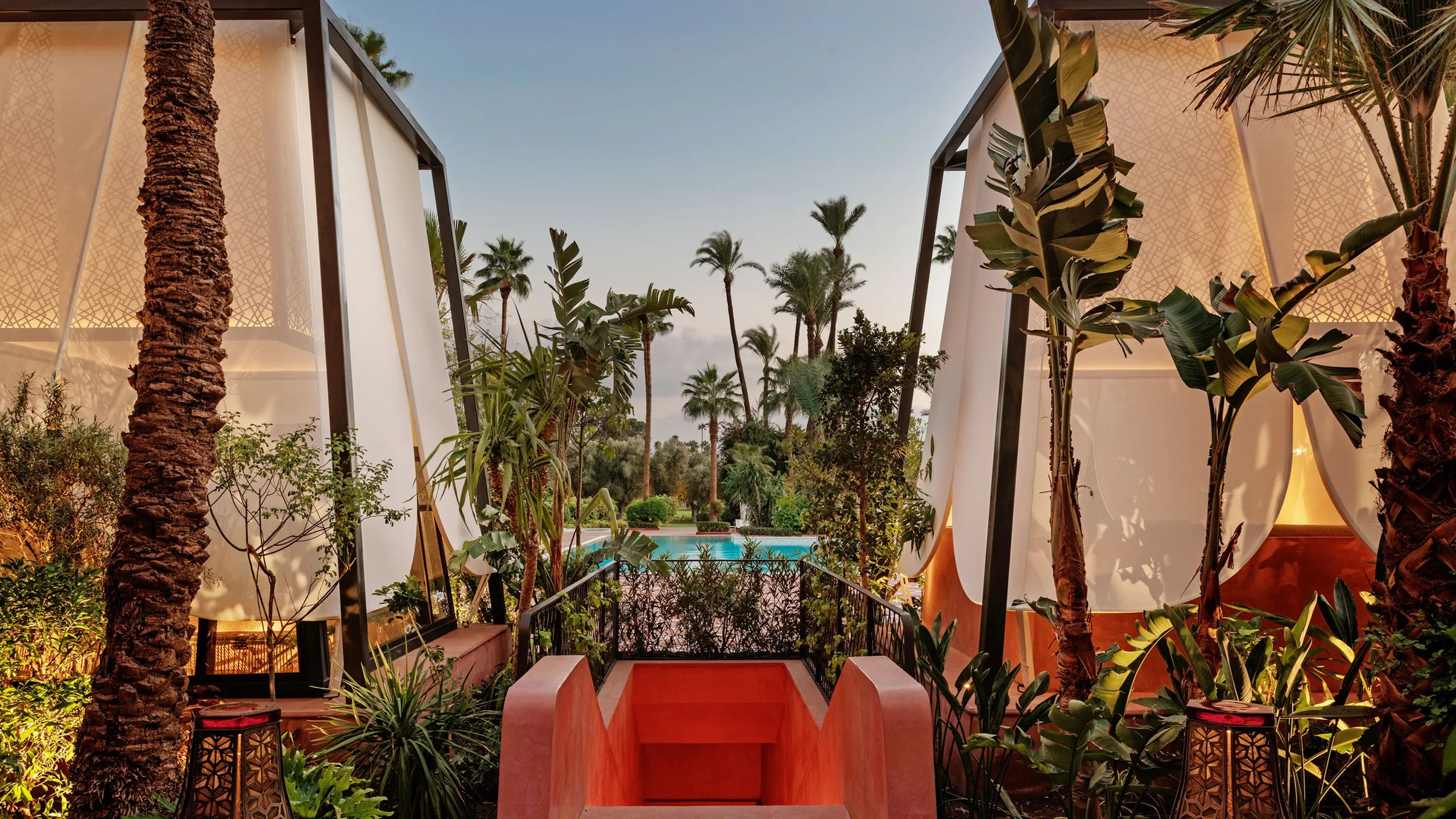
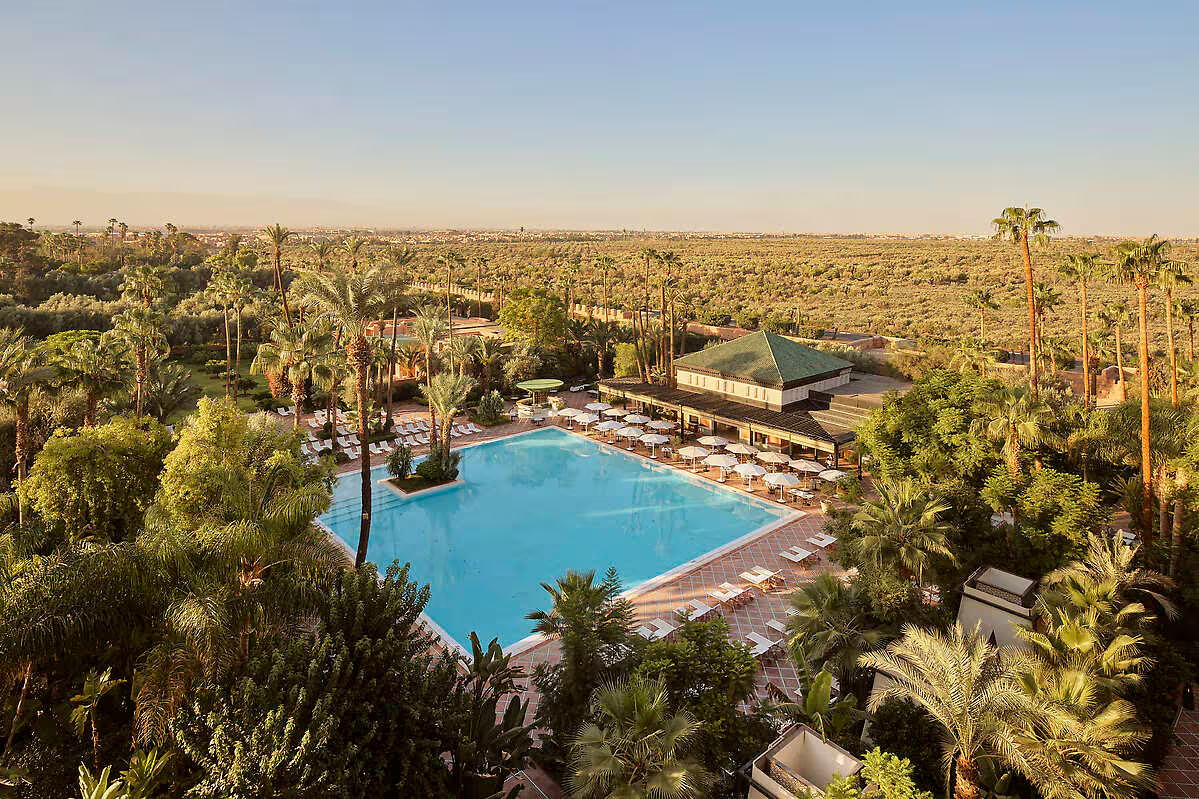
Those gardens still surround the hotel today: eight acres of roses, orange trees, olive trees, and palms that you walk through slowly and then want to sit in. The recent renovations have only deepened the effect. The lobby chandelier alone, a centenary commission in the form of a sculptural interpretation of Berber jewelry, announces clearly that this is a different order of property.
Spend the afternoon settling into the grounds. Dinner at La Mamounia is an occasion worth dressing for.
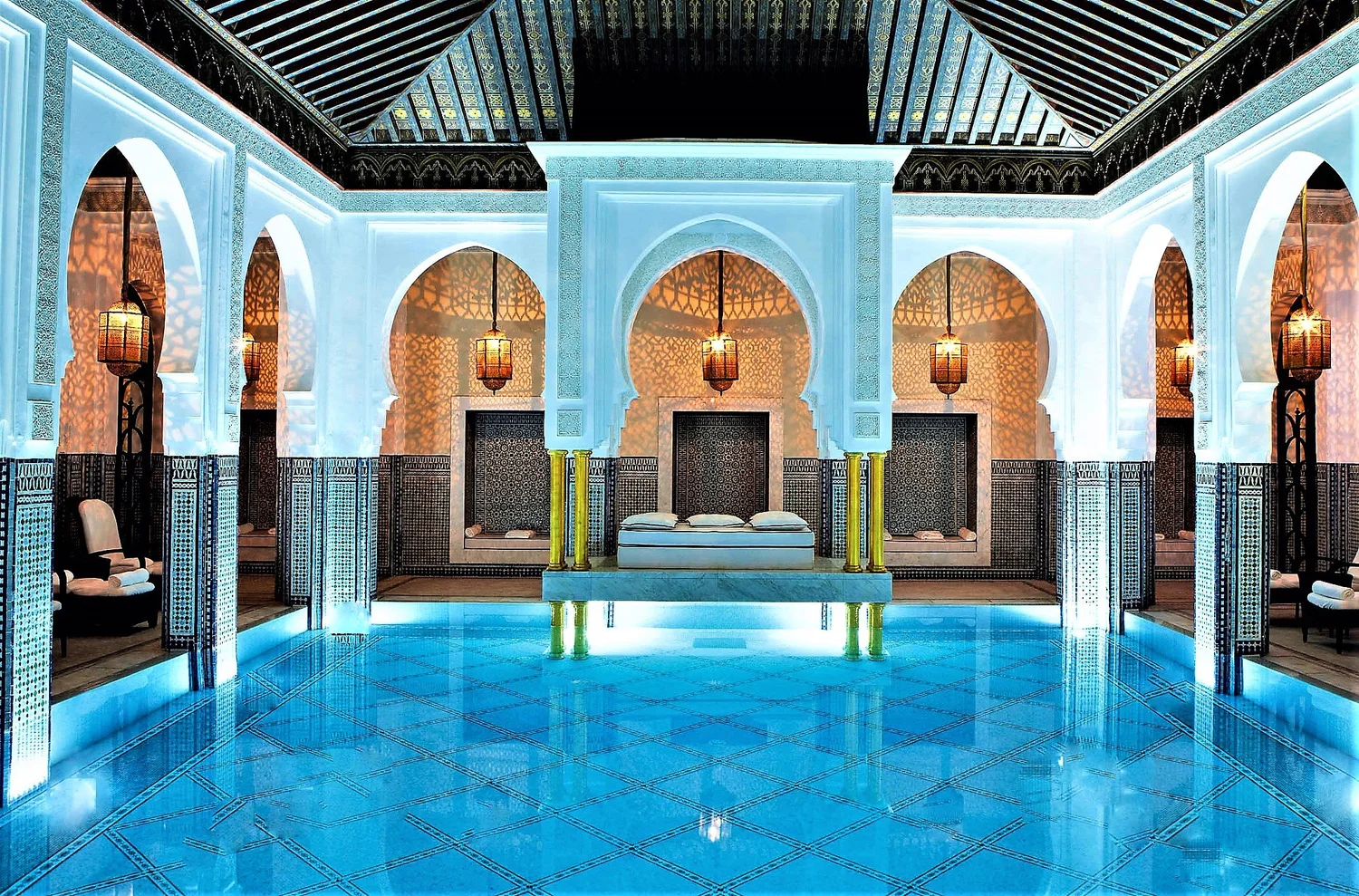
La Mamounia’s 2,500-square-meter spa offers over 80 treatments across two traditional hammams, a private hammam suite, a heated indoor pool, and treatment rooms stocked with Valmont and Augustinus Bader. Four restaurants, four bars, two tea rooms: there is nothing left unconsidered here.
This is a day with no fixed plan beyond the property itself, whether that means a full spa circuit, a slow afternoon by the pool, or simply more time in the gardens.
Dinner at one of the hotel’s other restaurants offers a different perspective on the kitchen before departure, and a final morning over breakfast on the grounds gives the trip the ending it deserves.
Best time to visit: March to May and September to November offer the most comfortable temperatures in both Marrakech and Essaouira. Summer in Marrakech is intense, often above 40°C, though Essaouira stays cooler year-round thanks to the Atlantic trade winds. The Gnaoua and World Music Festival in Essaouira runs each June, which adds atmosphere but also increases accommodation demand.
Dress code: Conservative dress is appropriate in medinas, souks, and religious sites, with shoulders and knees covered for both men and women. La Mamounia requires smart attire after 6 pm in its restaurants and bars; shorts and sandals are not permitted in the evenings.
Altitude note: Kasbah Tamadot sits at approximately 1,200 meters in the Atlas foothills. No acclimatization is required at this altitude, but temperatures drop sharply at night year-round.
Homosexuality is technically illegal in Morocco, and public displays of affection are not advisable for any couple. In practice, many LGBTQ+ travelers visit Morocco and find it a welcoming destination, particularly in Marrakech and Essaouira. All hotels on this trip are selected for their inclusive and discreet approach to LGBTQ+ guests. Our team will provide a full pre-departure briefing.
Tailor-made Vacation
Imagine having an entire castle to yourselves. Picture your group raising glasses as the sun sets over ancient battlements, or gathering around a roaring fire in a great hall that has hosted royalty for centuries. This isn’t just accommodation –...

Tailor-made Vacation
Three capitals in eleven days sounds like a lot of ground to cover, and it is, but London, Edinburgh, and Dublin each earn a few unhurried days rather than a rushed afternoon. London opens the trip with four nights at...
Tailor-made Vacation
No trip to Europe is complete until you have experienced its two most influential cities; London and Paris. Our carefully curated, luxury itinerary allows you to explore two of Europe’s most culturally rich and LGBTQ+ friendly cities. Embark on a...
We want to ensure you have the best experience with us so we’ll keep working on your itinerary until perfect. You will have your own personal dedicated member of our team who will help build a trip that is bespoke to you.
Call our travel experts on +44 (0)20 7157 1570
We pride ourselves in the number of clients that are referred to us by our existing customers. Our 5* Trustpilot rating is important to us, so we encourage you to browse our reviews. They speak for themselves and that's why you are in safe hands.
Planning your trip should feel effortless.
You share what matters, whether it’s a destination, a feeling, or a moment worth celebrating.
Your dedicated expert shapes a thoughtful, private itinerary tailored entirely around you.
Every detail handled. Every moment considered. Support before, during, and after your journey.
Share a few details about your trip and one of our travel experts will be in touch shortly.