





Editorials
A Luxury Gay Guide to Venice
Venice is one of the most romantic and welcoming cities in Europe for LGBTQ+ travelers. Our guide covers where to stay, where to eat, and how to see the city properly.
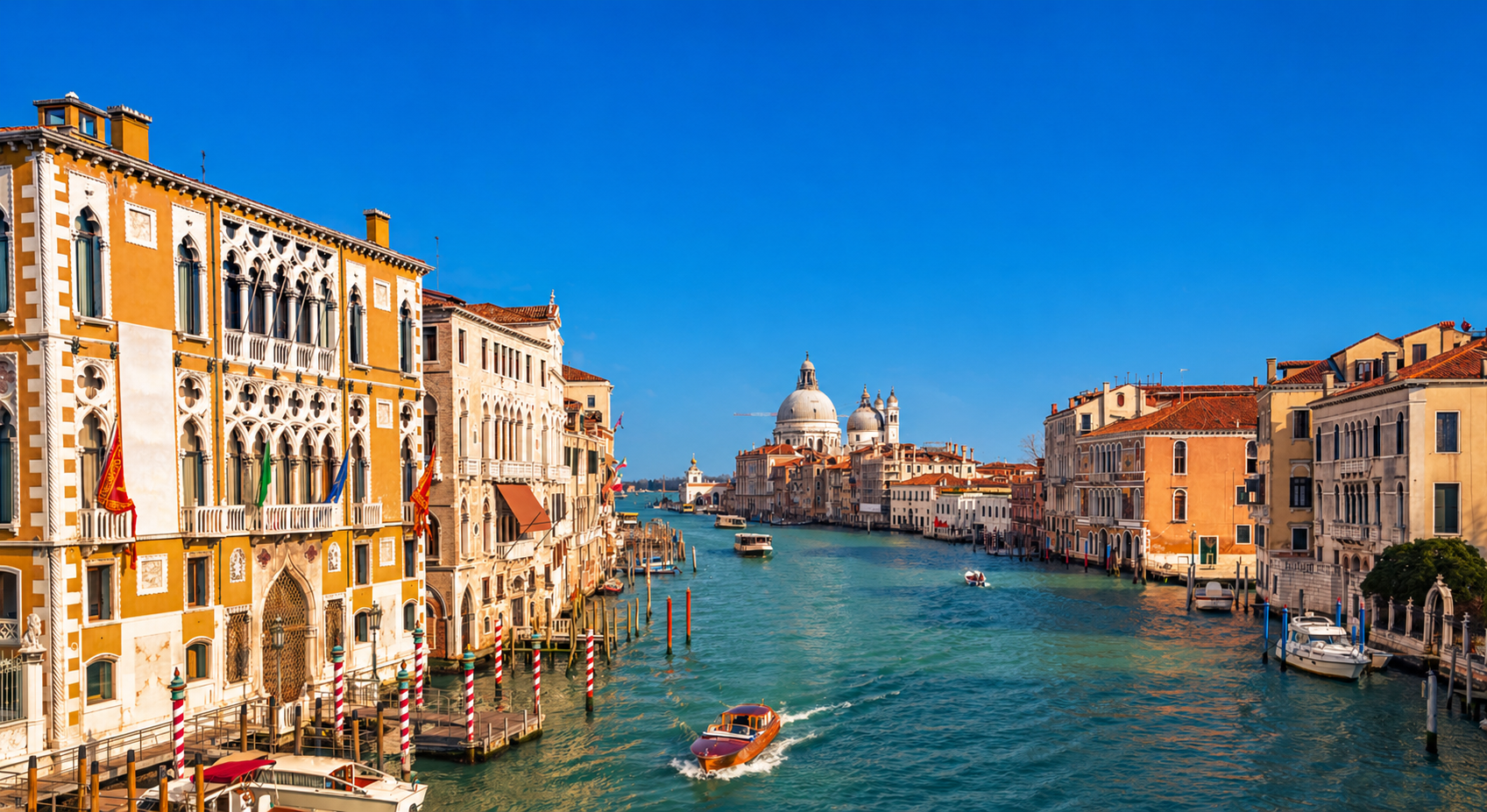
Venice has been attracting artists, writers, exiles, and travelers who didn’t quite fit the world they came from for the better part of a millennium. The city has always understood that beauty and unconventionality tend to travel together, and that instinct for openness runs through its culture in ways that make it one of the most naturally welcoming destinations in Europe for LGBTQ+ travelers. It is also, by almost any measure, one of the most romantic cities in the world.
None of that is accidental. Venice was for centuries a republic that operated by its own rules, a trading city at the intersection of East and West that developed a cosmopolitan tolerance unusual in medieval and Renaissance Europe. The artists and writers who followed, from Byron to Diaghilev to Peggy Guggenheim, found in the city a freedom that their home countries often denied them. That tradition has not entirely disappeared.
Italy’s legal framework for LGBTQ+ couples remains behind much of Western Europe, but Venice on the ground is a different story. The city is open, international, and accustomed to welcoming every kind of traveler. Same-sex couples here attract less attention than in most Italian cities, and the hotels and restaurants at the top of the market have always understood that their guests come in all configurations.

When to go
Venice in July and August is often overwhelming. The city receives more visitors per square meter than almost anywhere in Europe, the heat is intense, and the experience of moving between the main sights can feel more exhausting than pleasurable. The city is also now charging a day entry fee for peak season visitors, which signals where things are heading.
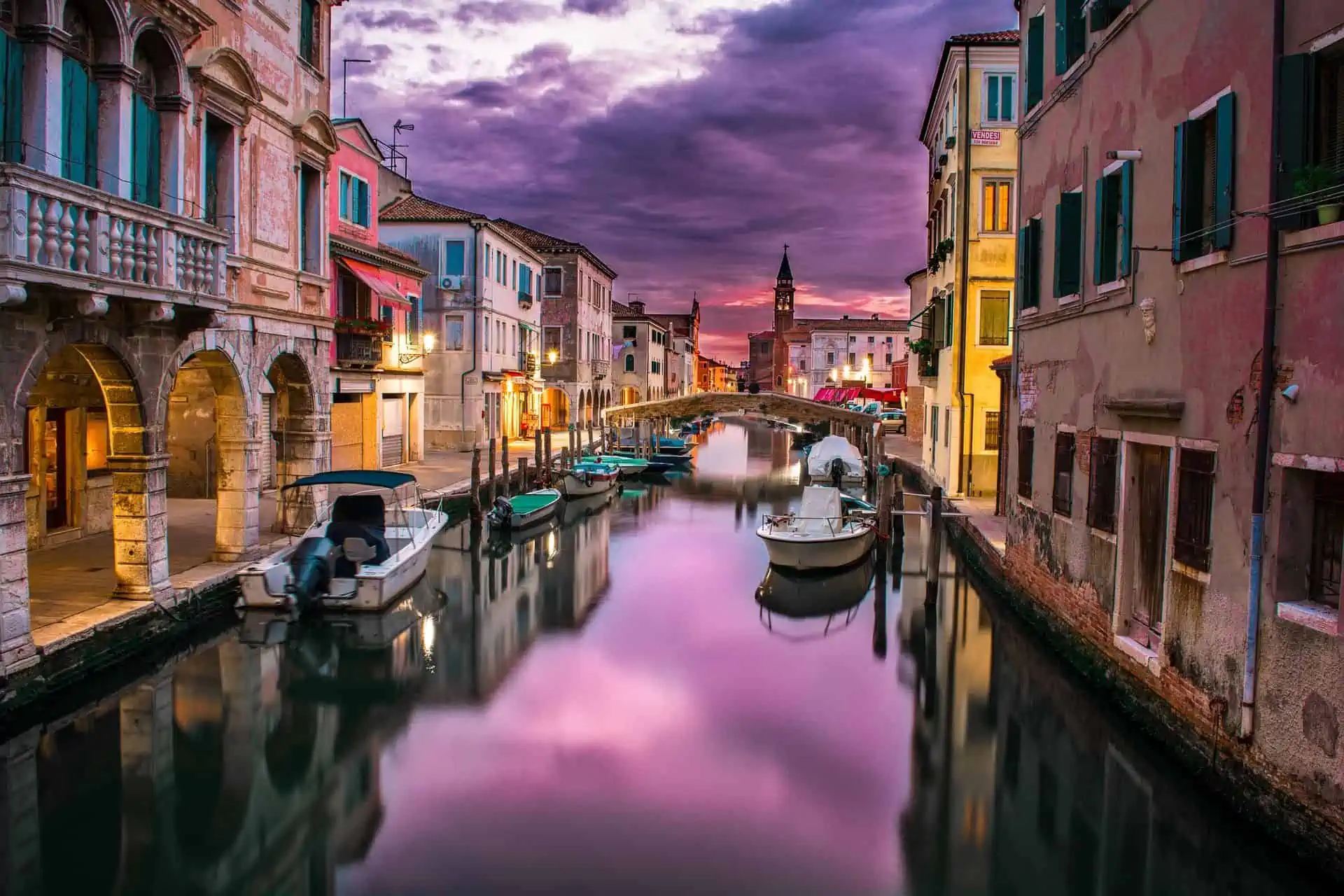
October and November are the strongest arguments for a first or return visit. The light in Venice in autumn is unlike anything else in Italy: low, golden, and diffuse in a way that makes the canal reflections and the facades of the buildings look almost painted. The crowds have thinned, the restaurants are less frantic, and the city returns to something closer to itself.
February, outside the Carnival period, offers a similar quality of experience with the added atmosphere of acqua alta season, when the high water floods the lower streets and piazzas in a way that is inconvenient but also, in its own way, extraordinary.
Where to stay
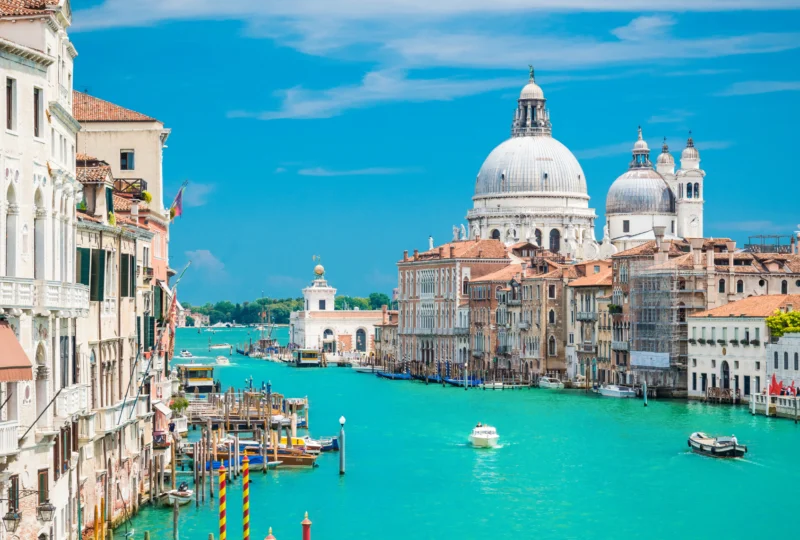
Venice has some of the finest hotels in Europe and the choices at the top of the market are genuinely distinct from one another.
The Aman Venice occupies a sixteenth-century palazzo on the Grand Canal with interiors that have been restored rather than reimagined, preserving the original frescoes, fireplaces, and proportions of a building that was never designed to be a hotel. It is the most architecturally extraordinary place to stay in the city, and the experience of arriving by boat and stepping directly into a private canal entrance sets a tone that nothing else quite matches. For LGBTQ+ couples celebrating a significant occasion, it is close to unbeatable.
The Cipriani, now operating as Belmond Hotel Cipriani, sits on the tip of the Giudecca island across the water from San Marco. The distance from the main tourist circuit is the point: you cross by private launch, the gardens are large by any Venetian standard, and the pool is one of the few outdoor pools in the city. The hotel has been a gathering point for a creative, cosmopolitan crowd since it opened in 1958 and the atmosphere reflects that history.
The Gritti Palace on the Grand Canal is the historic grand hotel choice, a fifteenth-century palazzo that has been receiving distinguished and unconventional guests since it opened. Ernest Hemingway stayed here repeatedly. Somerset Maugham, who was openly gay at a time when that carried genuine risk, made it his Venetian base. The hotel understands its own history and wears it lightly.
For a smaller and more intimate stay, Palazzo Venart on the Grand Canal is a boutique alternative with only eighteen rooms.
The LGBTQ+ scene
Venice does not have a traditional gay scene in the way that Rome or Milan do. There are no dedicated gay bars or clubs in the conventional sense, and the city’s compact geography and tourist-facing economy have not produced the kind of neighborhood identity that other Italian cities have developed.
What Venice has instead is something more diffuse and arguably more interesting: a city-wide atmosphere of openness that reflects its long history as a place that has made room for people who didn’t fit elsewhere. The LGBTQ+ community here tends to be visible in the cultural spaces, the private parties, and the aperitivo bars of the quieter sestieri rather than in dedicated venues.
Venice Pride takes place each summer, typically in June, and has grown steadily into one of the more atmospheric Pride events in Italy. The procession moves by boat through the canals, which gives it a visual spectacle that land-based Pride events rarely match. The event draws a strong international crowd and the city embraces it warmly.
The best trips begin with a conversation, not a booking form.
Request a quote →What to do beyond the obvious
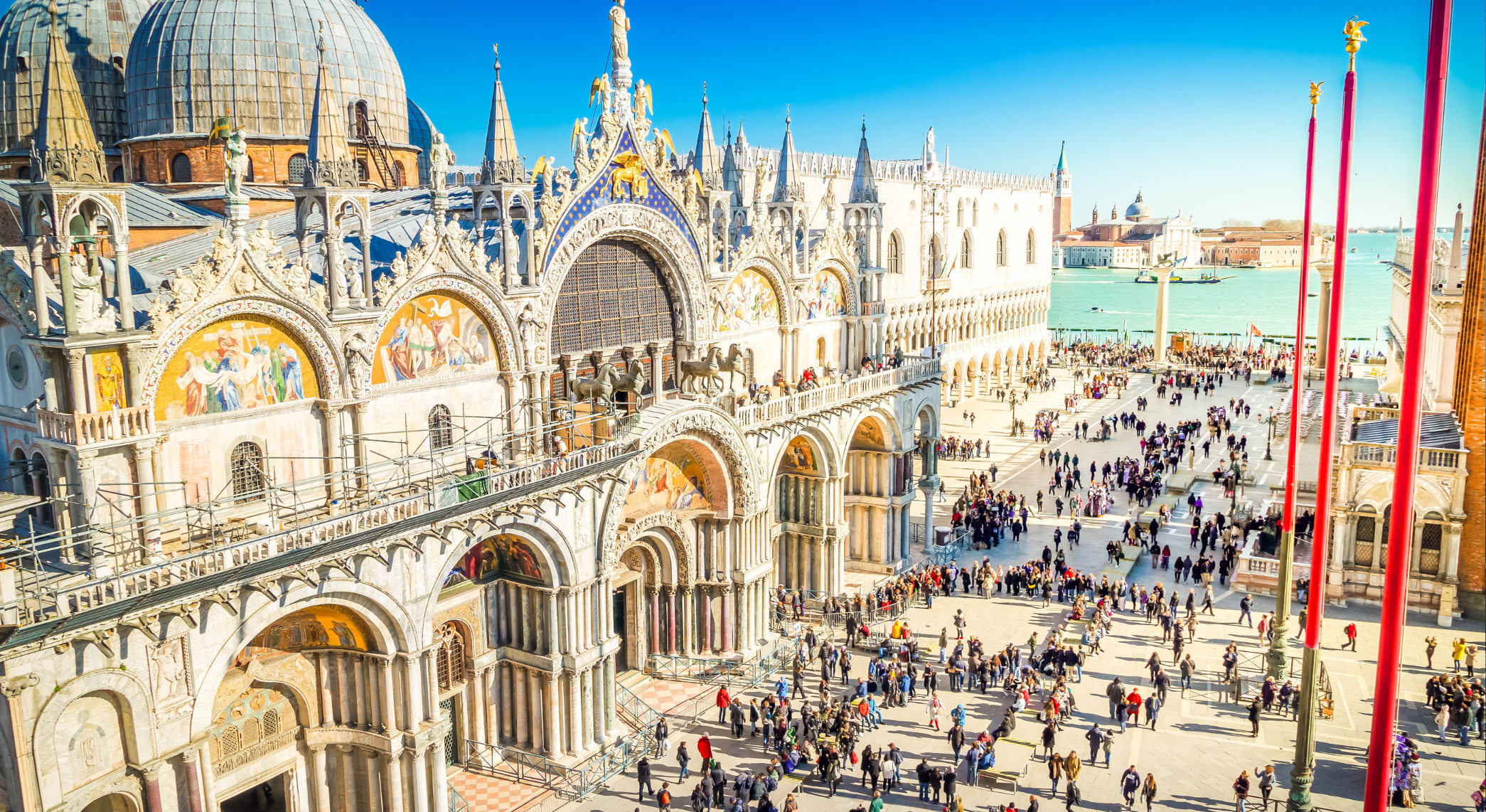
The Doge’s Palace and the Basilica di San Marco are worth every visit, but Venice rewards the traveler who moves beyond them considerably.
The Peggy Guggenheim Collection on the Grand Canal is one of the finest modern art museums in Europe, housed in the unfinished palazzo that Guggenheim bought in the 1940s and lived in until her death in 1979. Guggenheim herself was a complicated, boundary-defying figure who supported artists and lived on her own terms throughout her life, and the collection she assembled, Picasso, Pollock, Ernst, Calder, Dali, reflects that breadth of vision. The museum’s terrace on the Grand Canal is also one of the better places in Venice to spend a slow afternoon.
The islands deserve more time than most visitors give them. Murano for the glassblowing, which is worth seeing at a serious workshop rather than a tourist demonstration, Burano for the color-saturated fishing village that looks almost too vivid to be real, and Torcello, the most remote and the most moving: a near-abandoned island with a Byzantine cathedral from the seventh century and a population of fewer than ten permanent residents.
The sestiere of Cannaregio, in the north of the city, is the neighborhood that most visitors walk through on the way to somewhere else and the one most worth slowing down in. The Ghetto, the world’s oldest, has a history of extraordinary resonance. The canals here are wider and quieter, the restaurants are less tourist-facing, and the overall atmosphere gives you a sense of how Venetians actually live that the area around San Marco rarely allows.
We Suggest…
Arriving in Style: the Venice Simplon-Orient-Express
No arrival into Venice quite matches stepping off the Venice Simplon-Orient-Express at Santa Lucia station. The train runs from London Victoria via Paris and through the Alps, and the journey itself, polished wood paneling, white linen in the dining car, the landscape shifting from northern European to Mediterranean over the course of a day and a night, is as much the point as the destination. For a honeymoon or a significant trip, it reframes the whole experience of getting there.
The cabins have been restored to their 1920s configuration and the level of detail is meticulous: marquetry panels, brass fittings, and beds made up while you are at dinner. The dining car serves a menu that changes with each journey and takes the food seriously enough to justify dressing for it. The bar car, open late, is where the journey becomes social, and the mix of travelers it attracts tends toward the romantic and the celebratory.
Belmond, which operates the train, has made a visible effort in recent years to signal that the Orient-Express is for everyone, and the atmosphere on board reflects that.
LGBTQ+ couples traveling on the train report an experience that is warm, discreet, and entirely in keeping with the spirit of a journey that has always attracted people who appreciate the art of doing something beautifully. Depart London on a Thursday evening and you arrive in Venice the following afternoon, which is, by any measure, the right way to begin a trip.
Where to eat and drink
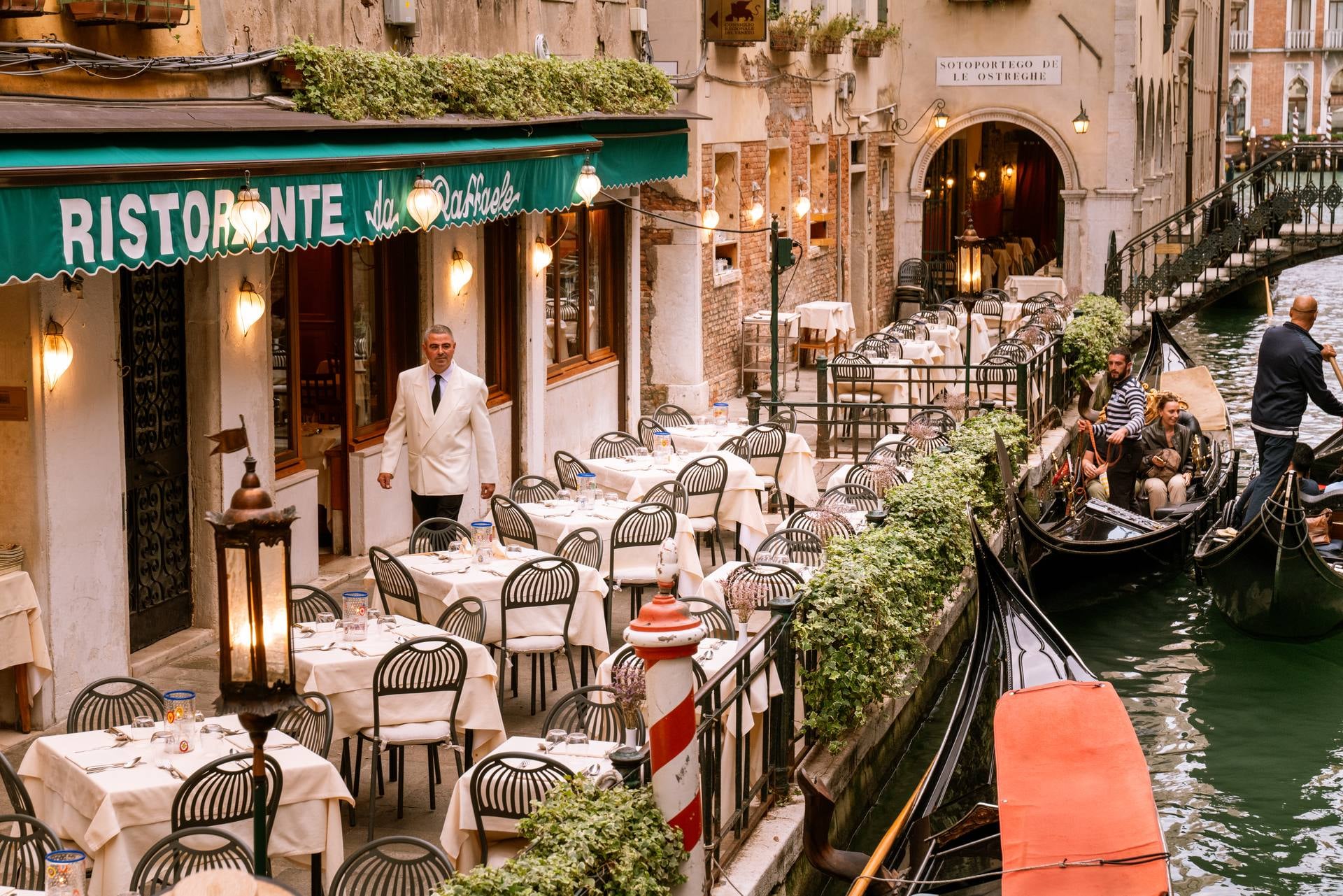
Venice has a worse culinary reputation than it deserves, largely because the restaurants immediately adjacent to the main tourist sights are often poor. Move twenty minutes in any direction and the picture changes.
The bacaro tradition is the best way into Venetian food culture. These are small wine bars that serve cicchetti, small plates of cured meats, salt cod, marinated vegetables, and fried things, alongside glasses of local wine served in a format that the Venetians call an ombra. The bacari around the Rialto market and in Cannaregio are the ones worth knowing: Al Merca, Cantina Do Spade, and Osteria all’Arco are all within walking distance of each other and collectively represent some of the most pleasurable eating in the city.
For a full dinner, Antiche Carampane in San Polo has been serving the best seafood in the city for years and takes its sourcing from the Rialto fish market across the bridge. Alle Testiere is smaller, more intimate, and requires booking well in advance. Both are the kind of restaurants that remind you why Venetian cuisine, built around the lagoon’s fish and the Veneto’s vegetables and wines.

Getting around
Venice has no cars, which is either obvious or still slightly surprising depending on how much you have read about it. Movement happens on foot or by water, and the choice of how you get around shapes the experience considerably.
The vaporetti, the public water buses, are functional and cheap and cover the main routes along the Grand Canal and out to the islands. For arrivals, departures, and occasions that warrant it, private water taxis are the right choice: expensive by the standards of a taxi in any other city, but the experience of arriving at your hotel by boat on the Grand Canal at night is one that justifies the cost at least once.
The most important navigational advice for any visit is to get lost deliberately. The streets between the main tourist routes are quieter, more residential, and more revealing of what Venice actually is than the marked paths between the sights. A good map and a willingness to take the wrong turn occasionally will take you to the parts of the city most visitors never find.
At Out Of Office, we plan LGBTQ+ travel to Venice and across Italy. Get in touch and start planning your trip to La Serenissima.
New to Out Of Office?
We are a luxury travel company for LGBTQ+ travelers. Everything we sell is tailor-made, planned by one named member of our team throughout, and nothing on this site is a fixed package unless it says so.
Where exclusivity meets inclusivity
Ten years, hundreds of five-star reviews, and a team who will tell you when a destination is not right for the trip you have in mind.
No two trips we plan are the same. Yours will be no exception.
Every itinerary starts as a blank page and is shaped around your pace, your routing and the places you actually want to see.
Stellar service. Stellar products. Stellar people and it gets so much better when you pick up the phone and call.
Anthony S.
Super client centred service. From first contact I have had warm, efficient, friendly and flexible service.
John
I’m confident in giving Out Of Office a 5-star review! They are one of the leaders in this space without a doubt.
Tiberiu

We plant trees for every booking
For every booking made with Out Of Office we commit to planting trees in your name to help reduce the impact of travel on future generations. You'll even get a link to see where your trees are planted in the world via our partner Ecologi.


We donate to Rainbow Railroad with every booking
Rainbow Railroad helps LGBTQ+ people escape state-sponsored violence and persecution. A donation goes with every trip we sell, funded by us and never added to your price.

Start Planning Your Trip
Tell us where you would love to go, when you are thinking of traveling and what kind of trip you have in mind. One of our LGBTQ+ travel specialists will create a tailor-made itinerary designed around your destination, style and preferences.
One named specialist, first inquiry to homecoming. No call center, and nothing is charged until you decide to book.