






Editorials
Atrani, Amalfi, or Ravello: Where to Stay on the Amalfi Coast?
Find out where you should stay on the Amalfi Coast
The Amalfi Coast draws more visitors than almost anywhere else in Italy, its cliffside towns strung along a stretch of coastline barely thirty miles long.
Deciding where to base yourself is the real question, since Amalfi, Atrani, and Ravello sit close enough together to visit each other easily but feel like genuinely different towns once you’re actually staying in one, a bustling harbor, a near-silent fishing village, a hilltop retreat with views over both.
Wherever you choose, the rest of the coast stays within easy reach, along with day trips to Sorrento, Naples, Capri, and Pompeii. Here’s how the three towns actually differ, and which one fits the trip you’re planning.
Amalfi: The Heart of the Coast
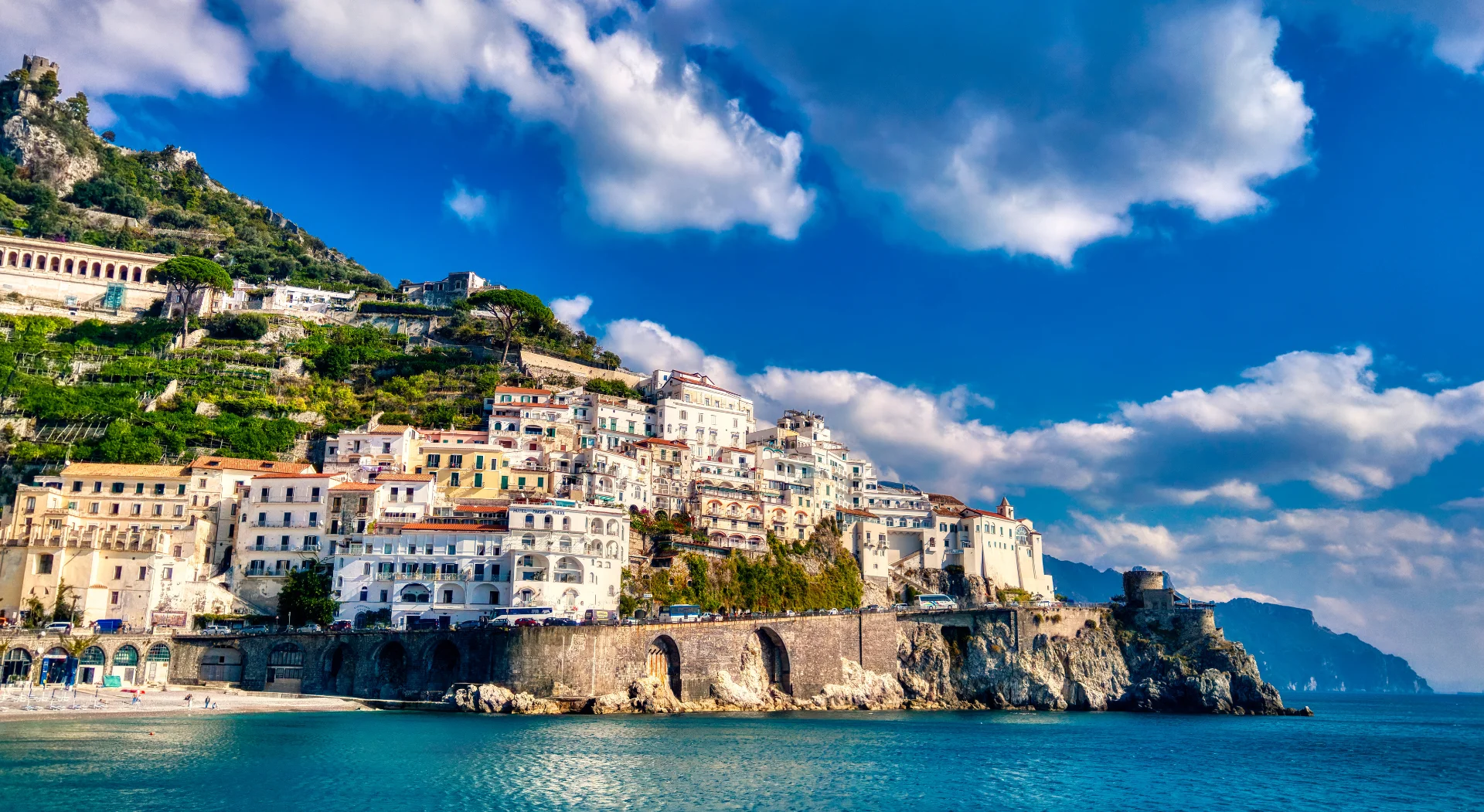
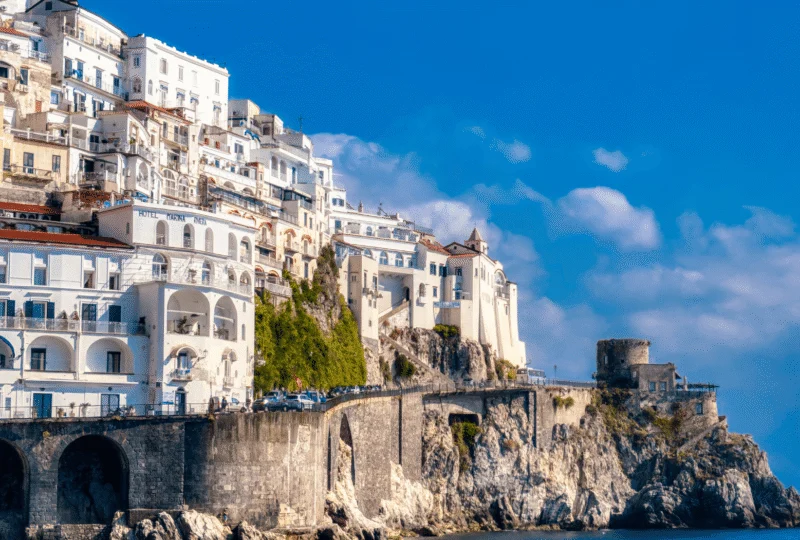
Amalfi gave the whole coastline its name, and it’s still the largest town along it, a natural hub if you want the shortest ferry and bus connections to everywhere else. Its history runs deeper than the postcard version suggests, Amalfi was a maritime republic that rivaled Venice and Genoa in the ninth century, and its old paper mills, some still standing in the valley behind the town, once supplied handmade paper across Europe.
Why Stay in Amalfi? The Duomo di Sant’Andrea dominates the town’s main piazza, its striped Arab-Norman facade reached by a steep flight of sixty-two steps, and the crypt below holds relics believed to be Saint Andrew’s. The piazzas around it stay busy into the evening with limoncello and gelato stops, and Marina Grande, the town’s small beach, sits close enough to the harbor to combine a swim with lunch at one of the waterfront seafood restaurants.
Who Should Stay Here? Amalfi suits couples and families who want to walk to dinner rather than book a taxi for it, and it’s the practical choice for anyone relying on public transport, ferries run seasonally to Positano and Capri, and the SITA bus to Sorrento takes a little over an hour along the coast road.
Atrani, the Village Amalfi’s Crowds Never Found
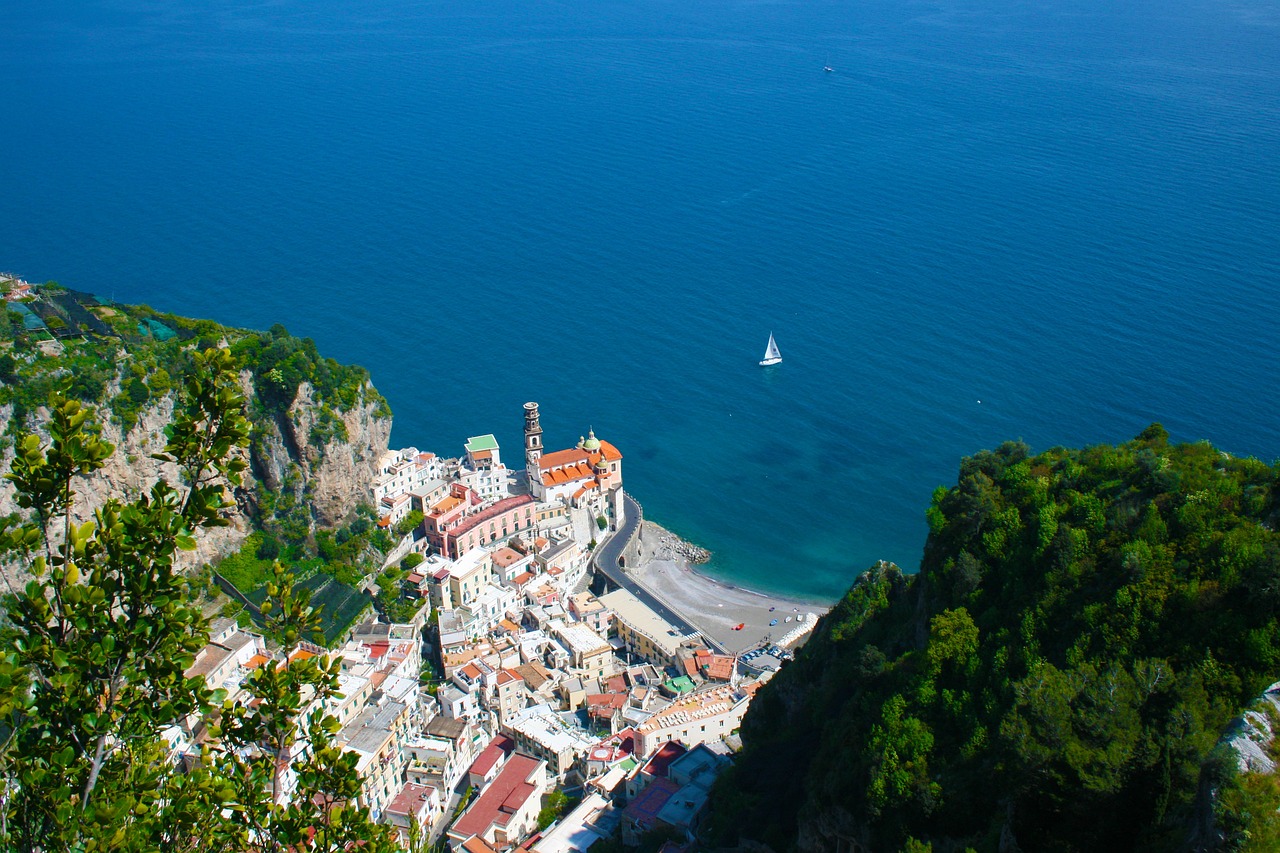
Atrani sits close enough to Amalfi that you can walk between them in under ten minutes through a tunnel cut into the cliff, yet the day-trip crowds that fill Amalfi’s piazzas rarely make it over.
Cars can’t reach most of the village at all, its center is a knot of stepped alleys built for foot traffic centuries before anyone owned a car, and with a population of under a thousand, it stays a real, lived-in place rather than a stop on a coach tour itinerary.
Why Stay in Atrani? The village is small enough to see in an afternoon, a handful of family-run restaurants around Piazza Umberto I, the eighth-century Collegiata di Santa Maria Maddalena church, and a compact beach that empties out once the day-trippers head back toward Amalfi by early evening.
Who Should Stay Here? Atrani suits travelers who’d rather spend a week somewhere still, with Amalfi’s restaurants and transport links a short walk away when needed. It comes with a real physical cost, though, the village is built almost entirely on stairs, hundreds of them connecting one level to the next, and there’s no way around that if mobility is a concern.
Anyone who can manage the steps gets one of the coast’s best views in exchange, since most of Atrani looks straight down at the water rather than out toward a road.
Ravello: A Romantic Hilltop Retreat
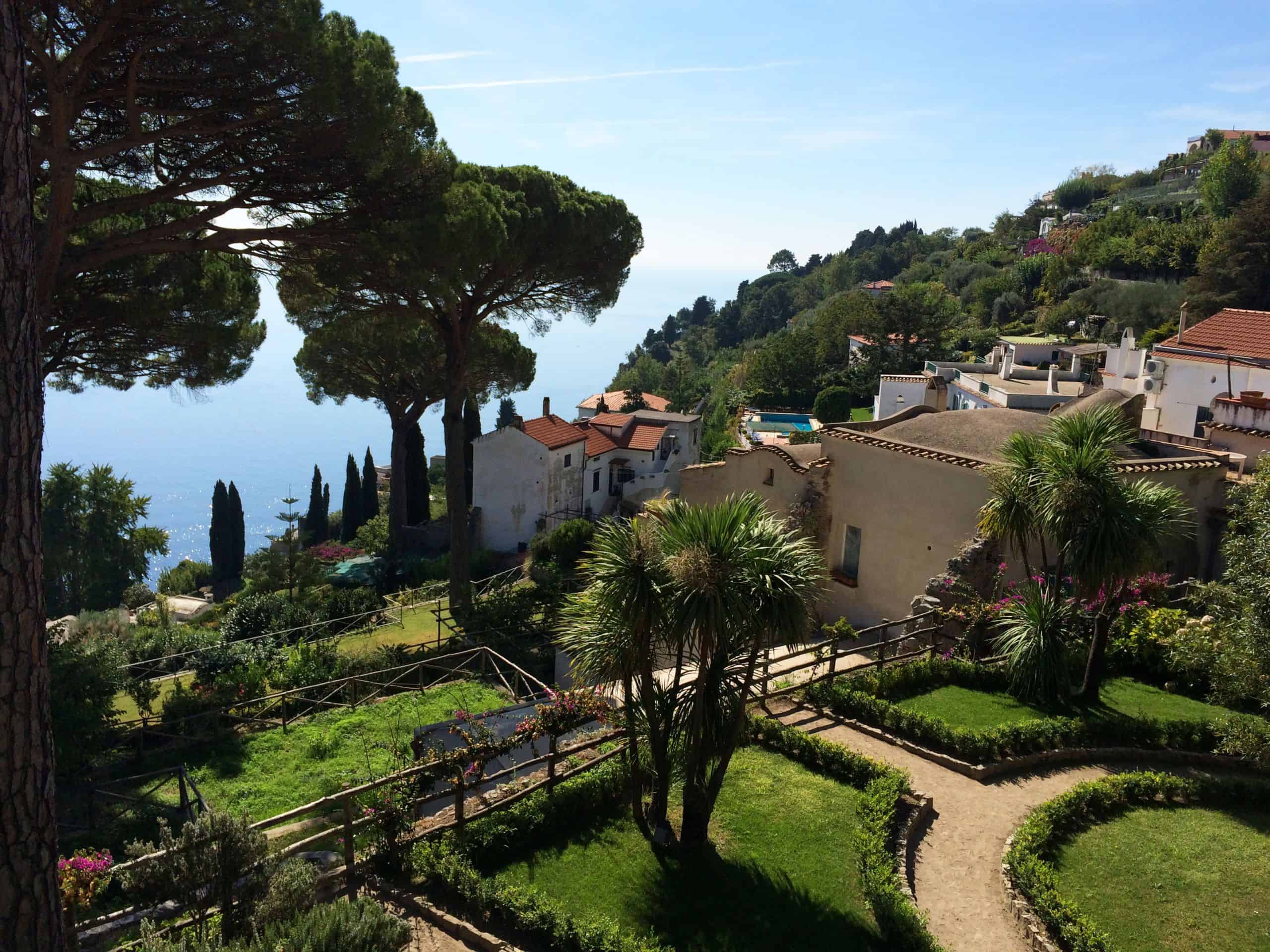
Ravello sits about 1,200 feet above the water, reached by a switchbacking road up from Amalfi, and that height is the whole point of staying here. It trades the coast’s beaches for gardens, quiet, and views down over the towns most visitors are staying in.
Gore Vidal lived here for over thirty years, in a cliffside villa called La Rondinaia, the Swallow’s Nest, which he bought in 1972 and could only reach the last stretch of on foot. He hosted a remarkable list of guests there over the decades, Tennessee Williams, Paul Newman, Andy Warhol, Princess Margaret, Mick Jagger, Bruce Springsteen, and Hillary Clinton among them, and locals still refer to him as Il Maestro. He sold the villa in 2005, reportedly for around $17 million, once the property’s twenty internal levels became too difficult for him to manage.
Why Stay in Ravello? The Villa Rufolo gardens hosted Wagner, who claimed the setting inspired the second act of Parsifal, and now host the Ravello Festival’s classical concerts each summer, performed on a stage cut directly into the cliffside with the sea behind it.
Villa Cimbrone’s gardens end at the Terrace of Infinity, a walkway lined with marble busts that looks straight down the coastline with nothing else in view. Several hotels here built their own infinity pools to match that same sightline, and staying at one means having the view without walking to it.
Who Should Stay Here? Ravello suits couples who want quiet over nightlife and don’t need beach access, since the town sits far above the shoreline with no beach of its own, the closest is a drive back down to Amalfi or Minori. It’s the right choice for a slower few days built around dinner reservations, garden walks, and a concert, rather than a base for hopping between beach towns.
See your complete itinerary before you decide.
Request a quote →Gay Travel on the Amalfi Coast
None of Amalfi, Atrani, or Ravello has a dedicated gay bar. The closest thing on the entire coast is L’Alternativa in Positano, technically a beachfront snack kiosk on Spiaggia Grande that turns into an informal gay-popular spot after dark, open until around 1am. Beyond that, Naples is the nearest real scene, about ninety minutes away by car, with a handful of clubs and bars including Cactus, and an annual Pride celebration each summer.
Legally, the ground is solid. Same-sex activity has been legal in Italy since 1890, and civil unions have been recognized nationally since 2016, though marriage itself still isn’t. Gore Vidal’s decades in Ravello, covered in more detail above, are a reminder that the coast has a long, specific history as a gathering point for gay writers and artists, even without anything resembling a modern nightlife scene attached to it.
In practice, this is a region built for a couple who wants beautiful places to eat dinner rather than somewhere to go out afterward. Affection between same-sex couples on beaches, in restaurants, or waiting for a bus draws no particular reaction anywhere on the coast, but anyone specifically wanting nightlife should treat Naples as a deliberate day or evening trip rather than expect to find it locally.

Is Positano Worth Visiting If You’re Not Staying There?
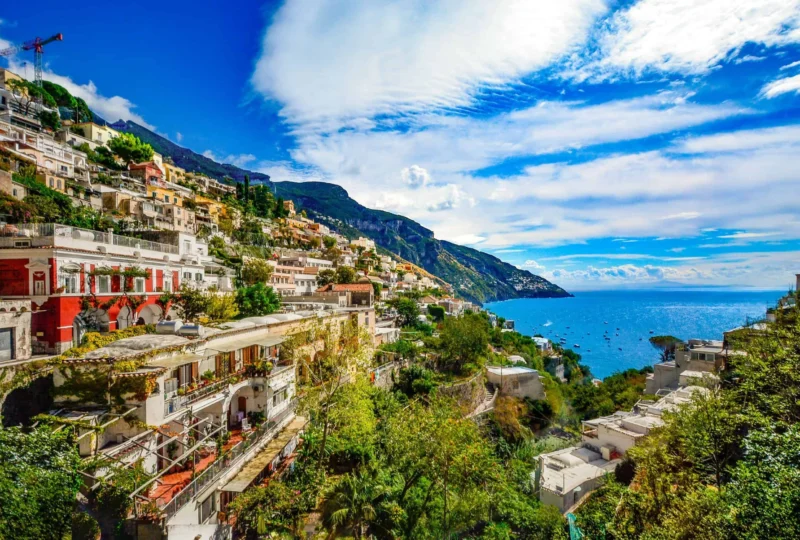
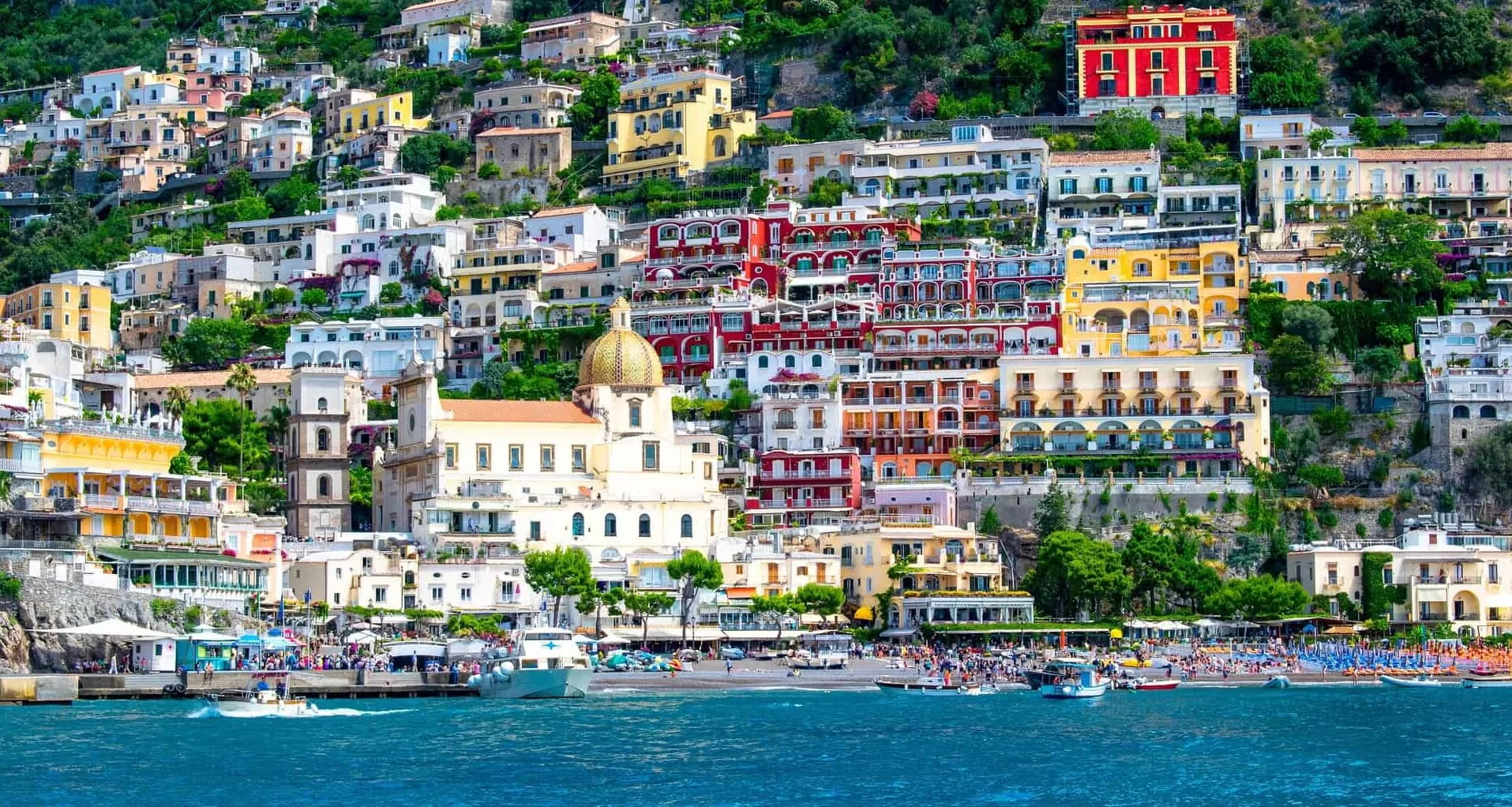
Yes, and most visitors experience it exactly this way, as a day trip rather than a base. Positano’s houses stack up a near-vertical hillside above the water, the whole town reachable mainly by stairs rather than streets, which is part of why it works better as a few hours on foot than a multi-night stay for most travelers.
John Steinbeck’s 1953 essay for Harper’s Bazaar is largely responsible for putting the town on the map in the first place, describing it as a place that “bites deep” and lingers in memory more than it convinces you of its reality while you’re actually standing in it. That description still holds.
The majolica-tiled dome of the Church of Santa Maria Assunta anchors the view from almost every angle in town, and the walk down from the main road to Spiaggia Grande, the town’s pebble beach, passes through narrow lanes stacked with boutiques selling the linen clothing the town is known for internationally.
A day trip works cleanly by ferry from Amalfi, roughly thirty minutes each way from April through October, or by SITA bus, which takes longer and gets crowded fast in summer. Arriving early, before the mid-morning ferries and coach tours land, is the difference between an actual walk through town and a slow shuffle through a crowd.
What Positano doesn’t reward is trying to make it a home base, its steep layout and premium pricing suit a few hours far better than the week some visitors plan around it.
Ready to Plan Your Amalfi Coast Trip
Few places in Europe pack in this much in so little space: a maritime republic, a hilltop garden that inspired an opera, a village most of the coast’s own visitors never find, and a town Steinbeck built into a legend with a single essay.
Our team knows the Amalfi Coast beyond the guidebooks. From choosing the right base for your travel style to arranging the hotels, experiences and hidden moments that bring the coast to life, we understand the details that matter. We also know the places where LGBTQ+ travelers can feel completely at ease. Get in touch and let us create an Amalfi Coast experience designed around you.




New to Out Of Office?
We are a luxury travel company for LGBTQ+ travelers. Everything we sell is tailor-made, planned by one named member of our team throughout, and nothing on this site is a fixed package unless it says so.
Where exclusivity meets inclusivity
Ten years, hundreds of five-star reviews, and a team who will tell you when a destination is not right for the trip you have in mind.
We know where you will be welcome, and where to take more care.
It shapes the hotels we use, the guides we work with and the routes we suggest.
Stellar service. Stellar products. Stellar people and it gets so much better when you pick up the phone and call.
Anthony S.
Super client centred service. From first contact I have had warm, efficient, friendly and flexible service.
John
I’m confident in giving Out Of Office a 5-star review! They are one of the leaders in this space without a doubt.
Tiberiu

We plant trees for every booking
For every booking made with Out Of Office we commit to planting trees in your name to help reduce the impact of travel on future generations. You'll even get a link to see where your trees are planted in the world via our partner Ecologi.


We donate to Rainbow Railroad with every booking
Rainbow Railroad helps LGBTQ+ people escape state-sponsored violence and persecution. A donation goes with every trip we sell, funded by us and never added to your price.


Start Planning Your Trip
Tell us where you would love to go, when you are thinking of traveling and what kind of trip you have in mind. One of our LGBTQ+ travel specialists will create a tailor-made itinerary designed around your destination, style and preferences.
One named specialist, first inquiry to homecoming. No call center, and nothing is charged until you decide to book.