






Moment · Spain
The Real Alcázar of Seville on a Private Early Tour
Walk Europe's oldest working royal palace before the gates open, reading its Mudéjar courtyards and gardens with your own guide.
Eleven Centuries of Palace
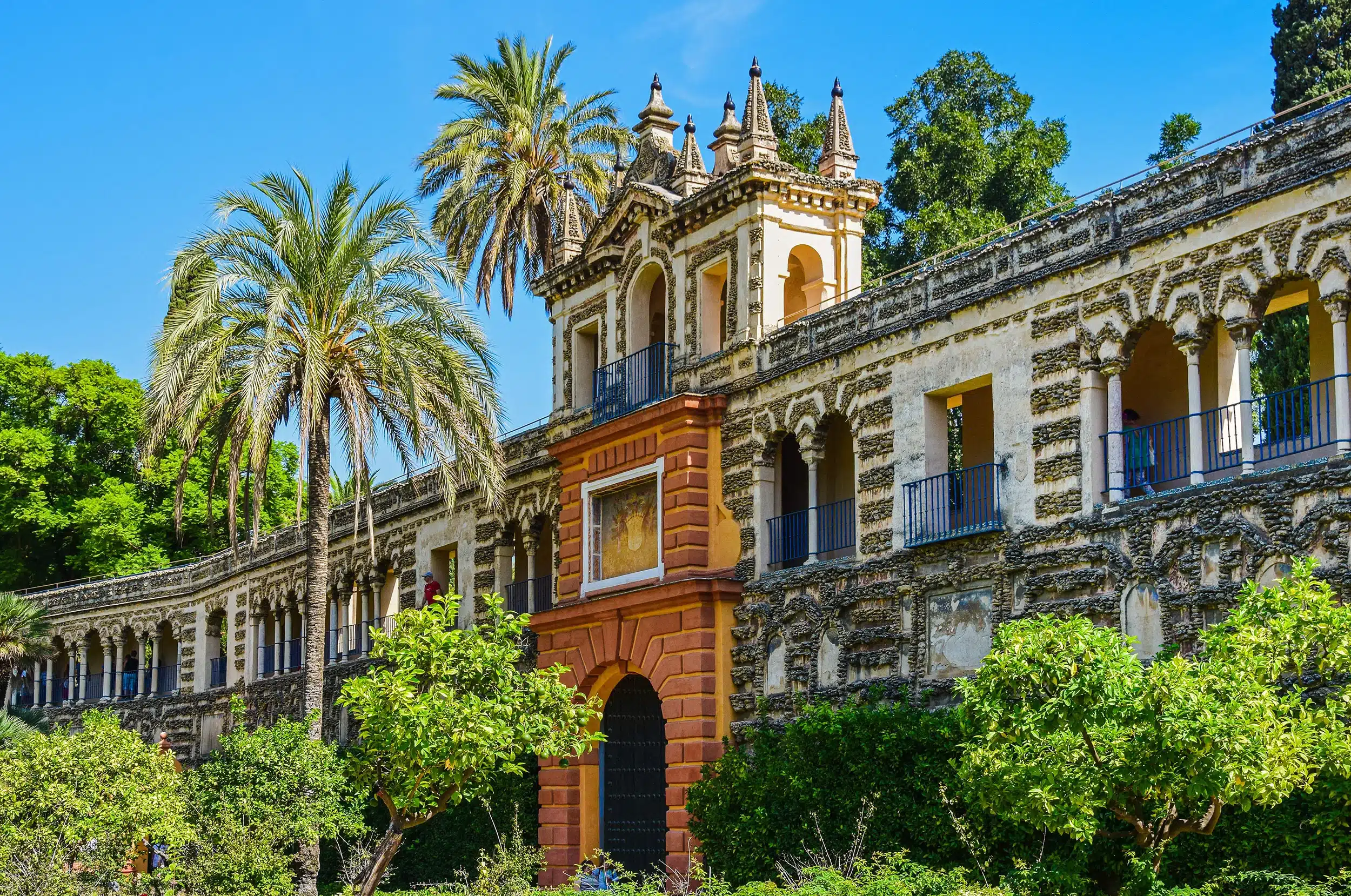
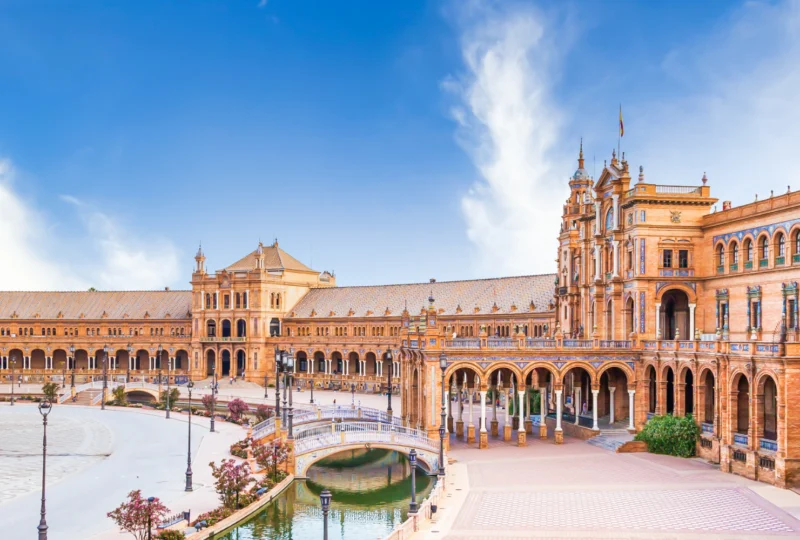
Seville’s Alcázar is Europe’s oldest royal palace still in use. It began in 913 as a fortified residence for Islamic governors, and successive Muslim dynasties added courtyard after courtyard and hall after hall in the refined style of al-Andalus. After Christian forces took the city in 1248, it became a Castilian royal home, yet nothing was swept away; instead, cultures mingled.
In the fourteenth century, King Peter I built a new palace inside the complex with Moorish craftsmen, creating one of the finest works of Mudéjar architecture, a fusion of Islamic and Christian styles, and later monarchs added Gothic chapels, Renaissance rooms, and landscaped gardens.
That blend of eras is the source of its richness. UNESCO listed it in 1987, and it remains both a residence of Spain’s royal family and one of the country’s most visited sights, usually seen on timed tickets along set routes. A private tour changes all of that.
Why Go Early and Privately
The palace is intricate, and its details vanish in a crowd: lines of Arabic poetry running along the walls, carved plaster casting lattices of light and shade, and courtyard geometry that needs time to be understood.
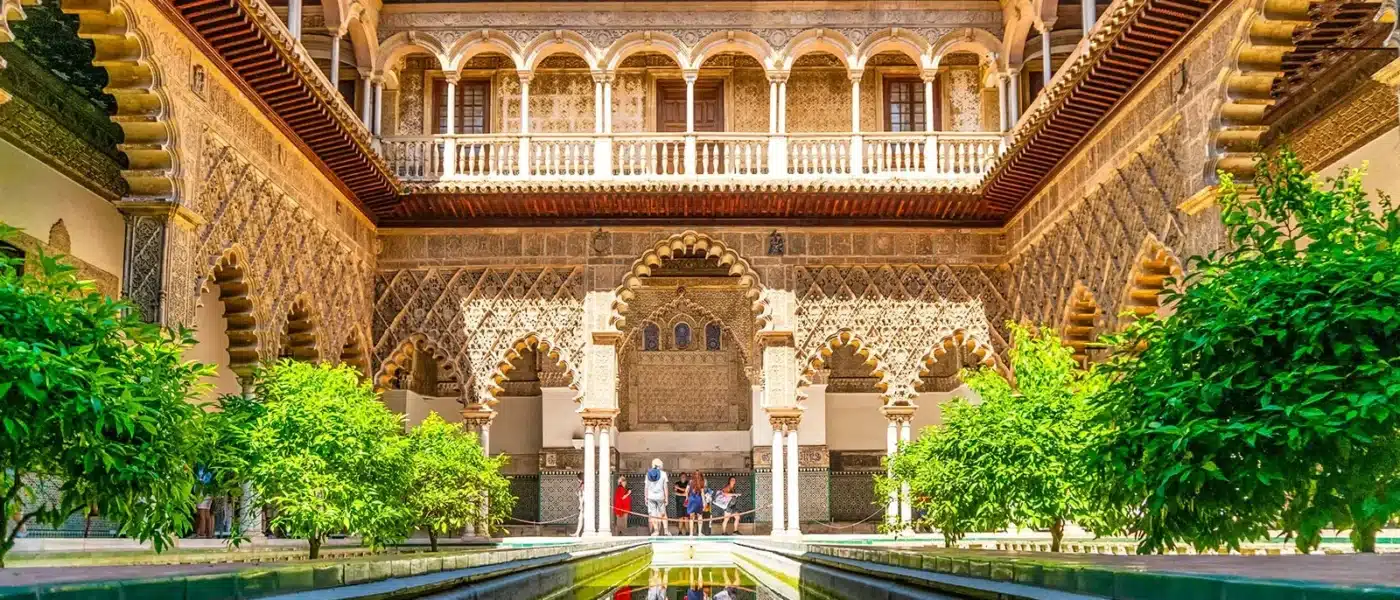
With a private guide you have room to look rather than rush, and coming in before the public means the Patio de las Doncellas and the Salón de Embajadores are yours in rare stillness. Your guide translates inscriptions, explains the meaning of particular motifs, and places each palace within the long story of Andalusian and Castilian Seville, lingering where you’re curious and moving on where you’re not.
It’s a beautiful way for a couple or friends to spend the morning.
See your complete itinerary before you decide.
Request a quote →Courtyards, a Golden Dome, and the Gardens
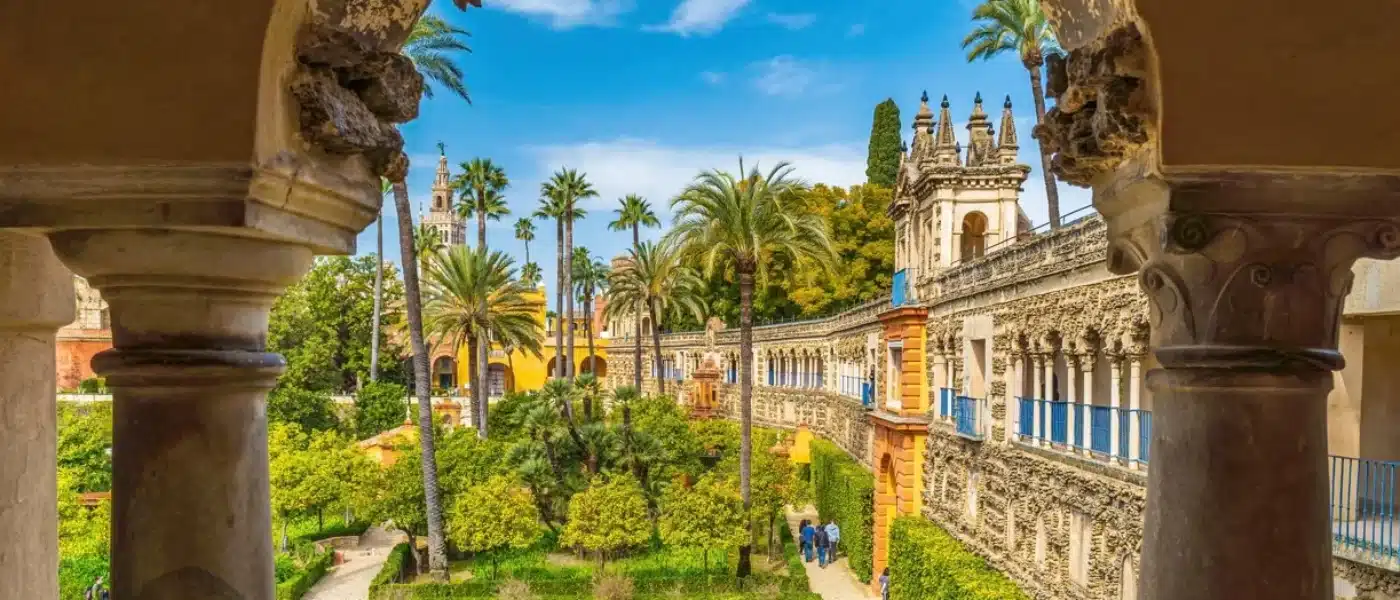
You often start in the Patio del León, where the oldest layers show, before moving into Peter I’s Mudéjar palace, the heart of the Alcázar and one of Spain’s most celebrated spaces.
The Patio de las Doncellas unfolds in perfect symmetry, its long pool mirroring arches and plasterwork that glow in early light. The Salón de Embajadores, once the throne room, astonishes with its carved dome, geometric ornament, and gold, and without crowds, its proportions become clear, a hall designed to display power through beauty rather than size.
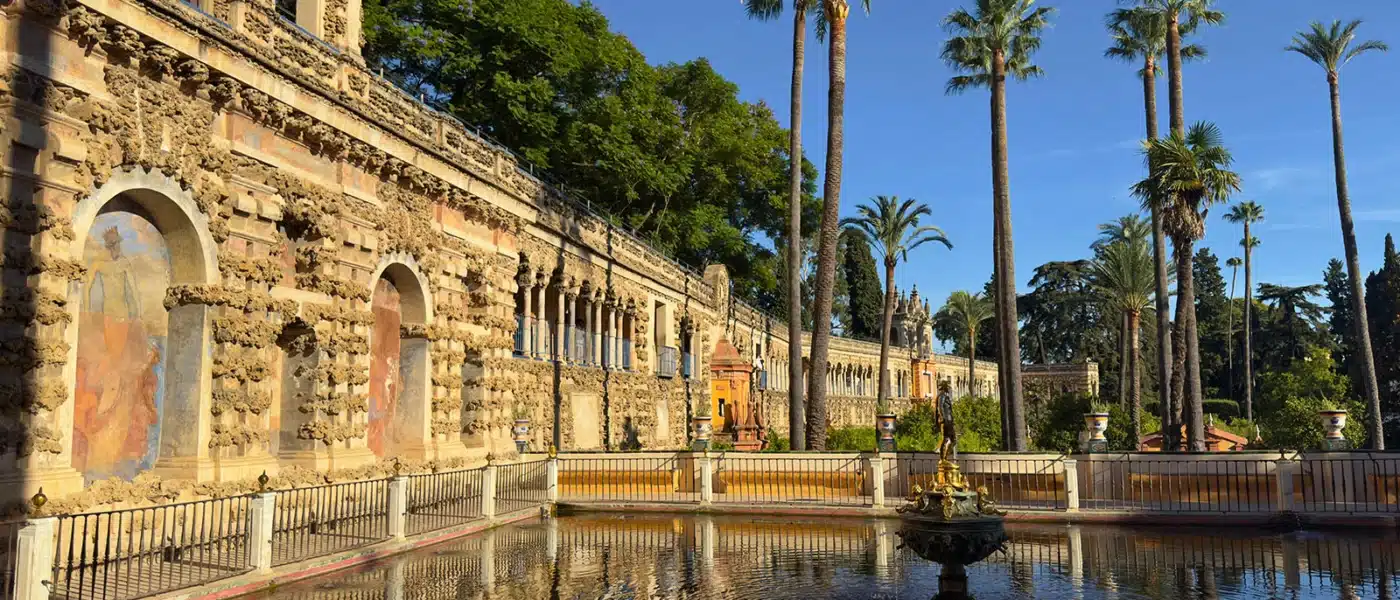
Upstairs, Renaissance ceilings, tiled passages, and private rooms added by later kings show how quietly the eras shift. Beyond, the gardens spread over terraces, pavilions, and hidden corners, fountains bringing movement to the stillness, and orange trees casting shade, and your guide can lead you to the oldest Islamic gardens or the later Renaissance sections as you prefer. In places, restoration has brought colours and tile patterns back to their original brilliance.
No Lines, No Crush
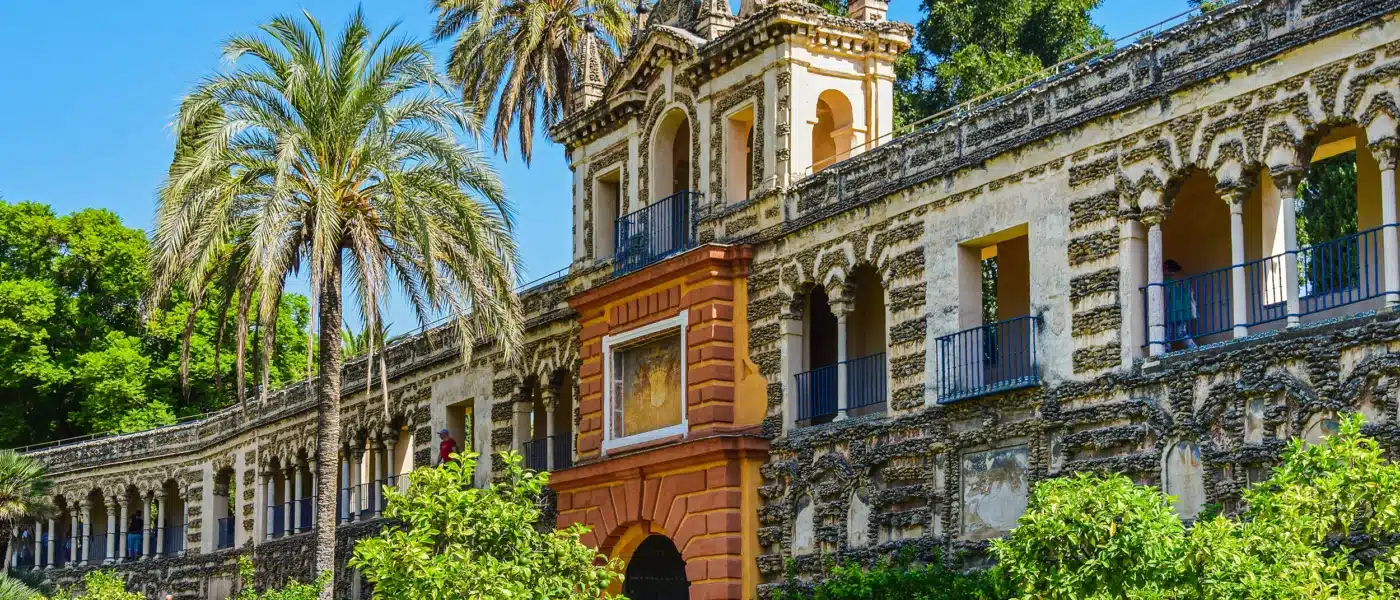
General admission can mean long queues, timed slots, and packed rooms, especially the famous ones, with groups blocking the view and noise pulling your attention away.
Early private access turns that around: the palace feels spacious and easy to read, you can step back to take in a courtyard’s geometry or lean in to study carved stucco without jostling, and your guide shapes the visit around what moves you rather than a script.
Your Out Of Office LGBTQ+ travel specialist can pair it with a welcoming hotel in Seville, and our Spain guide covers LGBTQ+ rights and travel advice.

We know where you will be welcome, and where to take more care.
It shapes the hotels we use, the guides we work with and the routes we suggest.
More Moments in Spain
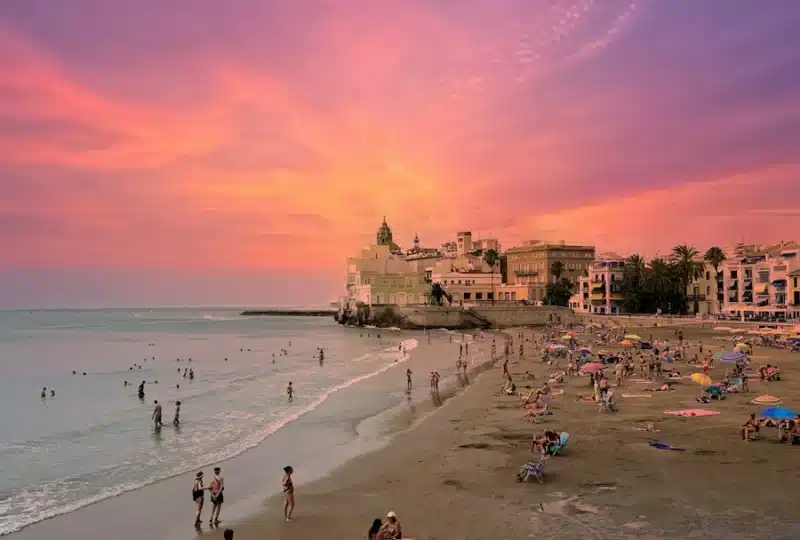
Sitges: Carnival on the Catalan Coast
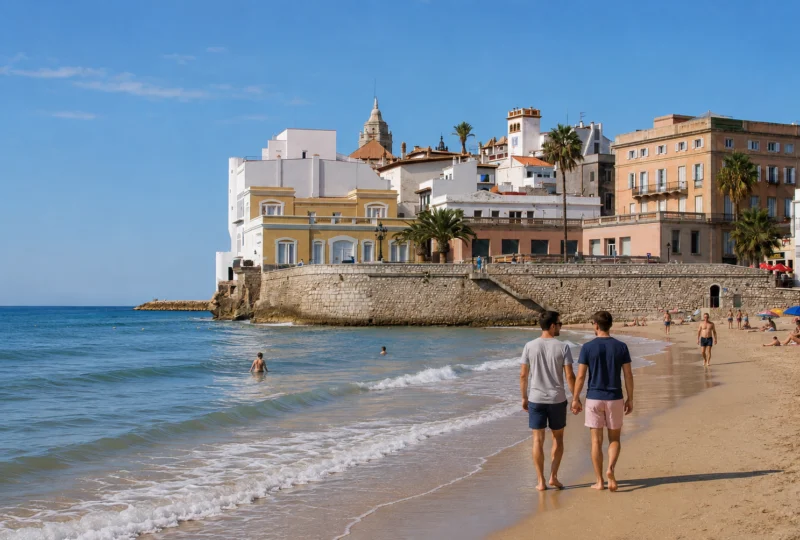
A Queer Spanish Haven Sitges is a small seaside town around 40 minutes south of Barcelona, with whitewashed streets, a church on a headland, and a long stretch of beaches. Its LGBTQ+ community has been part of the town for generations. For one week each February or early March, before Lent, Sitges hosts Carnival. Hundreds of thousands of visitors arrive for the parades, and the town gives itself over to costume and celebration.
Discover more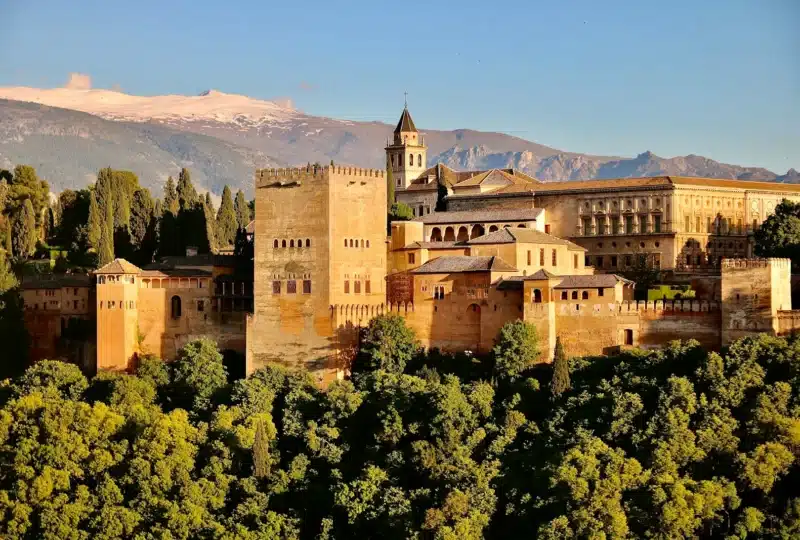
Granada: In the Footsteps of Federico García Lorca
Federico García Lorca was born on June 5, 1898, in Fuente Vaqueros, a village on the fertile plain outside Granada. He became one of the great writers of the twentieth century and the most translated Spanish poet of all time. He was also a gay man, and much of his work carries a longing he could not express openly.
Discover more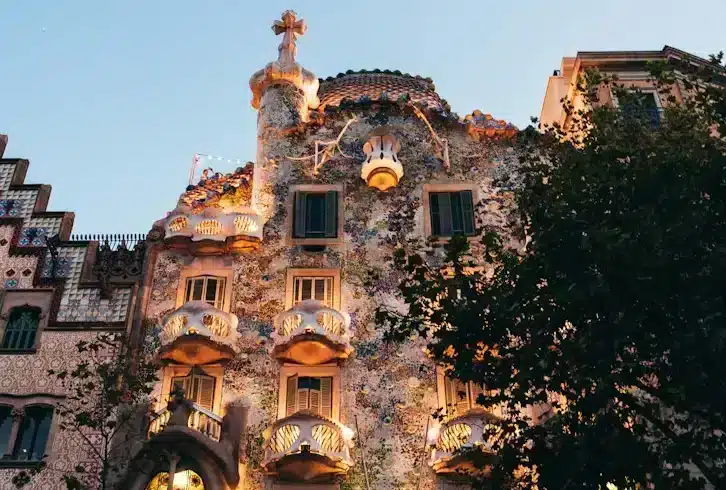
Barcelona: A Private Walk Through Queer History
Barcelona's queer history is easy to miss. Few of its landmarks carry plaques, and much of the story was lived under a dictatorship that treated gay and trans people as a danger to society. In June 1977, two years after Franco's death, around 4,000 people marched along the Rambla in the first major LGBTQ+ demonstration in Spain. Today the city is one of the most welcoming in Europe.
Discover more
We plant trees for every booking
For every booking made with Out Of Office we commit to planting trees in your name to help reduce the impact of travel on future generations. You'll even get a link to see where your trees are planted in the world via our partner Ecologi.


We donate to Rainbow Railroad with every booking
Rainbow Railroad helps LGBTQ+ people escape state-sponsored violence and persecution. A donation goes with every trip we sell, funded by us and never added to your price.


Start Planning Your Trip
Tell us where you would love to go, when you are thinking of travelling and what kind of trip you have in mind. One of our LGBTQ+ travel specialists will create a tailor-made itinerary designed around your destination, style and preferences.
One named specialist, first enquiry to homecoming. No call centre, and nothing is charged until you decide to book.