







Moment · Barcelona
Barcelona: A Private Walk Through Queer History
Walk from the Raval streets Jean Genet knew to the Rambla of Spain's first major Pride march, ending in the bars of the Gaixample.
Barcelona’s queer history is easy to miss. Few of its landmarks carry plaques, and much of the story was lived under a dictatorship that treated gay and trans people as a danger to society.
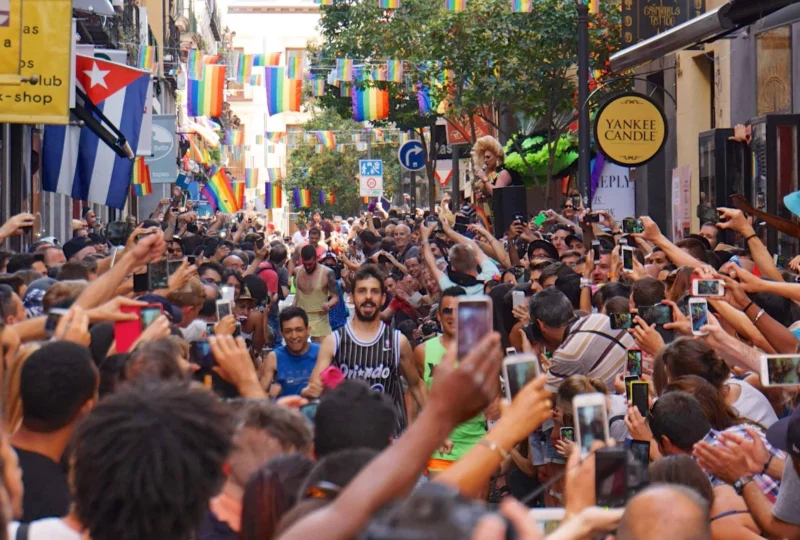
In June 1977, two years after Franco’s death, around 4,000 people marched along the Rambla in the first major LGBTQ+ demonstration in Spain. Today the city is one of the most welcoming in Europe.
A private walk with a guide who knows this history connects the old neighbourhoods with the city you see now.
The Raval and the Old Barrio Chino
In the early twentieth century, the streets of the Raval, then known as the Barrio Chino, were Barcelona’s most notorious quarter, full of cabarets, music halls, and bars where people lived outside the rules. La Criolla was one of its best-known cabarets, and in the 1930s the French writer Jean Genet lived in these streets, an experience that found its way into The Thief’s Journal.
Later writers knew the neighbourhood well too, including the poet Jaime Gil de Biedma and the novelists Terenci Moix and Juan Goytisolo. Your guide shows you where the old venues stood and how the area has changed since.
Keith Haring’s Mural
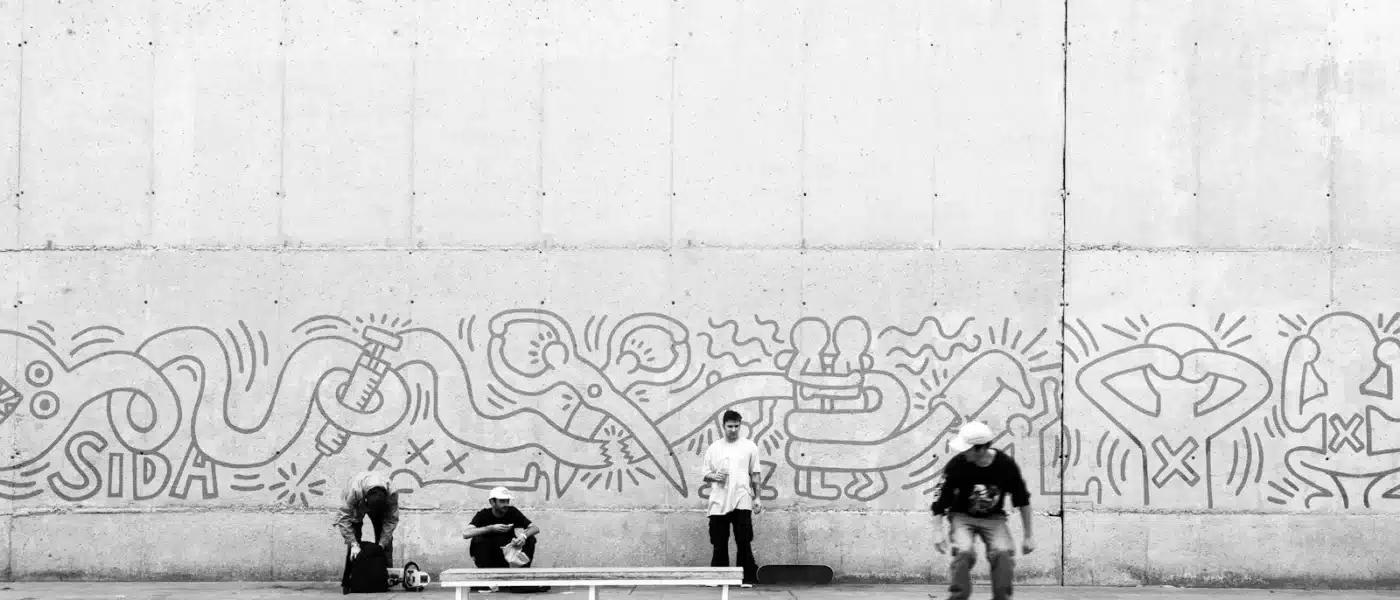
In 1989, the American artist Keith Haring came to Barcelona and painted a mural in the Raval in around five hours. Its message, in Spanish, was that together we can stop AIDS. Haring died of AIDS-related illness the following year.
A recreation of the mural now stands close to the Museum of Contemporary Art, and it is one of the city’s clearest reminders of the AIDS years. It makes a natural place to pause before the walk moves on.
The Rambla in 1977
Under Franco, gay and trans people could be imprisoned under laws that classed them as dangerous to society. The 1977 march on the Rambla was organised to mark the anniversary of the Stonewall riots in New York, and it brought together activists, students, trade unionists, and supporters. Two years later, homosexuality was removed from the dangerousness law.
The change since then has been remarkable. In 2005, Spain became one of the first countries in the world to recognise same-sex marriage, and Barcelona Pride now fills the city each summer.
The hard part is not finding a beautiful place. It is finding the right one for you.
Request a quote →The Memorial in Ciutadella Park
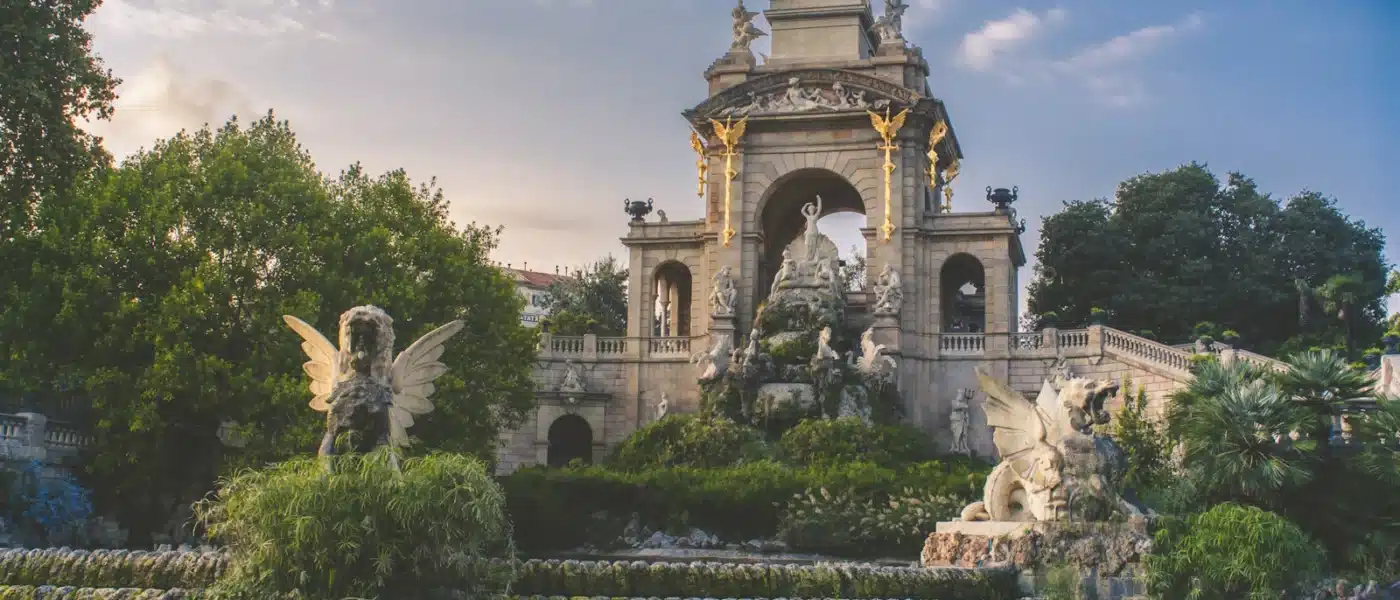
In 2011, Barcelona unveiled a memorial in Ciutadella Park: a pink-edged triangle set into the ground near the Marquès de l’Argentera entrance. Its Catalan inscription remembers the gay, lesbian, and trans people who have suffered persecution and repression throughout history.
Nearby, a small circle in the park is named for Sonia Rescalvo, a trans woman who was killed here in 1991. The city gave it her name in 2013, and your guide explains why both sites matter to Barcelona’s LGBTQ+ community.
The Gaixample
The walk ends in the present, in the part of the Eixample known as the Gaixample. In the blocks around Consell de Cent, between Balmes, Gran Via, Comte d’Urgell, and Aragó, you find the city’s highest concentration of LGBTQ+ bars, restaurants, and hotels.
By the time you arrive, the terraces are filling for the evening. It is the right place to finish, with a drink and dinner in a neighbourhood where queer life is fully visible.
Planning Your Barcelona Experience
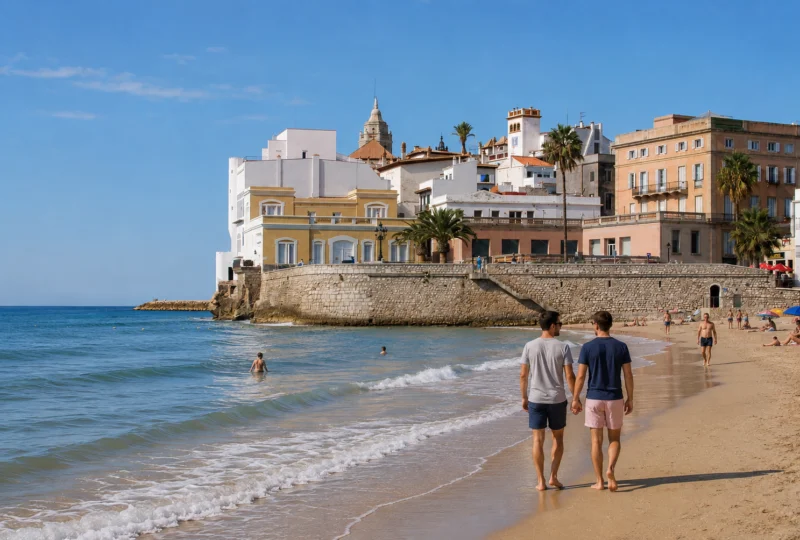
The walk takes around three hours at an easy pace, and comfortable shoes help on the old town’s paving. Late afternoon is a good time to start, so you reach the Gaixample as the evening begins. Sitges is around 40 minutes away by train or car if you would like to add a day on the coast.
Out Of Office can arrange a private guide who specialises in Barcelona‘s LGBTQ+ history and reserve a table for dinner afterward. Your LGBTQ+ travel specialist can also build the walk into a longer stay in the city or a wider journey through Spain.

See your complete itinerary before you decide.
Your specialist will bring together every detail of your trip, with clear pricing throughout.

We plant trees for every booking
For every booking made with Out Of Office we commit to planting trees in your name to help reduce the impact of travel on future generations. You'll even get a link to see where your trees are planted in the world via our partner Ecologi.


We donate to Rainbow Railroad with every booking
Rainbow Railroad helps LGBTQ+ people escape state-sponsored violence and persecution. A donation goes with every trip we sell, funded by us and never added to your price.


Start Planning Your Trip
Tell us where you would love to go, when you are thinking of travelling and what kind of trip you have in mind. One of our LGBTQ+ travel specialists will create a tailor-made itinerary designed around your destination, style and preferences.
One named specialist, first enquiry to homecoming. No call centre, and nothing is charged until you decide to book.