




Editorials
São Paulo vs. Rio: Which City Should You Visit?
Contrasting Brazil's biggest cities
Brazil’s two greatest cities couldn’t be more different – and that’s exactly what makes visiting both so rewarding. Rio de Janeiro, framed by dramatic mountains, is the ultimate beach destination, with music, dance, and outdoor living at its heart. São Paulo, in contrast, is a vast, dynamic megacity that never stops moving – it’s condired to be the economic powerhouse of South America.
In this guide, we’ll break down what really sets these two cities apart – from culture and nightlife to hotels and geography – so you can decide which vibe is right for you, or plan the perfect trip that combines both.
Culture
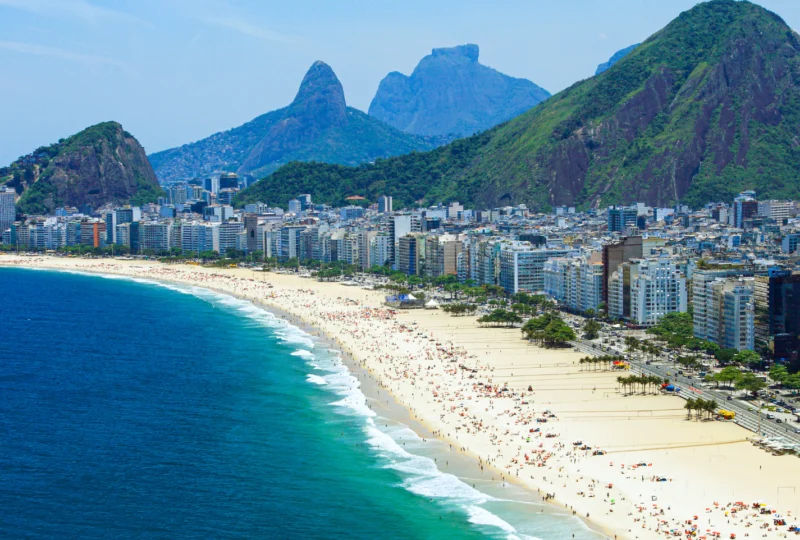
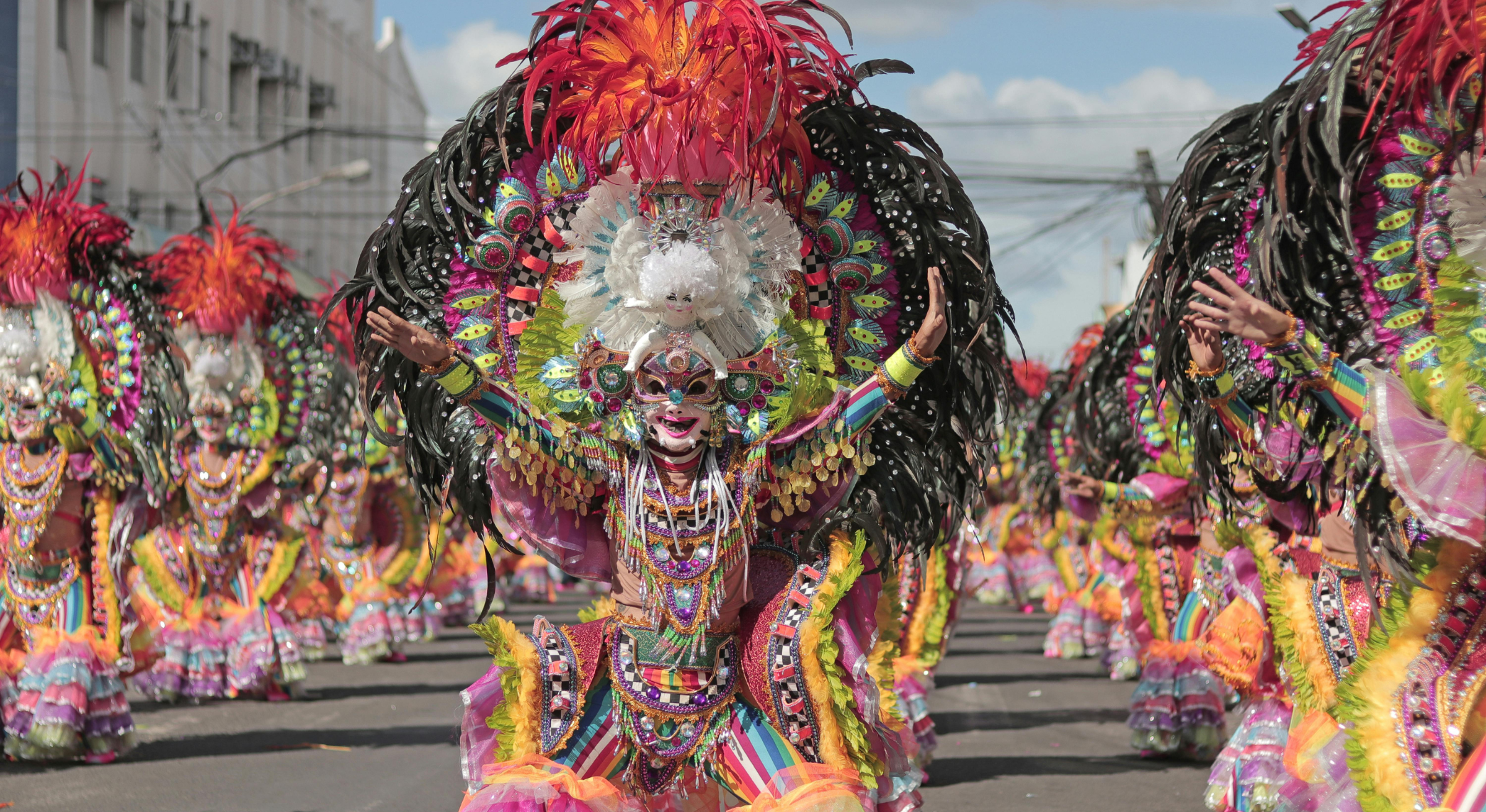
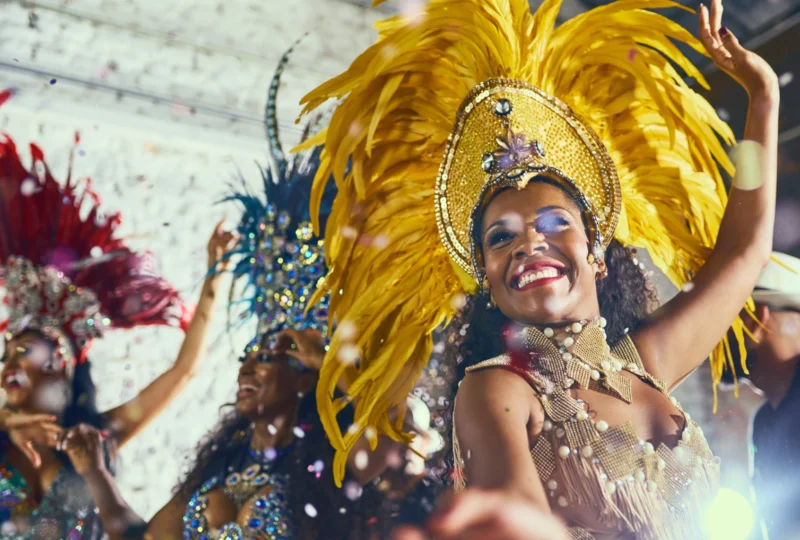
Rio de Janeiro embodies Brazil’s stereotypical image with its relaxed, sun-soaked culture where flip-flops are acceptable everywhere from beaches to shopping malls. Rio is famous worldwide for Carnival, samba schools, bossa nova and Tom Jobim’s “The Girl from Ipanema”, creating an atmosphere where music and dance feel woven into daily life. The Carioca lifestyle revolves around outdoor living, with beach culture influencing everything from fashion to dining, where healthy, quick options dominate street corners.
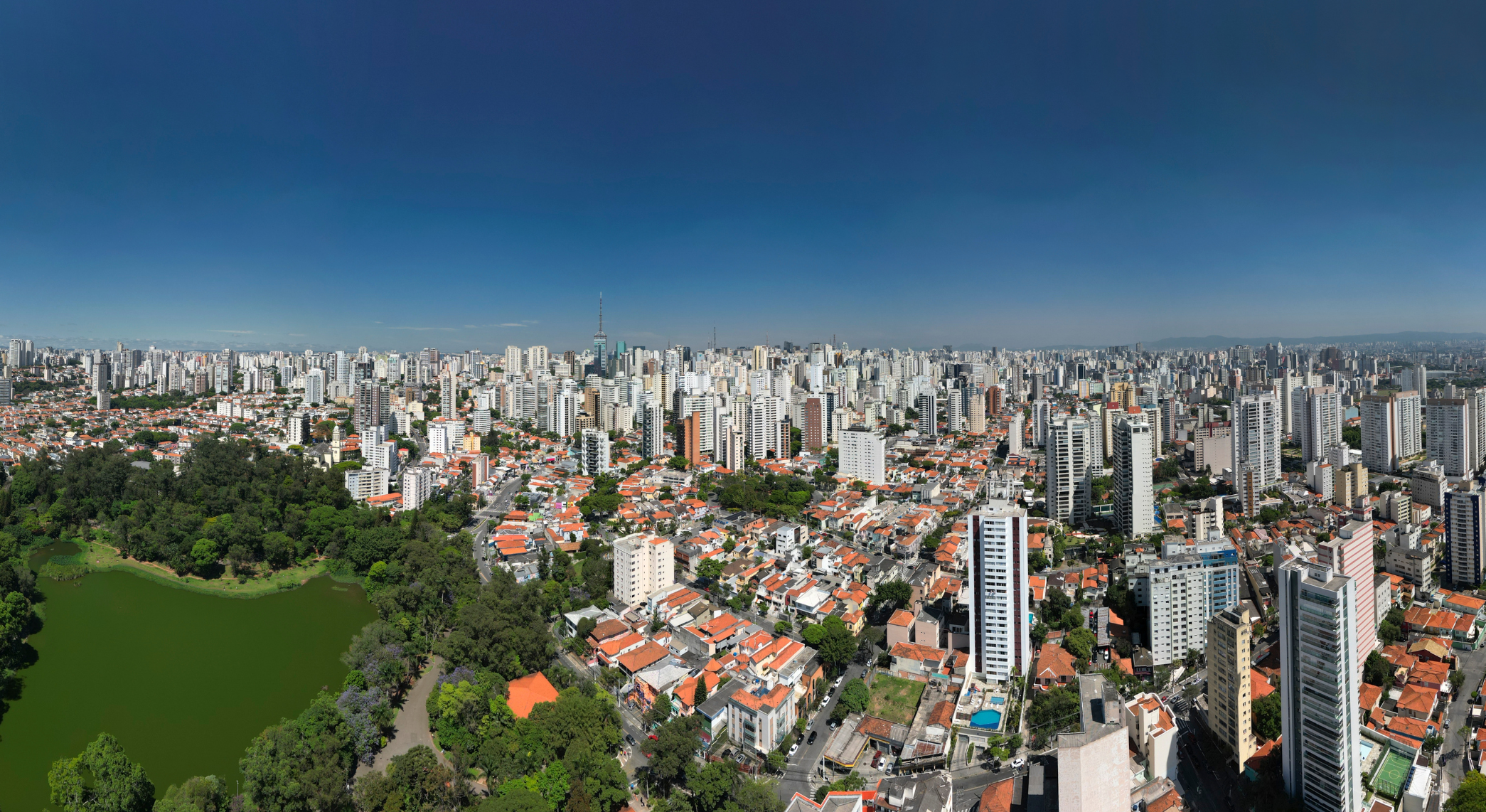
São Paulo, by contrast, is São Paulo’s reputation as the business district of Brazil has attracted immigrants for years, granting the city the diversity to bloom into a multicultural metropolis. What makes São Paulo so interesting and culturally rich is its large immigrant populations, from Italian to Japanese to Thai. This cultural melting pot has created a sophisticated metropolitan vibe where Paulistas dress up a lot more than the Cariocas, and the city runs at a more frenetic pace similar to New York or London.
Nightlife & Gay Scene
Rio’s gay scene centres around Ipanema beach culture, particularly around Posto 9 where rainbow flags mark the LGBTQ+ gathering spots. The scene is more tourist-oriented but highly integrated with the city’s outdoor lifestyle, featuring beach parties that transition into Lapa’s samba-filled nightclubs. Rio has more of the gay foreign tourist scene but since SP has a much larger local middle class than Rio it can support a much larger local scene.
São Paulo’s gay scene is one of the best gay nightlife in the planet, with São Paulo’s Pride celebration known as the biggest in the world since 2006. Much of the LGBTQ+ action happens on Frei Caneca Street, also dubbed Gay Caneca, while the rough-around-the-edges Largo do Arouche gayborhood remains a fixture. The night doesn’t kick off until midnight and goes on until the sun comes up; after-parties starting at 8 a.m. are not unheard of, with world-renowned superclubs like High Club, formerly The Week.
Hotels
Many grand Rio properties trace their roots to the early 20th century, when Rio was the glamorous gateway to South America and European elites flocked to its shores. Belle Époque masterpieces in Copacabana and Ipanema recall this golden age with ornate facades and marble salons, while modern boutique resorts embrace sleek tropical minimalism that frames the crashing Atlantic surf.
Expect more than stunning rooms: rooftop infinity pools overlook Sugarloaf Mountain and Christ the Redeemer, particularly in neighbourhoods like Copacabana and Ipanema, where you can walk from your luxury suite directly onto world-famous beaches.
São Paulo properties like Hotel Unique are major landmarks, with their unmistakable ship-like silhouette, soaring curved interiors, and massive porthole windows. Meanwhile, Rosewood São Paulo reimagines heritage buildings in the city’s historic core, pairing restored 20th-century landmarks with striking vertical garden towers by Jean Nouvel. Palácio Tangará provides secluded luxury at the edge of Burle Marx Park, enveloped in the landscape designs of Brazil’s most famous modernist gardener.
Tell us how you like to travel. We will shape the trip around it.
Request a quote →Geography
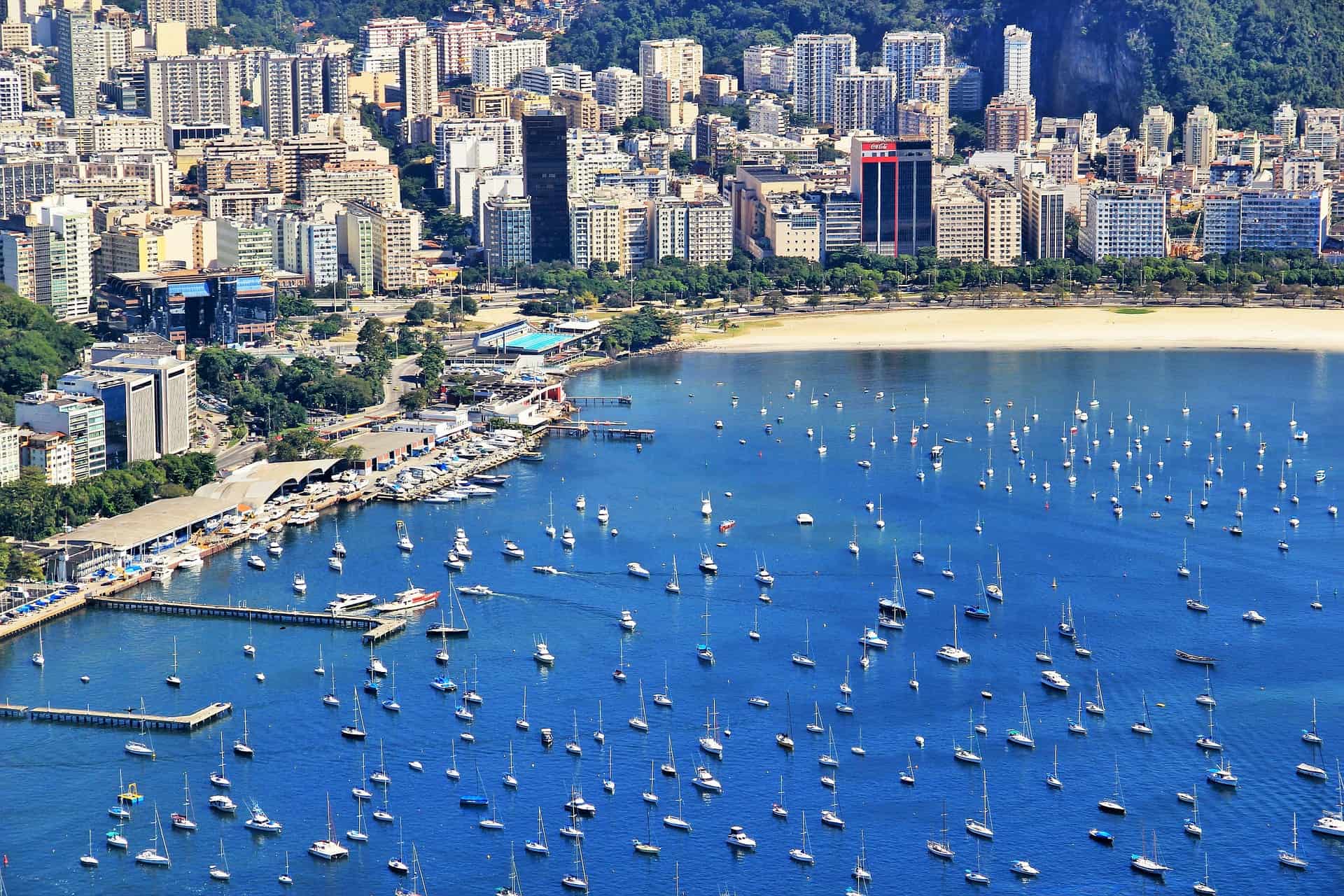
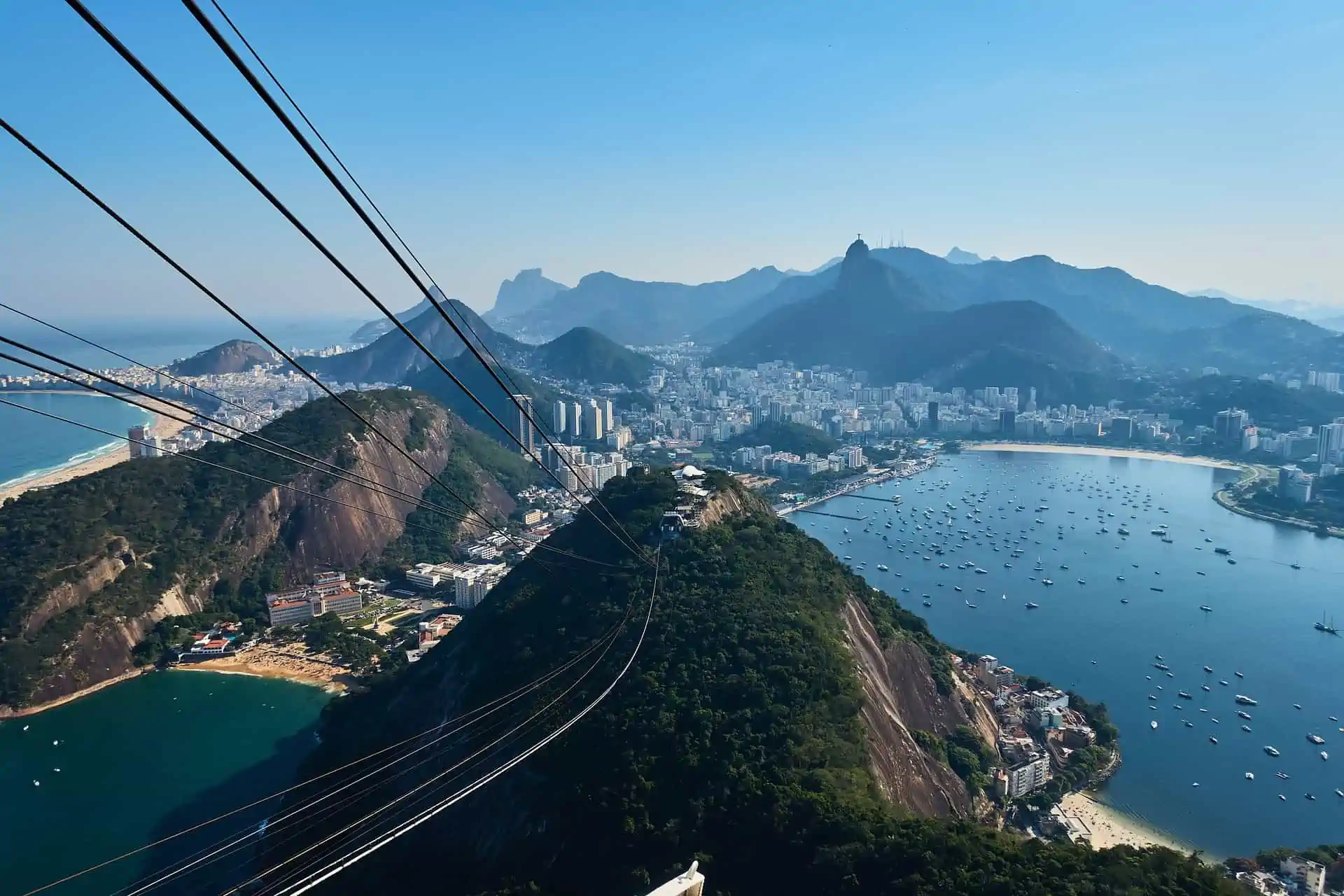
Rio de Janeiro represents one of the world’s most extraordinary examples of urban geography, where a metropolis of six million people has developed in harmony with dramatic natural landscapes. The city of Rio de Janeiro, shaped by interaction with mountains and sea, lies in the narrow strip of alluvial plain between Guanabara Bay and the Atlantic Ocean. Its exceptionally dramatic landscape is punctuated by a series of forested mountains that tower over the city, rising to the uppermost peak of the Tijuca massif at 1,021 m high, and cascading down to the coast where the steep cone shapes of Sugar Loaf (Pão de Açúcar), Urca, Cara de Cão and Corcovado frame the wide sweeps of Guanabara Bay.
In 2012, UNESCO recognised Rio de Janeiro’s exceptional cultural and natural amalgamation by bestowing the title “Carioca Landscapes Between the Mountain and the Sea.” What makes Rio geographically unique for visitors is this seamless integration of urban life with wild nature – The city has parks and ecological reserves such as the Tijuca National Park, the world’s first urban forest and UNESCO Environmental Heritage and Biosphere Reserve – meaning you can literally go from world-class beaches to rainforest hiking trails within minutes. This extraordinary geography creates a city where residents and visitors can surf at sunrise, hike through Atlantic rainforest by afternoon, and watch sunset from a mountaintop – all without leaving the metropolitan area.
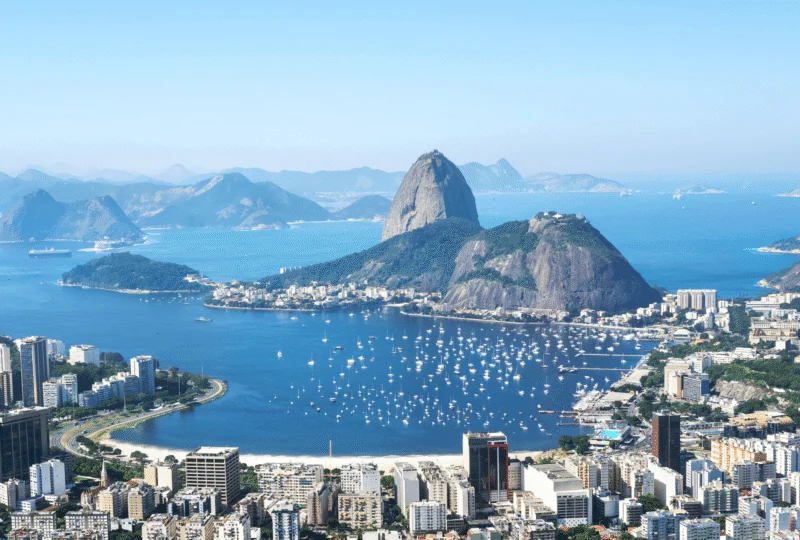
São Paulo represents pure urban magnitude as the “New York of Brazil” with significantly more skyscrapers spread over a significantly larger geographical area. The Brazilian city is a financial and industrial powerhouse formed by Jesuit missionaries in 1554 and is now the largest city of the Southern Hemisphere. Key landmarks include Avenida Paulista (the main strip for business and restaurants), Ibirapuera park as a natural refuge, São Paulo cathedral and the Municipal Market.
This elevated inland position, unlike coastal Rio de Janeiro, created a completely different urban development pattern where the city expanded horizontally across the plateau rather than being constrained by mountains and ocean, allowing for unprecedented urban sprawl that now covers over 1,500 square kilometres.
Combining Both Cities: The Perfect Brazilian Experience
São Paulo is 220 miles from Rio, which results in a flight time of just under an hour. If you drive a private car or take a bus between Rio and São Paulo, you’ll traverse a distance of 265 miles in between 4-5 hours.
For the ultimate Brazilian experience, spending 3-4 days in each city allows you to appreciate their contrasting energies. Start in Rio to decompress with beach culture and natural beauty, then move to São Paulo for the nightlife and and a more frenetic atmosphere. You can’t replicate the beach-going experiences of Rio in landlocked São Paulo, nut you can enjoy the diversity of culture and cuisine that simply doesn’t exist on the shores of Copacabana or Ipanema.
Can’t decide between Rio’s beaches and São Paulo’s nightlife? Let us help you find – and book – the perfect Brazil experience.
New to Out Of Office?
We are a luxury travel company for LGBTQ+ travellers. Everything we sell is tailor-made, planned by one named member of our team throughout, and nothing on this site is a fixed package unless it says so.
Where exclusivity meets inclusivity
Ten years, hundreds of five-star reviews, and a team who will tell you when a destination is not right for the trip you have in mind.
The hard part is not finding a beautiful place. It is finding the right one for you.
Every property we suggest is handpicked by our team. Twenty minutes with a specialist will tell you which ones are worth your time.
Stellar service. Stellar products. Stellar people and it gets so much better when you pick up the phone and call.
Anthony S.
Super client centred service. From first contact I have had warm, efficient, friendly and flexible service.
John
I’m confident in giving Out Of Office a 5-star review! They are one of the leaders in this space without a doubt.
Tiberiu
We plant trees for every booking
For every booking made with Out Of Office we commit to planting trees in your name to help reduce the impact of travel on future generations. You'll even get a link to see where your trees are planted in the world via our partner Ecologi.

We donate to Rainbow Railroad with every booking
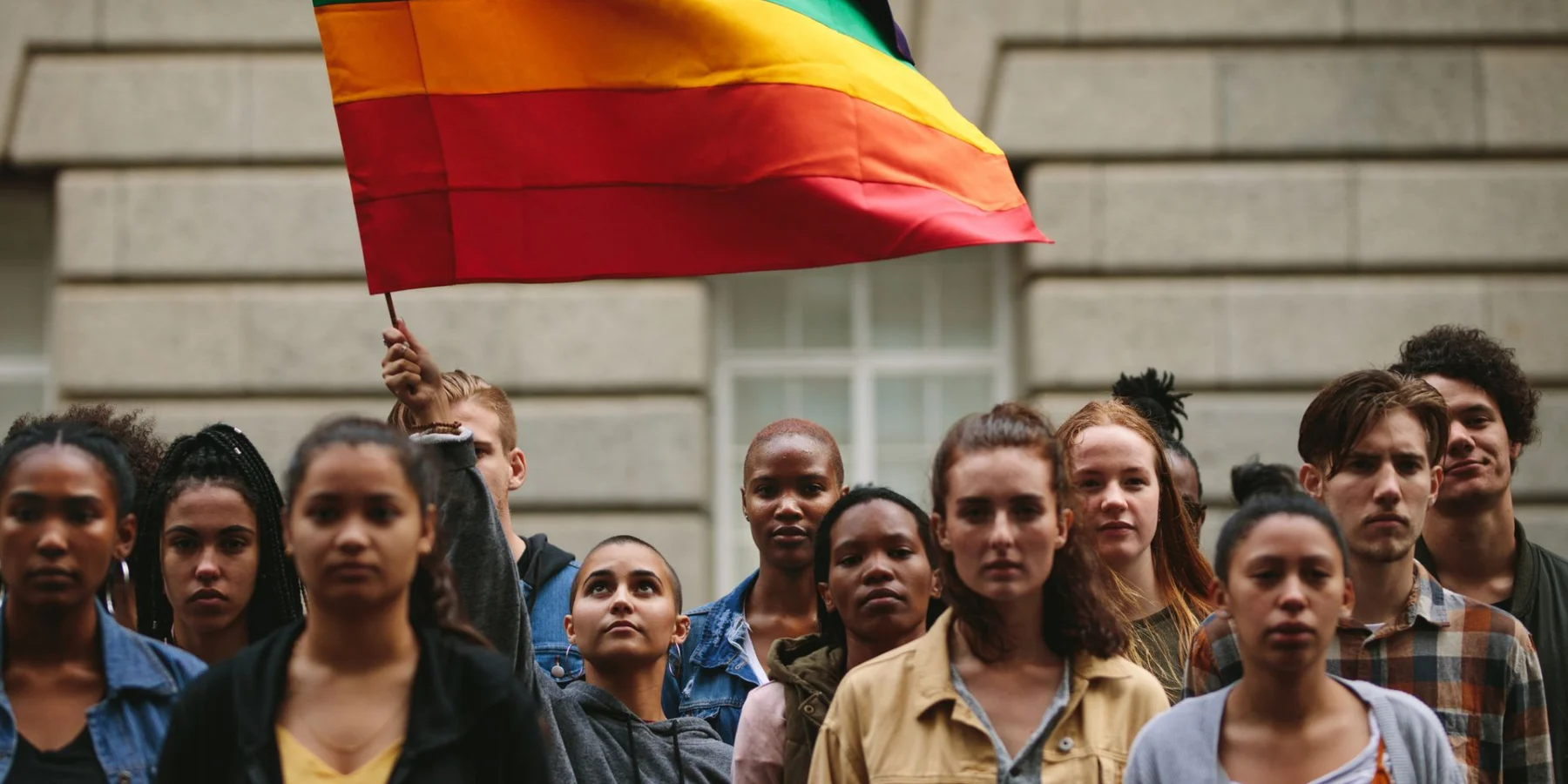
Rainbow Railroad helps LGBTQ+ people escape state-sponsored violence and persecution. A donation goes with every trip we sell, funded by us and never added to your price.

Start Planning Your Trip
Tell us where you would love to go, when you are thinking of travelling and what kind of trip you have in mind. One of our LGBTQ+ travel specialists will create a tailor-made itinerary designed around your destination, style and preferences.
One named specialist, first enquiry to homecoming. No call centre, and nothing is charged until you decide to book.