



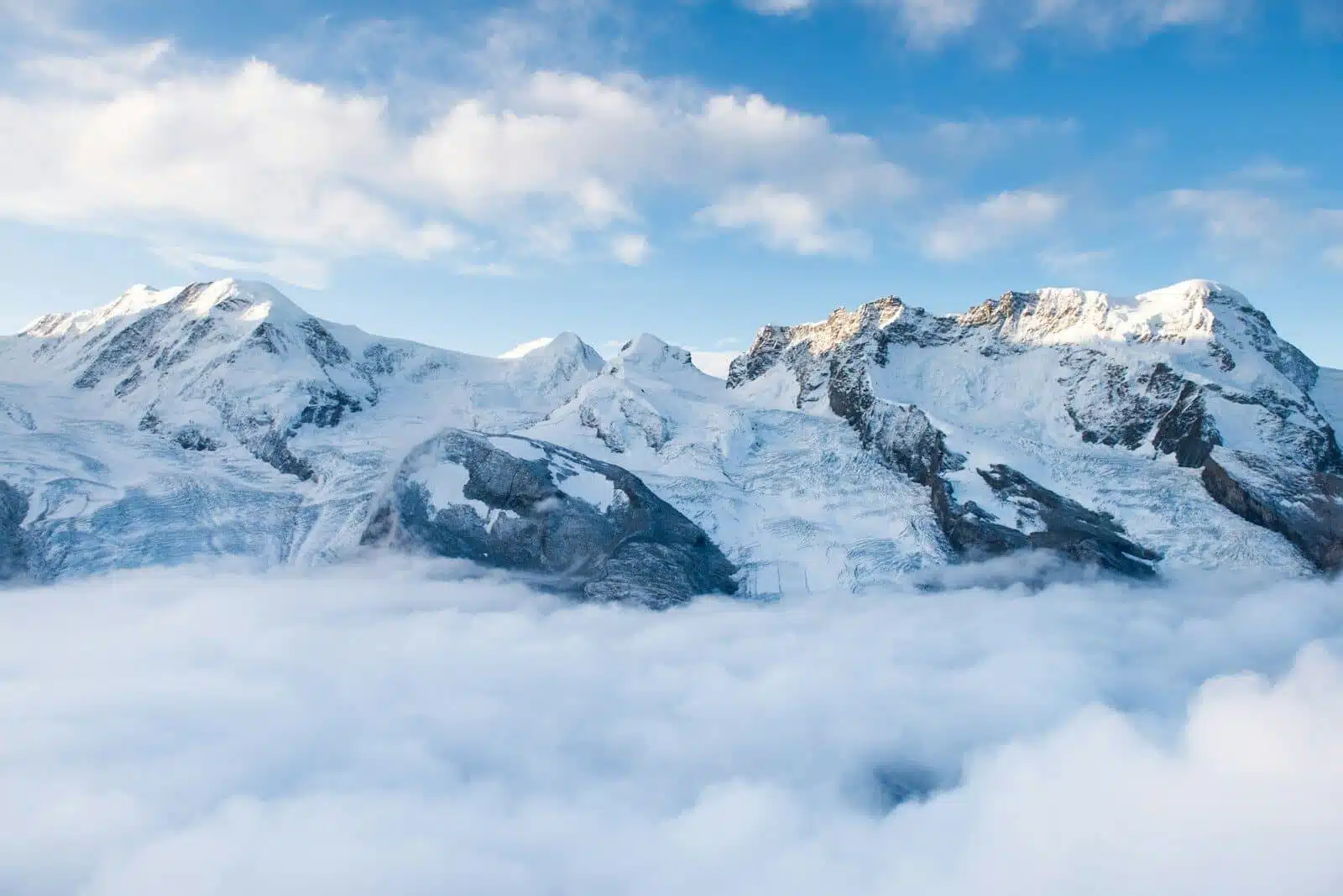
Moment · Switzerland
Sunrise Heli-Landing and First Tracks on Zermatt’s Theodul Glacier
Fly past the Matterhorn's north face before the lifts open, land on an empty glacier at dawn and carve the first turns of the day.
Zermatt in the Dark
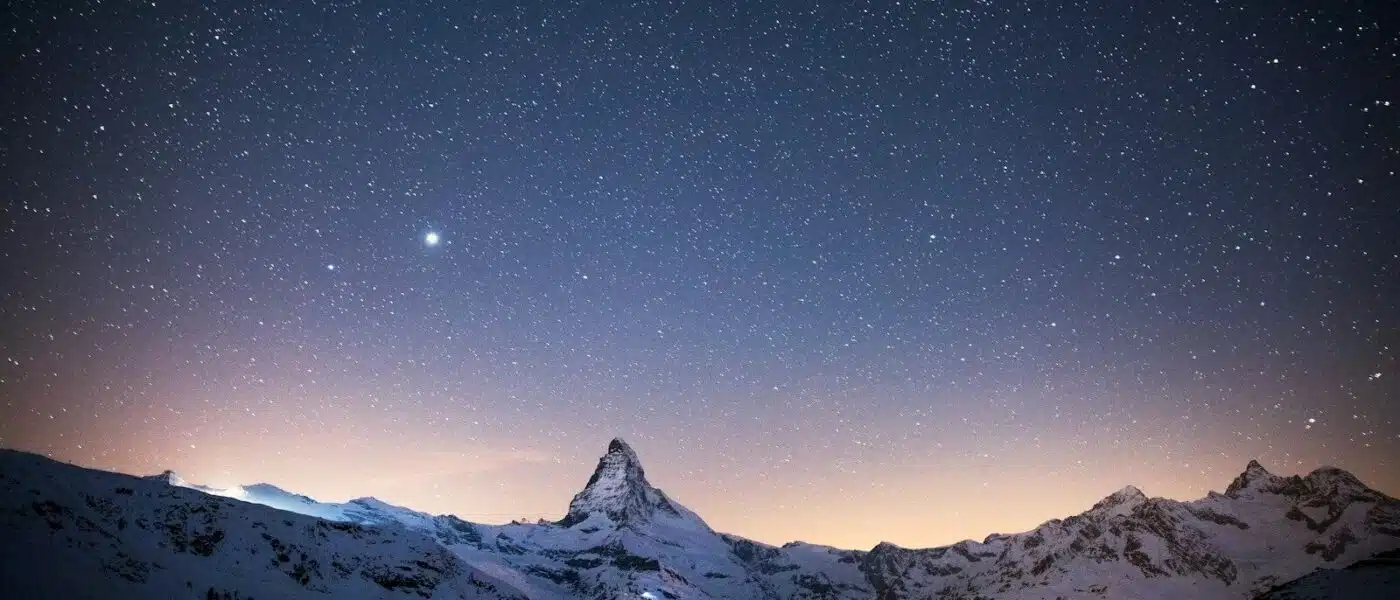
Zermatt has no cars, and at 4 am that matters: no engines, no shuttles and no traffic hum, just a walk or a silent electric taxi to your departure. The helicopter lifts off from the Zermatt helipad before the mountain railway’s first run and long before the ski area opens, and that timing is the whole point, because first tracks on untouched snow depend on the brief gap between overnight grooming and the first skiers. An ordinary ski day here starts in a lift line; this one starts earlier and far higher, and making it happen takes coordination well beyond a normal resort booking.
Past the Matterhorn’s North Face
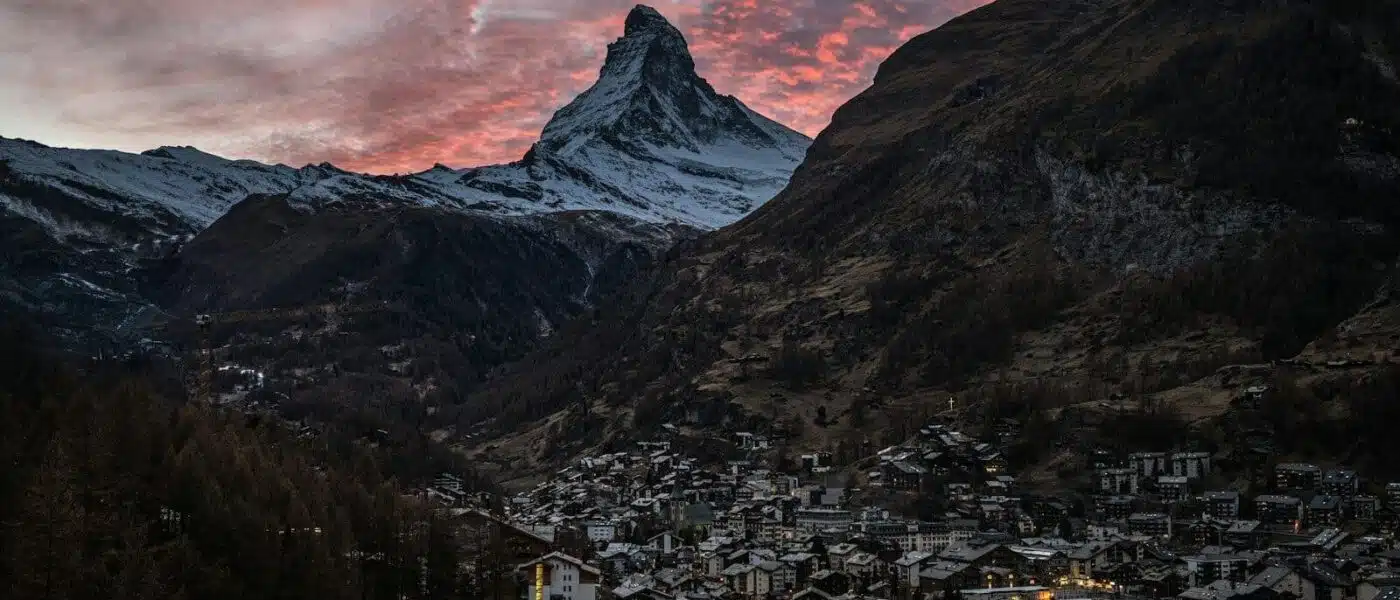
From the heliport you climb southeast to the Theodul Glacier at around 3,300 metres, following the ridge that marks the Swiss-Italian border, with the Matterhorn’s north face alongside you, a view no lift or trail can give. The face rises some 1,200 metres of almost sheer rock and ice from the Matterhorn Glacier to the 4,478-metre summit, and from this height and angle you see its whole architecture: the central couloir, the line of the Schmid Route and the way the summit pyramid joins the ridges running across to Cervinia in Italy. The flight takes under fifteen minutes, but it’s where you are in relation to the mountain that makes it unforgettable.
Spiced Tea on an Empty Glacier
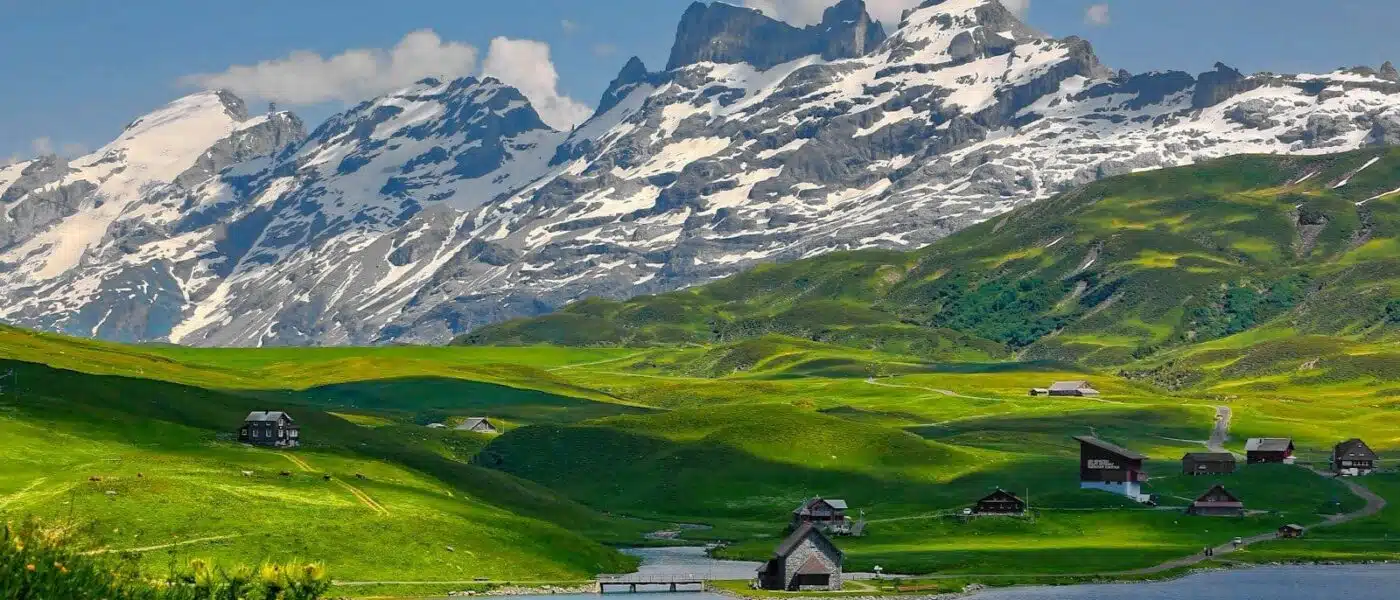
The Theodul Glacier lies at around 3,300 metres across the border beneath the Klein Matterhorn, and at sunrise it’s unmarked, with no lifts running and no one else there; only when you stand on it do you grasp how vast the snowfield is, several kilometres across at its widest. Before the first turn comes a ritual: spiced mountain tea, a deliberate pause, because the snow ahead is finite and once skied it’s gone for the day. The moment isn’t really about the altitude or even the view but the snow itself, first tracks on a glacier this size with no one else around, which depends on timing, coordination and relationships built over years. It’s an extraordinary shared morning for a couple or friends who ski well.
The best trips begin with a conversation, not a booking form.
Request a quote →Ice, History and a Mountain Pass
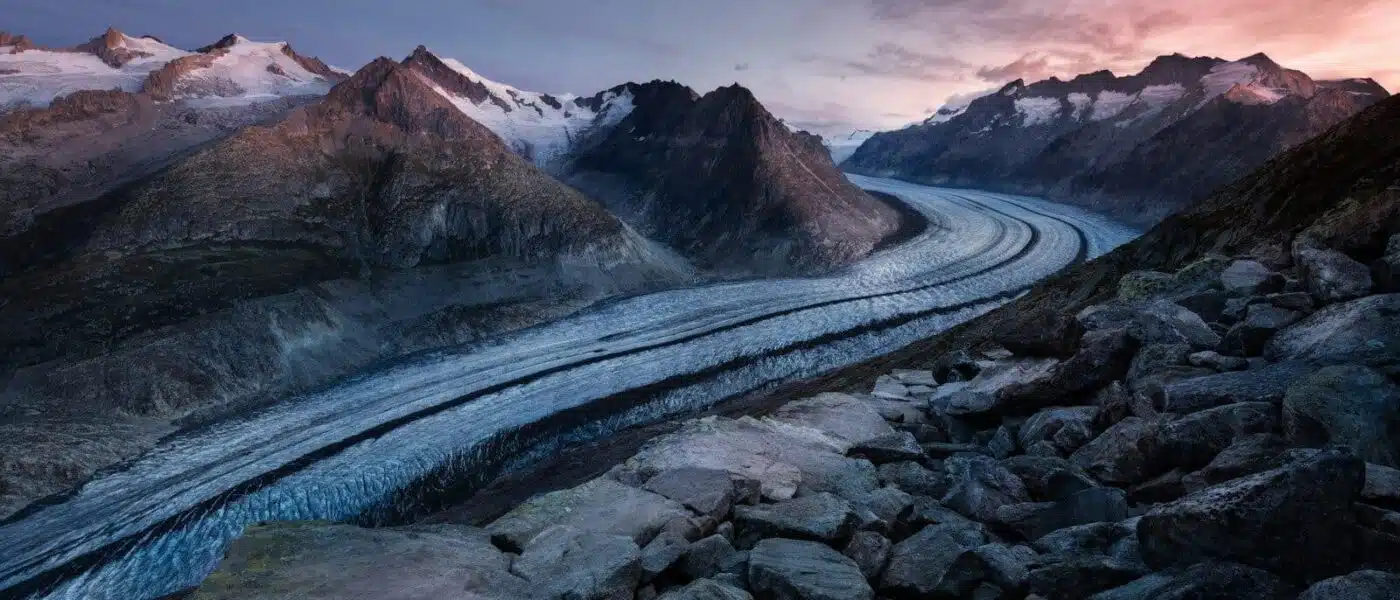
The glacier sits below the Klein Matterhorn, whose 3,883-metre top is the highest lift-served ski terrain in the Alps, and its altitude keeps snow on it most of the year, which is why Zermatt can offer skiing year-round while most resorts close in spring. The Theodul Pass above has been a route between Valais and the Aosta Valley for centuries, with archaeological finds tracing people crossing it back to the Bronze Age, and the same navigable high col that made it a crossing makes it good ski terrain today. Glacial retreat has changed its surface markedly in recent decades, and the ski area now relies partly on snow management early and late in the season, but it remains a high, open plateau with real vertical and a place in both Alpine history and ski racing.
The Descent
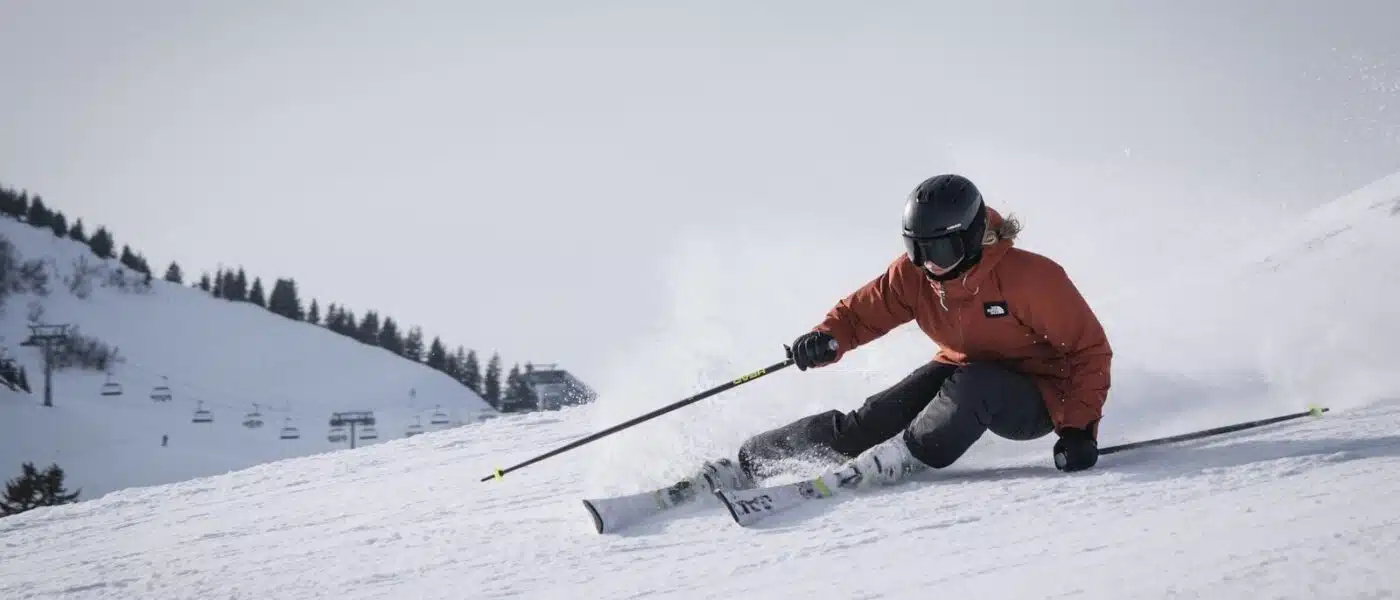
From the glacier, runs drop toward the Klein Matterhorn station, and between your landing and the lifts opening they’re untouched, unchanged since the night’s preparation and uncrossed by anyone else. Depending on your line you have more than 1,000 metres of vertical: wide, open upper slopes for fast carving at altitude, then more defined fall lines and, depending on conditions, changing pitch lower down. With the whole mountain to yourselves, line choice, speed and rhythm are entirely yours. This isn’t a lesson or a gentle route; the terrain needs confident skiers.
What It Takes to Arrange
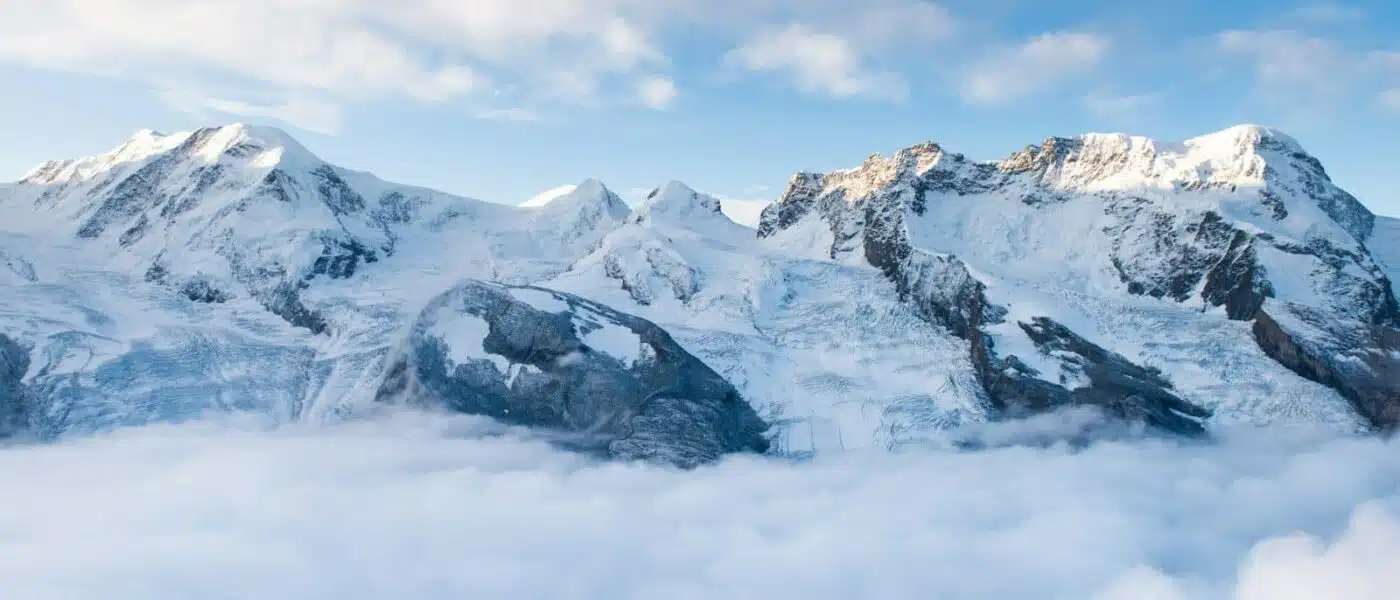
Private glacier landings here come under Swiss federal aviation rules and need coordination between licensed helicopter operators, the resort’s ski patrol and sometimes the cantonal authorities who oversee the protected alpine zone. Air Zermatt runs the main operation in the region, though specific glacier zones and first-tracks arrangements usually involve extra permissions linked to snow-safety checks and the season. The window runs roughly from late December to mid-April and narrows further with weather, since landings need stable high pressure, good visibility and manageable winds at altitude, conditions that can rule out several days in a row, and dawn flights must also line up with safe light on the glacier. It’s not something you can easily set up at short notice. Your Out Of Office LGBTQ+ travel specialist lays the groundwork well ahead and can pair it with a welcoming chalet or hotel, and our Switzerland guide covers LGBTQ+ rights and travel advice.
No two trips we plan are the same. Yours will be no exception.
Every itinerary starts as a blank page and is shaped around your pace, your routing and the places you actually want to see.
More Moments in Switzerland
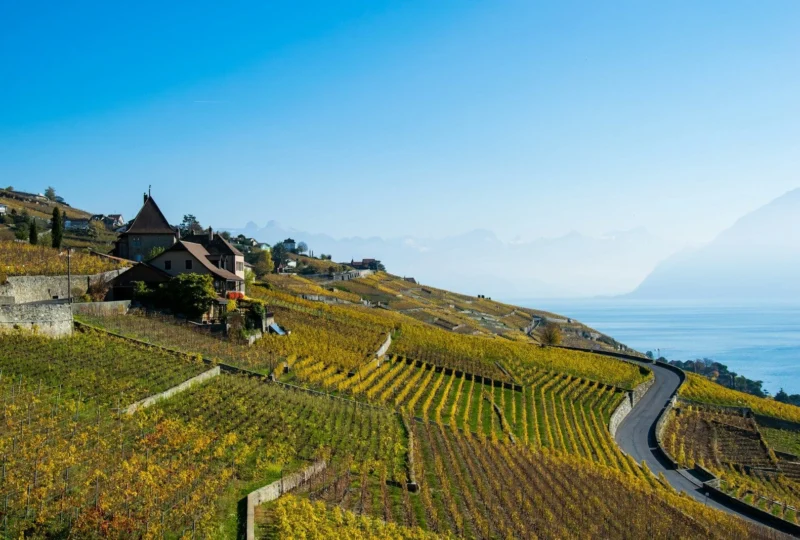
Private Tastings in the Lavaux Vineyards above Lake Geneva
A Thousand Years of Terraces Along Lake Geneva's northern shore, the Lavaux terraces cover 830 hectares, the largest continuous wine region in Switzerland. Over ten thousand terraces, each held up by dry-stone walls, step up the hillside; monks of the Cistercian and Benedictine orders built some of them 900 years ago. UNESCO listed the region in 2007, and it's still planted mostly with Chasselas, a white grape that thrives on these steep, sunny slopes.
Discover more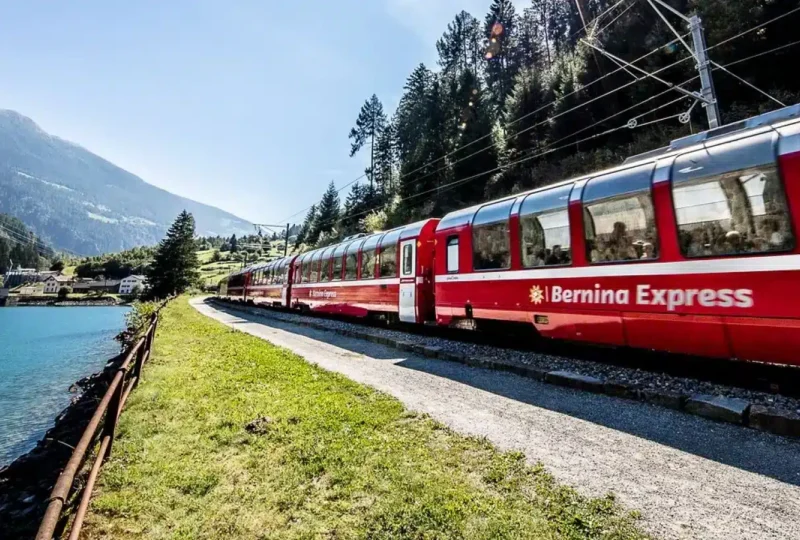
The Bernina Express, Swiss Alps to Italy, in a Private Carriage
Over the Alps to Italy Linking Chur, in eastern Switzerland, with Tirano across the Italian border, the Bernina Express tops out at 2,253 metres at Ospizio Bernina. The line belongs to the Rhaetian Railway's UNESCO-listed network, and on the way you roll over the soaring Landwasser Viaduct, loop around the corkscrew viaduct at Brusio and skirt two high lakes, Lej Nair and Lago Bianco.
Discover more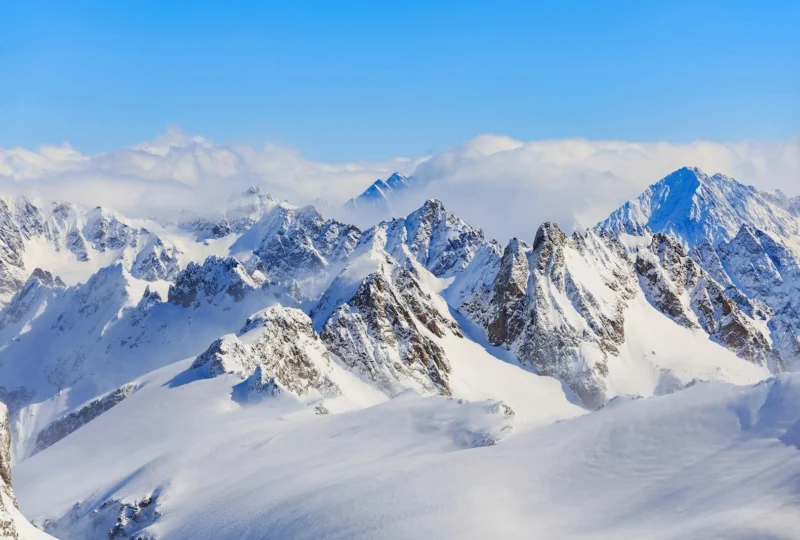
The Glacier Express from Zermatt to St. Moritz, in Style
Eight Hours Across the Alps On its way from Zermatt to St. Moritz the Glacier Express rattles over 291 bridges, slips through 91 tunnels and reaches its high point, 2,033 metres, on the Oberalp Pass. In your own panoramic carriage, crossing three cantons, you follow the Rhine Gorge and cross the Landwasser Viaduct over some eight hours.
Discover more
We plant trees for every booking
For every booking made with Out Of Office we commit to planting trees in your name to help reduce the impact of travel on future generations. You'll even get a link to see where your trees are planted in the world via our partner Ecologi.


We donate to Rainbow Railroad with every booking
Rainbow Railroad helps LGBTQ+ people escape state-sponsored violence and persecution. A donation goes with every trip we sell, funded by us and never added to your price.
Start Planning Your Trip
Tell us where you would love to go, when you are thinking of travelling and what kind of trip you have in mind. One of our LGBTQ+ travel specialists will create a tailor-made itinerary designed around your destination, style and preferences.
One named specialist, first enquiry to homecoming. No call centre, and nothing is charged until you decide to book.