







Moment · Japan
Shinrin-Yoku: Guided Forest Bathing on Yakushima Island
Slow down among thousand-year-old cedars and moss-covered granite with a certified forest therapy guide on Japan's rain-soaked island.
An Island of Rain and Cedar
Off the southern coast of Kyushu, Yakushima climbs steeply out of the sea and receives heavy rain all year, feeding rivers that cut through primary forest. About 30 percent of its 503 square miles is protected as Yakushima National Park, with large areas kept free of development and vehicles; roads only ring the coast, and the interior can be reached only on foot.
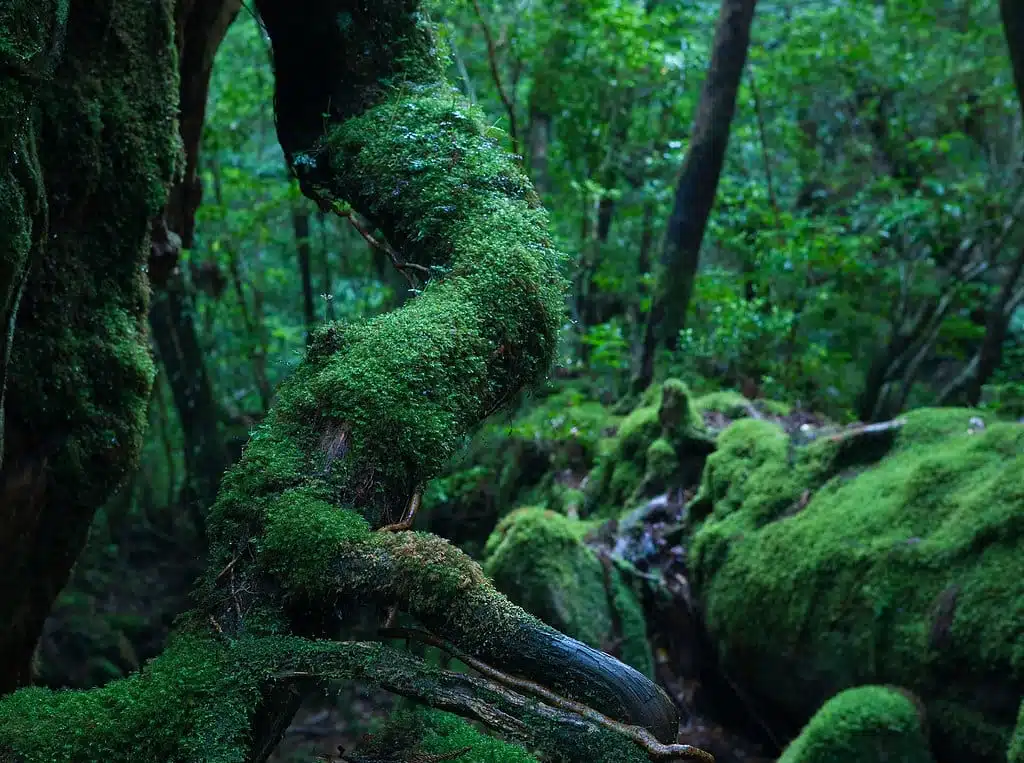
The forest keeps changing as you walk. Ancient Yakusugi cedars, some more than 1,000 years old, form the tallest canopy, with broadleaf trees beneath them, roots snaking across a floor mostly carpeted in moss and granite outcrops appearing without warning. The thick canopy dims the ground, cooling it and changing how sound carries. Walks here are built around pace and attention rather than fitness or distance: your guide chooses the route for the day’s weather and conditions and sets a speed that allows long spells of stillness, with no summit to reach and no finish line.
Preventive Medicine, Japanese Style
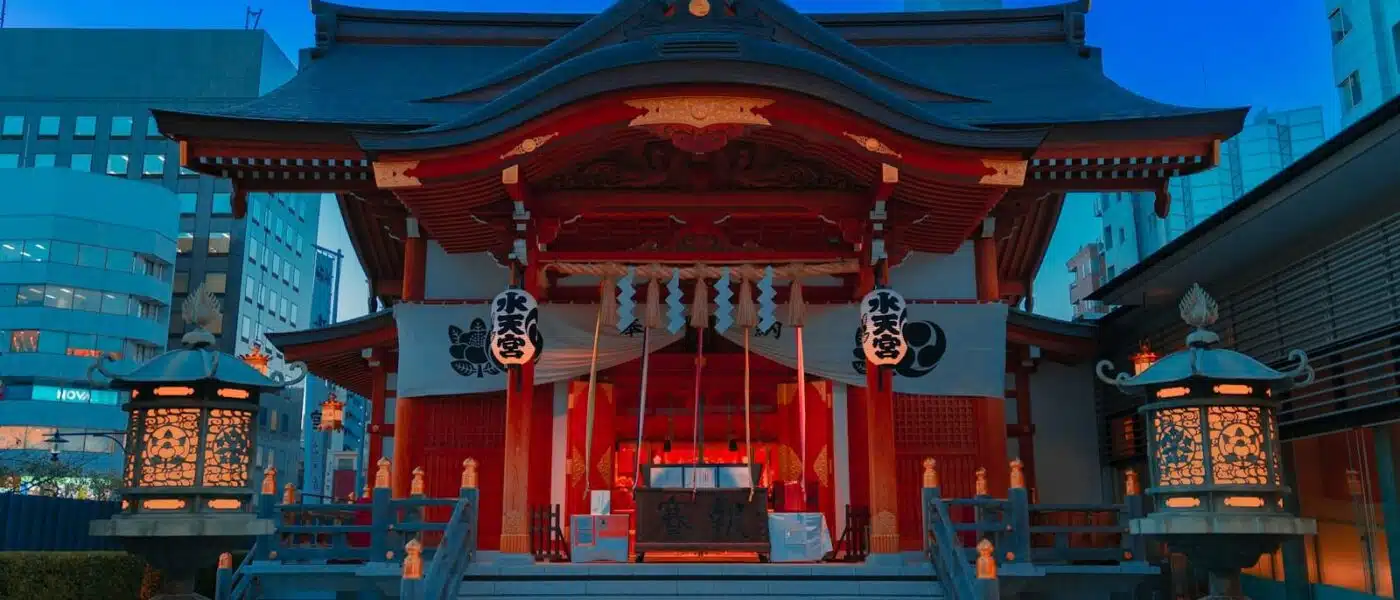
Shinrin-yoku, forest bathing, was formalized in Japan in the 1980s as a public health measure, a response to rising stress-related illness in cities, developed alongside research into what time among trees does to the body. Studies by Japanese universities and government agencies recorded lower cortisol and blood pressure and better immune response, linked to phytoncides, compounds released by trees. It was presented not as spirituality but as preventive medicine.
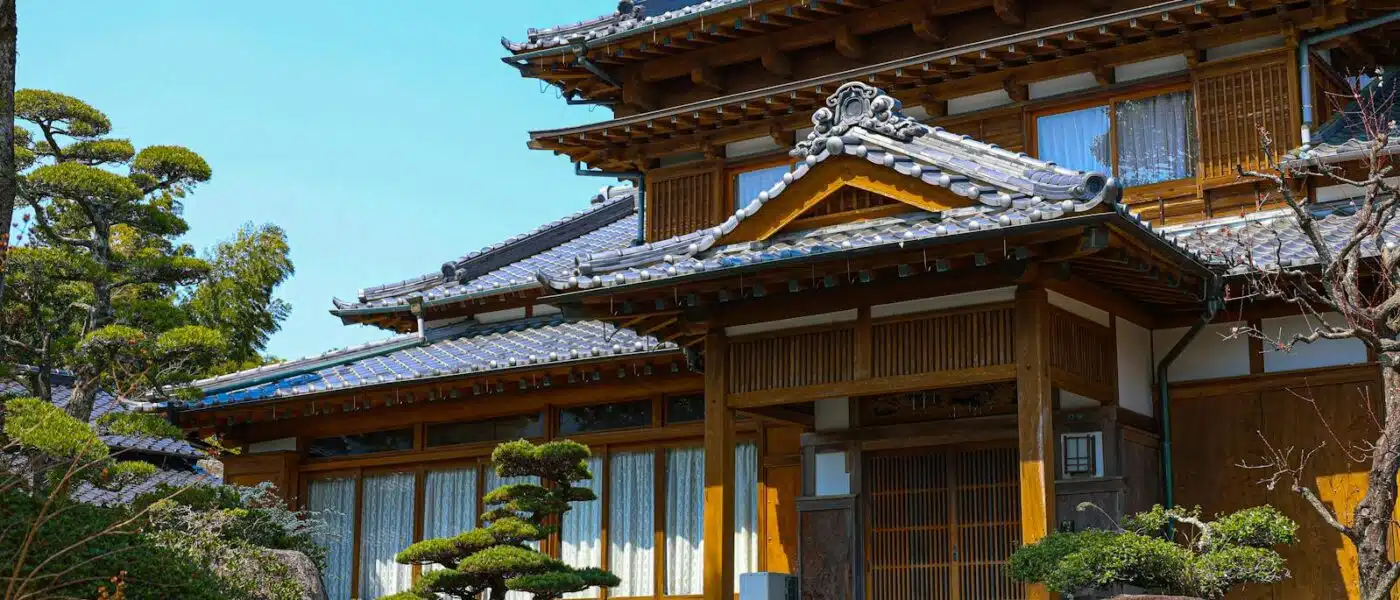
Yakushima has special weight here, home to some of Japan’s oldest living trees; altitude, rain and terrain slow their growth, giving dense grain and long life rather than great height. Japanese culture has long treated forests with respect rather than as something to conquer, and in Shinto, mountains and old woods are associated with kami, spirits. That doesn’t bring ritual into shinrin-yoku, but it shapes the restraint and attentiveness at its core.
Why a Certified Guide Matters
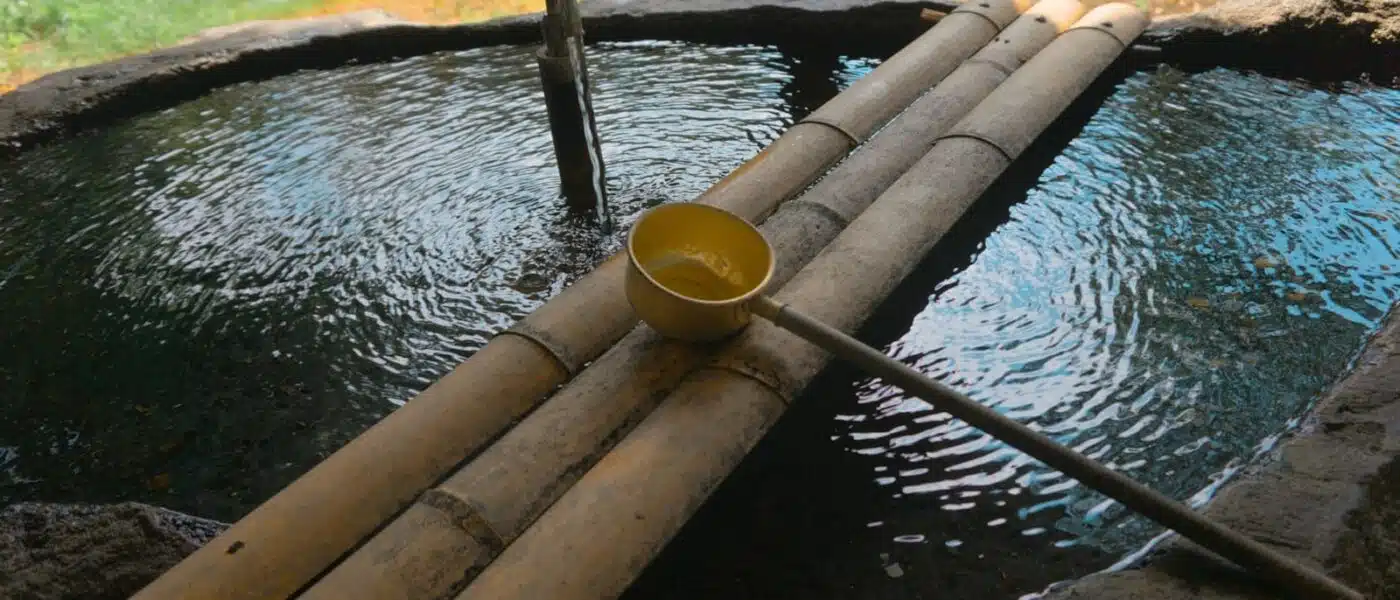
Left to yourself, forest bathing easily becomes either a hike or a meditation, and a certified guide keeps it from being either. Their role isn’t to interpret the forest but to shape how you meet it: moving slowly, pausing often and turning your attention to what usually goes unnoticed, the texture of bark, shifts in temperature, light moving over moss and leaf. Guides watch for signs of overstimulation or tiredness and adjust, choose routes for terrain, canopy and sound rather than views, and use silence deliberately without forbidding conversation. You don’t have to steer yourself or reach any particular state of mind. It’s a deeply restful day for a couple or a solo traveller.
We know where you will be welcome, and where to take more care.
Request a quote →How a Session Unfolds
Before you enter the forest, your guide leads a short physical warm-up of breathing matched to movement, posture checks and gentle stretching to ease tension, building awareness without meditation language or visualization. Along the walk come several pauses of five to ten minutes each: sitting on a log, standing under an ancient cedar, kneeling by a stream. Changing position resets your attention rather than stirring emotion, and your guide decides how often and how long.
The prompts are concrete. You’re asked to listen for the separate layers of forest sound rather than seek silence, to notice the different greens of moss, leaves and lichen, and sometimes to touch, feeling bark or the temperature difference between shade and open ground, without being asked to interpret any of it. The session ends without ceremony, and you walk back at a natural pace rather than hurrying, so the effects of all that stillness can settle.
Moss, Mist and Steady Cool
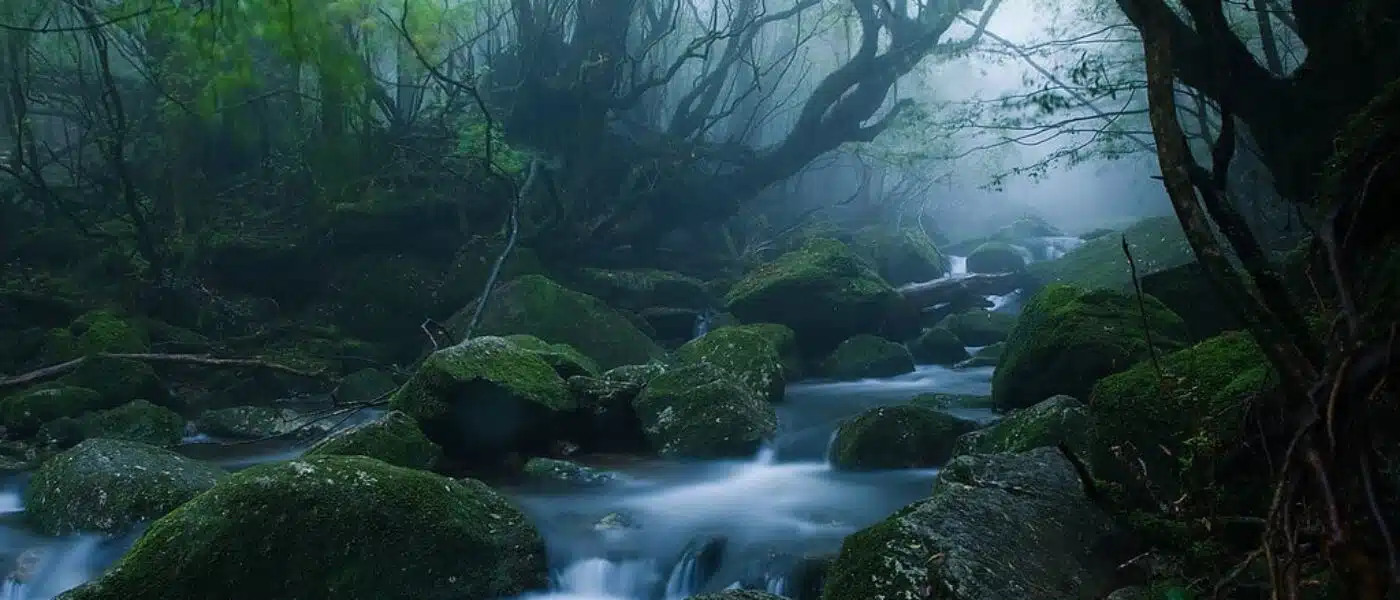
Yakushima gets 100 to 150 inches of rain a year, among the most in Japan, so moss covers almost everything, rock, fallen wood, roots and lower trunks, soaking up sound and damping echoes, while light filtering through the mossy canopy keeps the understory softly dim. The Yakusugi, an endemic cedar that can live beyond 1,000 years, often has a trunk 20 feet across, with camellia, ferns and dense undergrowth below. The ground is uneven throughout, with exposed granite, logs at every stage of decay and roots that demand attention as you walk.
Under the canopy it stays between 10 and 18°C all year, far cooler than the coast, and consistently humid, so your body barely has to cope with temperature swings. Interior trails follow natural ridges and watercourses rather than engineered switchbacks. Your Out Of Office LGBTQ+ travel specialist can arrange the guide and a welcoming place to stay on the island, and our Japan guide covers LGBTQ+ rights and travel advice.
Tell us where your mind keeps going back to. We will do the rest.
A line or two is enough to start. A specialist will pick it up from there.
More Moments in Japan
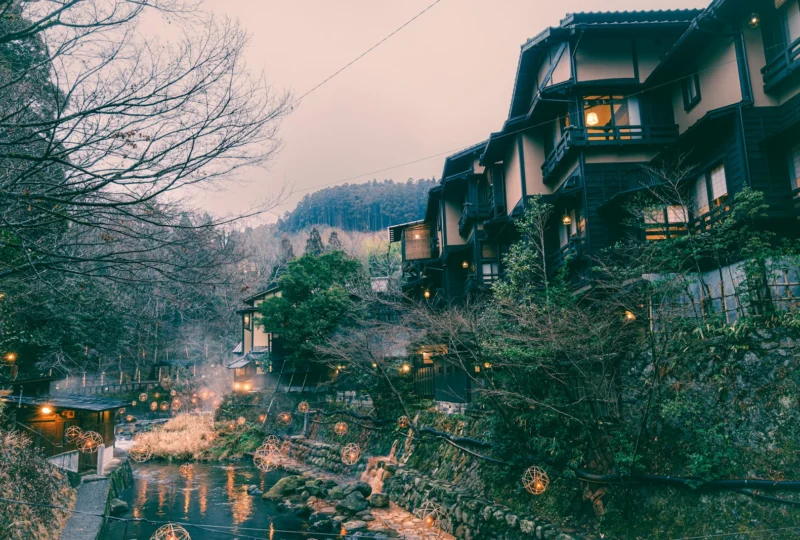
Kinosaki Onsen After Hours, with a Private Bath for Two
A Town Built for Bathing Kinosaki Onsen is a small canal town on the north coast of Hyogo Prefecture, shaped almost entirely by water. For over 1,300 years people have come not for temples or views but to bathe. Its seven public bathhouses line a willow-edged canal, all fed from the same geothermal source and each with its own history and character.
Discover more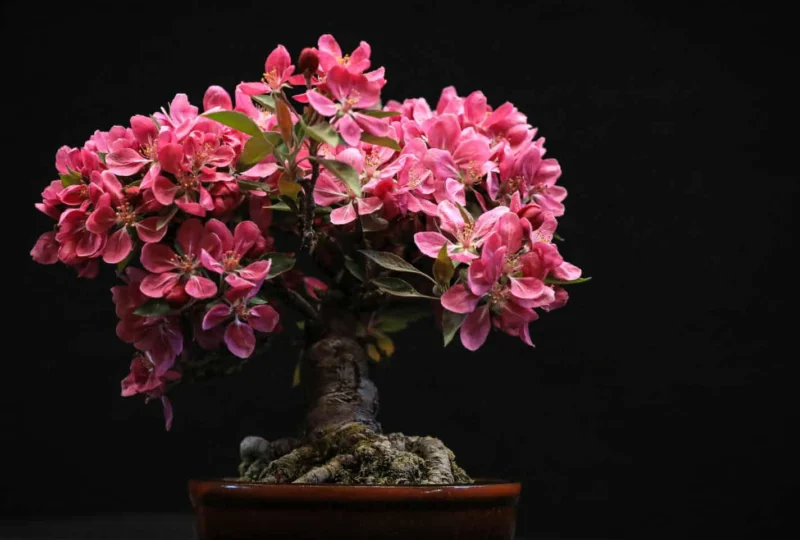
A Private Bonsai Workshop with a Master in Omiya Bonsai Village
From Chinese Penjing to Zen Discipline Bonsai began in Tang dynasty China as penjing, miniature landscapes arranged in trays. Buddhist monks brought it to Japan in the Heian period, where it became an art of the single tree rather than the composed scene, closely linked to Zen: simplicity, restraint and balance as expressions of a worldview, not mere style.
Discover more
Arashiyama’s Bamboo Grove at First Light, with a Private Photographer
A Courtly Retreat and a Famous Sound Arashiyama became a favourite escape in the Heian period, when members of the imperial court came to flee the summer heat and enjoy nature. The bamboo that defines the grove was first grown for practical things like baskets and fencing, but it gained cultural meaning as nearby temples, including Tenryu-ji, brought it into their practice.
Discover more
We plant trees for every booking
For every booking made with Out Of Office we commit to planting trees in your name to help reduce the impact of travel on future generations. You'll even get a link to see where your trees are planted in the world via our partner Ecologi.


We donate to Rainbow Railroad with every booking
Rainbow Railroad helps LGBTQ+ people escape state-sponsored violence and persecution. A donation goes with every trip we sell, funded by us and never added to your price.


Start Planning Your Trip
Tell us where you would love to go, when you are thinking of travelling and what kind of trip you have in mind. One of our LGBTQ+ travel specialists will create a tailor-made itinerary designed around your destination, style and preferences.
One named specialist, first enquiry to homecoming. No call centre, and nothing is charged until you decide to book.