




Editorials
Bariloche and Argentina’s Lake District: A Luxury Travel Guide
Explore Bariloche, Villa La Angostura and San Martín de los Andes with our luxury guide to Argentina’s Lake District, including hotels, scenic drives, honeymoons and LGBTQ+ travel.
Argentina’s Lake District is Patagonia at its most accessible. Instead of the glaciers and bare steppe farther south, this part of the country is a landscape of deep blue lakes, forested mountains, small alpine towns and roads that seem designed for stopping every few miles.
The region stretches through northern Patagonia, with Bariloche, Villa La Angostura and San Martín de los Andes forming the most useful route for a first trip. The famous Seven Lakes Route connects Villa La Angostura with San Martín de los Andes over roughly 110 kilometres, passing lakes including Correntoso, Espejo, Villarino, Falkner and Machónico.
For luxury travellers, it works particularly well because you can spend the day hiking, sailing or driving through national park scenery without giving up a comfortable base at night.
Bariloche: the gateway to the lakes
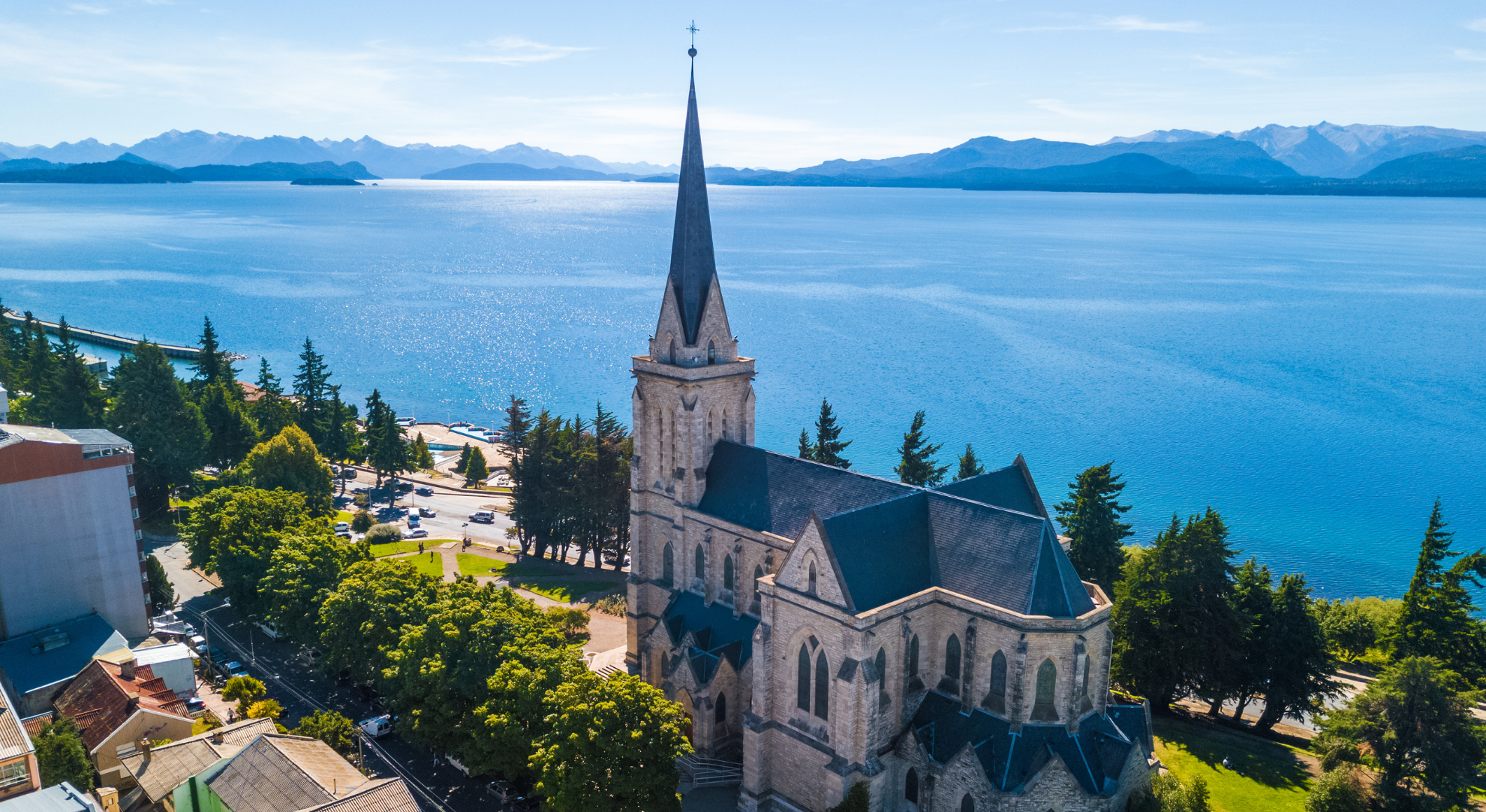
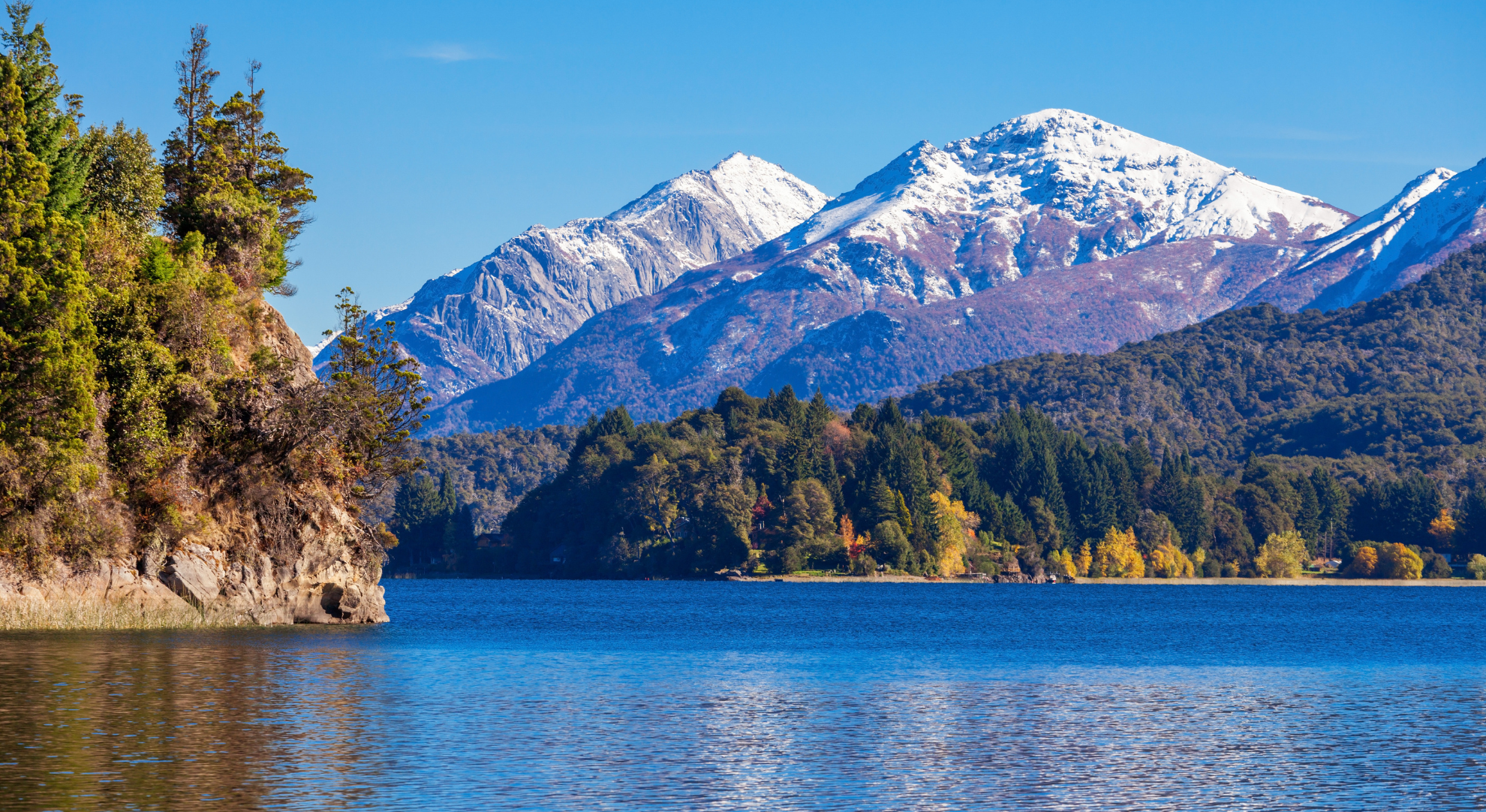
Bariloche sits on the shore of enormous Lake Nahuel Huapi, with mountains rising beyond the water. It is the biggest town in the region and the natural starting point for most journeys through the Lake District.
One of the best introductions is the Circuito Chico, a loop west of town through forests and along the edge of Nahuel Huapi and Moreno lakes. It passes Puerto Pañuelo, the Llao Llao peninsula and viewpoints across the surrounding mountains. Boats leave from Puerto Pañuelo for Victoria Island, the Arrayanes forest and Puerto Blest.
Bariloche itself has more going on than its landscape sometimes gets credit for. The town has a strong chocolate-making tradition, plenty of Argentine restaurants and breweries, and a distinctive architectural style influenced by the Alpine imagery adopted as the city developed into a mountain resort.
It is also one of Argentina’s main ski destinations in winter, with Cerro Catedral nearby, while the warmer months are better for hiking, kayaking, sailing and longer days exploring the national park.
Where to stay in Bariloche
The landmark address is Llao Llao Resort, set on a peninsula west of the city between lakes and wooded hills. Its location is the main event. Depending on the room, views stretch towards Nahuel Huapi, Moreno Lake and Mount Tronador, and the resort has an 18-hole golf course, spa, indoor-outdoor pool and several restaurants.
It is a large resort rather than an intimate lodge, which makes it particularly good for couples who want plenty to do without leaving the property every day.
For a honeymoon, we would generally favour one of the lake-facing rooms or suites. Waking up to the water and mountains is a far better reason to stay here than simply being able to say you booked Bariloche’s most famous hotel.
Villa La Angostura: smaller, quieter and surrounded by forest
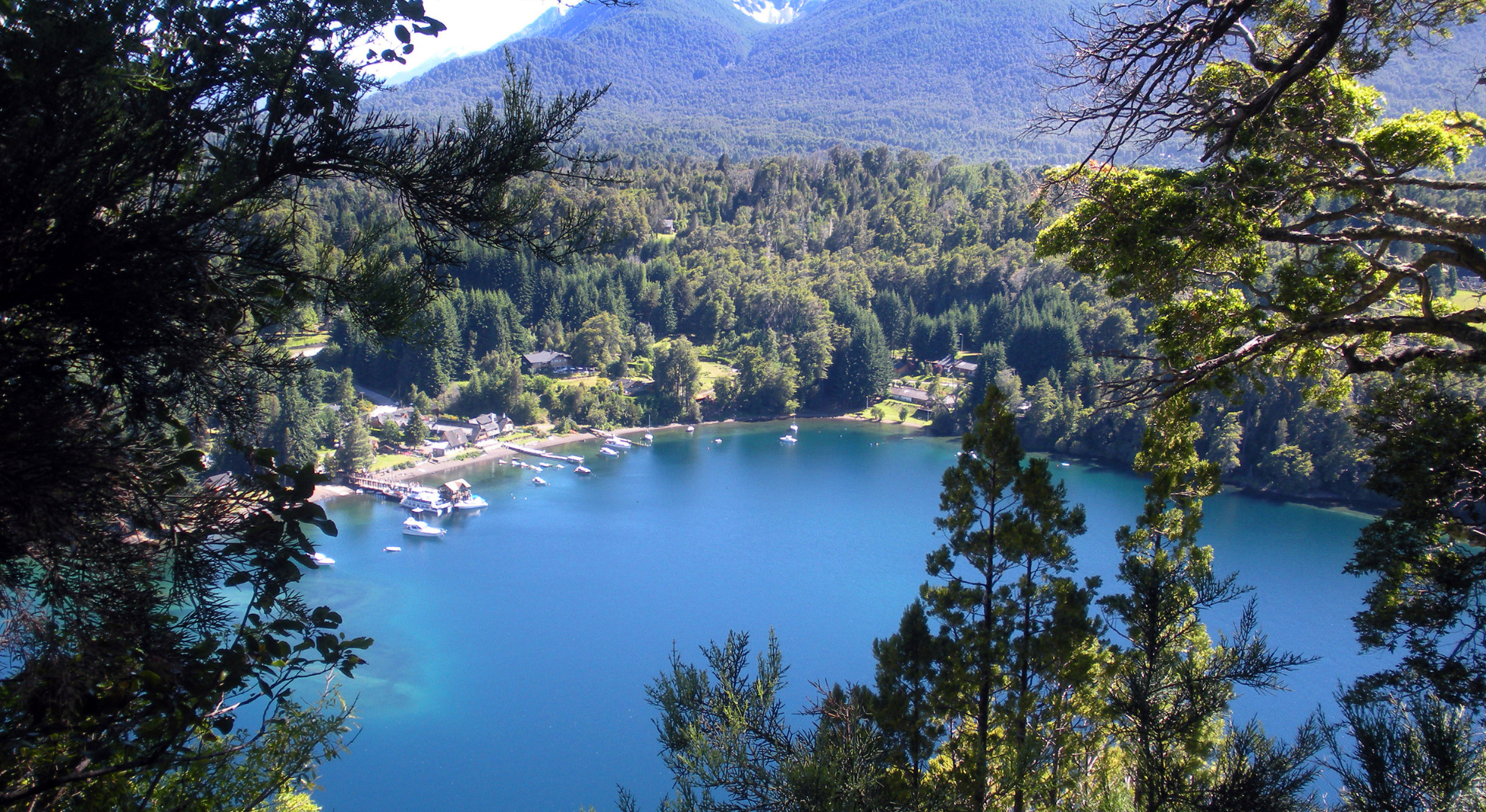
About an hour and a half from Bariloche, Villa La Angostura is noticeably smaller and more relaxed.
It sits at the northern end of Lake Nahuel Huapi, surrounded by forest and mountains, with quick access to Los Arrayanes National Park and the beginning of the Seven Lakes Route. In winter, nearby Cerro Bayo provides skiing and snowboarding, while summer is about the lake, walking trails and long drives through the surrounding national parks.
For couples, Villa La Angostura is arguably the most natural place in the region to slow down. There is less reason to rush between sights. Stay somewhere directly on the lake, spend part of the day on the water, have lunch overlooking the mountains and leave enough time to do very little.
It is also a good alternative to Bariloche if you would rather wake up somewhere quiet than be close to restaurants and shops.
Drive the Seven Lakes Route
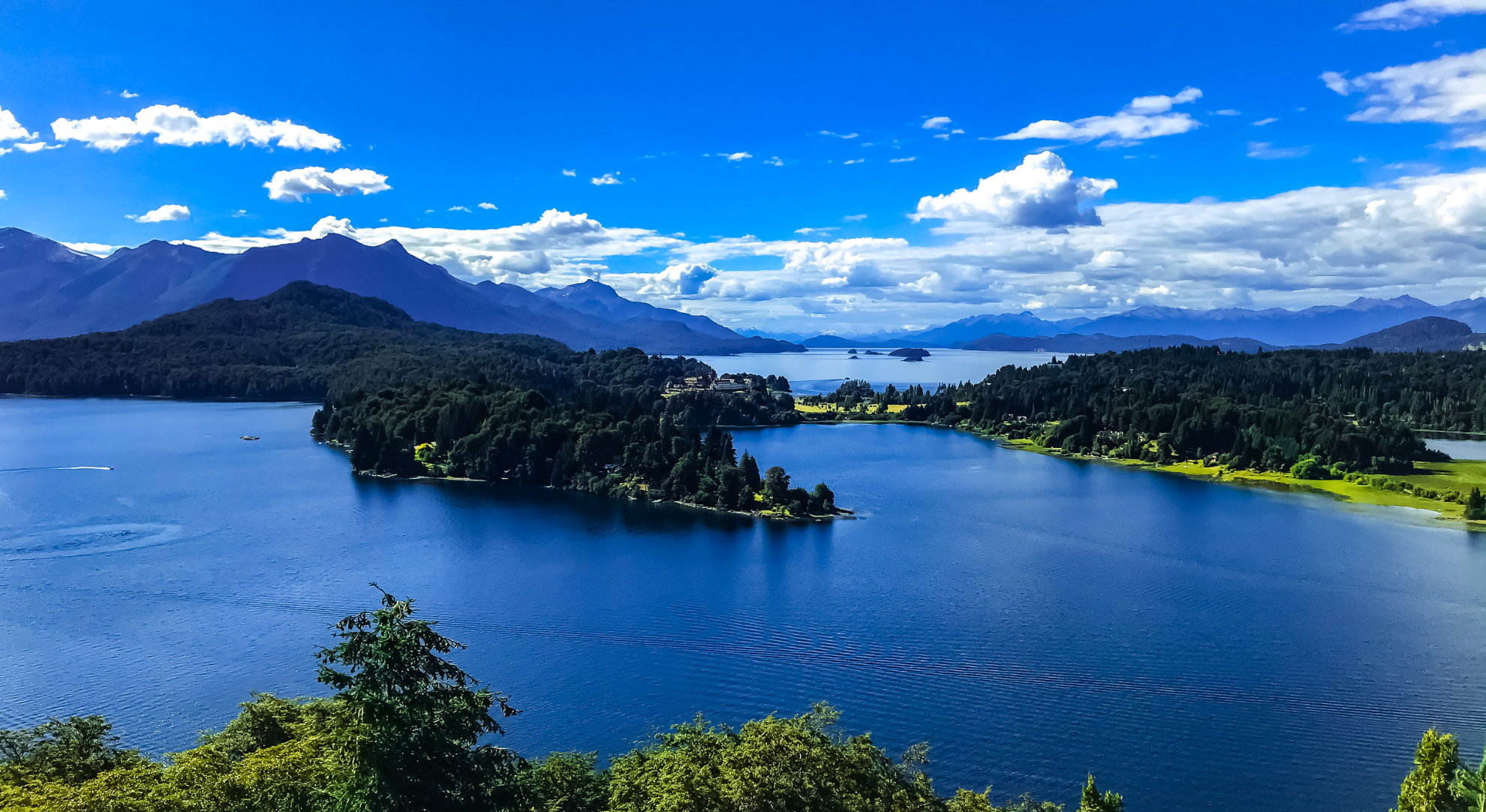
The drive between Villa La Angostura and San Martín de los Andes is one of the reasons to come to this part of Argentina in the first place.
Route 40 runs north through forest and around a succession of glacial lakes. The traditional route includes Espejo, Correntoso, Villarino, Escondido, Falkner, Machónico and Lácar, although there are plenty of worthwhile detours beyond those seven.
Do not treat it as a transfer.
The journey is only around 110 kilometres, but that misses the point. Stop at the lake shores, walk some of the shorter trails and allow the drive to take most of the day. Ñivinco waterfall is one option along the route if you want to break up the journey with a walk.
A private driver is worthwhile if nobody wants to spend the day watching the road. Otherwise, this is one of those rare places where renting a car adds to the trip.
San Martín de los Andes
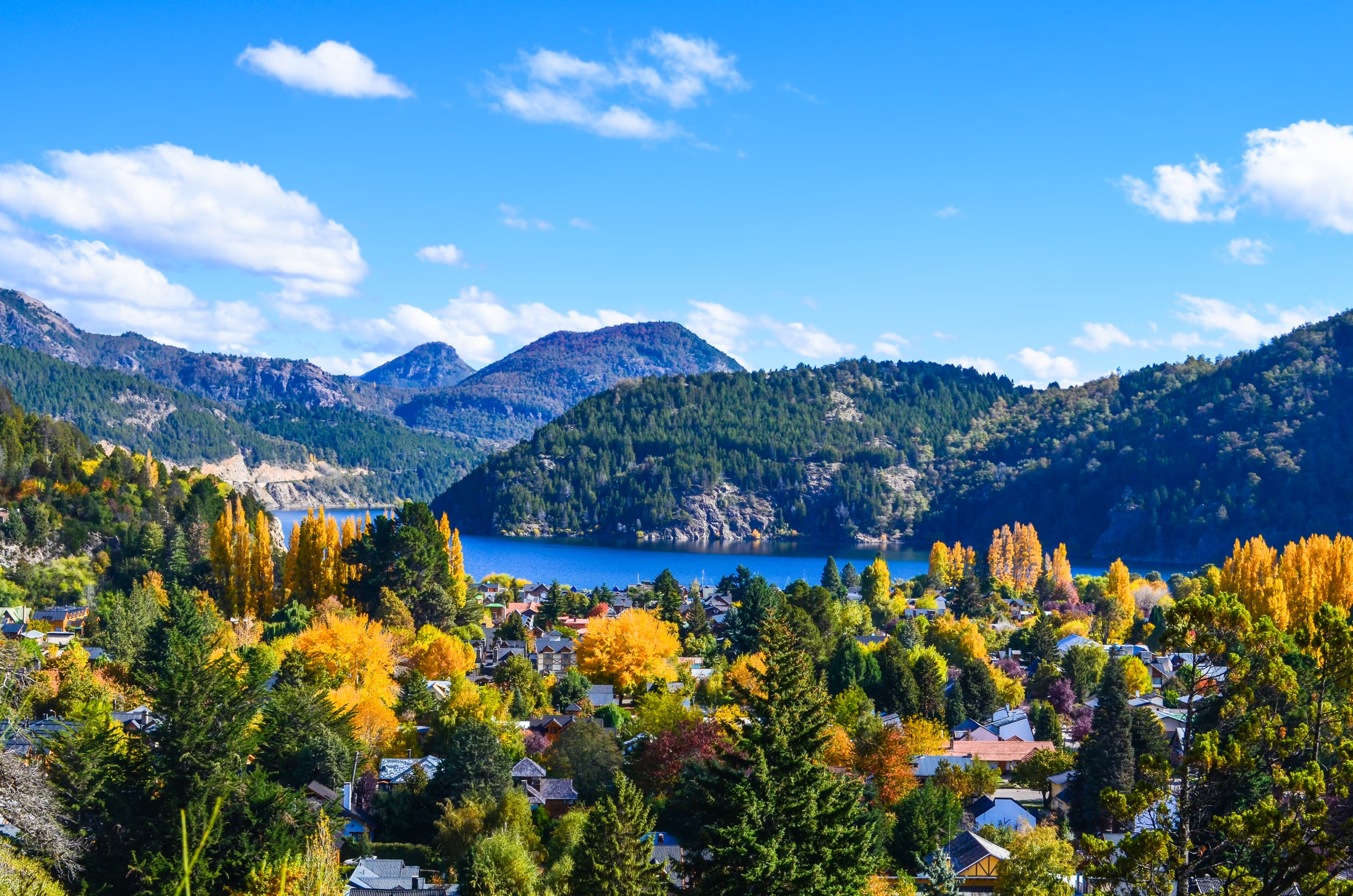
At the northern end of the route, San Martín de los Andes sits beside Lake Lácar with Lanín National Park beyond it.
It feels different again. Bariloche is the established resort town, Villa La Angostura is the secluded lake retreat, and San Martín has the character of a compact mountain town that still works as a destination in its own right.
The surrounding landscape opens up opportunities for hiking, fishing, boating and mountain drives, while winter brings skiing at Chapelco. The area is also a useful place to learn more about Mapuche culture, an important part of the history and identity of northern Patagonia. Argentina’s tourism authority specifically highlights this alongside Lanín Volcano as part of a longer journey through the region.
It is worth staying at least two nights rather than reaching San Martín and immediately turning back towards Bariloche.
The hard part is not finding a beautiful place. It is finding the right one for you.
Request a quote →What makes the Lake District different from southern Patagonia?
The Lake District and southern Patagonia are not interchangeable.
Around El Calafate and El Chaltén, the drama comes from glaciers, exposed mountains and huge expanses of steppe. The Lake District is greener and softer, with forests reaching the water, towns dotted between the lakes and far more opportunity to explore by road.
That also changes the pace of the trip.
You can hike in the morning, have lunch back in town, spend the afternoon on a boat and still return to a proper hotel for dinner. It is Patagonia without the sense that every excursion has to become an expedition.
For some travellers, that is precisely the appeal.
Is Argentina’s Lake District good for a honeymoon?
Very.
It works particularly well for couples who want scenery and outdoor experiences but do not necessarily want every day of their honeymoon to involve a demanding hike.
A good Lake District honeymoon might combine a few nights at a resort outside Bariloche, a quieter lakefront stay in Villa La Angostura, the Seven Lakes drive and a final couple of nights in San Martín de los Andes.
It also pairs extremely well with Buenos Aires. Fly south after several days in the capital and the change is immediate. One day you are walking through Recoleta or eating late in Palermo; the next you are looking across Nahuel Huapi towards snow-covered mountains.
LGBTQ+ travel in Argentina’s Lake District
The Lake District does not have the visible LGBTQ+ scene of Buenos Aires, and that is not really why you come here. What matters more is how comfortable the region feels for couples travelling together. Bariloche is the most cosmopolitan base, while the smaller towns are quieter and more traditional, but same-sex couples are a familiar part of Argentina’s tourism landscape and the larger luxury hotels are used to welcoming international LGBTQ+ guests.
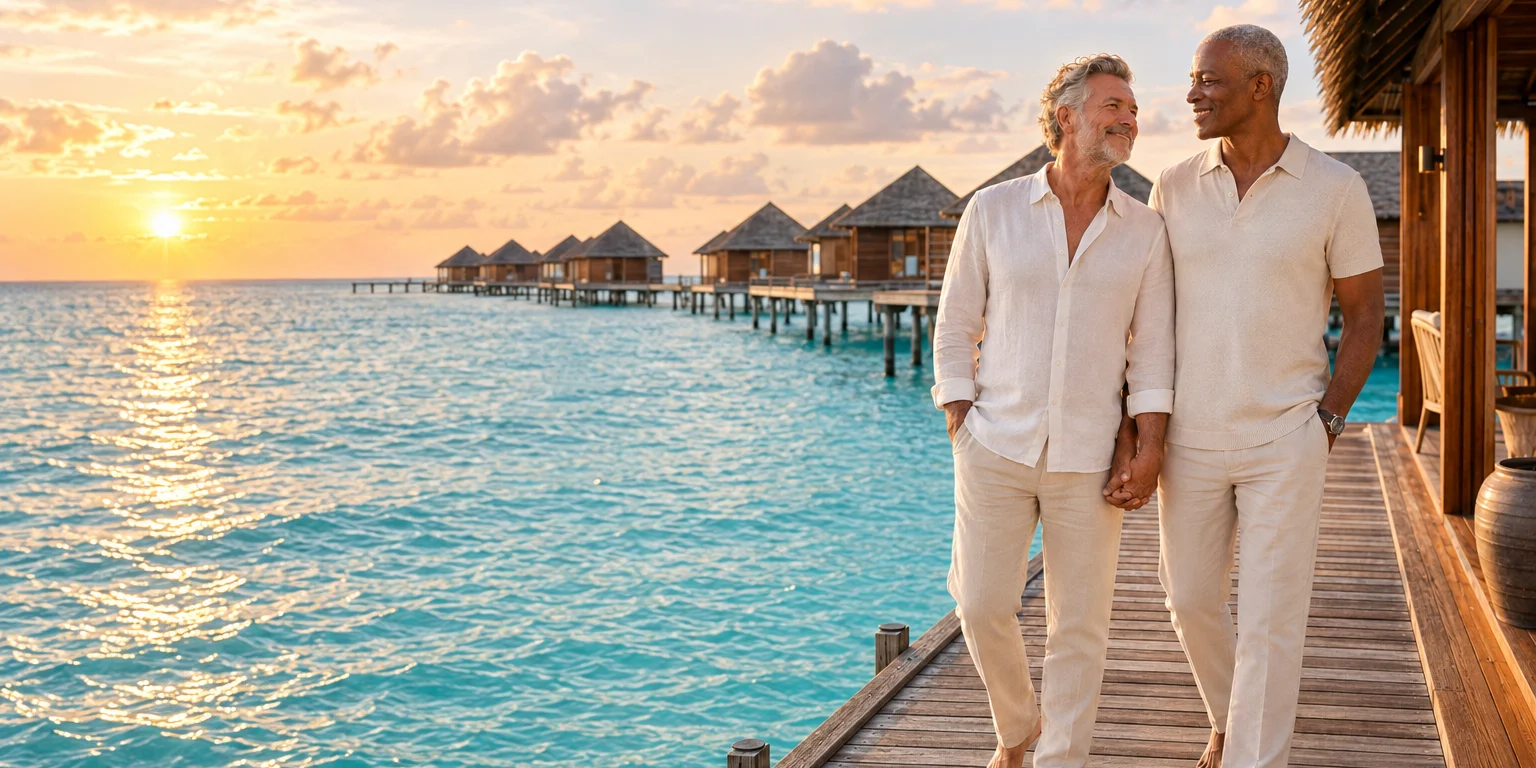
For a honeymoon, the appeal is less about nightlife and more about being able to enjoy the region as a couple, from lakefront hotels and private excursions to long drives through the national parks, without the trip needing to be built around specifically gay venues.
When to visit Argentina’s Lake District
There is no single best season because the region changes so much through the year.
December to March is the obvious period for hiking, lake activities and road trips, with long days and warmer temperatures.
March and April bring autumn colour to the forests and generally fewer visitors. Bariloche’s tourism authority specifically promotes fall for exploring the Circuito Chico and Lake Nahuel Huapi scenery.
June to September turns the Lake District into a winter destination, particularly for skiing around Bariloche, Villa La Angostura and San Martín de los Andes.
For a honeymoon built around driving, walking and time on the lakes, we would usually favour the warmer months.
How long do you need?
Allow seven to ten days if you want to see the region properly.
A week is enough for Bariloche, Villa La Angostura and San Martín de los Andes without rushing. With ten days, you can stay longer in each place, spend more time on the lakes and build in a few days where the itinerary is deliberately light.
That is one of the strengths of Argentina’s Lake District. There are spectacular things to see, but the trip does not have to become a race between them.
For couples planning a longer Argentina honeymoon, it can sit comfortably between Buenos Aires and Mendoza, or replace southern Patagonia altogether if lakes, forests and mountain hotels appeal more than glaciers and long trekking days.
On this page
- Bariloche: the gateway to the lakes
- Where to stay in Bariloche
- Villa La Angostura: smaller, quieter and surrounded by forest
- Drive the Seven Lakes Route
- Do not treat it as a transfer.
- San Martín de los Andes
- Luxury Argentina: Buenos Aires, Iguazu, Mendoza & Patagonia
- What makes the Lake District different from southern Patagonia?
- Is Argentina’s Lake District good for a honeymoon?
- Plan Your Gay Honeymoon in Argentina
- LGBTQ+ travel in Argentina’s Lake District
- When to visit Argentina’s Lake District
- A Luxury Guide to Ushuaia: Argentina’s End of the World
- How long do you need?
New to Out Of Office?
We are a luxury travel company for LGBTQ+ travellers. Everything we sell is tailor-made, planned by one named member of our team throughout, and nothing on this site is a fixed package unless it says so.
Where exclusivity meets inclusivity
Ten years, hundreds of five-star reviews, and a team who will tell you when a destination is not right for the trip you have in mind.
See your complete itinerary before you decide.
Your specialist will bring together every detail of your trip, with clear pricing throughout.
Stellar service. Stellar products. Stellar people and it gets so much better when you pick up the phone and call.
Anthony S.
Super client centred service. From first contact I have had warm, efficient, friendly and flexible service.
John
I’m confident in giving Out Of Office a 5-star review! They are one of the leaders in this space without a doubt.
Tiberiu
We plant trees for every booking
For every booking made with Out Of Office we commit to planting trees in your name to help reduce the impact of travel on future generations. You'll even get a link to see where your trees are planted in the world via our partner Ecologi.


We donate to Rainbow Railroad with every booking
Rainbow Railroad helps LGBTQ+ people escape state-sponsored violence and persecution. A donation goes with every trip we sell, funded by us and never added to your price.

Start Planning Your Trip
Tell us where you would love to go, when you are thinking of travelling and what kind of trip you have in mind. One of our LGBTQ+ travel specialists will create a tailor-made itinerary designed around your destination, style and preferences.
One named specialist, first enquiry to homecoming. No call centre, and nothing is charged until you decide to book.