







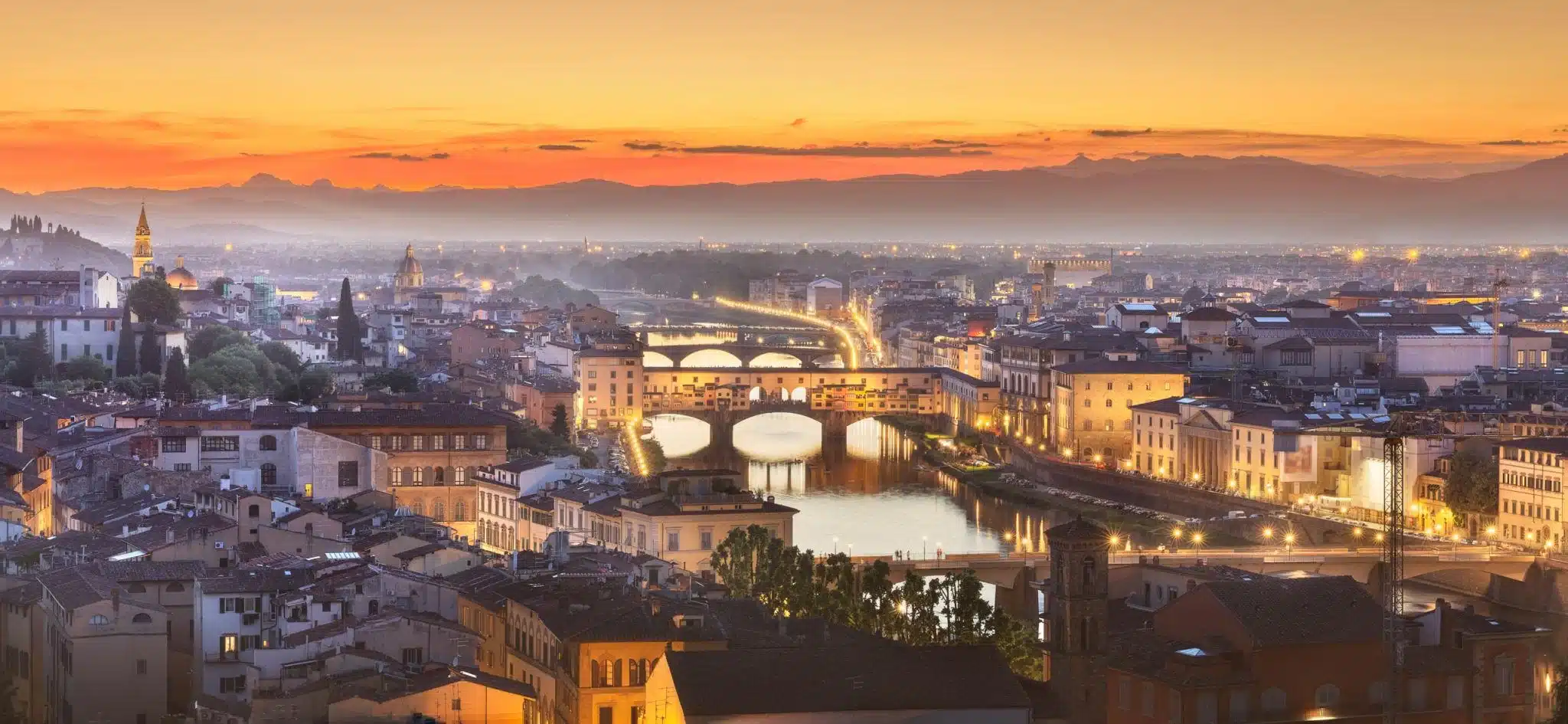
Moment · Italy
Walking Florence’s Vasari Corridor Above the Ponte Vecchio
Cross the Arno on the Medici's secret elevated passage, through 73 windows of Florence, from the Uffizi to the Boboli Gardens.
A Private Road Above the City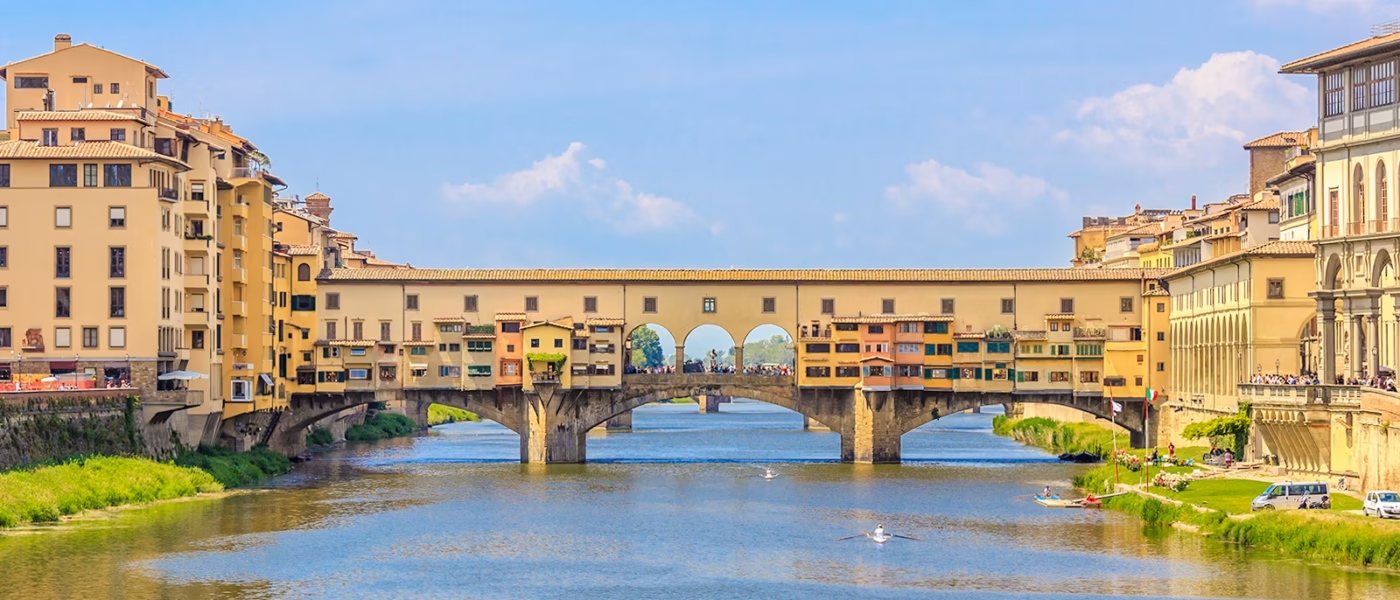
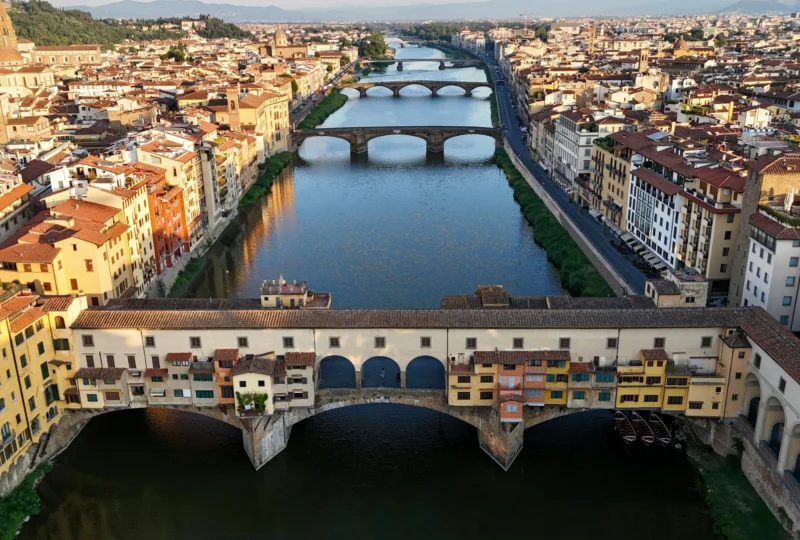
For about 760 metres the Vasari Corridor runs high above Florence’s streets, leaving the Uffizi, riding along the top of the Ponte Vecchio, crossing the Arno, skirting the church of Santa Felicita and emerging in the Boboli Gardens behind the Pitti Palace.
Giorgio Vasari designed it and had it finished in just five months in 1565, for the wedding of Cosimo I de’ Medici’s son Francesco to Joanna of Austria. Building it meant bargaining with owners along the way, engineering a passage over the bridge and routing around the medieval tower of the Mannelli family, who wouldn’t let it be pulled down.
It was as much about safety as ceremony. Political violence was common in Renaissance Florence, and a private raised route linking the seat of government, the offices and the family palace was real protection as well as a show of power. When the corridor reached the Ponte Vecchio, Cosimo had the butchers who’d worked there since 1345 replaced by goldsmiths and jewelers, and the goldsmiths are there still.
Vasari’s Greatest Commission
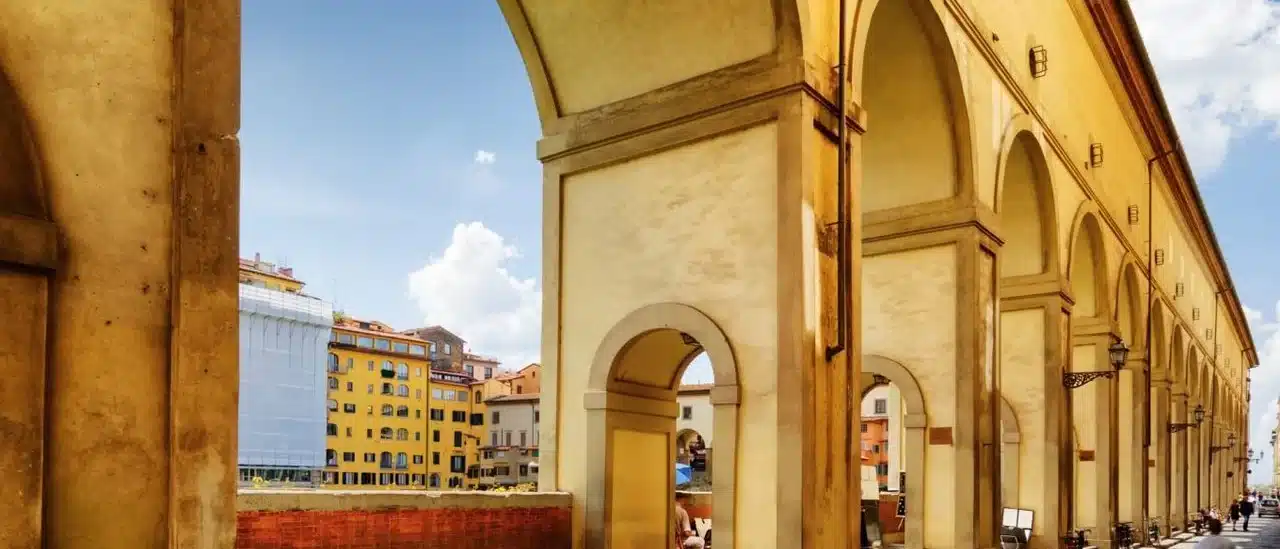
Vasari is best remembered for his Lives of the Artists, still a key source on Renaissance painters and sculptors, but he was also a working architect on the Medici payroll, and the corridor, an extension of the Uffizi he’d designed five years before, was among his biggest projects.
In August 1944 the retreating German army blew up the medieval buildings at either end of the Ponte Vecchio; the bridge survived, and so did the corridor above it.
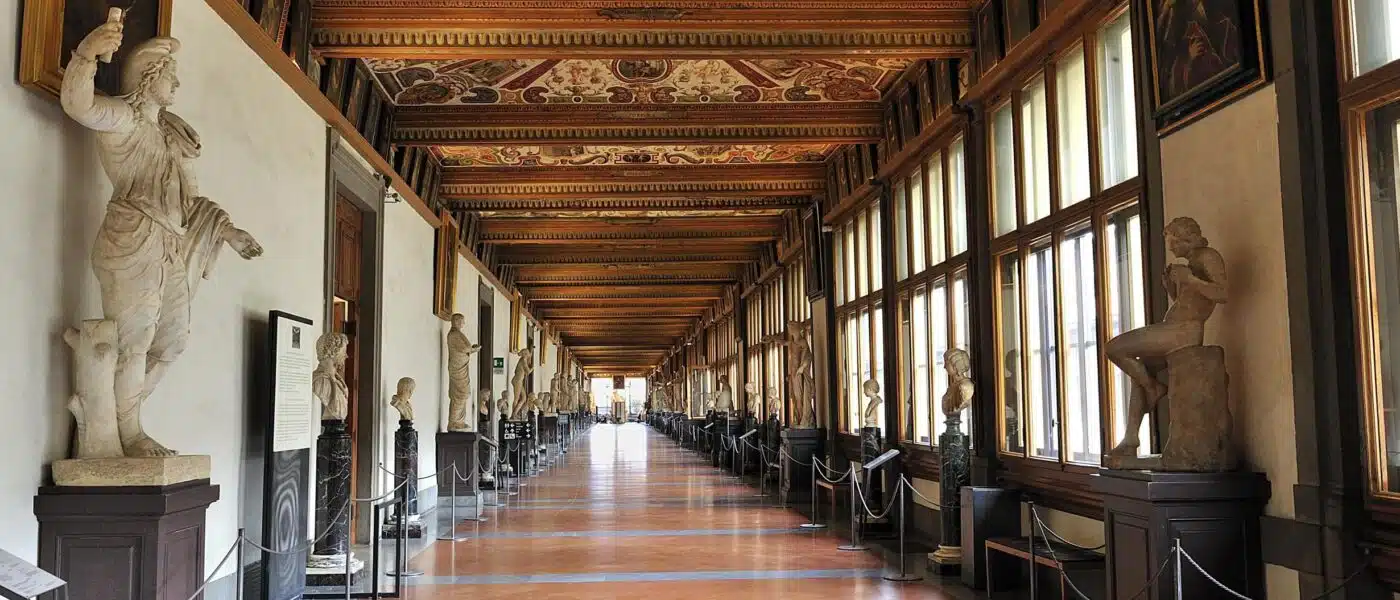
A recent major restoration shored up the structure, improved lighting and climate control and rethought the visit.
The self-portrait collection that once lined the walls, more than 700 works from the Renaissance to the twentieth century, now has its own rooms on the Uffizi’s second floor, and the corridor is once again what it was built to be, a raised promenade over the city, its 73 windows opened to make the most of the views.
We know where you will be welcome, and where to take more care.
Request a quote →Why Walk It Privately, Even at Night
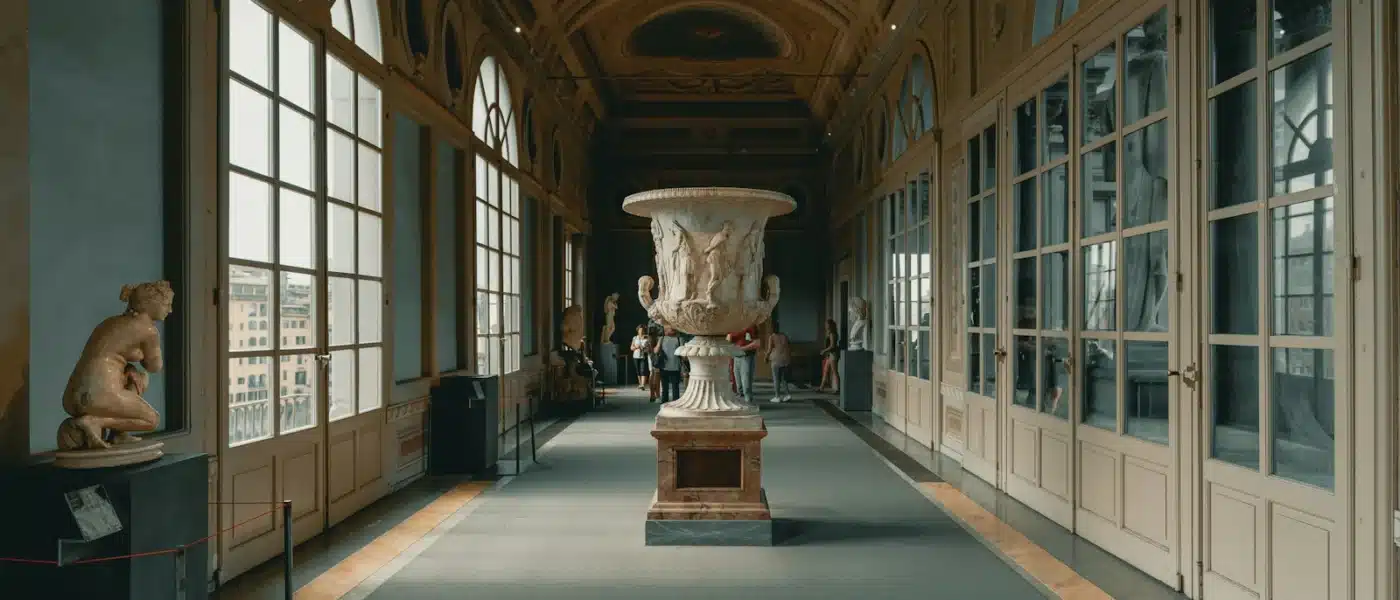
The corridor is really a sequence of views, each window framing a different piece of Florence, and privately you can move at the pace it deserves, pausing at the windows that matter rather than trailing a group.
On Friday evenings it stays open until 11 pm, and the city below, the lit Ponte Vecchio, the river and the old centre, is at its most magical.
Walking it then with a guide who can explain what each stretch says about the Medici and the city beneath them is something no street-level visit can match, and a wonderfully romantic evening for a couple.
Uffizi to Boboli
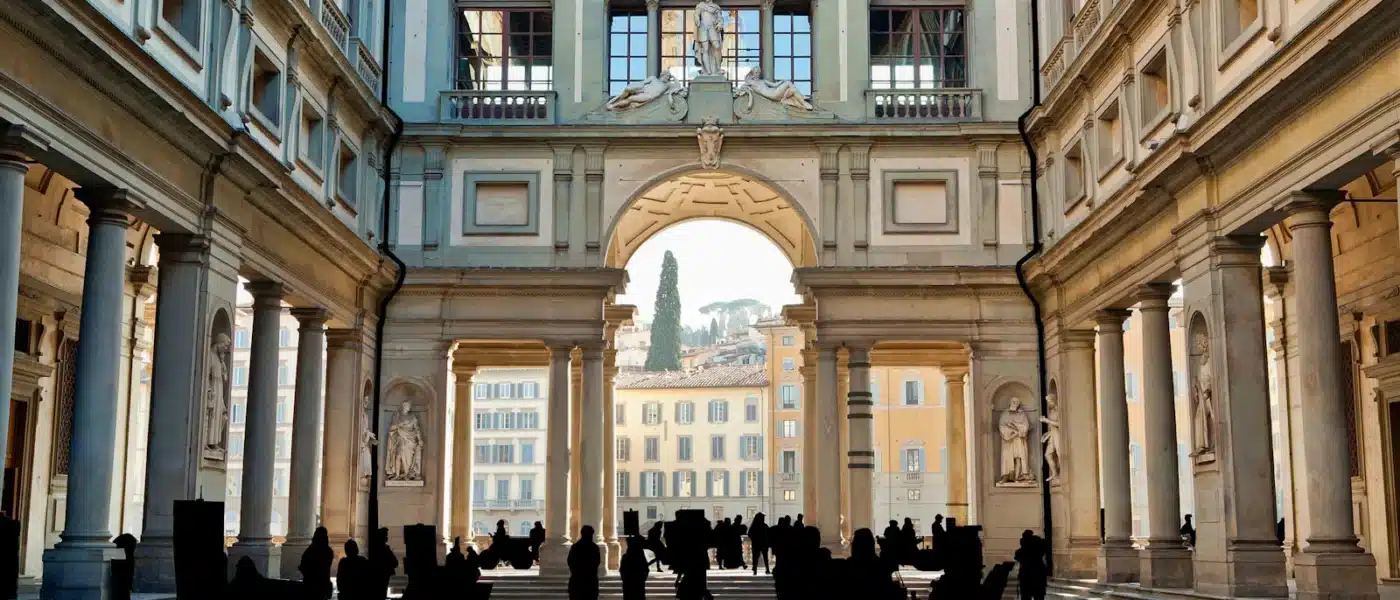
Step in from the Uffizi and the mood shifts at once: lower ceilings, narrower walls and an immediate sense of a private route. The stretch over the Ponte Vecchio is the most direct, with windows on both sides looking down on the Arno and across the roofs of the goldsmiths’ shops, a view that has barely changed since Cosimo first walked here.
The route passes through Santa Felicita, where Vasari built an enclosed balcony so the Medici could hear Mass unseen by the congregation below, and ends at the Pitti Palace’s Boboli Gardens entrance, beside Buontalenti’s grotto in one of the family’s great landscape commissions. Your Out Of Office LGBTQ+ travel specialist can pair the walk with a welcoming hotel in Florence.
Tell us where your mind keeps going back to. We will do the rest.
A line or two is enough to start. A specialist will pick it up from there.
More Moments in Italy
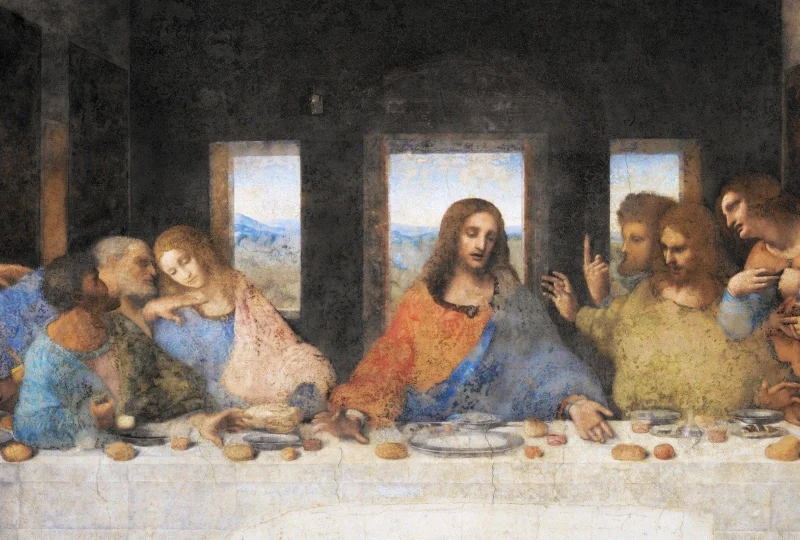
Leonardo’s Last Supper in Milan, on a Private Visit
A Plain Room and an Extraordinary Wall Tucked away in the old dining hall of Santa Maria delle Grazie, a Dominican convent in a calm part of Milan, is a painting scholars have studied and travellers have longed to see for centuries. You may think you know it from a lifetime of copies, lectures and books, but the first glimpse of the real thing, filling the end wall, still takes your breath away.
Discover more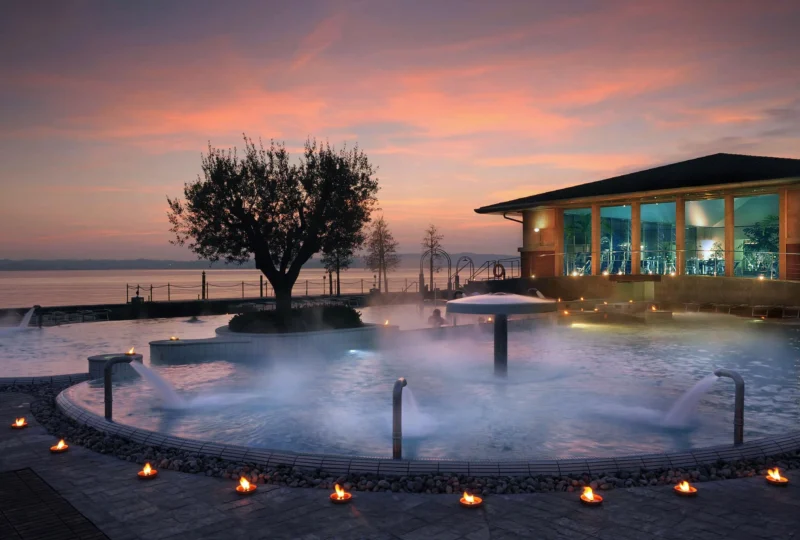
Sirmione’s Thermal Waters: An Early Morning at Aquaria
Hot Springs Beneath the Lake A thin strip of land pushes four kilometres out from Garda's southern shore, and Sirmione's old town fills its end. You cross into it past the Castello Scaligero, where the peninsula is thinnest, then follow the lanes toward the Roman ruins of the Grotte di Catullo on the point and down to the lakefront, where the Aquaria spa stands in a park above the lake.
Discover more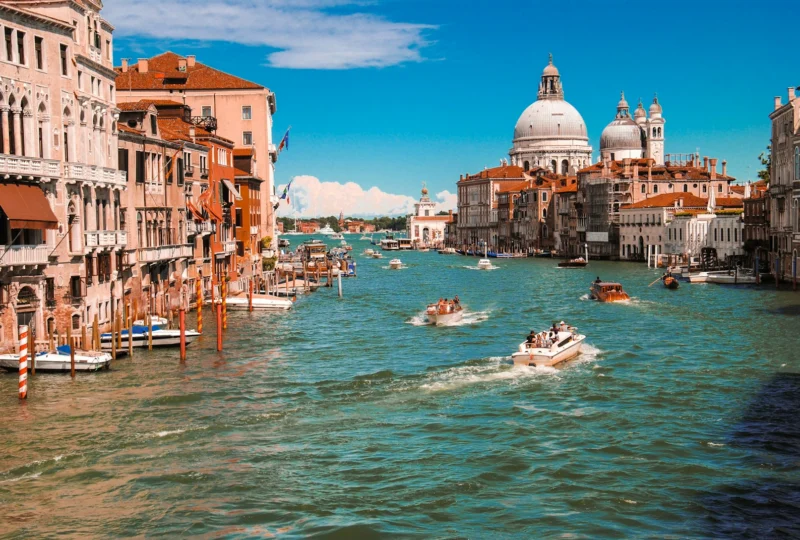
A Private Gondola Through Venice’s Quiet Canals
A Thousand Years on the Water For more than a thousand years, gondolas were how Venice moved, across the lagoon and through the city's waterways. Their flat bottoms, lopsided hulls and ornate iron prow, the ferro, were all shaped for shallow, twisting canals. In the seventeenth and eighteenth centuries there were thousands; today fewer than 500 are still working, most of them for visitors.
Discover more
We plant trees for every booking
For every booking made with Out Of Office we commit to planting trees in your name to help reduce the impact of travel on future generations. You'll even get a link to see where your trees are planted in the world via our partner Ecologi.


We donate to Rainbow Railroad with every booking
Rainbow Railroad helps LGBTQ+ people escape state-sponsored violence and persecution. A donation goes with every trip we sell, funded by us and never added to your price.


Start Planning Your Trip
Tell us where you would love to go, when you are thinking of travelling and what kind of trip you have in mind. One of our LGBTQ+ travel specialists will create a tailor-made itinerary designed around your destination, style and preferences.
One named specialist, first enquiry to homecoming. No call centre, and nothing is charged until you decide to book.