




Moment · Greece
Walking to Skaros Rock from Imerovigli, Santorini
Hike out at sunrise to the rugged headland that was once Santorini's medieval capital, with the whole caldera spread around you.
You set out from Imerovigli down a stretch of concrete stairs; soon the way becomes a narrow earth path as the caldera falls away on both sides. In front of you rises Skaros Rock, a volcanic promontory thrust out over the sea. Santorini’s capital once stood here; today it makes one of the best short walks on the island.
Its position was no accident. Imerovigli occupies the highest part of the caldera rim, and even its name reflects its old role as a lookout: it combines the Greek imera, meaning day, with the Latin vigilare, to watch or keep guard. From up here, approaching ships could be spotted far out in the Aegean. Skaros, directly below, took that natural defensive position one step further.
The landscape itself is much older. Santorini’s caldera was shaped by repeated volcanic eruptions and collapses over hundreds of thousands of years, leaving the immense flooded basin and cliffs you see today. Walking out towards Skaros puts you unusually close to that geology: instead of looking at the caldera from a hotel terrace, you’re moving along part of its exposed volcanic edge.
About Out Of Office
Out Of Office is a luxury tailor-made travel company with a focus on delivering exclusivity and inclusivity. Our passion for global adventure is matched only by our deep commitment to delivering exceptional five-star service.
Everything we do is customised and designed especially for you – our valued customer – based on your exact personal requirements. Each member of our team is widely travelled. This means you get access to first-rate travel insights and the best possible advice from our team of luxury travel experts.
| Enquire Now |
A Capital Lost to the Sea
Rugged volcanic promontory of Skaros with scattered ruins
It’s difficult to picture now, but Skaros was once one of the most important places on Santorini. After the Fourth Crusade brought the island into the orbit of Venetian rule, settlements were built in defensible positions as protection against the pirate raids that were a persistent threat across the Aegean.
Skaros developed into a fortified settlement of roughly 200 houses, together with churches and monasteries, and served as Santorini’s capital for centuries. Its sheer cliffs provided formidable natural defenses: from the sea, the settlement would have appeared almost impossibly perched above the caldera.
Life gradually moved elsewhere. Skaros was eventually abandoned in the eighteenth century, while Fira began to develop as people resettled from the old fortress and went on to become Santorini’s capital in the nineteenth century. Today almost everything that once made Skaros a town has vanished. What remains is a craggy volcanic point, scattered traces of walls and churches, and one of the clearest reminders that Santorini’s clifftops were once chosen for survival rather than sunsets.
The Hike Itself
Hikers crossing the spine of Skaros Rock toward the summit
The round trip is about a mile and takes 45 minutes to an hour, although it’s worth allowing longer if you want to explore the chapels and stop for photographs. The distance is short; the steps are what you feel.
From Imerovigli, hundreds of them take you down towards the saddle connecting the village with Skaros. The path then flattens as it follows the rock’s spine, with increasingly open views across the caldera. The final approach to the higher ground is rougher, and reaching the top involves scrambling over steep rock without railings.
There’s no need to treat the summit as the point of the walk. The views unfold throughout the route, across the flooded caldera towards Thirassia and the volcanic islands, while looking back gives you one of the best perspectives on Imerovigli itself: white houses appearing almost stacked into the dark cliff.
We know where you will be welcome, and where to take more care.
Request a quote →Two Chapels on the Rock
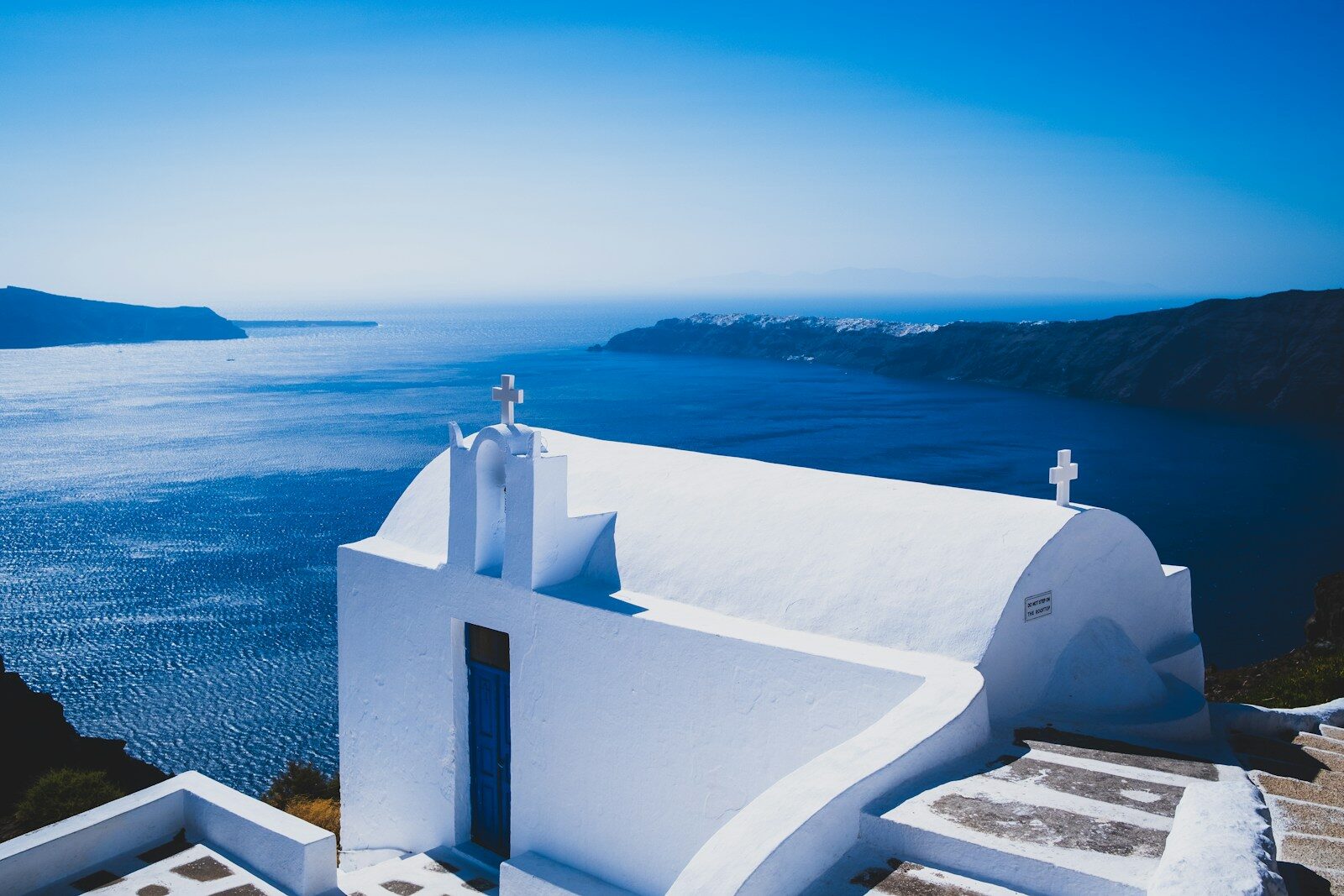
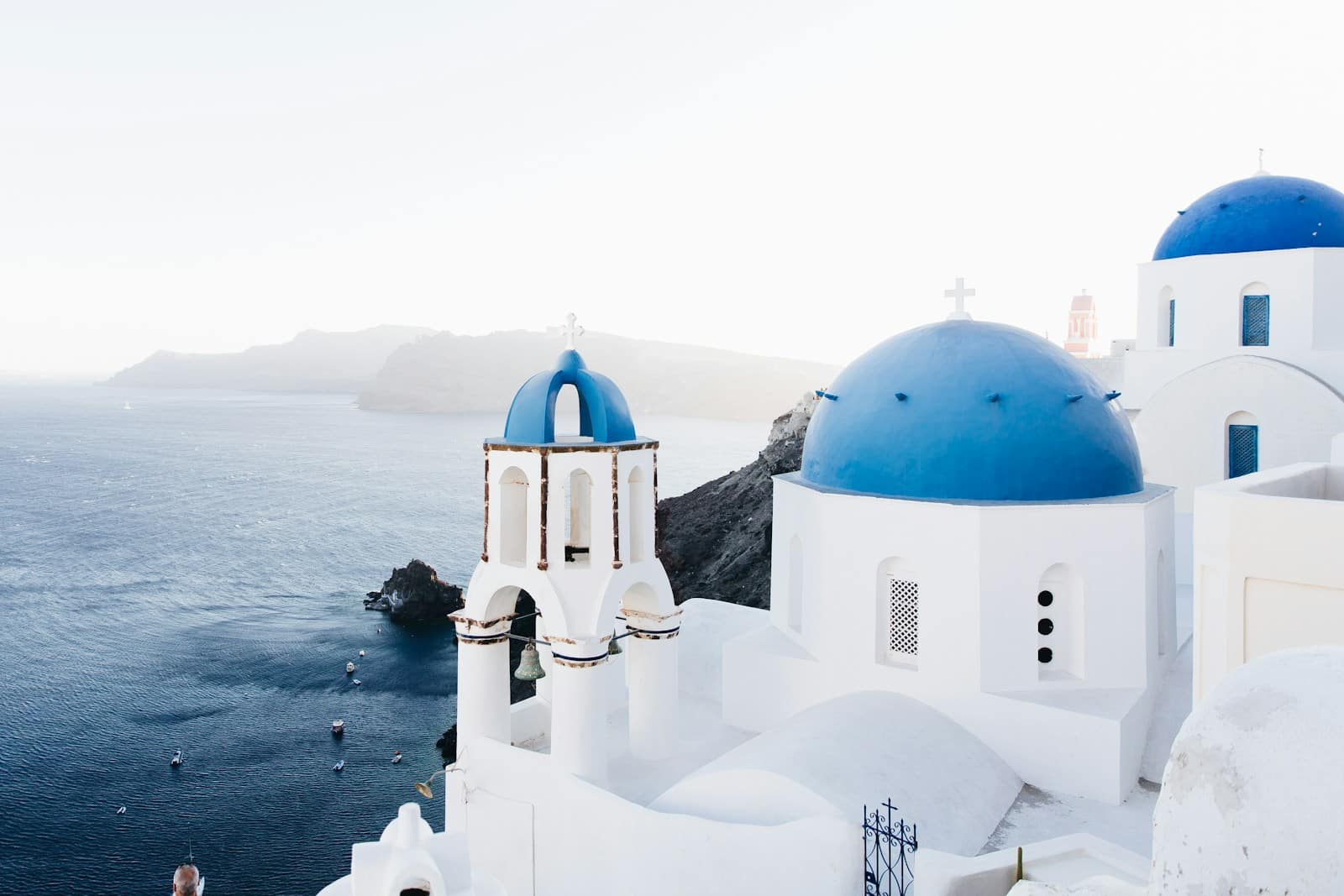
Chapel of Panagia Theoskepasti on the cliff edge at Skaros
Halfway along, the little whitewashed church of Agios Ioannis makes a natural place to stop. Continue around Skaros rather than simply climbing upwards and you reach Panagia Theoskepasti, tucked dramatically against the seaward side of the rock.
The chapels make more sense when you know how densely settled Skaros once was. The fortified town included houses, churches and monasteries, part of a wider medieval Santorini in which religion and defense occupied the same extraordinary landscape. When much of the settlement disappeared, its surviving churches became some of the few visible traces of the community that lived here.
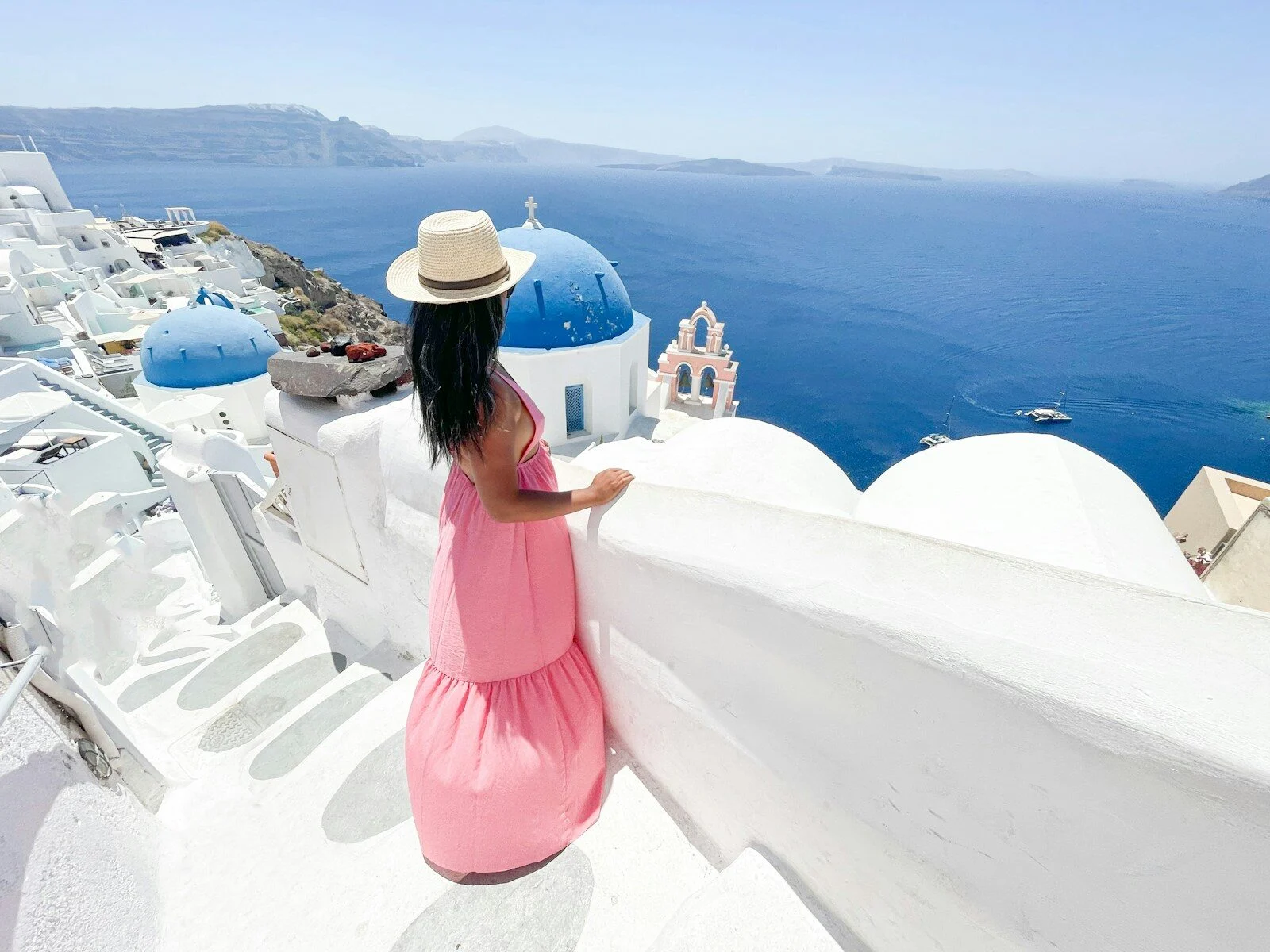
Panagia Theoskepasti is particularly striking because of its isolation. White walls and a blue dome sit against bare volcanic rock with the Aegean immediately beyond. It feels far removed from the busy lanes and infinity pools only a short walk uphill.
A Different Side of Santorini
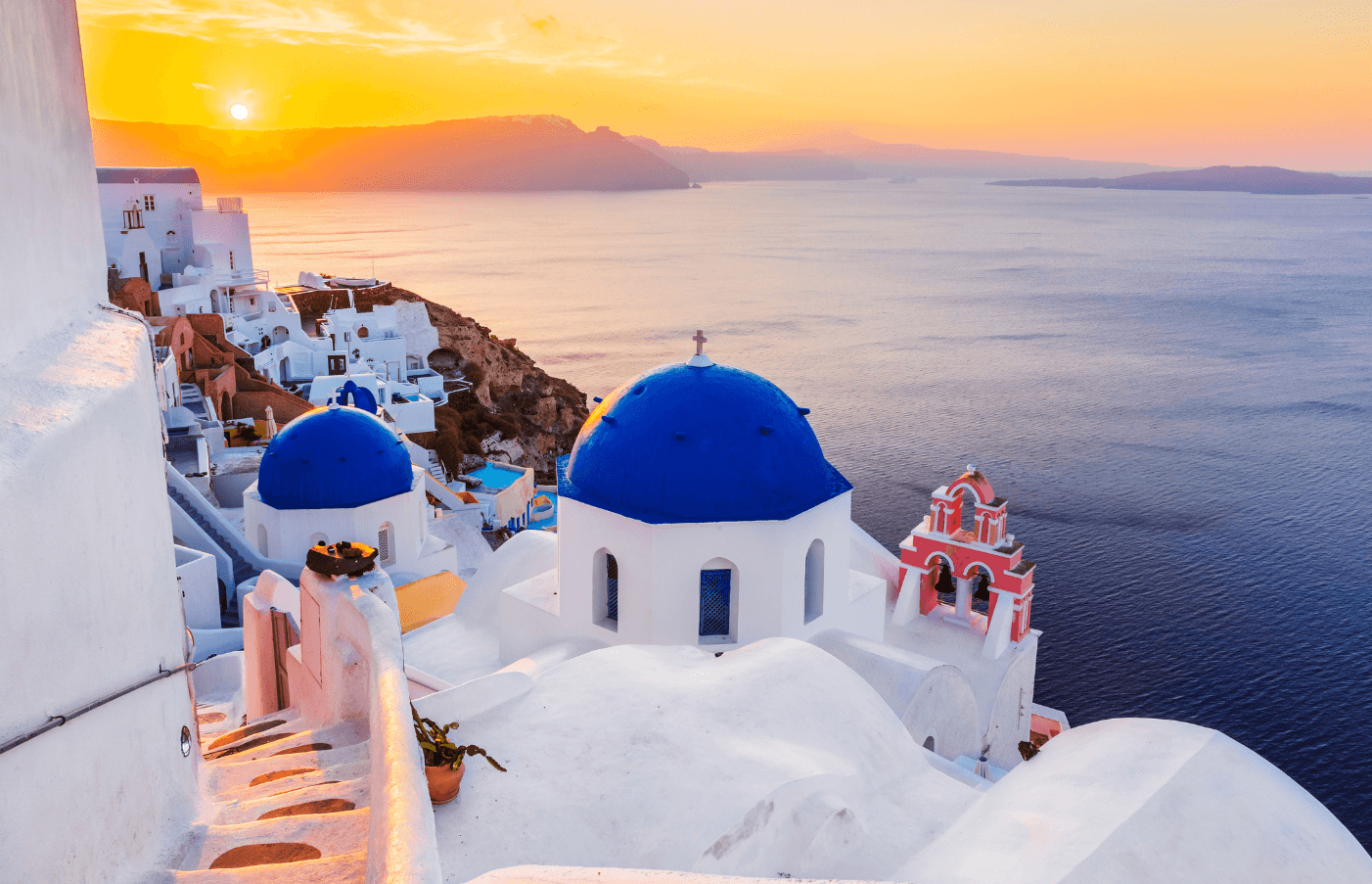
One of the pleasures of Skaros is how quickly Santorini changes character. Imerovigli is known today for luxury caldera hotels, private terraces and honeymoon suites, yet within minutes you’re walking through the remains of a settlement created for an entirely different reason.
The same geography that now commands some of the island’s most expensive views once offered protection. The height gave residents advance warning of ships approaching across the Aegean; the precipitous cliffs made attack difficult; and the rock itself provided a naturally fortified position.
That contrast gives the walk more substance than its distance suggests. You’re not simply heading to another caldera viewpoint. You’re crossing between modern Santorini and the landscape that shaped how islanders lived centuries before tourism arrived.
Go at Sunrise
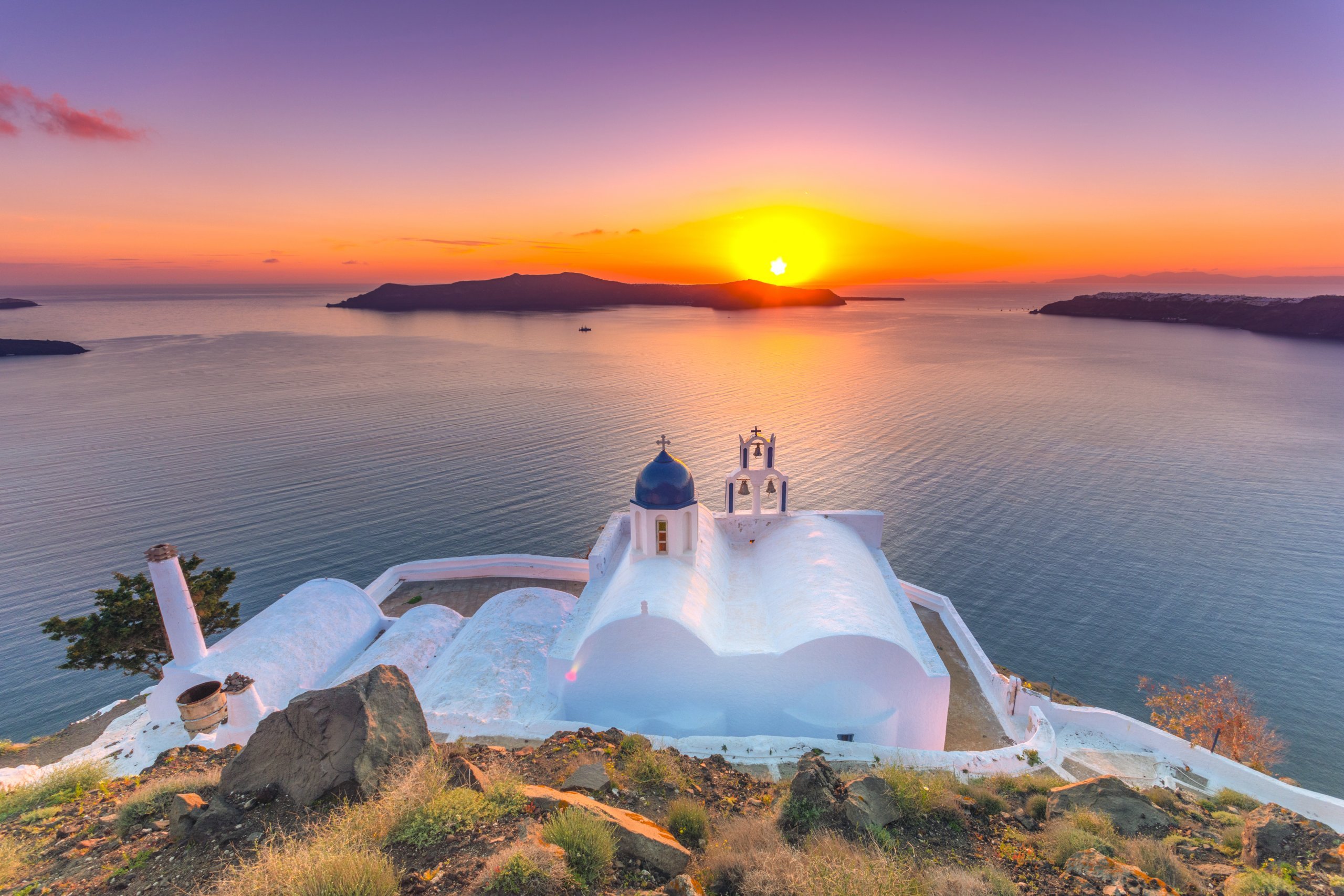
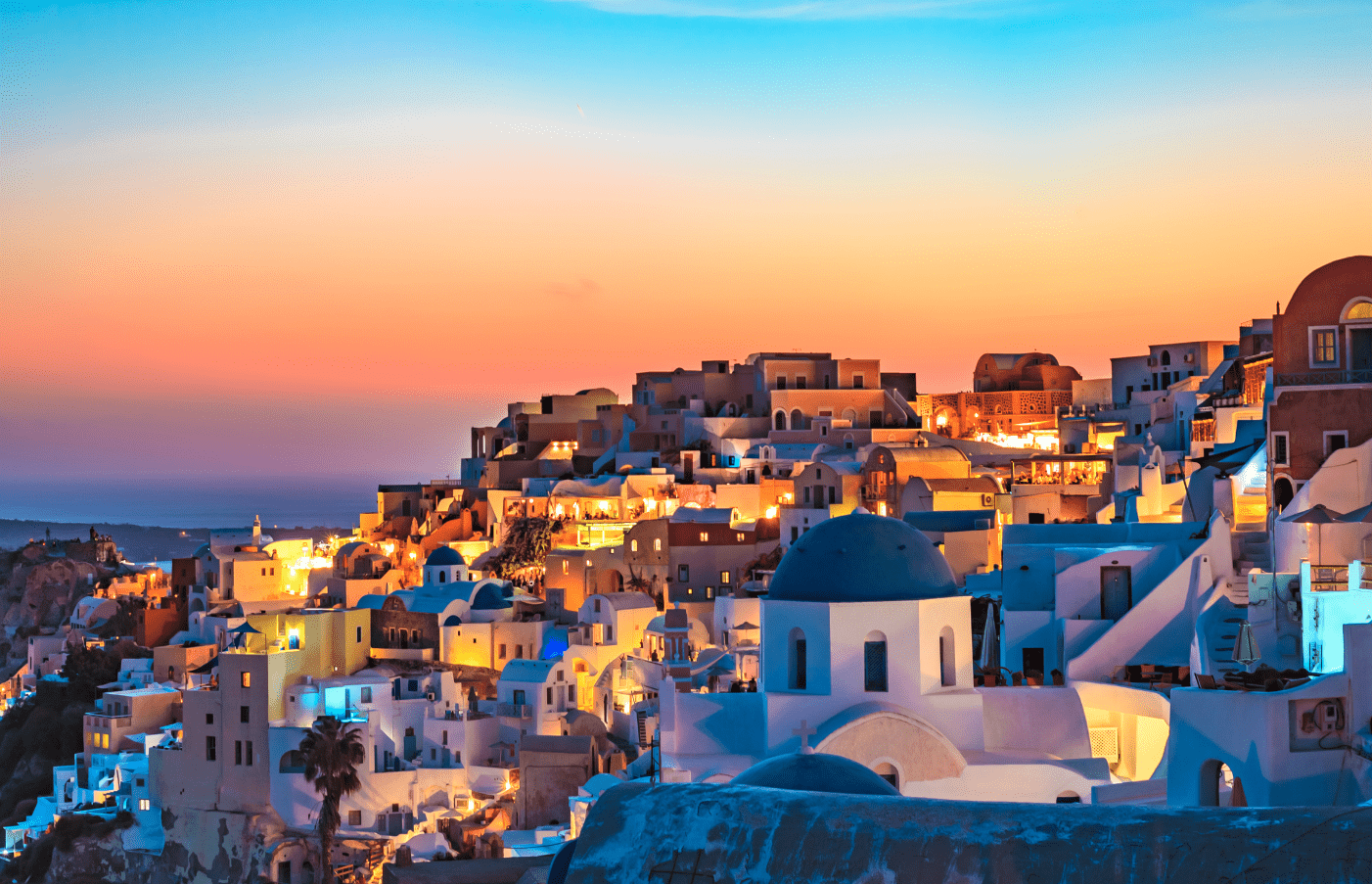
Sunrise light over Santorini’s caldera seen from the Skaros trail
Dawn is the time to go. At that hour the caldera is quieter, the heat has yet to build and the trail can feel almost entirely yours. The early light catches the pale buildings of Imerovigli behind you while the volcanic rock slowly changes colour below.
It’s particularly good for couples because the experience feels surprisingly private for somewhere so close to one of Santorini’s most popular villages. Go early enough and you can be back in Imerovigli for breakfast while much of the island is only beginning its day.
Wear proper shoes: the stairs are irregular, the path is exposed and loose stones make flip-flops a bad idea. There is little protection from the sun once you’re out on the rock, so carry water and avoid the hottest part of the day in summer.
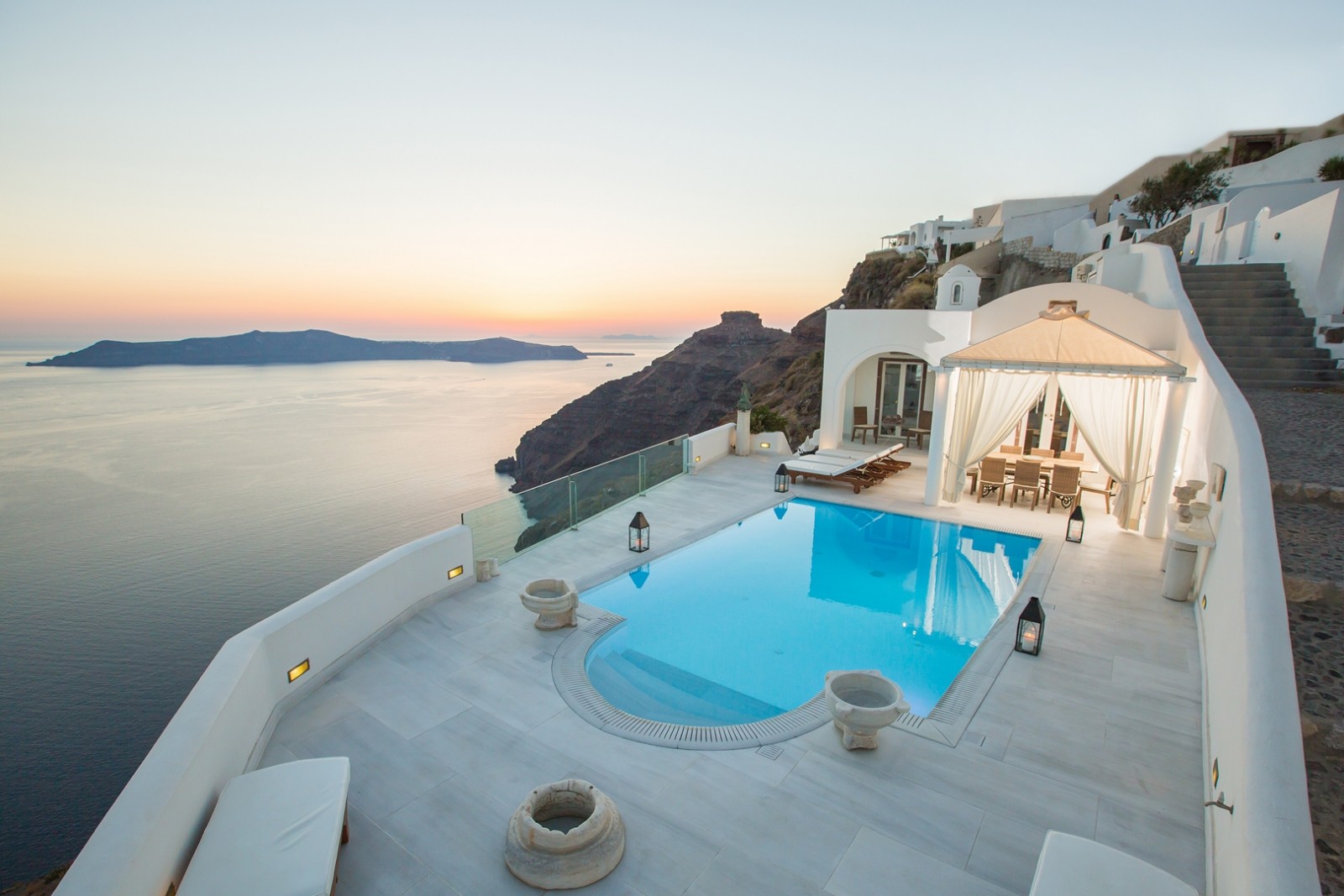
Your Out Of Office LGBTQ+ travel specialist can build the walk naturally alongside a hotel stay in Imerovigli, pairing it with a welcoming caldera hotel close enough to set out on foot at sunrise and return in time
Tell us where your mind keeps going back to. We will do the rest.
A line or two is enough to start. A specialist will pick it up from there.
More Moments in Greece
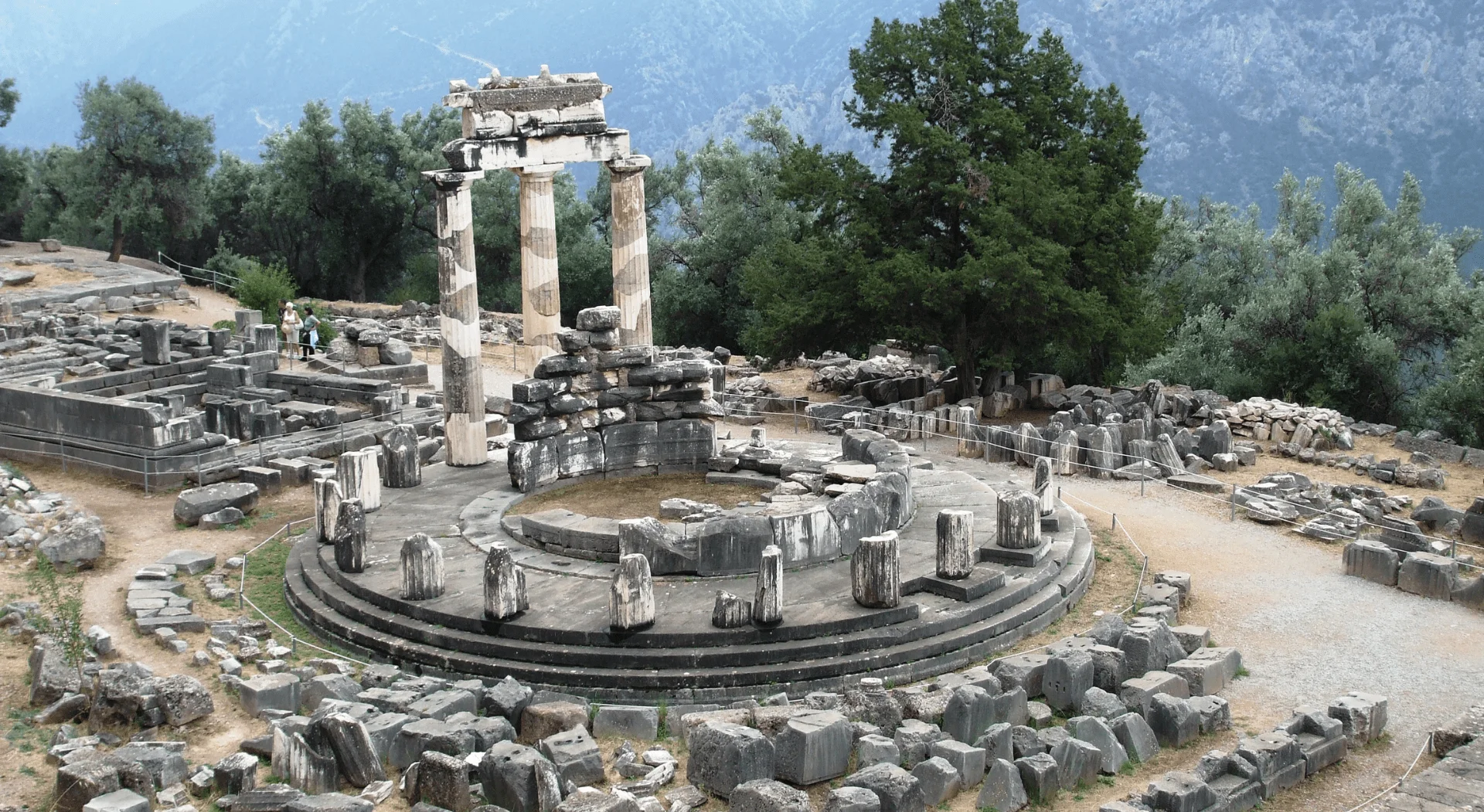
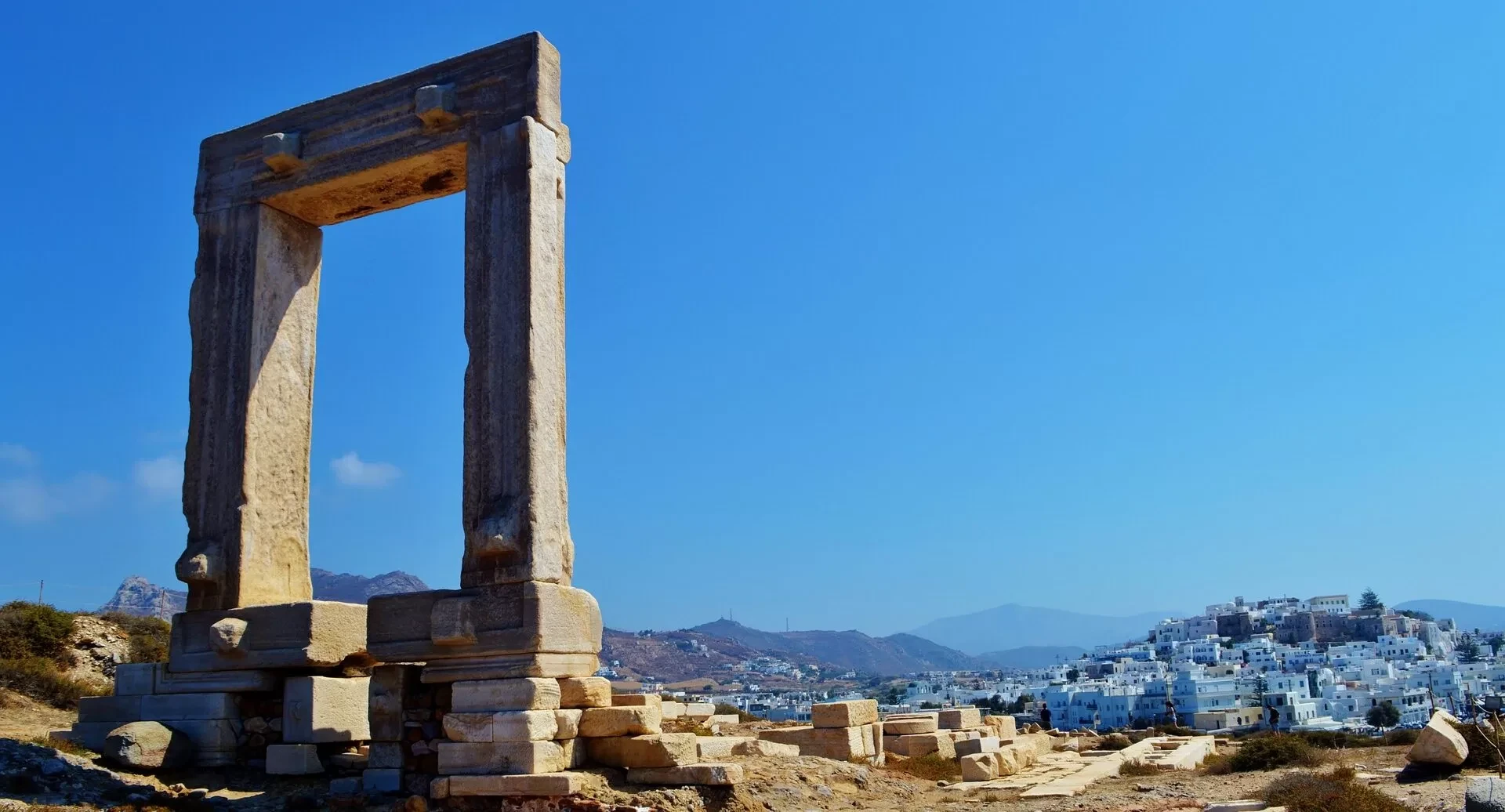
Delphi
Delphi is an ancient Greek city located in the region of Central Greece. It was significant culturally and religiously due to its association with the god Apollo. According to mythology, Apollo spoke to mortals through the Oracle of Delphi, making it a centre of spiritual reverence and awe.
Discover more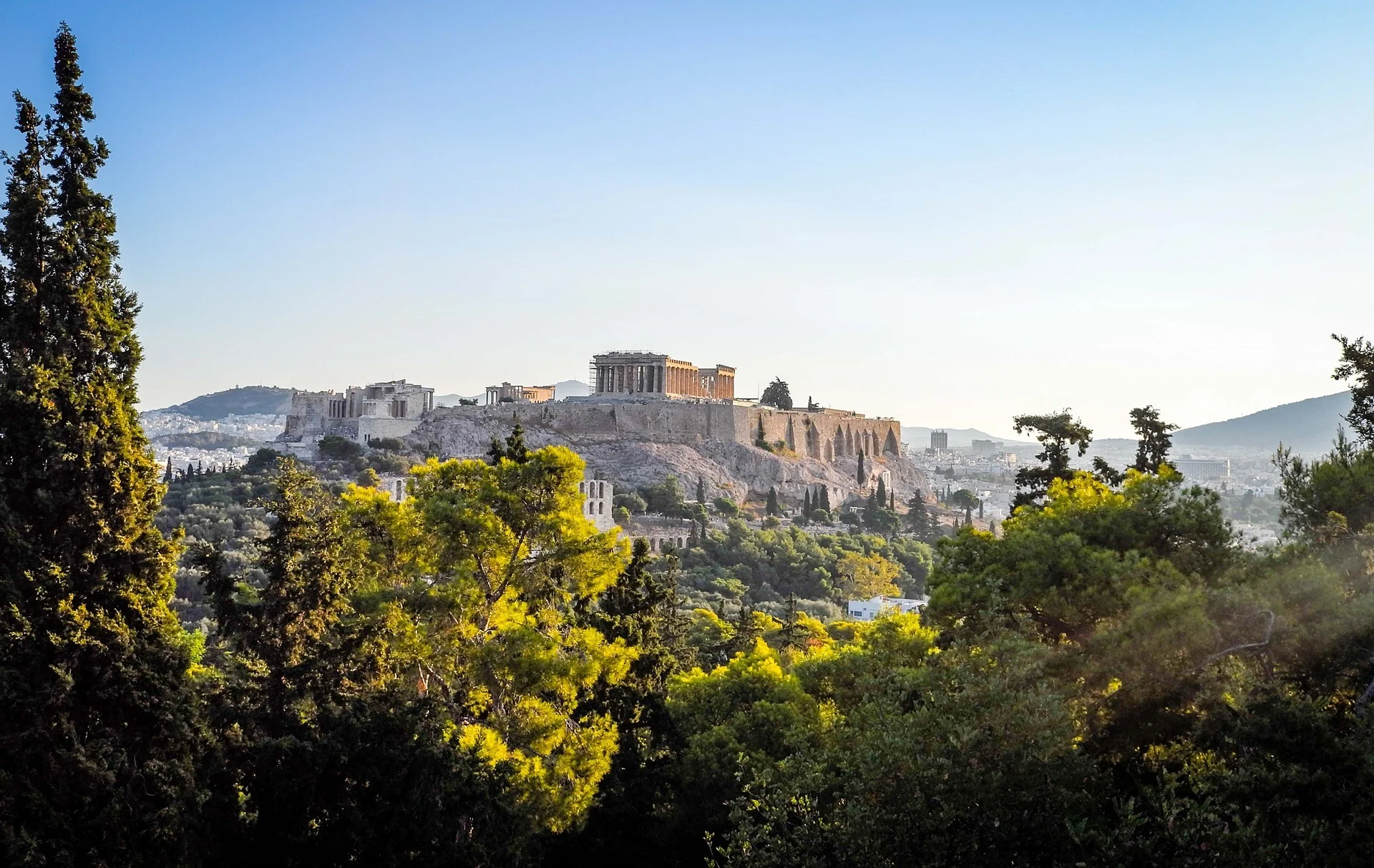
Acropolis of Athens
Visiting the Acropolis of Athens is an awe-inspiring experience. Walk in the footsteps of ancient Greeks and wander among ruins that have witnessed 2,500 years of history. Get ready to explore one of the world's most iconic monuments. The history of the Acropolis As you explore the Acropolis, it's important to remember its long history.
Discover more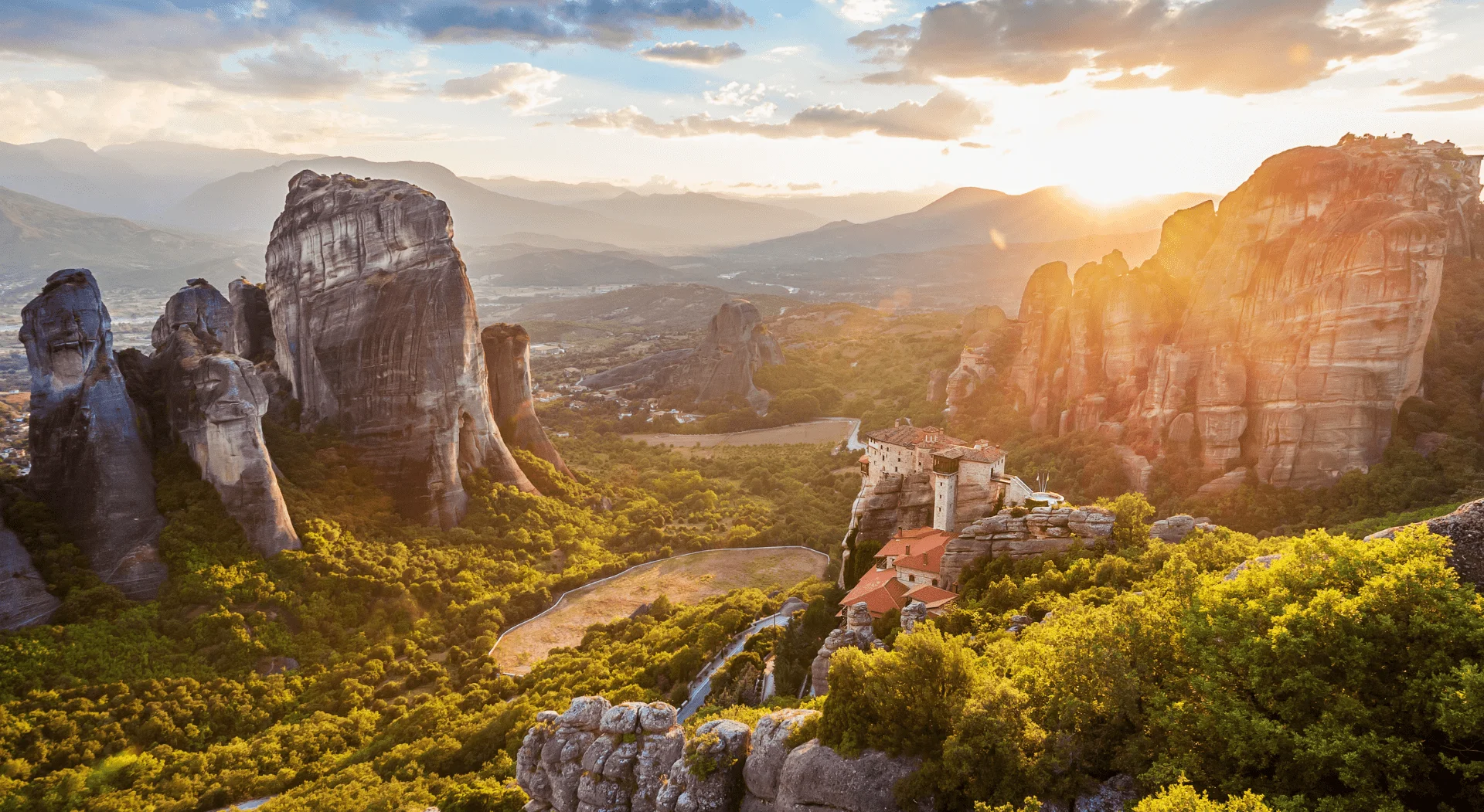
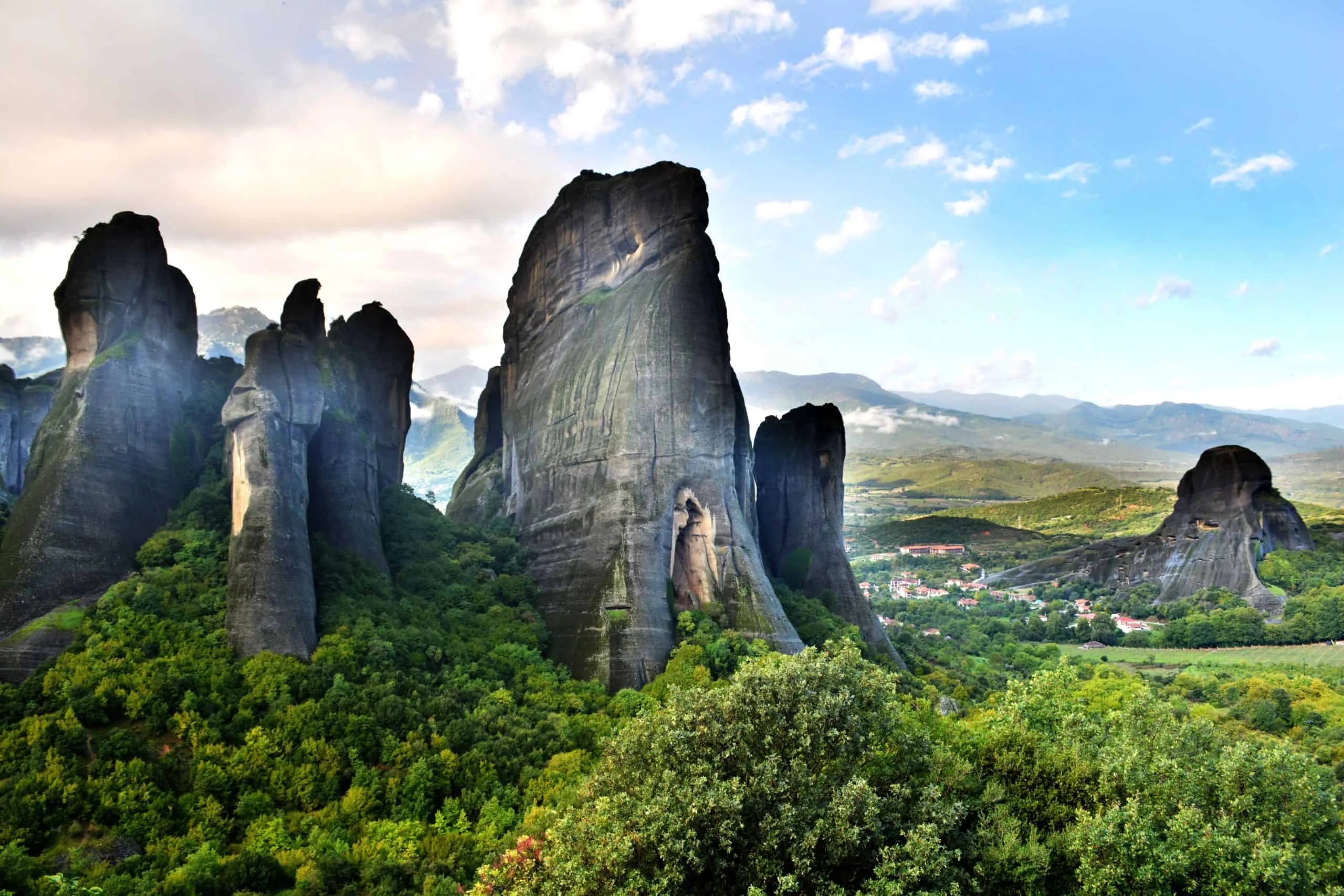
Meteora
Meteora is a stunning geological formation in Greece, made up of soaring sandstone rocks and ancient monasteries. Its name literally translates to “suspended in air” and it's no surprise why. Standing at around 400 meters high, these sheer cliffs stay firmly rooted in the sky, hosting an array of awe-inspiring monasteries. Meteora’s story is truly remarkable - it is both a testament to natural beauty and human resilience.
Discover more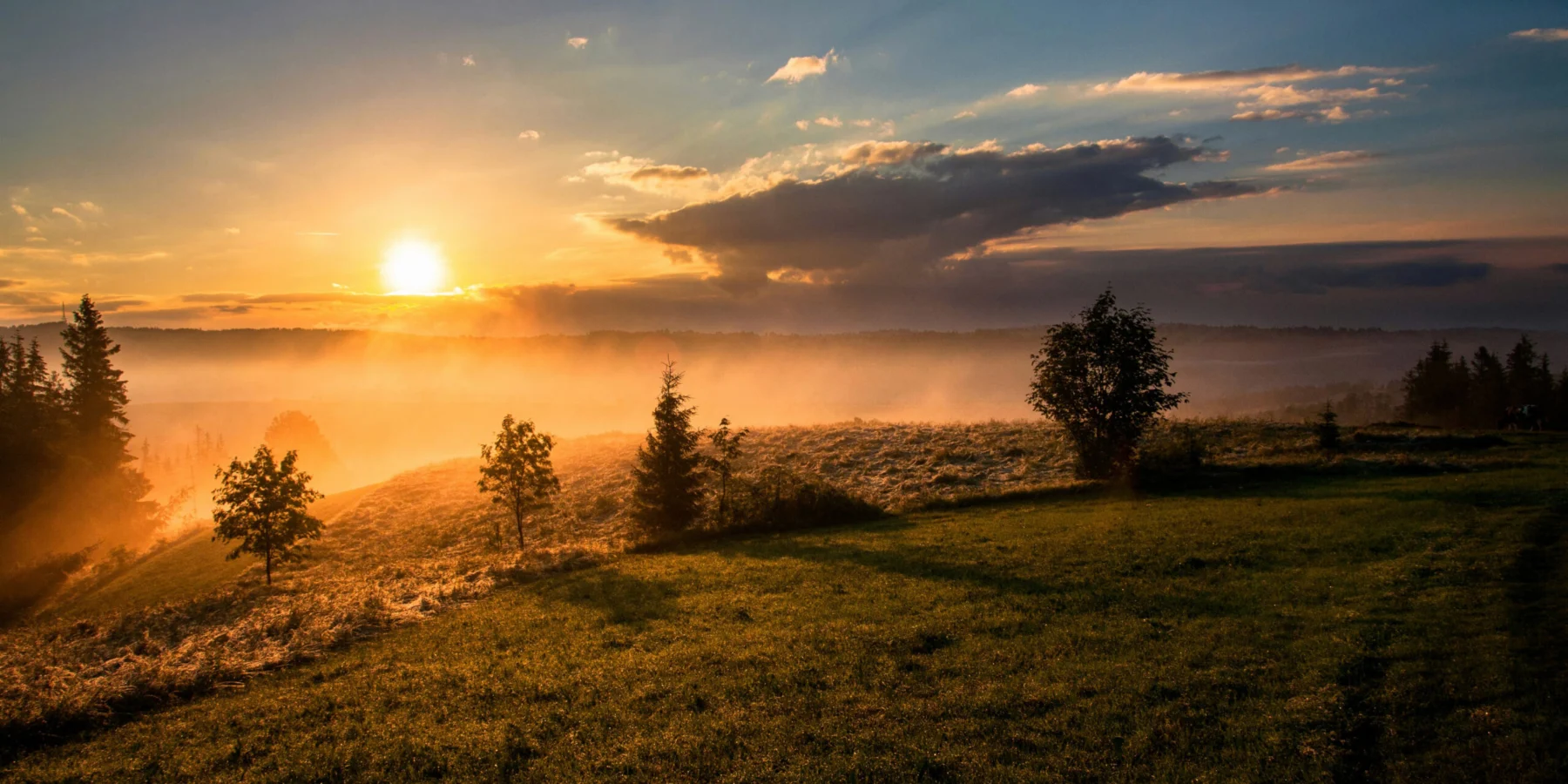
We plant trees for every booking
For every booking made with Out Of Office we commit to planting trees in your name to help reduce the impact of travel on future generations. You'll even get a link to see where your trees are planted in the world via our partner Ecologi.


We donate to Rainbow Railroad with every booking
Rainbow Railroad helps LGBTQ+ people escape state-sponsored violence and persecution. A donation goes with every trip we sell, funded by us and never added to your price.

Start Planning Your Trip
Tell us where you would love to go, when you are thinking of travelling and what kind of trip you have in mind. One of our LGBTQ+ travel specialists will create a tailor-made itinerary designed around your destination, style and preferences.
One named specialist, first enquiry to homecoming. No call centre, and nothing is charged until you decide to book.