


Luxury vacations

Luxury Croatia Yacht Charter: Split, Hvar & Dubrovnik

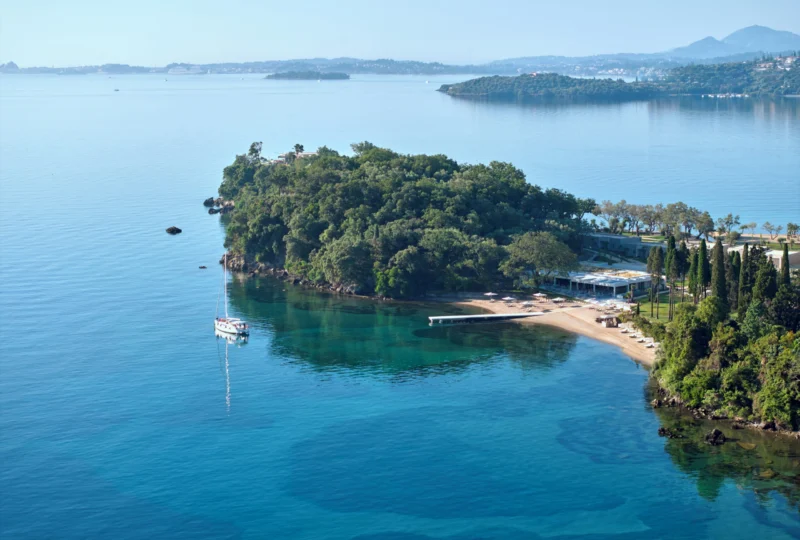
Explore Croatia from the perfect vantage point as you sail across the Adriatic; venturing into magical saltwater lakes, taking in medieval architecture and sampling the best food Croatia has to offer.

Rather than a single hotel stay with day trips built around it, this itinerary pairs three of Croatia’s most distinctive luxury properties with a private yacht used to move between them, treating the sailing itself as part of the stay rather than a means of transport.

The route begins in Split, moves through the islands of Hvar and Korčula, and finishes in Dubrovnik, with a full day exploring the protected waters of Mljet National Park along the way.

Split’s Diocletian’s Palace recedes into a wall of pale stone as the yacht pulls away from the harbor, replaced by the uninhabited islets of the Pakleni chain. Mljet’s saltwater lake, reached only by boat, offers a stillness the open Adriatic does not. Korčula’s walled Old Town appears on the horizon looking much as it would have centuries ago. By the time Dubrovnik’s cliffs come into view on the final approach, the week has been shaped less by hotel check-ins than by the sea itself.

Nights are spent at Maslina Resort on Hvar, Lešić Dimitri Palace on Korčula, and Villa Dubrovnik to close the trip. Three properties have been chosen specifically because each offers a genuinely different character, from Maslina’s wellness-led calm to Lešić Dimitri’s six individually themed suites within a restored palace.

Croatia has also made real progress for LGBTQ+ travelers in recent years, extending to full joint adoption rights for same-sex couples in 2022, and this itinerary is a natural fit for LGBTQ+ couples or families drawn to the country’s sailing culture.

Dubrovnik, Mostar & Kotor: A Balkans Coastal Discovery

Three countries, three very different histories, and barely three hours of driving between any of them.

This itinerary treats Dubrovnik as a base rather than a single stop, using it to reach two neighboring countries most travelers never quite make time for.

A day trip crosses into Bosnia and Herzegovina to reach Mostar, a city defined by its 16th-century Ottoman bridge and a history of destruction and rebuilding still visible at every turn.

From there, the route continues south into Montenegro, to the Bay of Kotor, a fjord-like inlet ringed by mountains, with a walled medieval town at its heart that rivals Dubrovnik’s own for atmosphere, at a fraction of the crowds.

Your base throughout is Villa Dubrovnik, set into the cliffs just outside the Old Town walls, making it easy to return each evening to genuine quiet after a day spent crossing borders.

Both Bosnia and Montenegro remain considerably less visited than Croatia itself, and this itinerary is a natural extension for LGBTQ+ travelers who have already experienced Dubrovnik and want to see what sits just beyond it, or as an add-on to our Highlights of Croatia or Game of Thrones itineraries for anyone extending their stay.

Maslina Resort

Set among olive groves and terraced vineyards on Hvar’s Maslinica Bay, Maslina Resort takes its name from the olive trees preserved throughout its two hectares of pine forest.

The design leans into that setting: Brač stone, brushed brass, and terracotta tie every room back to the island’s architectural heritage, while an indoor-outdoor layout means most beds are positioned to wake up to a sea view.

The resort’s Pharomatiq Wellness spans 600 square meters, with a sea-view gym, an aqua-thermal suite of saunas and steam rooms, a cold plunge pool, and treatment rooms both indoors and out. Two heated saltwater pools sit poolside among the olive trees, one built for quiet lounging with sea views, the other designed with families in mind. Beyond the resort, Stari Grad, one of the oldest towns in the Eastern Adriatic, is a short walk away.

For couples looking for a wellness-forward alternative to Hvar Town’s busier social scene, Maslina Resort offers genuine quiet without sacrificing polish and pairs naturally with a spa-and-wellness-led Croatia itinerary.

The Pucic Palace

Set on Dubrovnik’s Gundulić Square, in the heart of the Old Town, The Pucic Palace occupies a restored 17th-century Baroque mansion where each of the nineteen rooms and suites is named after a Croatian poet, musician, or artist from the city’s history.

Wooden-beamed ceilings, wrought-iron balustrades, and antiques on loan from city museums sit alongside contemporary touches like Bulgari bath products and Tempur-Pedic beds.

Mornings can start at the hotel’s Parisian-style café spilling onto the square, and the location makes exploring effortless: Pile Gate is a five-minute walk away, Banje Beach seven, and the hotel is genuinely steps from several of the city’s Game of Thrones filming locations, including the Jesuit Stairs used for Cersei’s Walk of Shame. Guests receive complimentary access to Banje Beach with a towel, parasol, and sunlounger included, along with porter service from outside the city walls for anyone arriving by car.

For travelers who want to be inside the Old Town walls rather than a transfer away from them, The Pucic Palace is the most central luxury option in Dubrovnik and the natural base for our Game of Thrones itinerary.

Villa Dubrovnik

Built directly into the rocky coastline just beyond Dubrovnik’s medieval walls, Villa Dubrovnik trades the bustle of the Old Town for something quieter: sheer cliffs, a private beach, and floor-to-ceiling views of the Adriatic and Lokrum Island from nearly every room.

Interiors by Studio Arthur Casas lean into the city’s stone tradition, mixing original Croatian stone with sea-blue accents and terracotta tones drawn from the rooftops below.

A glass lift descends to a spotless reception, and from there the hotel unfolds around its heated indoor pool, Villa Spa, and Restaurant Pjerin, where a terrace looks straight out over the water. Tailored experiences are easy to arrange, from private boat trips to the Elaphiti Islands to wine tastings on the Pelješac peninsula, and the hotel’s own beach offers a quieter alternative to the more crowded stretches in town. Old Town itself is a fifteen-minute walk away, or a short boat ride if the mood strikes.

For couples drawn to Dubrovnik’s history but not its crowds, Villa Dubrovnik offers the rare combination of proximity and total seclusion and pairs naturally with a stay built around the city’s Game of Thrones filming locations or as the final stop on a longer Adriatic escape.

Lešić Dimitri Palace

Tucked inside the medieval walls of Korčula Old Town, a few steps from the house where Marco Polo is said to have been born, Lešić Dimitri Palace occupies a former 18th-century bishop’s residence that took five years to restore.

Rather than standard rooms, the palace offers just six independent suites, each designed around a different stop on Polo’s Silk Road journey, from the South Asian-inspired Ceylon to the three-bedroom Venice, complete with a carved wooden balcony.

Every suite comes with its own kitchenette, and the palace’s Michelin-starred LD restaurant looks out over the Adriatic and the Korčula archipelago from a terrace built above the Old Town wall, serving seafood alongside the estate’s own olive oils and wines made from indigenous grk and pošip grapes. The spa’s Thai and Ayurvedic treatments round out a stay that feels closer to a private residence than a hotel, in the most walkable part of one of Dalmatia’s most underrated islands.

For couples who want Dalmatian island life without the crowds of Hvar or the scale of Dubrovnik, Lešić Dimitri Palace is a natural fit for a quieter final stop on a Dalmatian coast itinerary, or as a honeymoon destination in its own right.

Shinta Mani Wild

Deep in the Cardamom Mountains, where poaching once threatened some of Southeast Asia’s last untouched wilderness, Shinta Mani Wild has turned conservation into the entire point of a stay. Fifteen tented suites are strung along a private stretch of the Sre Ambel River, each one raised on stilts and reached by a network of elevated walkways that keep the forest floor undisturbed below.

Days here move at the pace of the rangers who run the property’s anti-poaching patrols, and guests are invited to join them: tracking wildlife, checking camera traps, or simply learning how a for-profit resort ended up funding one of the region’s more effective conservation programs.

Evenings return to comfort, with a floating bar over the river and a kitchen drawing on ingredients grown in the camp’s own gardens.

For couples who want their luxury to come with a genuine sense of purpose and a setting few other properties in Cambodia can match, Shinta Mani Wild is difficult to improve upon. It is featured in our Luxury Cambodia: Private Temples, Jungles & Islands Tour and is a natural fit for travelers drawn to our adventure vacations.

Song Saa Private Island

Song Saa occupies its own private island in the Koh Rong Archipelago, off the coast of Cambodia, split across two smaller islets connected by a wooden footbridge that guests cross on arrival and rarely think to leave.

Thirty overwater and beachfront villas make up the entire resort, each built from reclaimed materials by local craftsmen and positioned for uninterrupted views of the water.

The island’s marine conservation program runs in parallel with the resort itself, protecting a stretch of reef directly offshore that guests can snorkel with a marine biologist on staff.

Beyond the water, days can be spent doing very little at all: a private beach on the second islet, a spa built into the forest canopy, and a kitchen serving Khmer-inspired dishes built around the day’s catch.

For couples seeking genuine seclusion rather than simply a nice hotel, Song Saa remains one of the most complete private-island experiences in Cambodia and closes out our Luxury Cambodia: Private Temples, Jungles & Islands Tour as its final stop. It is also a fitting choice for honeymooners looking for privacy above all else.

Raffles Grand Hotel d’Angkor

Few hotels in Cambodia carry the sense of occasion that comes with checking into the Raffles Grand Hotel d’Angkor.

Built in 1932 as the first luxury address for early travelers to Angkor Wat, it remains one of only two hotels in the country to predate the civil war and Khmer Rouge era, and its fifteen acres of French-inspired gardens, cage elevator, and wide verandas have lost none of their original character.

Every stay comes with a 24-hour Raffles Butler, and the hotel’s Elephant Bar remains one of Siem Reap’s most celebrated places for a drink after a day at the temples. Le Grand serves Royal Khmer cuisine alongside European fine dining, while the Apsara Terrace pairs a traditional Cambodian dance performance with a Pan-Asian barbecue, a fitting way to close a day spent exploring Angkor Wat, Angkor Thom, and Ta Prohm, all within a short drive.

For couples who want their stay in Siem Reap to feel like part of the history they came to see, the Raffles Grand Hotel d’Angkor is difficult to match and pairs naturally with our Discover Cambodia itinerary or as a refined start to any Cambodia honeymoon.

Rosewood Phnom Penh

Rosewood Phnom Penh occupies the top fourteen floors of Vattanac Capital Tower, the tallest building in Phnom Penh and one of the more striking symbols of the city’s modern skyline. Every room looks out over the Mekong and Tonle Sap rivers below, a striking contrast to the more historic hotels found elsewhere in the country.

The hotel’s six restaurants and bars move confidently between cuisines, from the French and Cambodian dishes at Brasserie Louis to the Cantonese and Sichuanese menu at Zhan Liang, while Sora’s rooftop sky deck remains one of the city’s most talked-about spots for a sunset cocktail. A complimentary Remork city tour introduces guests to the Royal Palace, the National Museum, and Phnom Penh’s riverside, a useful orientation before a deeper look at the city’s history at the Tuol Sleng Genocide Museum and the Killing Fields.

For travelers beginning or ending a Cambodia trip in the capital, Rosewood Phnom Penh offers a genuinely different register from the country’s more colonial-style properties and pairs naturally with our Highlights of Vietnam and Cambodia itinerary, which also opens in Phnom Penh.

Seychelles & Mauritius: Two Pearls of the Indian Ocean

Ask most travelers to choose between the Seychelles and Mauritius, and they will hesitate. This itinerary is built to explore the best parts of both.

The Seychelles and Mauritius are frequently held up against each other in comparisons of the Indian Ocean’s finest destinations, yet surprisingly few itineraries actually combine them.

This trip pairs the granite-boulder beaches and untouched rainforest of the Seychelles with the more developed resort landscape of Mauritius, giving guests a genuine sense of both islands rather than a single, narrower picture of the region.

The journey begins on Mahé, the largest and most mountainous of the Seychelles’ islands, before continuing to La Digue, home to Anse Source d’Argent, widely considered one of the most photographed beaches in the world.

From there, a short flight connects to Mauritius, where the remaining days settle into the more familiar rhythm of resort life at Sugar Beach on the west coast.

Both nations have also made meaningful progress for LGBTQ+ travelers, with Mauritius decriminalizing same-sex relationships in 2023 and the Seychelles having done the same in 2016, making this pairing a considered choice for LGBTQ+ honeymooners drawn to the contrast between the two island nations and for anyone with a taste for adventure alongside their relaxation.

Mauritius Island Escape

This itinerary is built entirely around one island, with time to escape, explore, and immerse yourself in life on Mauritius.

Where several of our Mauritius itineraries pair the island with a South African safari, this one stays put, giving guests nine full days to explore a single destination properly rather than fitting it around a longer, more demanding journey.

The stay is split between two contrasting properties on opposite sides of the island, chosen specifically so that the second half feels genuinely different from the first rather than simply more of the same.

The first stretch unfolds at Four Seasons Resort Mauritius at Anahita on the east coast, a resort built around an active, social pace.

The second half moves to Constance Le Prince Maurice, a quieter, more secluded property further along the same coastline.

Mauritius has also made genuine progress for LGBTQ+ travelers in recent years, decriminalizing same-sex relationships in 2023, making this an especially welcoming choice for LGBTQ+ couples looking for a straightforward, single-destination beach escape.

Mauritius Wellness & Spa Retreat

Some travelers come to Mauritius to see the island. This retreat is for those who come to feel it, one slow, salt-scented day at a time.

This itinerary is designed for travelers who want Mauritius stripped back to its most restorative elements: warm water, quiet mornings, and treatments that leave more time unaccounted for than planned.

Rather than moving quickly between sights, the days here are shaped around slowness, with two distinct properties chosen specifically for the depth of their wellness programming rather than for size or spectacle.

The first half of the stay unfolds at Heritage Le Telfair, a colonial-era estate on the southwest coast whose spa draws on centuries-old Mauritian wellness traditions alongside more contemporary treatments.

The second half moves to Shanti Maurice on the south coast, a resort built specifically around its wellness identity, with a program of yoga, meditation, and holistic therapies set against some of the island’s most dramatic, unspoiled coastline.

Mauritius has made real progress for LGBTQ+ travelers in recent years, decriminalizing same-sex relationships in 2023, and this itinerary is a particularly welcoming choice for LGBTQ+ couples seeking genuine rest rather than a packed schedule of activity.

Those traveling alone will find it just as suited to a solo reset as to a shared one.

Jewish Heritage in Europe: Berlin, Prague, Krakow & Budapest

This route traces something more interesting than loss. Jewish life in Europe predates most of the countries built around it by centuries, communities that shaped the culture, commerce, and intellectual life of cities like Prague and Krakow long before the twentieth century tried to erase them entirely.

What makes this trip worth taking is how much of that history is still here, in person, rather than behind glass.

Synagogues that have held services continuously for seven hundred years. Historic quarters that once emptied out and have since become some of the most vibrant neighborhoods in their respective cities. A culture that absorbed the worst the last century could do to it and kept going anyway.

The weight of that history is real, and this itinerary doesn’t look away from it, particularly in Krakow, but it isn’t the whole story, and it was never meant to be.

Twelve days, four cities, each one adding a different layer rather than repeating the last. Berlin comes first because it gives you the widest lens, centuries of German Jewish history through the Jewish Museum and the old Scheunenviertel, before the trip narrows into more specific stories.

Prague and Krakow sit together for a reason, one of Europe’s oldest Jewish quarters next to the place carrying the heaviest history on the whole route, and a single direct train between them keeps that leg simple rather than drawn out.

Budapest comes last on purpose. Its Jewish Quarter has become the city’s best nightlife too, so the trip ends on continuation rather than closure, which is exactly the note this journey is meant to leave you on.

Germany’s Fairy-Tale Route: Brothers Grimm, Neuschwanstein & Disney

This itinerary traces the real origins of the Disney fairy tale back to their source. It starts in the villages where the Brothers Grimm gathered the stories the world grew up on, then ends at Neuschwanstein, the castle built by King Ludwig II of Bavaria.

Ludwig was gay, at a time when homosexuality was a criminal offense in Bavaria, and Neuschwanstein was as much a private escape from that reality as it was a royal residence.

Walt Disney later turned that same castle into the most recognizable silhouette in American childhood.

The two sit at opposite ends of the country, so rather than backtrack across Germany by road, this route links them with one short domestic flight, keeping every transfer sensible and every day focused on the history rather than the road.

For American travelers especially, there’s something close to a homecoming in this trip.

So much of what shaped the American imagination, the fairy tale itself, the castle on the horizon, the idea of magic as something you could actually build, started here, in these forests and in the private world of a king who had nowhere else to be himself but stone, long before any of it crossed the Atlantic.

World War II Tour of Europe: London, Normandy, Berlin & Krakow

This route follows the war’s actual turning points, London’s underground command center, the beaches where the Allies broke through, the capital of the regime being fought, and the site of its worst crime, in something close to chronological order.

Four stops, each one a different piece of how the war was run, fought, caused, and ultimately answered for. You come away from this trip having actually walked the story rather than read a condensed version of it, one that includes a chapter often left out of the standard telling, gay men and lesbians were also targeted by the Nazi regime, forced to wear the pink triangle in the camps, and Berlin’s own Memorial to Homosexuals Persecuted Under Nazism, near the Brandenburg Gate, marks that history directly.

The route runs London to Normandy to Berlin to Krakow, moving by a short Channel crossing, an easy flight, and a direct train. This isn’t history dressed up as travel. It’s the real thing, with excellent hotels attached.

This is the trip for anyone who’s ever stood in a museum reading a placard about D-Day or the Holocaust and thought, I need to actually see this. Photographs and documentaries can only take the story so far.

Standing in the room where Churchill planned Britain’s survival, walking the sand at Omaha where the outcome of the war hung by inches, or seeing the gate at Auschwitz with your own eyes changes what that history means to you, permanently and in a way nothing else quite manages.

This route exists for people who want that shift, not a checklist of countries, but the four places that actually decided how the twentieth century turned out.

Best of Eastern Europe: Budapest, Prague & Krakow

This route traces the twentieth century almost as much as it traces geography.

Budapest’s uprising in 1956, Prague’s Spring in 1968, and Krakow’s proximity to Auschwitz all sit under the same long shadow of Soviet influence, three cities that lived through decades of the same history in three entirely different ways.

What makes the trip remarkable now is how much survived it. All three historic centers came through the war largely intact, genuine medieval and Renaissance Europe rather than the rebuilt version most travelers get further west, and all three still deliver a five-star experience at a fraction of what the same standard costs in Paris or Rome.

The route runs Budapest to Prague to Krakow, two direct seven-hour trains linking three cities that could hardly look more different from each other, without ever forcing you through the one genuinely awkward overland leg in the region, the long haul between Krakow and Budapest.

For anyone who reads the history books and wants to stand where it actually happened rather than just imagine it, this is about as complete an education as a single trip through Europe can offer.

Capitals of Central Europe: Berlin, Prague, Vienna, Budapest

Central Europe packs an absurd amount into a small stretch of the map.

In under two weeks you can stand where a wall once split a city in two, walk streets that survived the twentieth century almost entirely untouched while the rest of the continent rebuilt from rubble, tour a palace built to out-glitter every other royal court in Europe, and finish in a city split down the middle by a river, two different characters facing each other across the water.

Few regions on earth fit this much history and contrast into a single, connected route.

Better still, none of it requires a single flight. This itinerary moves entirely by rail, the way Central Europe was always meant to be seen, watching the landscape and the architecture shift gradually from one capital to the next rather than jumping between them from thirty thousand feet.

This route works as well as it does because it puts four completely different versions of Europe within easy reach of each other, without asking you to choose just one.

The real reward here is in the contrast, Berlin’s raw modern history giving way to Prague’s untouched old town, Vienna’s imperial grandeur handing off to Budapest’s thermal baths and grit, all inside less than two weeks and a handful of train journeys.

It’s less a single destination than a proper introduction to what makes Europe worth returning to again and again, four distinct identities that somehow still feel like one continuous story.

Los Cabos: Adventure Beyond the Resort

Beneath its resort reputation, Los Cabos holds some of the richest marine life in Mexico and a desert most visitors never see.

Los Cabos has built its reputation on resort pools and beachfront cocktails, but the water and the desert surrounding the peninsula hold a different kind of trip entirely, one that queer and trans-focused dive operators in the region have already been running for years. This seven-day itinerary is built for travelers who want that same active, outdoors-first version of Cabo, without giving up the comfort of a private, tailor-made trip.

The dividing line at Land’s End, where the Pacific Ocean meets the Sea of Cortez, sets the tone for the days at sea. This side of the peninsula is home to sea lion colonies and a wide range of reef fish, drawn to the underwater rock formations shaped by two different currents meeting in one place, and between mid-December and mid-April, gray and humpback whales pass close enough offshore to turn an ordinary boat trip into something considerably more.

On land, the desert beyond the resort corridor holds its own version of adventure, from cardon cacti taller than a house to arroyos that fill briefly during the region’s rare desert rain. A private guide brings a different pace to each day, whether that means an early dive, an afternoon on horseback, or simply time on the water with no set plan.

The trip closes with a night in Cabo San Lucas itself, where the marina area holds a small but welcoming gay scene, a chance to trade the desert quiet for one evening of the town’s better-known energy before departure.

Riviera Maya: A Wellness Retreat

Mayan-inspired rituals, a sanctuary for sacred bees, and a cenote lagoon for morning yoga, woven into one retreat.

This seven-day retreat is built around a Riviera Maya resort with one of the region’s more distinctive wellness programs, anchored by a genuine commitment to Mayan healing tradition rather than a generic spa menu borrowed from elsewhere. A couple of carefully chosen excursions are layered in, and the ruins, day trips, and nightlife that fill most Riviera Maya itineraries are left out by design.

Central to the resort’s own program is an on-site sanctuary dedicated to an endangered stingless bee considered sacred by the Maya, whose honey features throughout the spa’s treatments. Beyond the property, a day trip to Yäan Healing Sanctuary offers a more traditional counterpoint, with a temazcal ceremony, the Mayan sweat lodge ritual, followed by a cool-down swim in a cenote and a meal of traditional Yucatecan food. A separate morning is set aside for stand-up paddle yoga on a cenote or lagoon, balance and breathing combined in a setting unlike any studio.

Back at the resort, a cenote-inspired purifying ritual and a cacao healing ritual offer two further paths into Mayan wellness tradition, while a guided underwater meditation experience closes out the more unusual side of the program.

Between these experiences, the days are largely unstructured, and there is space throughout for simply doing nothing at all, an increasingly rare offering on a coastline usually built around excursions. The retreat closes with a quiet final day, a chance to notice what a week without a fixed schedule actually feels like before the return home.

Make an enquiry

Planning your trip should feel effortless.

We Listen

You share what matters, whether it’s a destination, a feeling, or a moment worth celebrating.

We Curate

Your dedicated expert shapes a thoughtful, private itinerary tailored entirely around you.

You Travel

Every detail handled. Every moment considered. Support before, during, and after your journey.

Share a few details about your trip and one of our travel experts will be in touch shortly.

(1) Your trip
(2) Your details

Tell us a little about your trip.

  • $3,000-5,000
  • $5,000-7,500
  • $7,500-10,000
  • $10,000-20,000
  • $20,000+

Email