







Moment · St Barth's
Scuba Diving Pain de Sucre and the Kayali Wreck, St Barths
Dive the tunnels and walls of St Barths' favorite site just off Gustavia, and, if you're certified, the colonized Kayali wreck at 30 meters.
A Reef Just Outside the Harbor
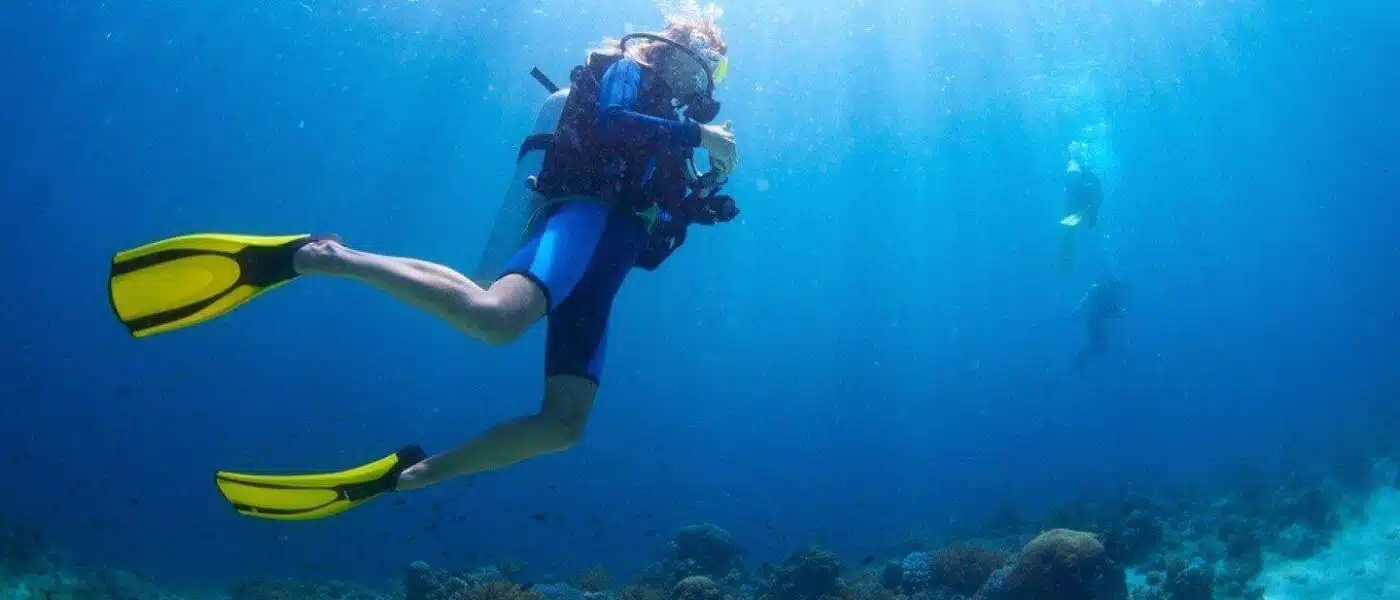
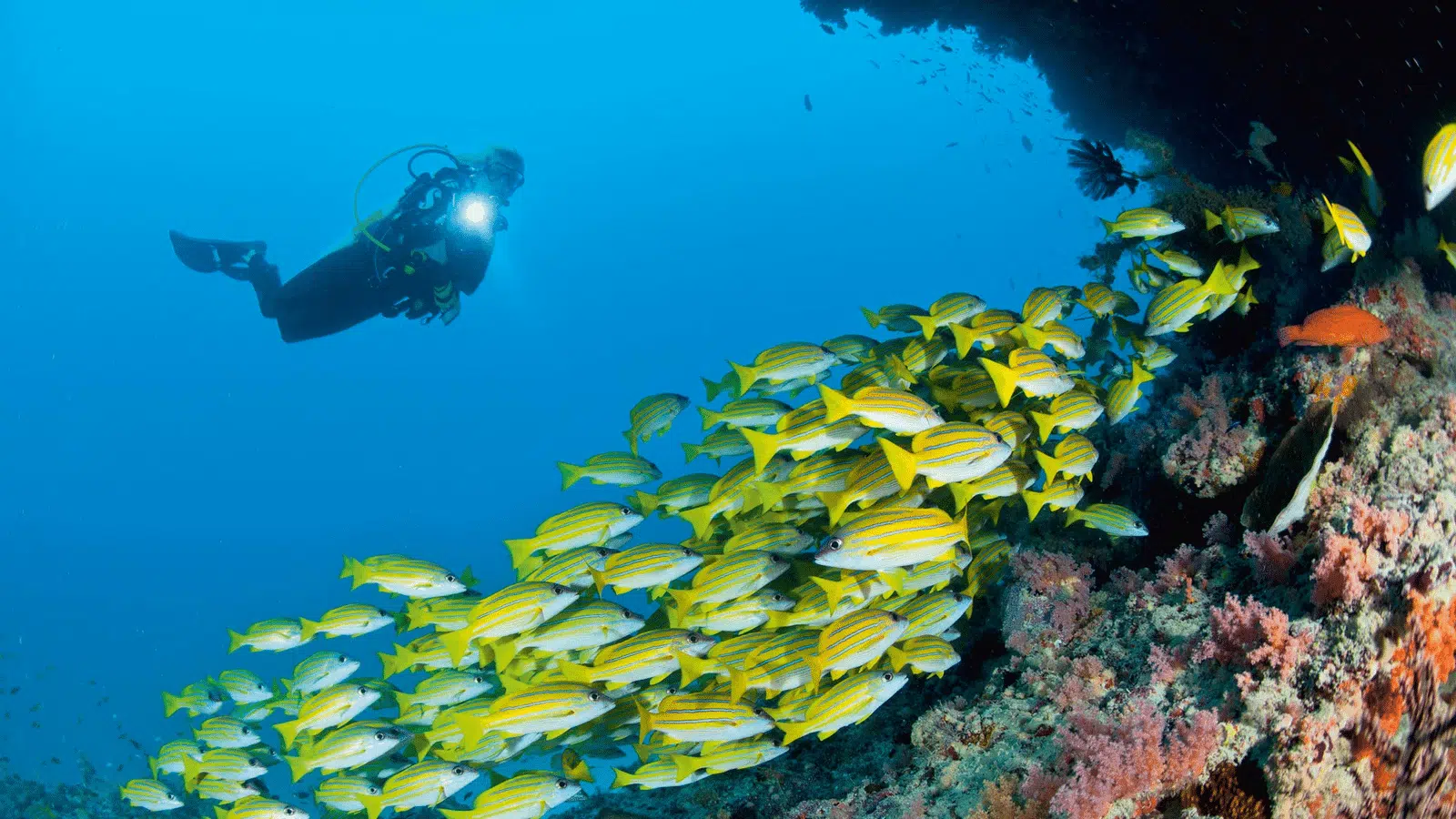
Pain de Sucre is St Barths’ most dived site and one of the few in the Caribbean equally rewarding for beginners and experts, a single islet just outside Gustavia harbor holding five distinct dive sites. Leaving Gustavia, you see the rock rising from the sea south of town almost at once. You descend from the mooring buoy with coral in view within seconds, the water so clear you can see the reef from the surface, light reaching the corals and the fish moving among them. Below the waterline, the islet’s volcanic rock continues into tunnels, caverns and arches, the most varied underwater terrain around the island.
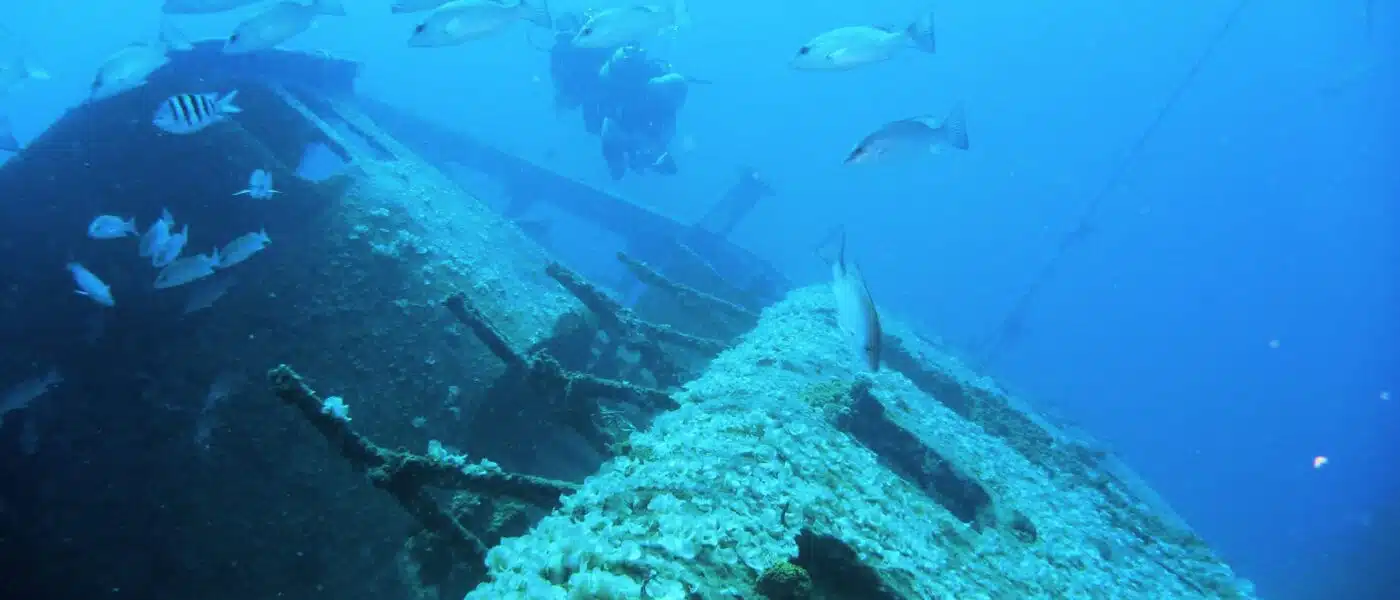
For divers certified to go deeper, the Kayali lies at 30 meters. Sunk in 1994, this 40-meter cargo ship has become a living structure, clothed in sponges and soft corals, sheltering groupers, moray eels and lionfish, and circled on most dives by spotted eagle rays: St Barths’ finest wreck dive.
Volcanic Rock, Protected Water
St Barths sits on a volcanic base, which shapes every dive around it: not flat reef but outcrops, coral, swim-throughs and walls that change with depth, and Pain de Sucre shows this better than anywhere. The Natural Reserve, founded in 1996 and now named the Réserve Nicole Aussedat after its founder, protects Pain de Sucre and the nearby Gros Ilets as one of its five sectors. Fishing is banned, anchoring is limited to moorings, jet skis are prohibited and dive boats tie up to buoys to spare the reef, so after decades of protection the site is in visibly better shape than similar reefs elsewhere in the Caribbean.
Visibility usually runs 20 to 30 meters, best from November to June, with water at 77 to 84°F all year. The shallower areas suit beginners, while the Kayali, one of four wrecks around the island, requires at least Advanced PADI certification. Scuttled deliberately, it sits upright on the sand, fully penetrable and thoroughly colonized, with turtles recorded here consistently since it went down.
We know where you will be welcome, and where to take more care.
Request a quote →Why Dive with Your Own Guide
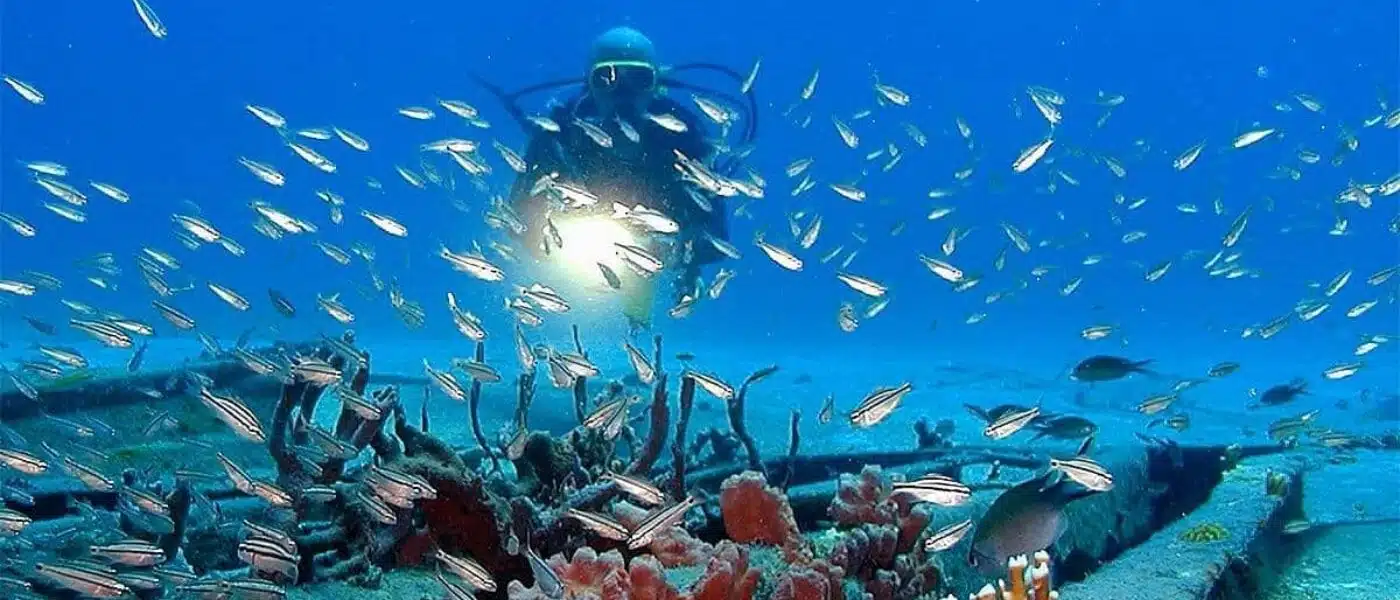
Pain de Sucre is popular, and on a busy morning several groups from Gustavia’s dive shops may share the same tunnels and crowd the same parts of the Kayali. A private guided dive changes that: you set off when conditions suit, and a guide who dives only with you paces the dive around what you find, not a fixed route for a big group. On the Kayali, that means time at the parts of the wreck most likely to produce encounters and a dive profile shaped to your experience. For first-timers, the shallows offer an ideal first open-water dive, calm, clear and full of life at every depth. It’s a wonderful underwater day for a diving couple or friends.
Walls, Tunnels and the Wreck
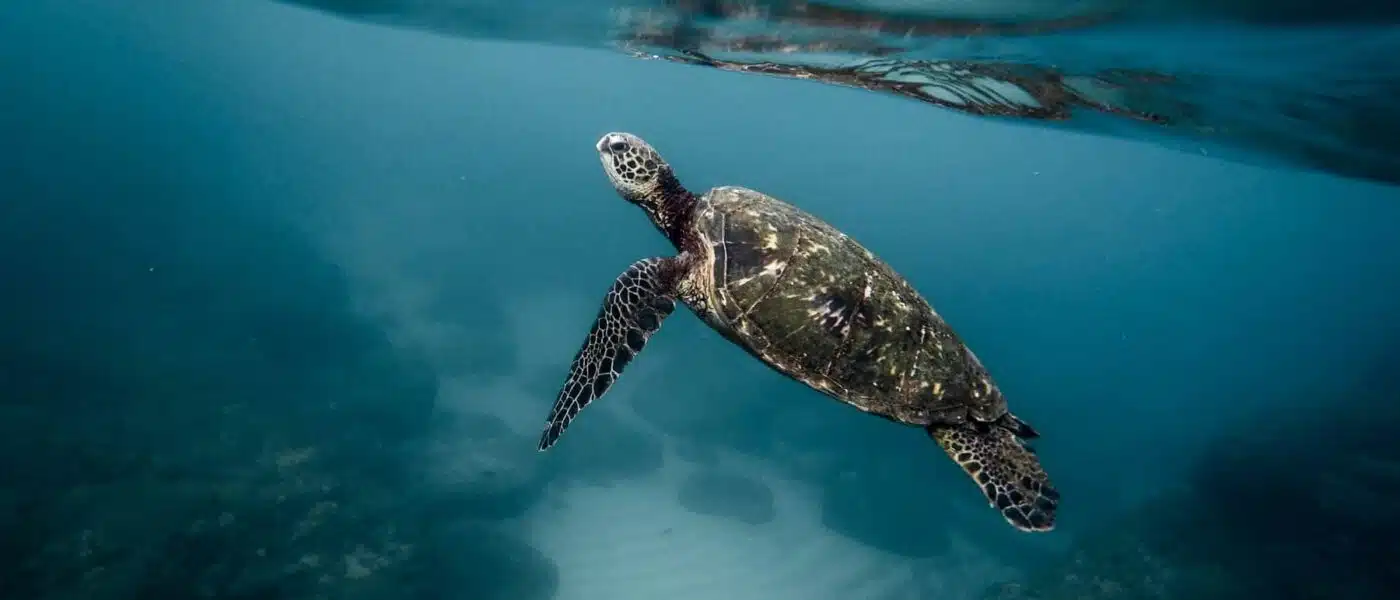
You begin on the islet’s outer walls, where volcanic rock drops into coral-draped ledges and sea fans reach out at depth, butterflyfish, angelfish and parrotfish thick on a healthy reef and barracuda circling the edges. Tunnels and caverns cut through the rock at various depths, single-file and lit from both ends in the shallows, lobsters tucked into the dark corners and nurse sharks resting on the sand. The arches open into areas where visibility lets you take in the whole underwater structure.
On the seabed at 30 meters, the Kayali’s hull is intact but so encrusted it looks like reef from afar, though its superstructure still reads as a working Caribbean vessel of the early 1990s. With a torch, the interior brings close encounters with groupers and morays, while eagle rays glide around the outside, sometimes in pairs. Your Out Of Office LGBTQ+ travel specialist can arrange the guide and a welcoming place to stay on the island.
Tell us where your mind keeps going back to. We will do the rest.
A line or two is enough to start. A specialist will pick it up from there.
More Moments in St Barth's
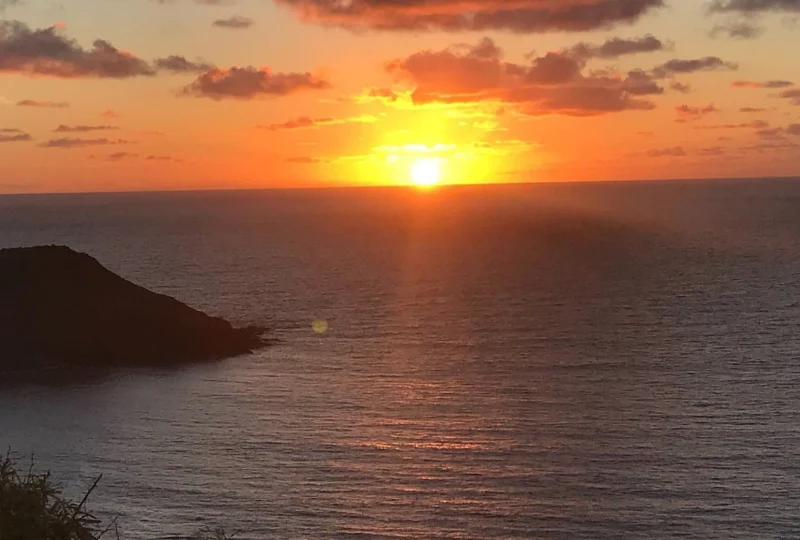
Sunrise from Morne du Vitet, St Barths’ Highest Point
Up Through the Mahogany The path starts in Vitet, the island's oldest settlement, and winds up through mahogany and tropical greenery, uneven in places but climbing gently. The air is fresh so early, and the birdsong starts before full light. Then, suddenly, you're at the top.
Discover more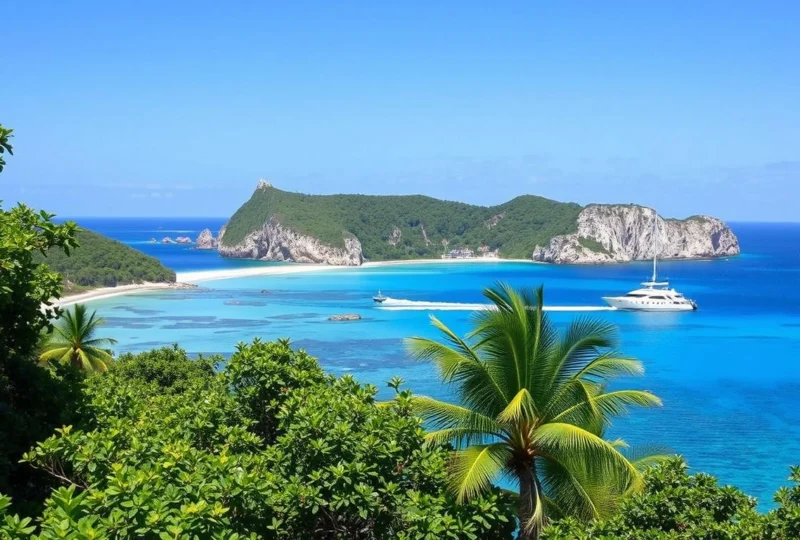
A Private Yacht Day Around St Barths, from Colombier to Île Fourchue
Beyond the Reach of Roads Sail out of Gustavia on your own yacht and St Barths transforms at once: the town's red roofs fall behind, the hills above Shell Beach appear, and the northwest coast opens up ahead. Twenty minutes later you're at anchor in Anse de Colombier, a bay with no road, no beach club and nobody who didn't come by sea.
Discover more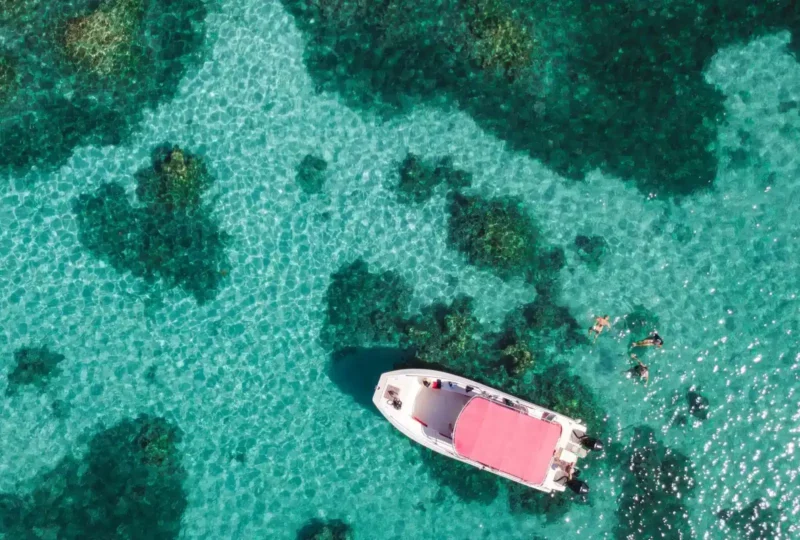
Snorkeling with Wild Sea Turtles in St Barths
Turtles in the Wild Thanks to its natural reserve, St Barths' waters hold a healthy, easily reached population of wild sea turtles. Few Caribbean islands offer such dependable encounters with free-roaming turtles in their natural habitat.
Discover more
We plant trees for every booking
For every booking made with Out Of Office we commit to planting trees in your name to help reduce the impact of travel on future generations. You'll even get a link to see where your trees are planted in the world via our partner Ecologi.


We donate to Rainbow Railroad with every booking
Rainbow Railroad helps LGBTQ+ people escape state-sponsored violence and persecution. A donation goes with every trip we sell, funded by us and never added to your price.


Start Planning Your Trip
Tell us where you would love to go, when you are thinking of traveling and what kind of trip you have in mind. One of our LGBTQ+ travel specialists will create a tailor-made itinerary designed around your destination, style and preferences.
One named specialist, first inquiry to homecoming. No call center, and nothing is charged until you decide to book.