




Editorials
Malta Has Caravaggio’s Greatest Work. Most Travelers Walk Right Past It.
Rome gets the reputation. Naples gets the drama. Malta gets the painting, the one Caravaggio signed with his own name, in blood, the only time he ever did.
In May 1606, Caravaggio killed a man named Ranuccio Tomassoni during a brawl in Rome, the kind of violent dispute that had followed him through most of his adult life, though this one didn’t end with an apology or a fine. A death sentence followed, issued by the Pope himself, meaning any citizen of Rome could legally kill Caravaggio on sight. He fled south immediately, first to Naples, then further still, out of Italy entirely, to Malta.
Who Caravaggio Actually Was in Rome
Before the killing, Caravaggio had already built a career on painting differently than anyone else working in Rome, using ordinary people as models for saints, lighting his scenes like a single candle in a dark room, and painting the human body with an intensity that unsettled as often as it impressed. His patron during these years, Cardinal Francesco del Monte, commissioned some of his most charged early work, paintings of adolescent boys posed with a sensuality rarely seen in religious or mythological painting of the period.
Art historians have debated for decades what that charge in the work actually means. Some read it as evidence of Caravaggio’s own attraction to men, pointing to how differently he composed his male subjects compared to his female ones. Others argue the case is circumstantial, built more on modern assumption than documented fact, since no letters or firsthand testimony from his life settle the question either way. What’s certain is that the question has never gone away, and it shapes how many visitors look at his work today, whether or not it shaped how he painted it.
Fleeing South, and Becoming a Knight
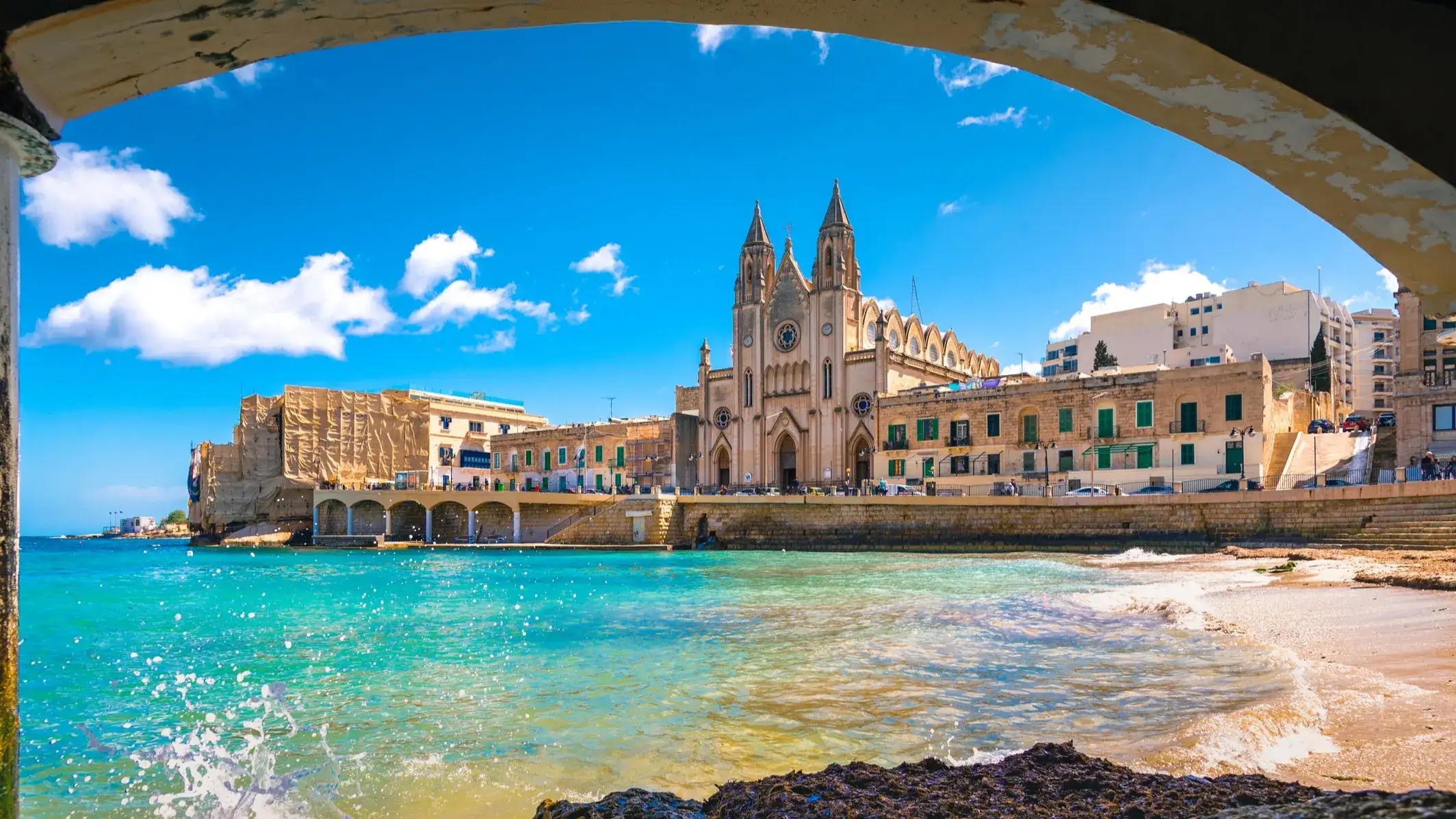
Malta wasn’t a random destination. The Knights of St. John, the military and religious order that ruled the island, offered Caravaggio something Rome no longer could: protection, and the possibility of a title that came with its own legal immunities. He arrived in 1607 and spent the following year working to earn his place, culminating in his induction as a Knight of Magisterial Obedience on July 14, 1608, one of the highest ranks the Order could grant someone with no noble birth behind him.
The Painting Itself
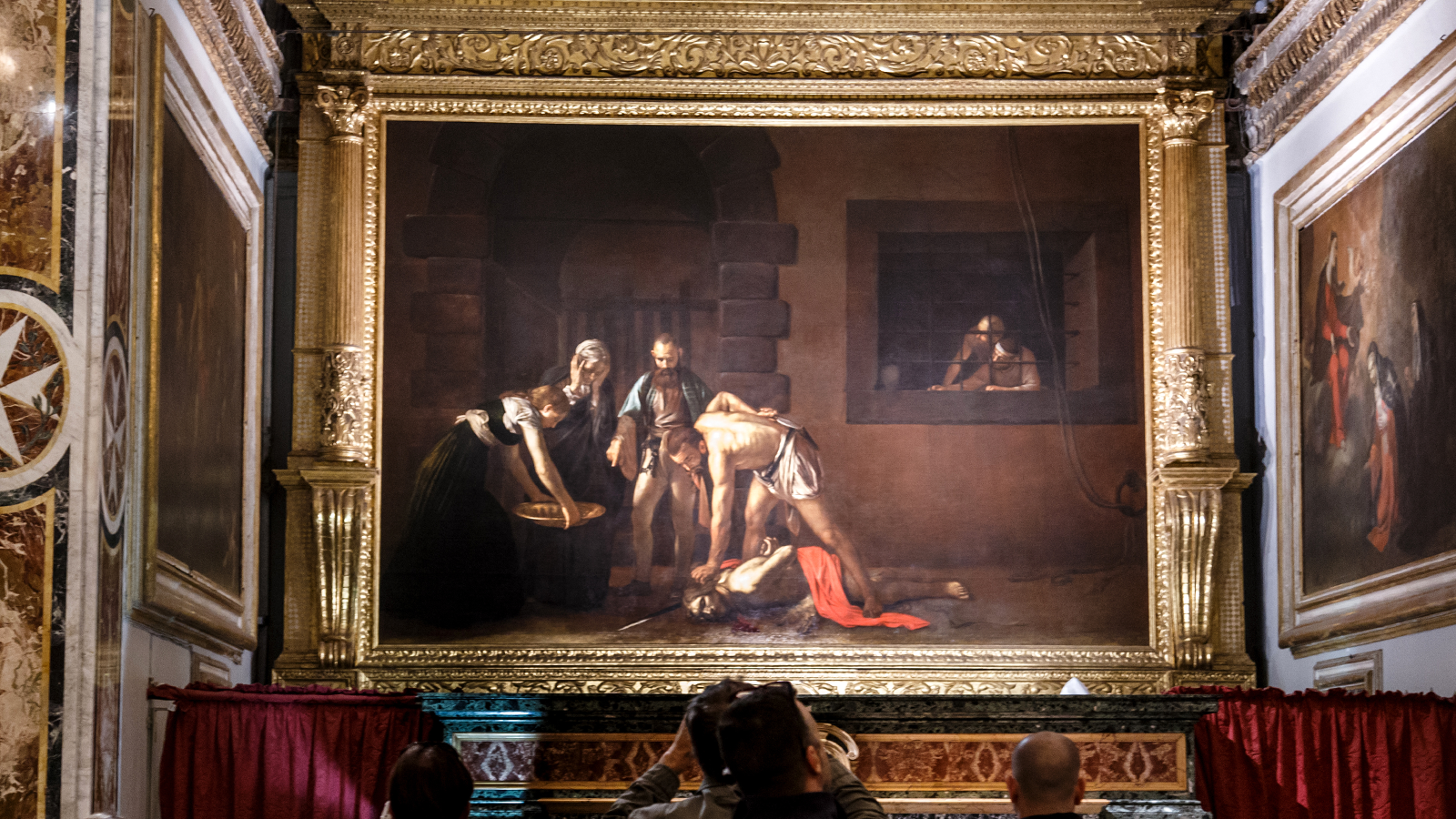
The painting that marked his induction was The Beheading of Saint John the Baptist, commissioned by the Order’s Grand Master, Alof de Wignacourt, for the altar of the Oratory at St. John’s Co-Cathedral. At 3.7 by 5.2 meters, it remains the largest canvas Caravaggio ever painted, and the only one he ever signed, his name written directly into the blood pooling from the Baptist’s severed neck, styled “f. Michelangelo,” the “f.” marking his new status as a Knight.
The scene itself is stark even by Caravaggio’s standards: no crowd, no spectacle, just the executioner finishing the job with a knife after the sword has already fallen, a jailer directing the scene, and a serving girl holding out the platter that will carry the head. It reads less like a religious commission and more like something closer to a confession, a man who knew exactly what a death sentence looked like, painting one.
Your personal travel specialist, from the first conversation to the flight home.
Request a quote →Where to See It
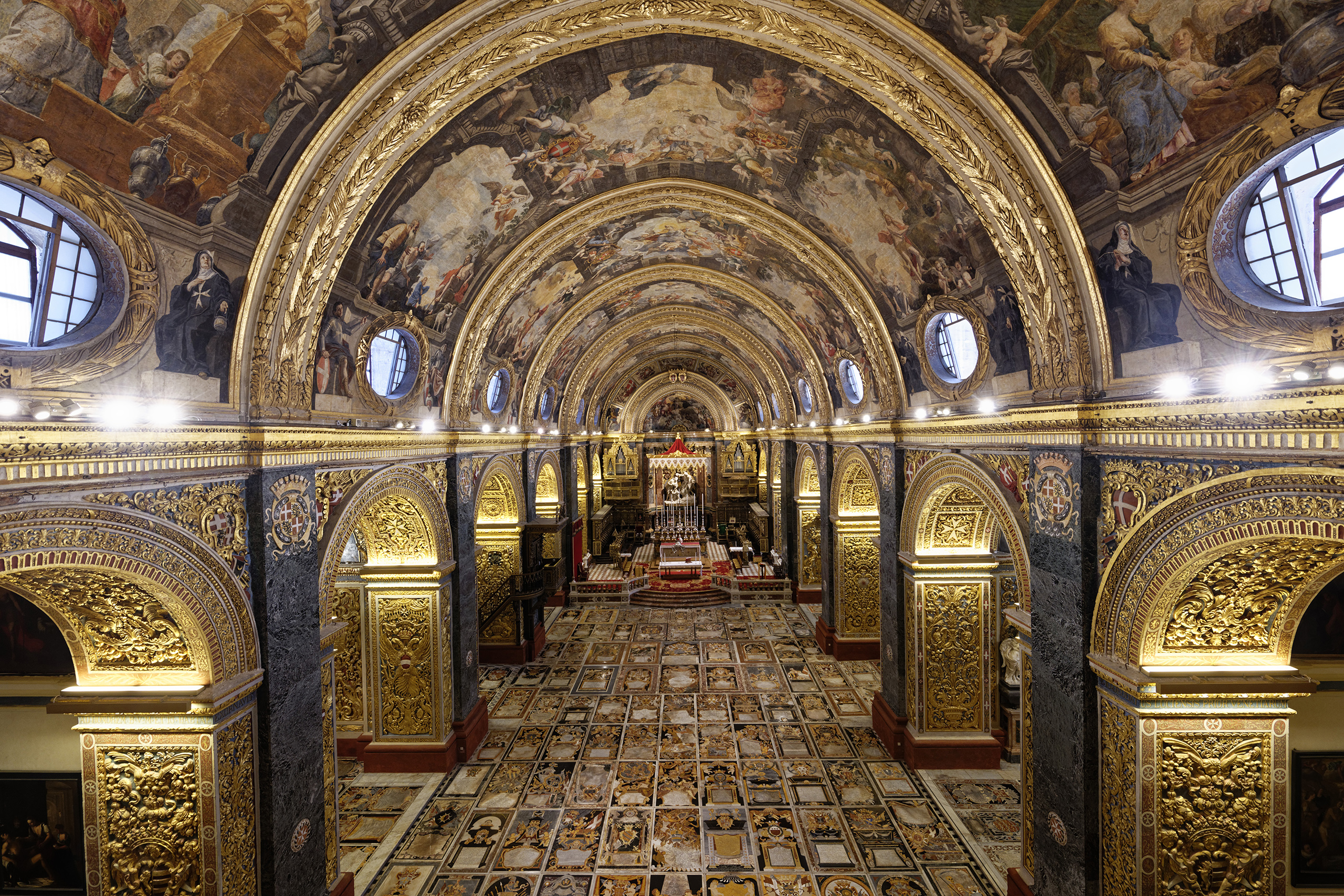
The painting still hangs in the Oratory of St. John’s Co-Cathedral in Valletta, the same room where it was originally installed, and the same room where, roughly six months after his induction, Caravaggio was formally expelled from the Order in absentia, denounced as a “foul and rotten member” in a ceremony held in front of the very painting he’d made to earn his place. The Cathedral is one of Valletta’s most visited sites, but the Oratory itself, tucked to the side of the main nave, is easy to move past quickly if you don’t know to slow down for it.
How It Ended
The expulsion followed another violent incident, an assault that landed Caravaggio in the Order’s own prison on Malta before he escaped and fled again, first to Sicily, then back to Naples. He spent his final months moving between cities, once badly disfigured in an attack whose motive was never confirmed, before dying in 1610 near Porto Ercole, on the Tuscan coast, under circumstances still debated by historians today, malaria, lead poisoning, and murder have all been proposed, and none conclusively proven.
The man never returned to Rome. The painting never left Malta.
One of the Great Works of Western Art
Whatever the truth of his life, the painting is the part that survives, and it’s worth seeing for exactly that reason. Art historians consistently rank it among the great achievements of Western painting, not for its subject but for what Caravaggio does with darkness itself, using it not as background but as the thing the entire composition is built from, so that the few figures caught in the light feel less painted than witnessed.
Few artists have ever made a single canvas feel this immediate, this close, or this human. Standing in front of it in the same room where it’s hung for over four hundred years is one of the more moving things a visit to Malta can offer.

New to Out Of Office?
We are a luxury travel company for LGBTQ+ travelers. Everything we sell is tailor-made, planned by one named member of our team throughout, and nothing on this site is a fixed package unless it says so.
Where exclusivity meets inclusivity
Ten years, hundreds of five-star reviews, and a team who will tell you when a destination is not right for the trip you have in mind.
Tell us how you like to travel. We will shape the trip around it.
How long you want to be away, how much you want to move, and what you would rather leave out entirely.
Stellar service. Stellar products. Stellar people and it gets so much better when you pick up the phone and call.
Anthony S.
Super client centred service. From first contact I have had warm, efficient, friendly and flexible service.
John
I’m confident in giving Out Of Office a 5-star review! They are one of the leaders in this space without a doubt.
Tiberiu

We plant trees for every booking
For every booking made with Out Of Office we commit to planting trees in your name to help reduce the impact of travel on future generations. You'll even get a link to see where your trees are planted in the world via our partner Ecologi.

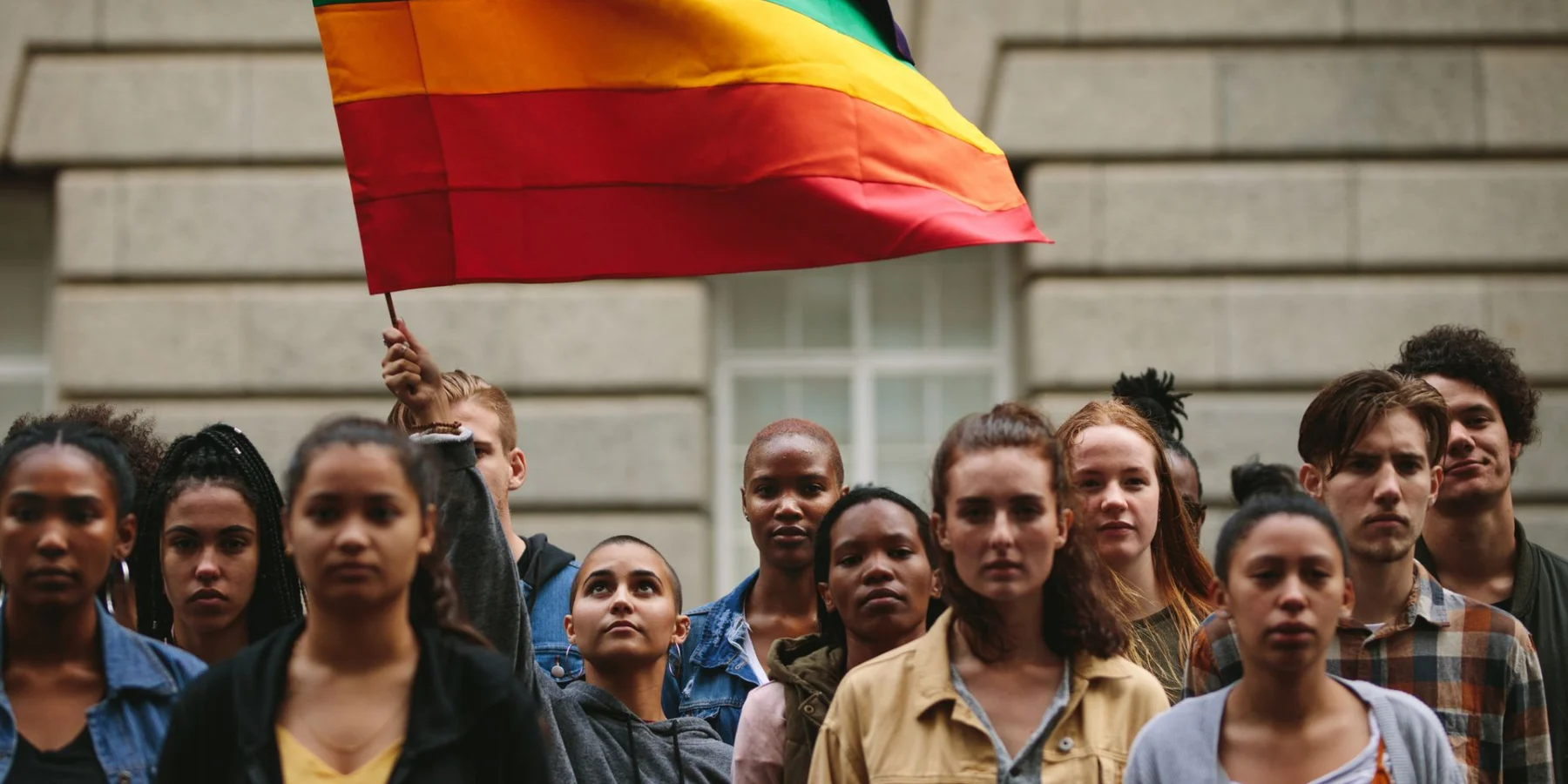
We donate to Rainbow Railroad with every booking
Rainbow Railroad helps LGBTQ+ people escape state-sponsored violence and persecution. A donation goes with every trip we sell, funded by us and never added to your price.

Start Planning Your Trip
Tell us where you would love to go, when you are thinking of traveling and what kind of trip you have in mind. One of our LGBTQ+ travel specialists will create a tailor-made itinerary designed around your destination, style and preferences.
One named specialist, first inquiry to homecoming. No call center, and nothing is charged until you decide to book.