


Moment · Tanzania
A Night Inside the Great Migration, Serengeti
Sleep in a mobile camp that follows the herds across the Serengeti, with lions calling in the dark and the migration somewhere close by.
Two Million Animals on the Move
Every year some two million wildebeest, zebra and gazelle move in an unbroken clockwise loop through the Serengeti-Mara ecosystem, following the rain to fresh grass. There’s no single event with a start or finish; it simply carries on, season after season, shaped by weather rather than dates. A few camps exist specifically to follow it, packing up and moving between the southern and northern Serengeti as the herds shift, so staying in one means sleeping wherever the herds are now, not at a fixed point on the map. What you’ll see depends on when you come: plains thick with newborn calves in one season, dramatic river crossings in another.
Why the Camps Move
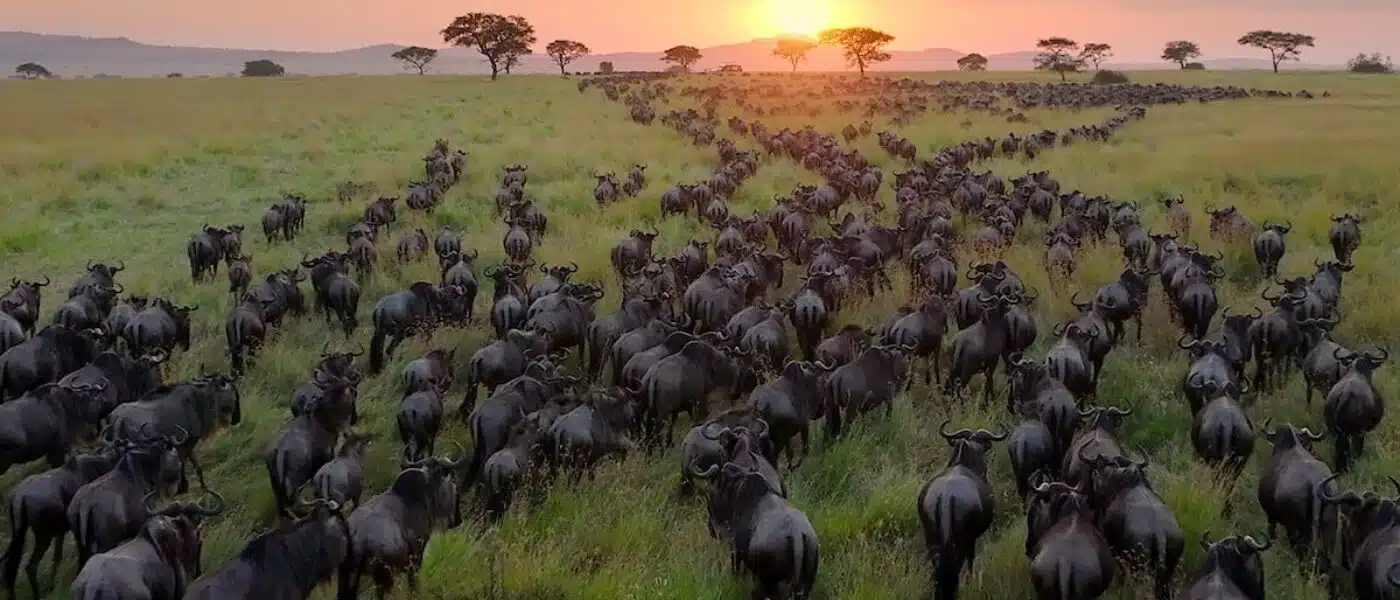
The migration’s clockwise route covers about 800 kilometers a year, starting with calving in the southern Serengeti, moving north through the central and western areas, crossing into Kenya’s Maasai Mara in the dry months and heading south again as the rains move. It has stayed broadly the same for generations, driven by rainfall rather than a calendar, which is why no safari can promise an exact spot on a given day.
Mobile camps were the answer to that uncertainty. Instead of building a permanent lodge and hoping the herds pass, operators designed camps that can be taken down and rebuilt elsewhere, usually moving between the southern plains for calving and the north for the dry-season crossings, relocating about twice a year to stay near the herds.
Small, Responsive, Close to the Action
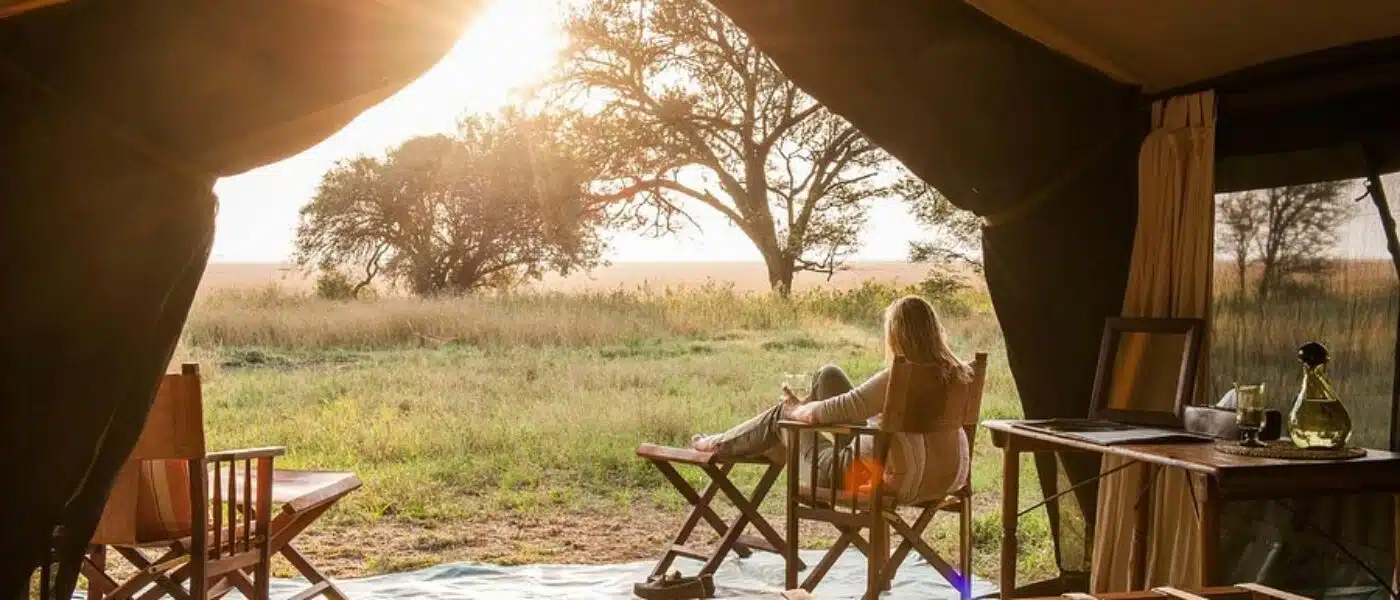
A permanent lodge brings comfort and consistency but no say in where the animals are while you’re there. A mobile camp tips the balance, because its whole purpose is to stay within reach of the migration’s current phase. These camps usually have few tents and few guests, favoring intimacy and a light footprint over size, and game drives are led by specialists who track the herds daily and follow the action rather than a fixed loop, a closer, more responsive relationship with the land.
Tell us how you like to travel. We will shape the trip around it.
Request a quote →Calves, Crossings and Lions at Night
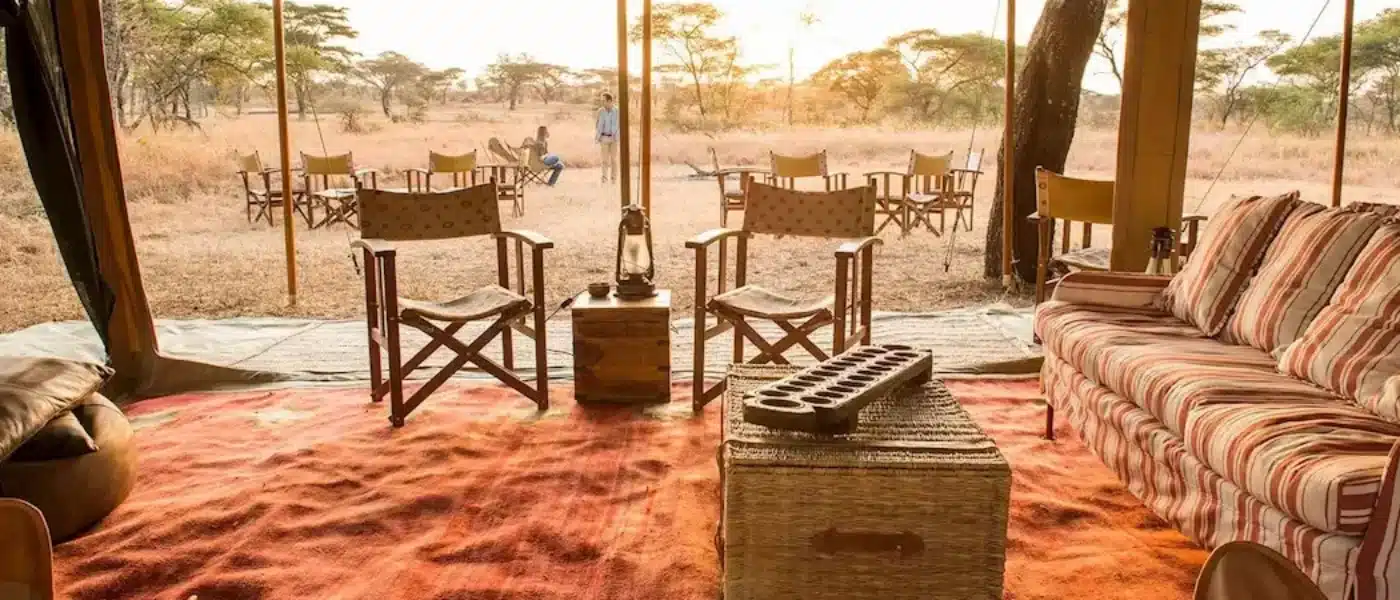
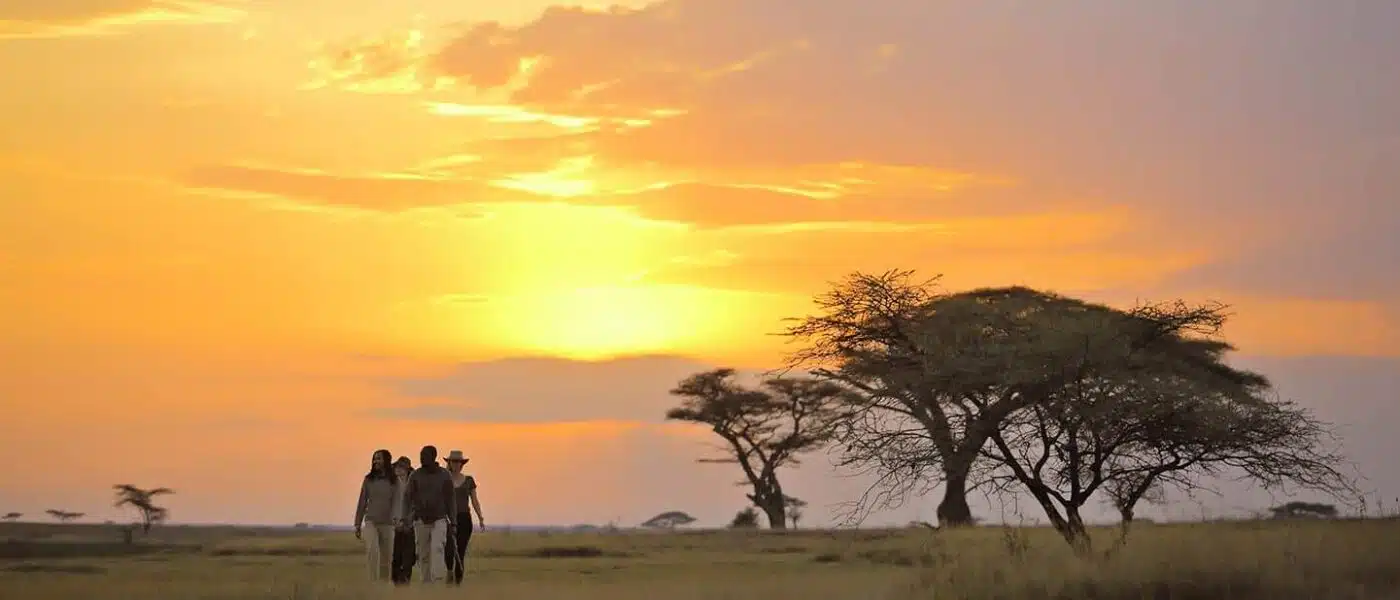
You’ll usually arrive at a tented camp set on a rise or open plain, chosen for its view over the grassland. Days revolve around two drives in the cool of early morning and late afternoon, when animals are most active, and what you see depends on the season. In the calving months on the southern plains, the grass fills with newborn wildebeest and the predators that follow them, life and danger playing out in the open; in the dry months further north, camps move near the river crossings, where thousands gather before plunging in, often with crocodiles waiting below.
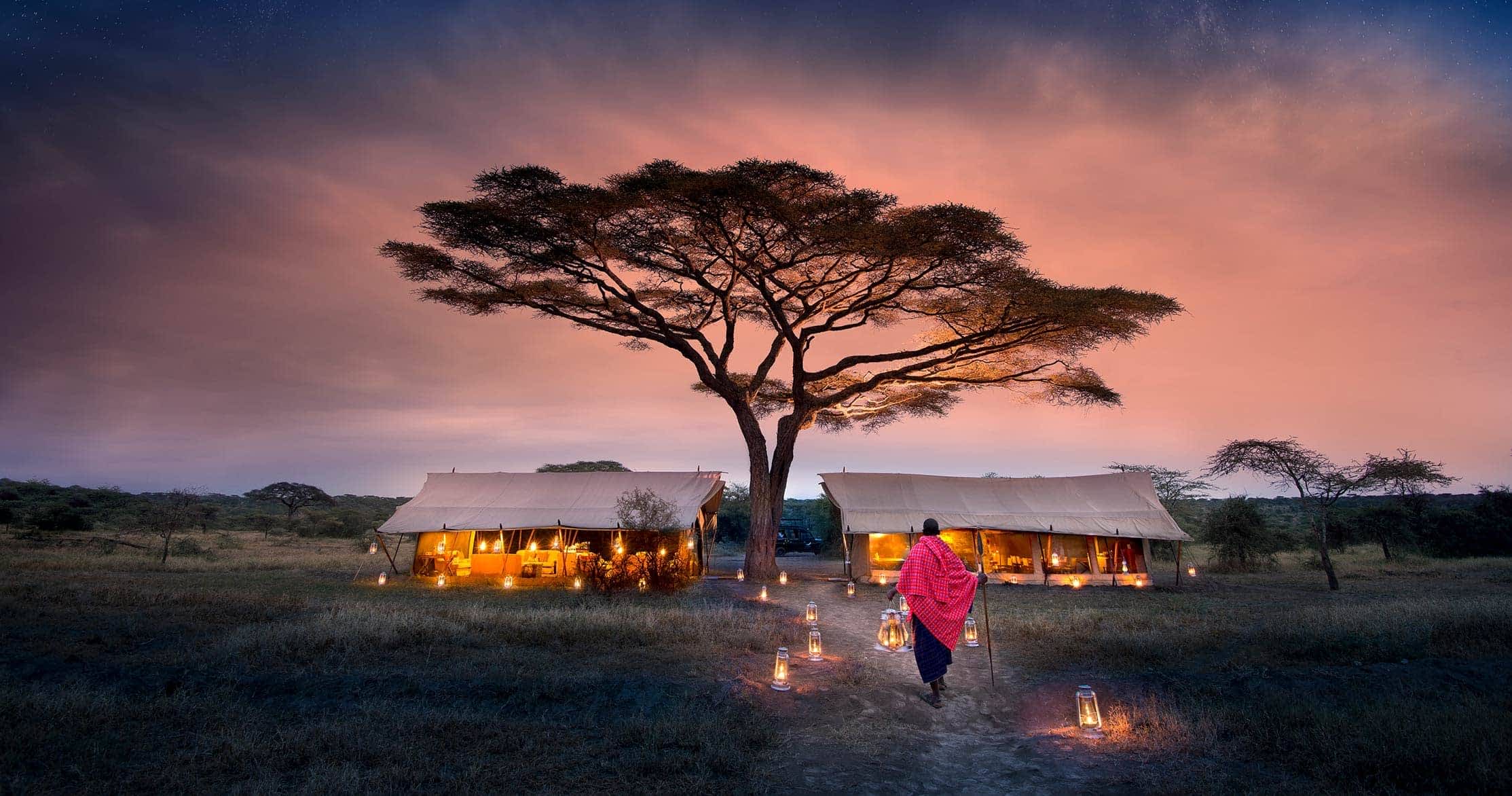
Between drives, camp life slows. Meals are served in an open-sided dining tent looking over the plains, the day’s sightings the inevitable topic, then a sundowner as the light fades and dinner under canvas. Nights have an atmosphere all their own: with no walls or buildings around, the sounds of the bush reach straight into camp, lions calling across the plains, hyenas close by, sometimes the heavy tread of elephants passing near the tents. None of it is staged or guaranteed; it’s simply what happens when a camp sits inside a living wildlife landscape.
Honest Planning
Out Of Office chooses the camp and dates that best match the migration’s likely position during your visit, working with operators who follow the herds all year, and builds transfers and the rest of your Tanzania trip around it. We’re honest from the start: no safari can guarantee a particular sighting on a particular day, so we place you in the right region in the right season rather than promising what no one controls. What stays with most people isn’t a single moment but the sense of having slept inside a landscape still shaping itself. Your LGBTQ+ travel specialist plans the safari, and our Tanzania guide covers LGBTQ+ rights and travel advice.
The hard part is not finding a beautiful place. It is finding the right one for you.
Every property we suggest is handpicked by our team. Twenty minutes with a specialist will tell you which ones are worth your time.
More Moments in Tanzania
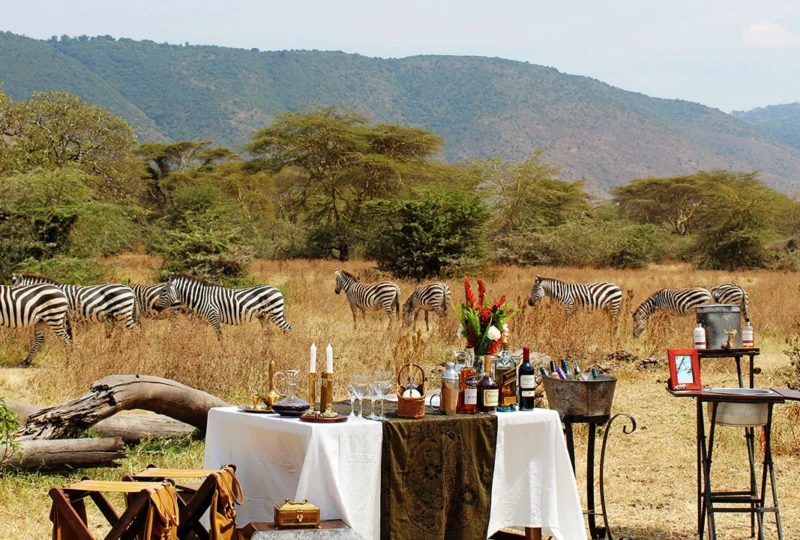
A Private Bush Dinner on the Rim of the Ngorongoro Crater
Above the Caldera at Dusk The Ngorongoro Crater is the largest unbroken volcanic caldera on earth, a huge bowl of grass and forest left when an ancient volcano collapsed millions of years ago, its walls now enclosing one of Africa's richest concentrations of wildlife. By late afternoon the road down into the crater closes and the day's vehicles start climbing back to the rim, and as the light softens, your evening begins above them.
Discover more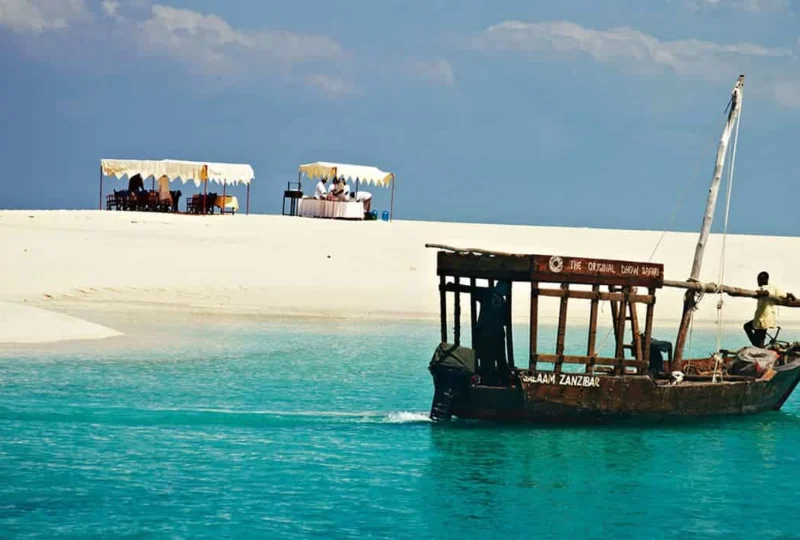
A Private Dhow Sail to a Vanishing Sandbank off Zanzibar
Land That Lasts a Few Hours Off Zanzibar's coast, a few sandbanks rise from the Indian Ocean at low tide and sink again when it returns, leaving a strip of pure white sand ringed by shallow turquoise water, reachable only by boat, for just a few hours.
Discover more
We plant trees for every booking
For every booking made with Out Of Office we commit to planting trees in your name to help reduce the impact of travel on future generations. You'll even get a link to see where your trees are planted in the world via our partner Ecologi.

We donate to Rainbow Railroad with every booking
Rainbow Railroad helps LGBTQ+ people escape state-sponsored violence and persecution. A donation goes with every trip we sell, funded by us and never added to your price.

Start Planning Your Trip
Tell us where you would love to go, when you are thinking of traveling and what kind of trip you have in mind. One of our LGBTQ+ travel specialists will create a tailor-made itinerary designed around your destination, style and preferences.
One named specialist, first inquiry to homecoming. No call center, and nothing is charged until you decide to book.