




Editorials
Ayutthaya: Thailand’s Ruined Capital, and How to Visit It Properly
Ayutthaya was Siam's capital for four centuries, once compared to London and Paris. Why it fell, how to reach the ruins from Bangkok, and how long to stay.
Ayutthaya rose in 1350 as the capital of Siam, built where three rivers meet for trade and defense, and within two centuries it had grown into one of the richest cities on earth. Visiting European merchants described it as bigger than London, home to trading quarters from Portugal, the Netherlands, Japan, and Persia, and to a royal court that dealt directly with kings across Asia and Europe.
In 1767 a Burmese army burned it to the ground, and the Siamese court fled downriver to build a new capital that became Bangkok. What is left is a city frozen mid-collapse, stone Buddha heads growing into tree roots and brick chedis rising straight out of open fields, and it sits close enough to Bangkok that seeing it only takes the will to leave the city for a day.
Why It Became So Rich
King U Thong founded the city in 1350, and the wealth that followed came from a specific position rather than luck. Ayutthaya sat directly on the river route connecting Chinese and Indian trade, and the kingdom exported rice and textiles in volume large enough to fund a court that dealt with European powers as an equal rather than a supplier.

What to See Among the Ruins
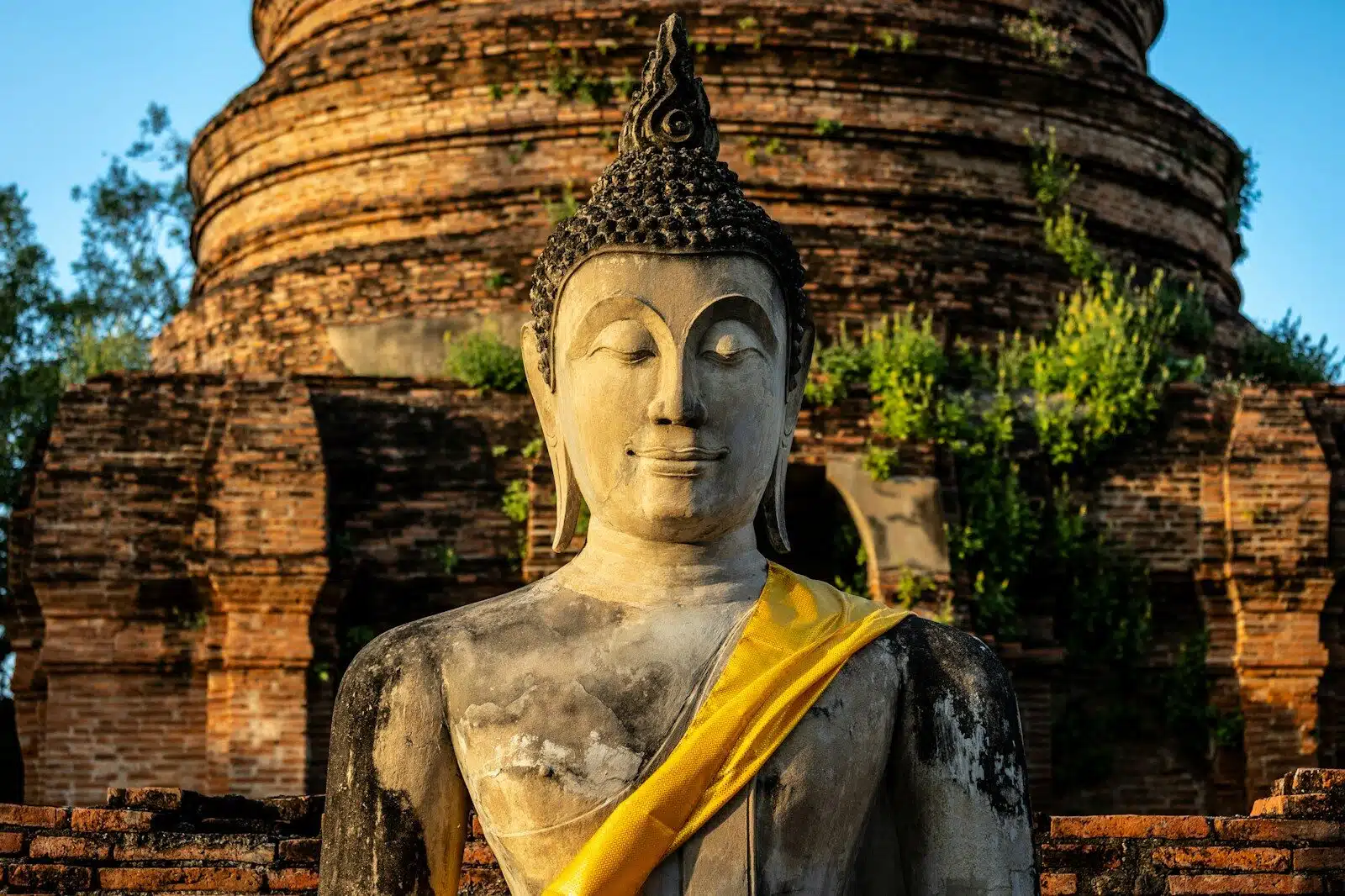
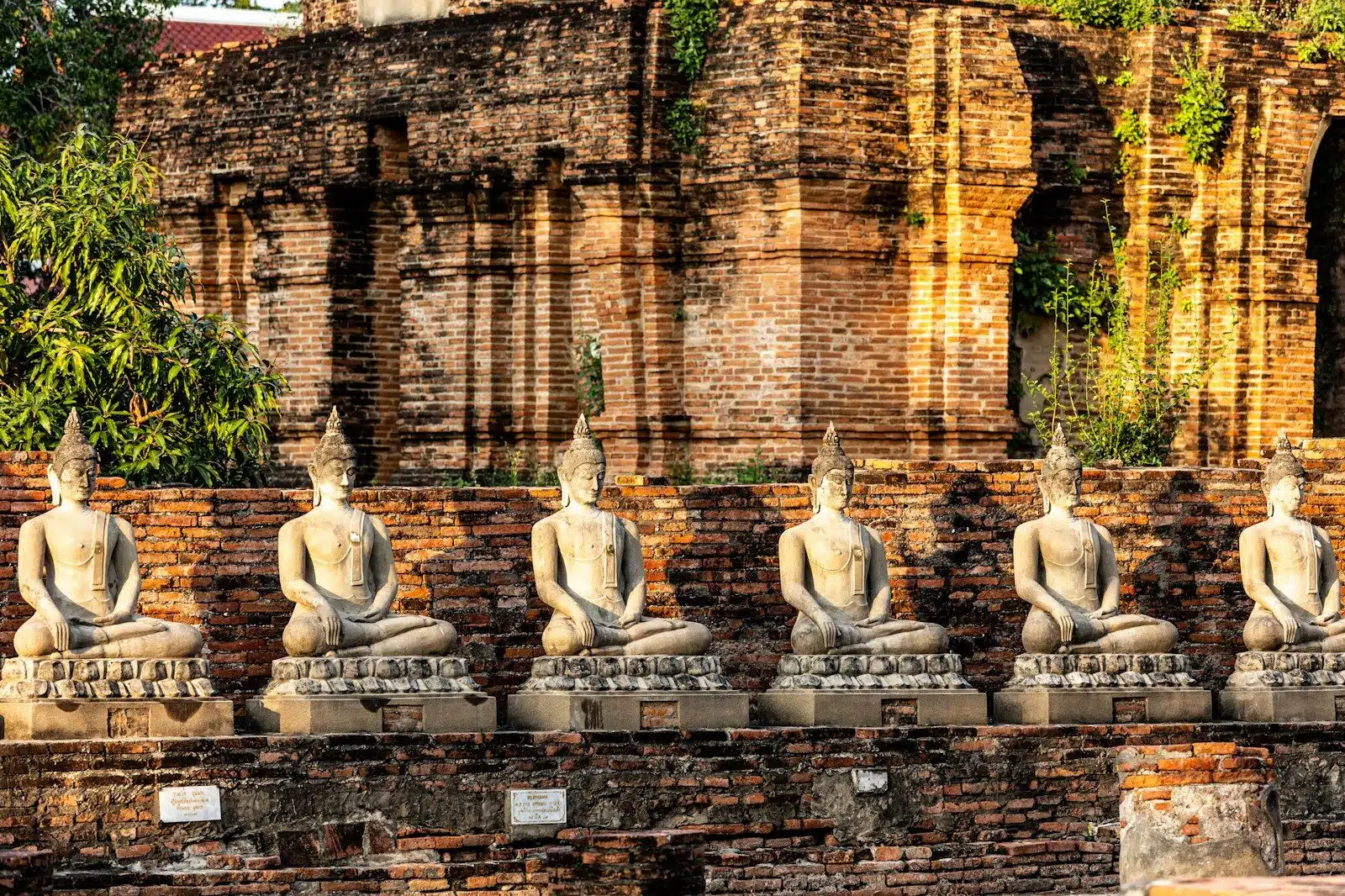
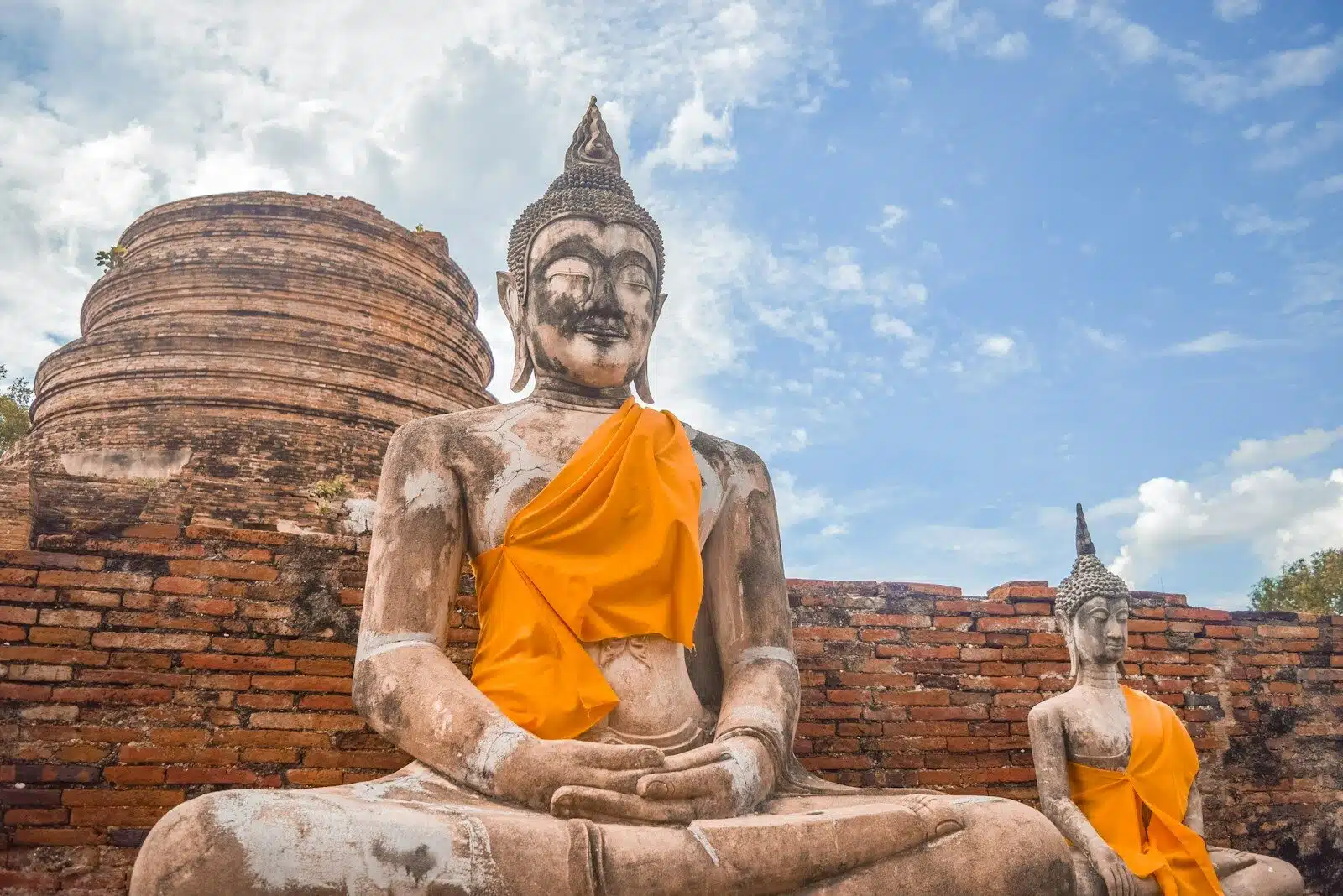
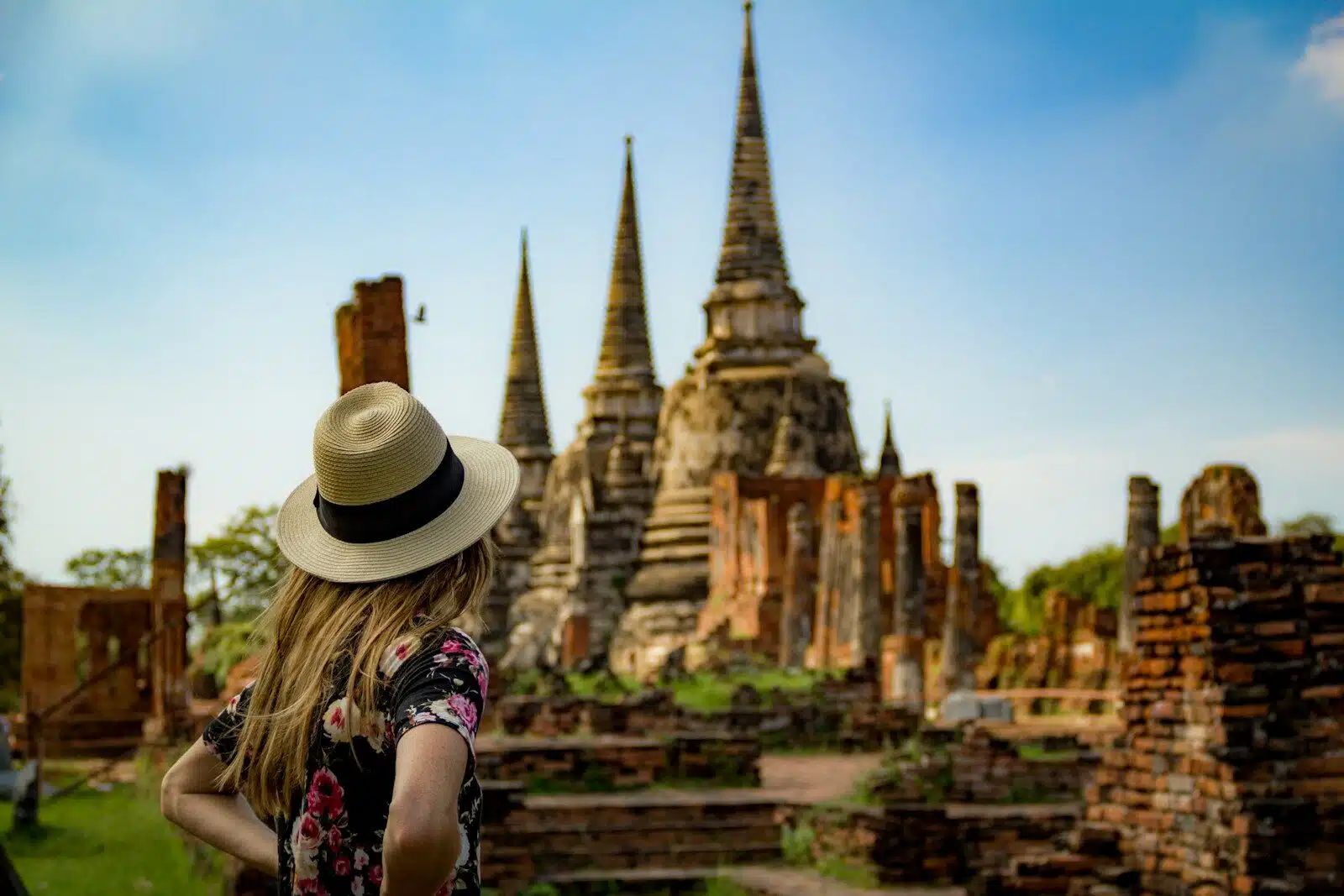
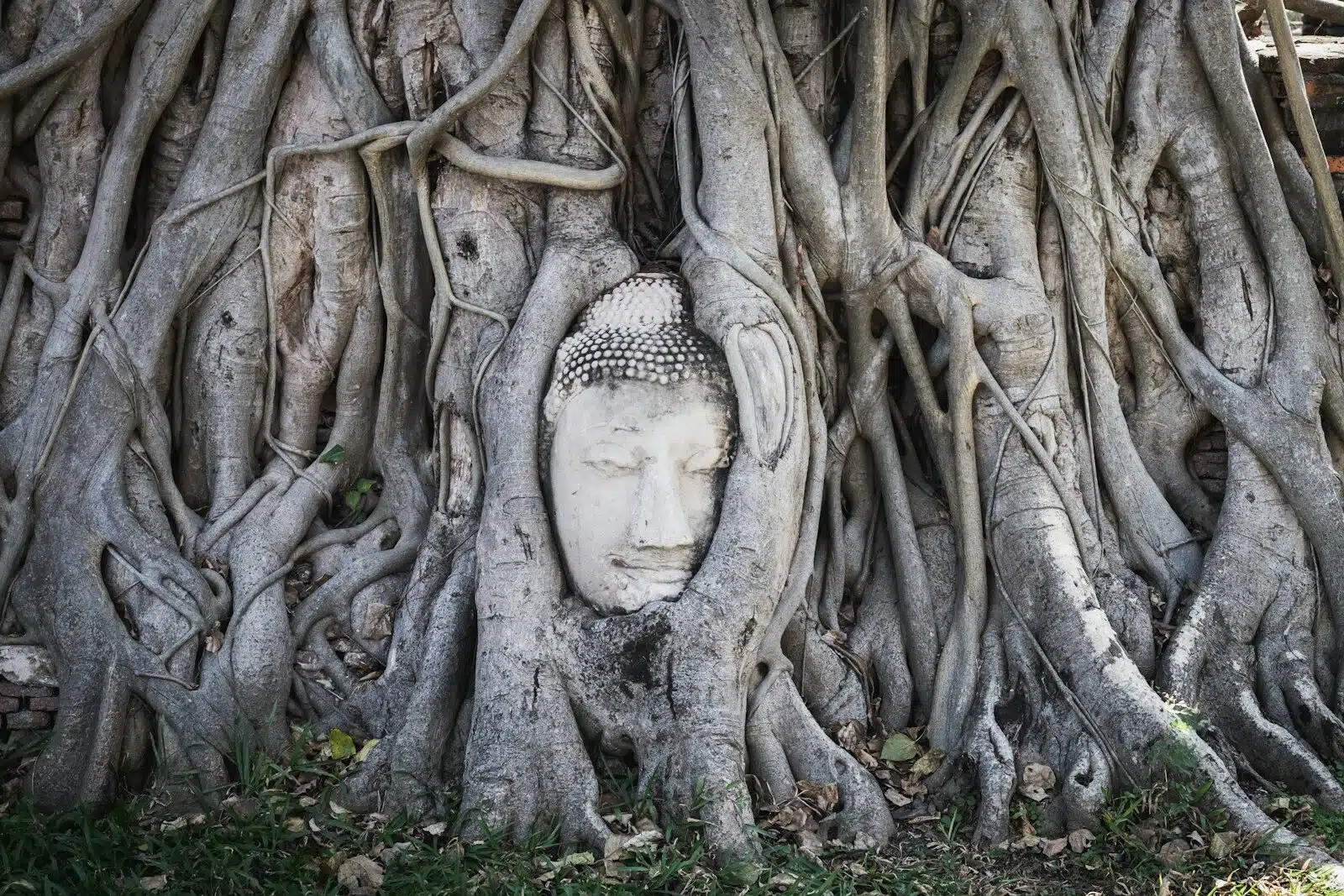
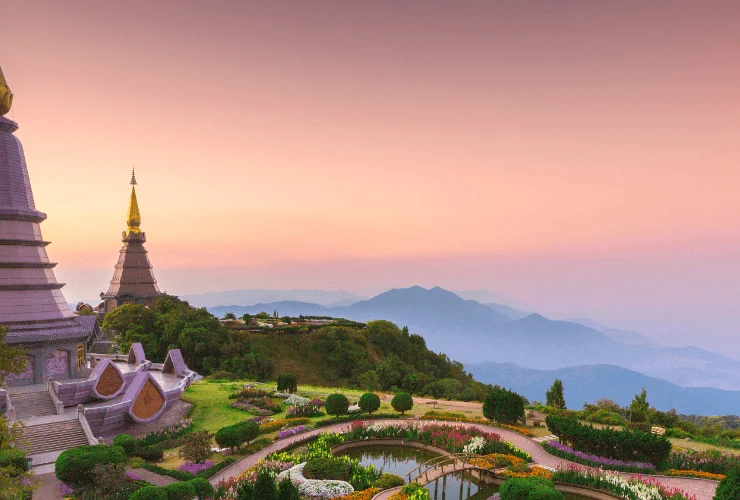
Wat Mahathat holds the single image most people associate with Ayutthaya, a stone Buddha head wrapped in the roots of a banyan tree, likely settled there over decades after the temple’s fall rather than placed deliberately. Wat Phra Si Sanphet, once inside the royal palace grounds, has three large chedis built to hold the ashes of three kings, and gives the clearest sense of how grand the palace complex once was.
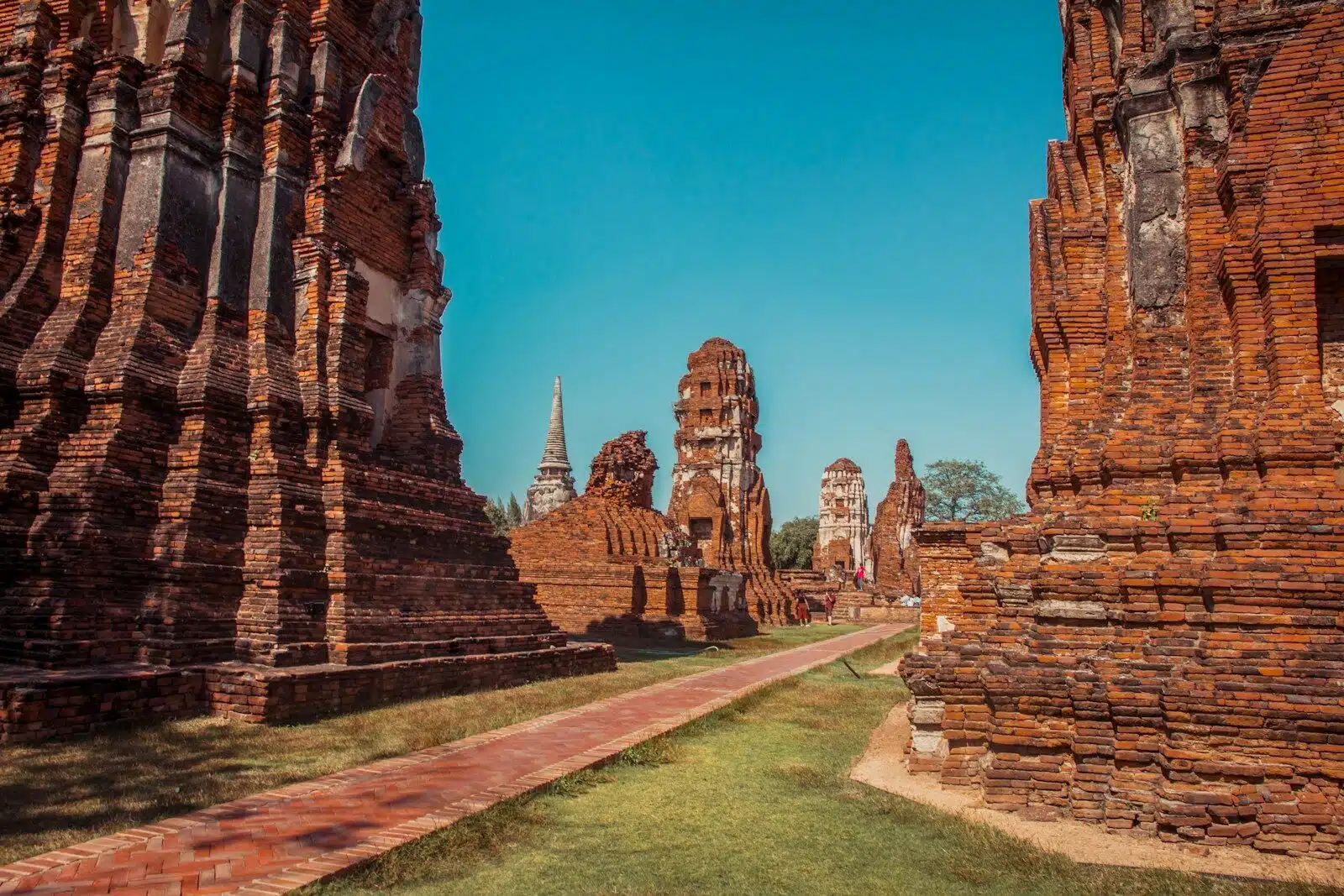
Wat Chaiwatthanaram sits on the river’s edge and was built in the Khmer style with a central prang surrounded by smaller towers, a design that borrows directly from Angkor. Late afternoon light on the towers, with the river running past, is why photographers return here specifically at that hour rather than midday. Wat Yai Chai Mongkhon, on the edge of town, has a large reclining Buddha and a tall central chedi that visitors can climb for a view across the surrounding rice fields.
Outside the old city, Bang Pa-In Summer Palace mixes Thai, Chinese, and European architectural styles from the 19th century, when Siamese kings began building in dialogue with the West rather than defending against it. Most of the temple sites charge a small entry fee, usually paid in cash at the gate, and a shared ticket covering several of the main ruins is often available at the historical park entrance.
Why Wasn’t Ayutthaya Rebuilt as the Capital?
When a Thai general named Taksin drove the Burmese army back out later in 1767, he chose not to rebuild on the ruins. He established a new capital downriver at Thonburi instead, closer to the sea for trade and easier to defend against a second invasion by the same route the Burmese had used.
His successor, Rama I, founded the Chakri dynasty in 1782 and moved the capital across the river to what is now Bangkok. Ayutthaya was left to the jungle, and it never governed Thailand again.
Getting There and Getting Around
Ayutthaya sits about an hour and a half from Bangkok by car, and roughly the same by train from Bang Sue Grand Station, with services running through most of the day. A private driver is the easiest option for a couple who want to move between temples on their own schedule rather than a set tour route, and cars can be arranged through most Bangkok hotels with a day’s notice.
Once in Ayutthaya, the main ruins sit close enough together that a bicycle or a tuk-tuk hired for a few hours covers the historical park easily, with Bang Pa-In Summer Palace as the one site far enough out to need a separate car trip.
How Long to Stay
Ayutthaya sits close enough to Bangkok, about an hour and a half by car or a similar time by train, that most tour operators sell it as a single long day. A day trip covers the main temples but arrives on the same schedule as every other bus from the capital, which means the popular sites are busiest exactly when you are there.
One night changes the experience. Staying over means reaching Wat Chaiwatthanaram for sunset once the day-trip buses have left, and returning to Wat Mahathat early the next morning before the heat and the crowds arrive together. A single overnight at a small riverside hotel is enough to see the main sites at a better pace without needing to plan a second full day.
Tell us where your mind keeps going back to. We will do the rest.
Request a quote →What to Combine It With
Ayutthaya works best as a stop rather than a standalone destination, and its position makes that easy. Couples flying into Bangkok can build in a night here before heading into the city, using it to adjust to the time zone somewhere quieter than a capital of ten million people. Others treat it as a bridge on the way south, splitting a longer Thailand trip into a cultural opening chapter before an internal flight to Koh Samui or Phuket for the beach portion.
A river cruise along the Chao Phraya is a natural pairing, since several operators run boats between Bangkok and Ayutthaya that let a couple see the same waterways the old traders once used, arriving by water rather than road.
Is Ayutthaya Worth It If You’ve Already Seen Angkor Wat?
Yes, and the reason is that they are not really the same kind of site. Angkor was built as a religious complex by the Khmer Empire, sandstone temples carved with bas-reliefs and gradually reclaimed by jungle over centuries, and visiting it is a monument-by-monument experience spread across a park the size of a small city.
Ayutthaya was a working trading capital first and a collection of temples second, laid out with canals and markets and entire foreign merchant quarters, so what you are walking through is the skeleton of a city rather than a single religious site. It is also a fraction of the effort, no flight to Siem Reap and no separate visa, just an hour and a half from wherever you are already staying in Bangkok.
What’s the Difference Between Ayutthaya and Sukhothai?
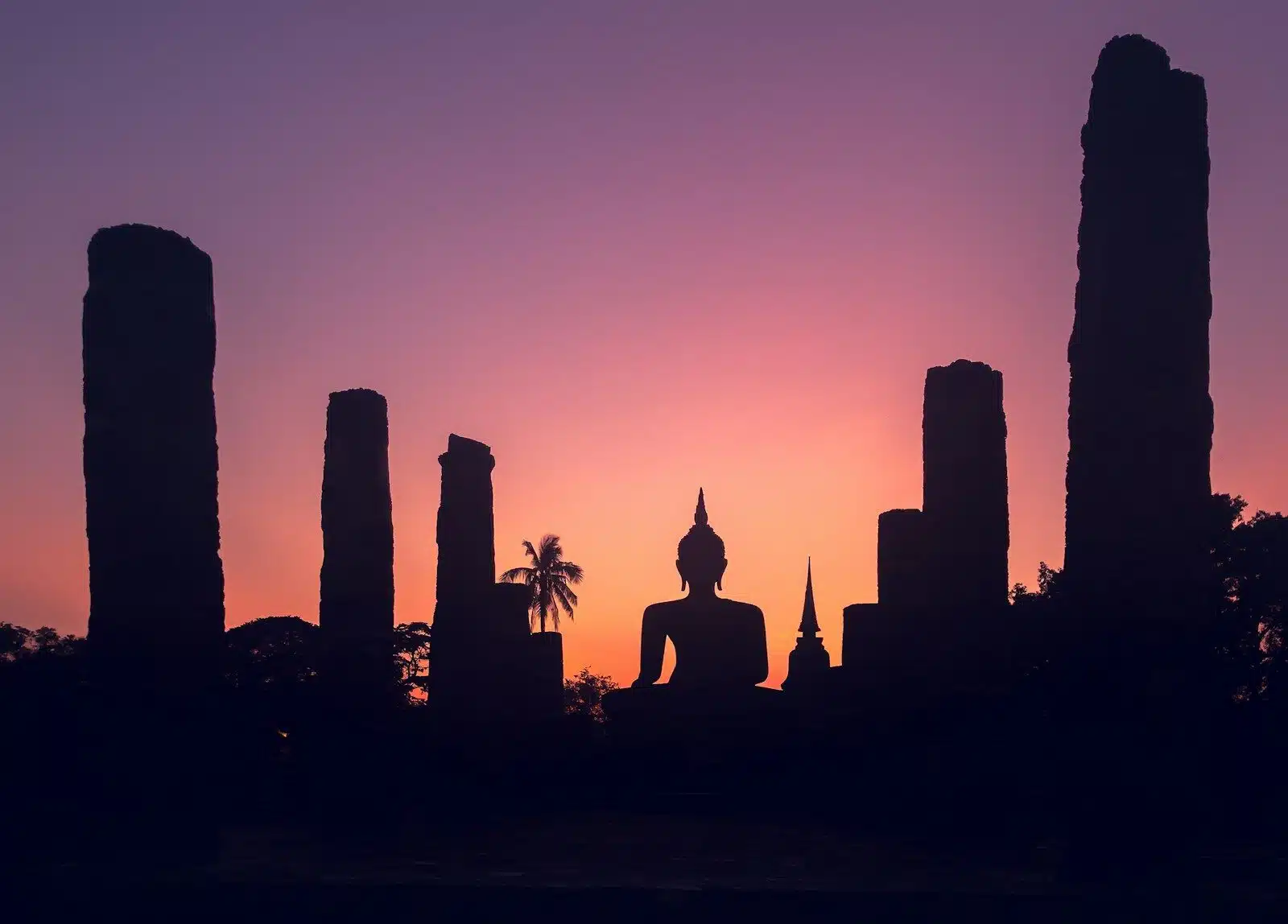
Sukhothai came first, founded in 1238 as the first independent Thai kingdom, and its art and architecture became the template much of Thailand still draws on, recognizable by its lotus-bud chedis and the graceful walking Buddha style that started there.
Ayutthaya absorbed Sukhothai into its territory in 1438 and became the larger, wealthier empire that followed it, built around cosmopolitan trade rather than being the origin story. Sukhothai’s ruins sit in an open, grassy park with lotus ponds and feel closer to a garden than a city, while Ayutthaya’s brick and stucco ruins sit dense and close together, closer to the shape of the working capital they once were.
The other real difference is logistics, Sukhothai is a long way north, usually paired with Chiang Mai rather than Bangkok, while Ayutthaya sits close enough to the capital to fit into a single day or overnight.
Thailand’s Openness Extends Here Too
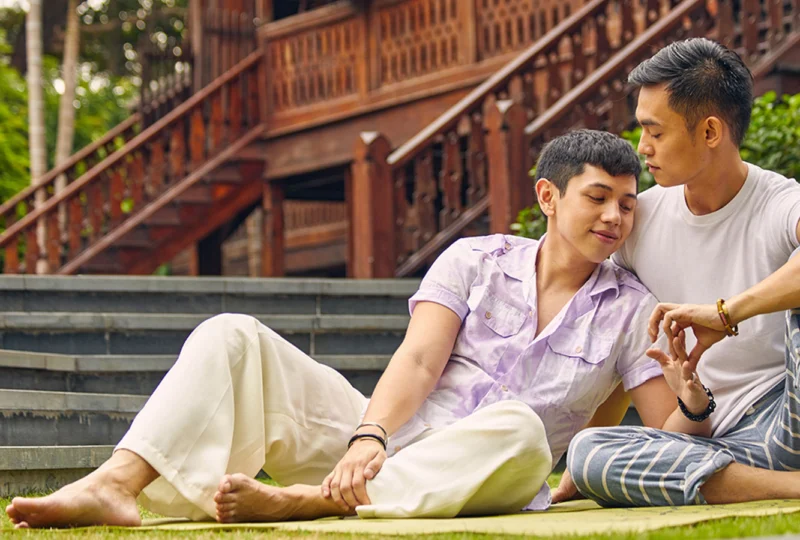
Thailand’s general ease with LGBTQ+ visitors is not confined to Bangkok bars or Phuket resorts, and Ayutthaya is a good example of that. Thai Buddhist culture treats temple visits as a shared, everyday activity rather than something bound up with the visitor’s identity, and same-sex couples walking the ruins together, hand in hand or not, draw no particular attention from other visitors or from temple staff.
The only real etiquette to keep in mind is the one every visitor follows regardless of who they are traveling with, modest clothing that covers shoulders and knees when entering active temple grounds, since some of these sites remain functioning places of worship rather than pure ruins.
Ayutthaya is easiest to get right as one chapter of a longer itinerary rather than a bolt-on day trip, and the order matters as much as the sites themselves. We build full Thailand itineraries that open with a night or two here, move through Bangkok, and connect on to Koh Samui or Phuket for the beach half of the trip, timed so drivers, flights, and hotels line up without dead days in between. Get in touch and we will put together a Thailand route built around your own pace, start to finish.


On this page
- Why It Became So Rich
- How to Combine Your Gay Wedding and Honeymoon in Thailand
- What to See Among the Ruins
- Why Wasn’t Ayutthaya Rebuilt as the Capital?
- Getting There and Getting Around
- How Long to Stay
- What to Combine It With
- Thailand, Your Way: Six Journeys Through One Remarkable Country
- Is Ayutthaya Worth It If You’ve Already Seen Angkor Wat?
- What’s the Difference Between Ayutthaya and Sukhothai?
- Thailand’s Openness Extends Here Too
New to Out Of Office?
We are a luxury travel company for LGBTQ+ travelers. Everything we sell is tailor-made, planned by one named member of our team throughout, and nothing on this site is a fixed package unless it says so.
Where exclusivity meets inclusivity
Ten years, hundreds of five-star reviews, and a team who will tell you when a destination is not right for the trip you have in mind.
The best trips begin with a conversation, not a booking form.
Tell us how you would like the trip to feel, and a specialist will take it from there.
Stellar service. Stellar products. Stellar people and it gets so much better when you pick up the phone and call.
Anthony S.
Super client centred service. From first contact I have had warm, efficient, friendly and flexible service.
John
I’m confident in giving Out Of Office a 5-star review! They are one of the leaders in this space without a doubt.
Tiberiu
We plant trees for every booking
For every booking made with Out Of Office we commit to planting trees in your name to help reduce the impact of travel on future generations. You'll even get a link to see where your trees are planted in the world via our partner Ecologi.

We donate to Rainbow Railroad with every booking
Rainbow Railroad helps LGBTQ+ people escape state-sponsored violence and persecution. A donation goes with every trip we sell, funded by us and never added to your price.

Start Planning Your Trip
Tell us where you would love to go, when you are thinking of traveling and what kind of trip you have in mind. One of our LGBTQ+ travel specialists will create a tailor-made itinerary designed around your destination, style and preferences.
One named specialist, first inquiry to homecoming. No call center, and nothing is charged until you decide to book.