





Editorials
The Best Christmas Markets in Germany for Gay Travelers
From Munich's Pink Christmas to Hamburg Winter Pride, plus five classic markets worth building a trip around.
Germany all but invented the Christmas market, and with more than 3,000 running across the country each December, deciding where to go is the hardest part.
Two markets in particular deserve top billing for LGBTQ+ travelers specifically, and beyond them, Germany’s classic markets are worth building a trip around regardless of who you’re traveling with.
Pink Christmas: Munich’s LGBTQ+ Christmas Market
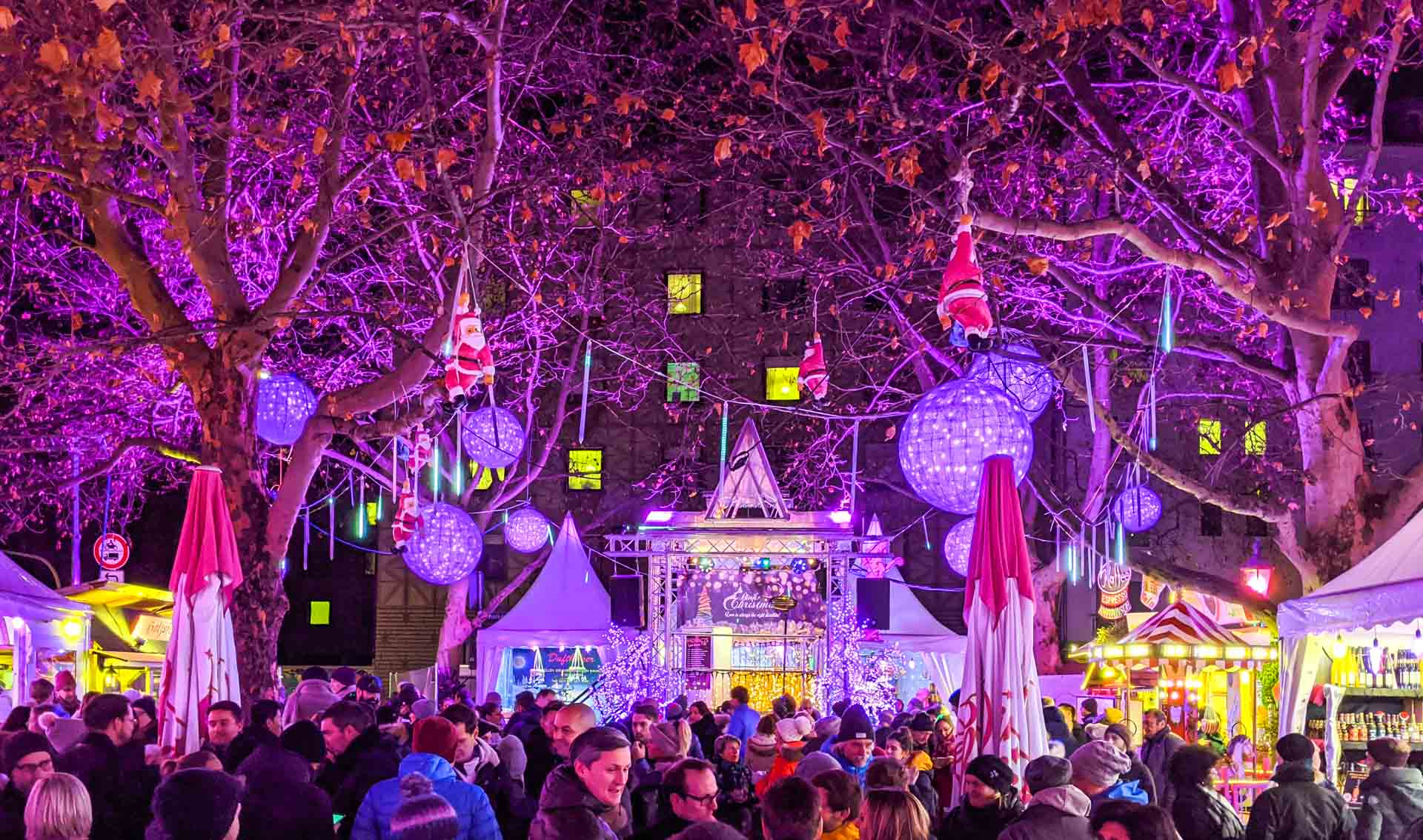
Pink Christmas takes over Stephansplatz in Munich’s Glockenbachviertel, the city’s gay neighborhood, for its 21st year running in 2026, with dates expected to fall between November 20 and December 20. Founded in 2005 by Robert Maier-Kares as a visible space during what was then a far more conservative Advent season, it’s grown into one of the city’s most talked-about markets, small in footprint but outsized in atmosphere, everything from the fairy lights to the mulled wine tinted pink for the occasion.
Alongside the usual roasted almonds and glühwein, there’s a dedicated Prosecco bar, a nightly DJ set, and a drag show most Sundays. December 1 brings a dedicated World AIDS Day program, tying the market back to its community roots rather than letting it drift into just another festive stop. Entry is free, and it draws a genuine mix of LGBTQ+ locals, straight neighborhood families, and curious visitors all sharing the same small square.

Hamburg Winter Pride
Hamburg’s answer sits in St. Georg, the city’s LGBTQ+ neighborhood, at the corner of Lange Reihe and Kirchenallee, and holds the title of Germany’s largest gay and lesbian Christmas market. It runs through November and December 2026, a short walk from the main train station.
Expect the full range of market staples, mulled wine, punch, roasted almonds, run in part by local LGBTQ+ organizations who take turns behind the stalls throughout the season. A giant illuminated reindeer watches over the square, and rather than piped-in carols, the market runs its own stage program, with drag hosts and entertainment building through the weekends. On Friday and Saturday nights from 7pm, DJs take over, moving from pop and electro into Schlager as the evening wears on.
Five More Christmas Markets Worth Building a Trip Around
Nuremberg’s Christkindlesmarkt
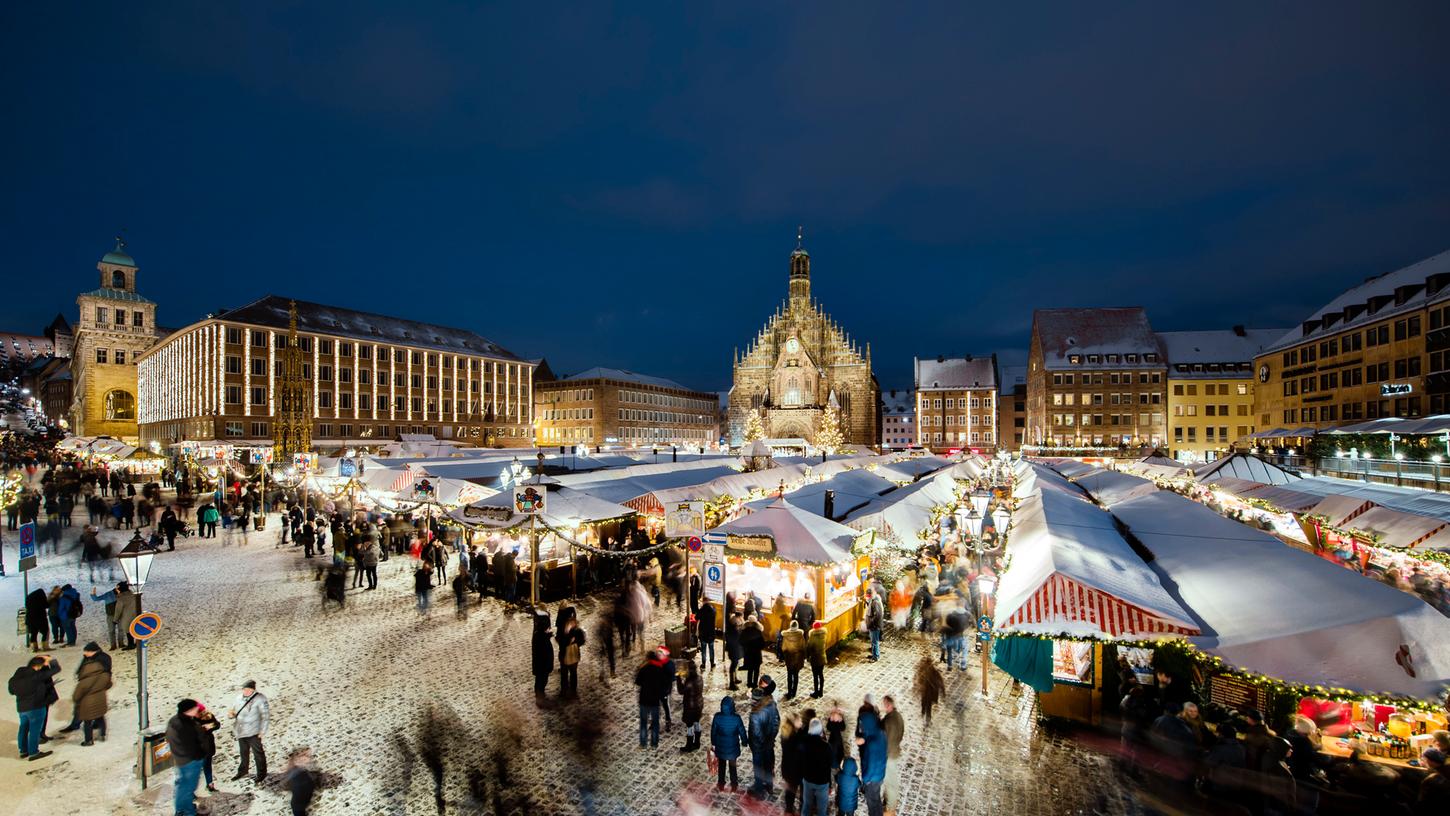
The one most people picture when they think of a German Christmas market, red-and-white striped stalls filling the Hauptmarkt, opened each year by the Nuremberg Christkind reading a prologue from the Frauenkirche balcony. It’s fiercely protective of tradition, no plastic goods, no canned music, and it’s the place to try Nürnberger Lebkuchen, the city’s protected gingerbread. Running November 27 to December 24, 2026.
Dresden’s Striezelmarkt
Claims the title of the world’s oldest Christmas market, dating back to 1434. Set in the baroque Altmarkt, it’s home to a 14-and-a-half-meter Christmas pyramid recognized by Guinness World Records and Dresden Stollen, Germany’s most famous Christmas bread. Running November 25 to December 24, 2026.
Tell us where your mind keeps going back to. We will do the rest.
Request a quote →Cologne’s Cathedral Markets
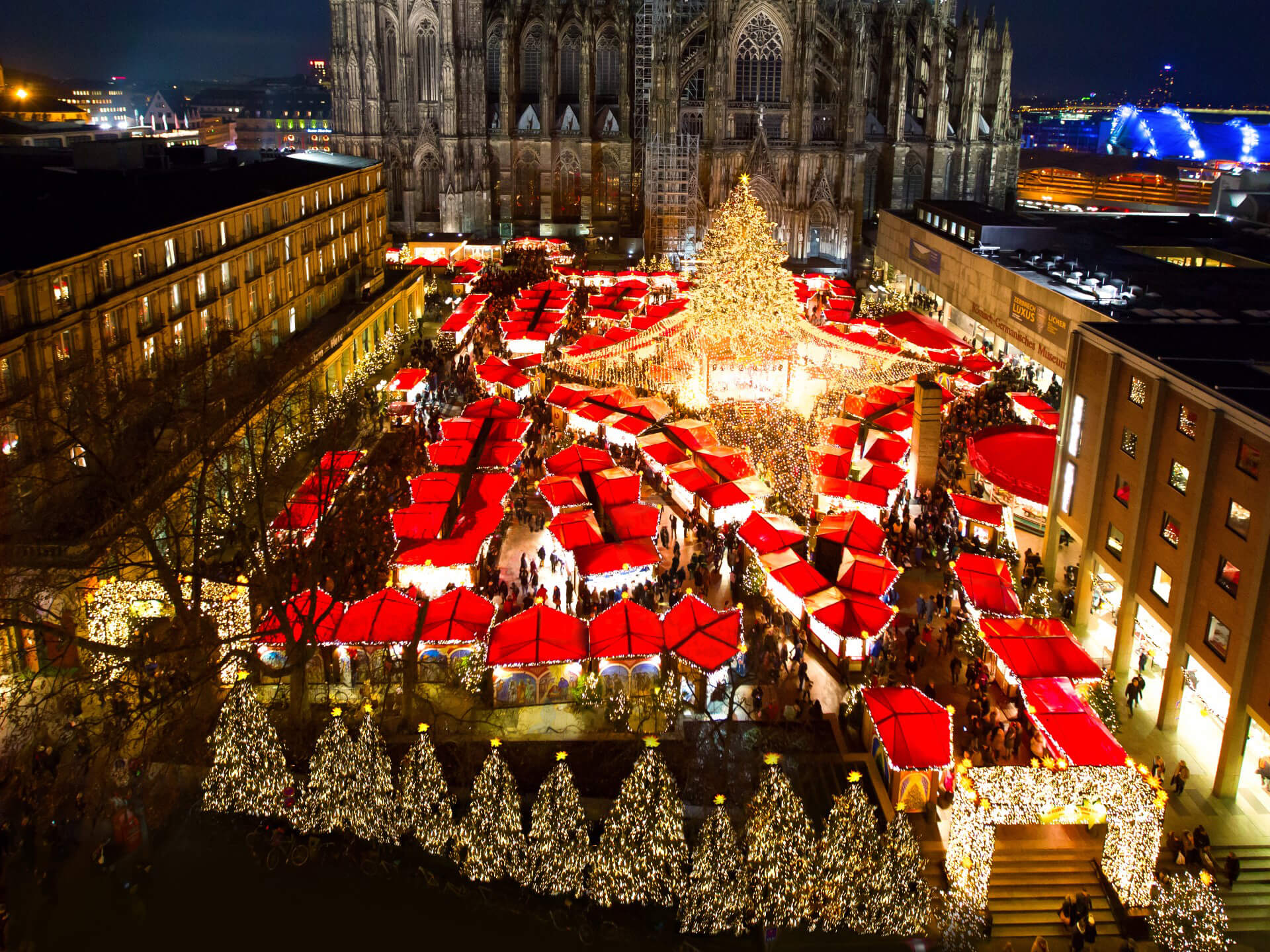
Cologne turns the whole city into a Christmas market, with seven separate markets running simultaneously, the most striking beneath the twin Gothic towers of Cologne Cathedral. It’s an easy market to spend a full weekend moving between, each one with its own character. The Cathedral market opens November 23, 2026.
Munich’s Christkindlmarkt
Distinct from Pink Christmas, this one wraps around the New Town Hall on Marienplatz, with a 30-meter tree and live music from the balcony on Advent evenings. It’s one of the easiest big markets to pair with a side trip into the Alps. Opens November 20, 2026.
Rothenburg ob der Tauber’s Reiterlesmarkt
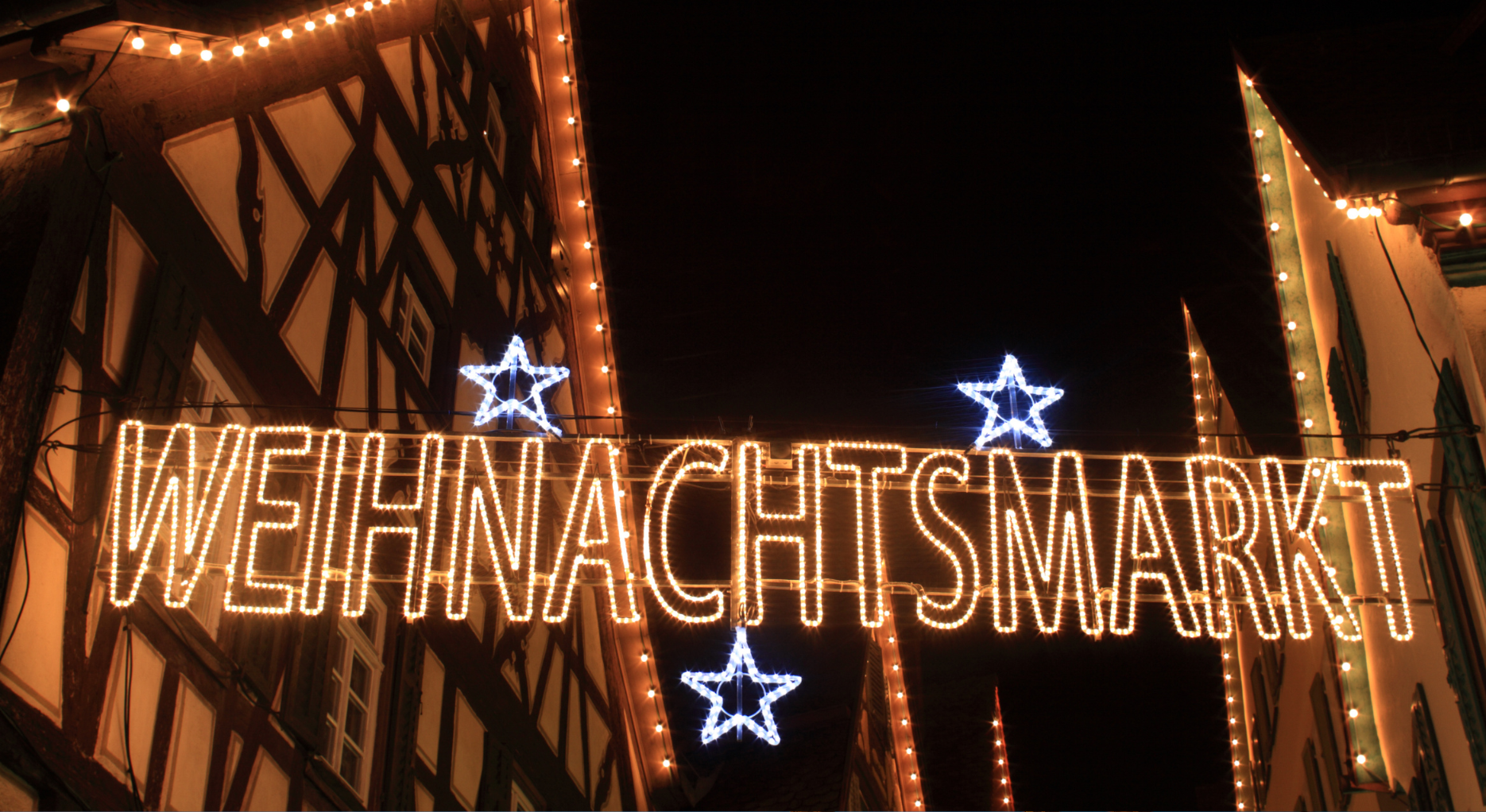
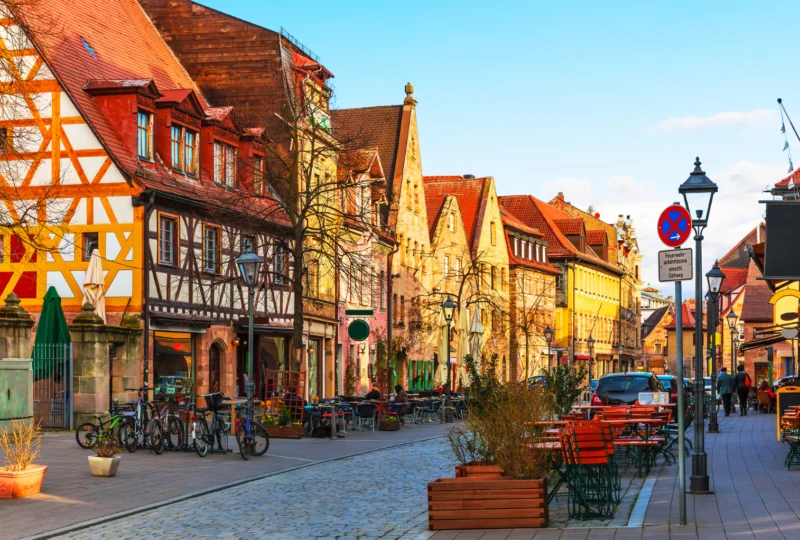
Trades scale for pure atmosphere. This medieval walled town’s market is frequently cited as the most beautiful Christmas market in the country, half-timbered houses and cobbled lanes doing most of the work without needing the crowds of the bigger cities.
Why Germany Leads the World on Christmas Markets
The tradition itself started here. Dresden’s Striezelmarkt has run continuously since 1434, making it the oldest Christmas market anywhere, and that nearly six-hundred-year head start built up something no other country has managed to replicate, an entire regional craft economy built around Advent. The Erzgebirge region alone has been hand-carving wooden nutcrackers, pyramids, and smoking figures for generations, and much of what fills the stalls each December is still made by the same families and workshops that made it decades ago, not imported for the season.
It also helps that these markets were never designed as a tourist product in the first place. They grew out of medieval trade fairs held to get through the darkest, coldest weeks of the year, and that origin still shapes how they function, town squares that residents actually gather in themselves, not stage sets built for visitors.
Scale plays its part too. With more than 3,000 markets running each December, there’s enough variety that no two trips need look the same, and the regional differences are real; what you’ll find in a market matters as much as where it’s set. That combination, deep tradition, regional character, and sheer volume of choice, is what keeps pulling visitors back year after year, often to the same market, the same stall, the same mug of glühwein.

On this page
New to Out Of Office?
We are a luxury travel company for LGBTQ+ travelers. Everything we sell is tailor-made, planned by one named member of our team throughout, and nothing on this site is a fixed package unless it says so.
Where exclusivity meets inclusivity
Ten years, hundreds of five-star reviews, and a team who will tell you when a destination is not right for the trip you have in mind.
The best trips begin with a conversation, not a booking form.
Tell us how you would like the trip to feel, and a specialist will take it from there.
Stellar service. Stellar products. Stellar people and it gets so much better when you pick up the phone and call.
Anthony S.
Super client centred service. From first contact I have had warm, efficient, friendly and flexible service.
John
I’m confident in giving Out Of Office a 5-star review! They are one of the leaders in this space without a doubt.
Tiberiu
We plant trees for every booking
For every booking made with Out Of Office we commit to planting trees in your name to help reduce the impact of travel on future generations. You'll even get a link to see where your trees are planted in the world via our partner Ecologi.

We donate to Rainbow Railroad with every booking
Rainbow Railroad helps LGBTQ+ people escape state-sponsored violence and persecution. A donation goes with every trip we sell, funded by us and never added to your price.


Start Planning Your Trip
Tell us where you would love to go, when you are thinking of traveling and what kind of trip you have in mind. One of our LGBTQ+ travel specialists will create a tailor-made itinerary designed around your destination, style and preferences.
One named specialist, first inquiry to homecoming. No call center, and nothing is charged until you decide to book.