





Editorials
Disney’s German Roots: The Real Fairy Tale Trail
Neuschwanstein inspired Disney's castle, and the Brothers Grimm inspired its stories.
Did you know the Disney castle silhouette, the one every child recognizes before they can read, was never dreamed up in a studio at all? It came from a real castle in Bavaria, built by a king whose private life had no place in the world he was born into. And Snow White, Cinderella, Rapunzel, and Sleeping Beauty all trace back further still, to two brothers collecting stories from villages along the Weser river more than a century before Walt Disney ever put pencil to paper.
Both threads still exist, in full, on the ground in Germany today. You can walk the actual towns behind the Grimm fairy tales and stand in the actual castle that shaped Disney’s most famous image, no screen required, just a well-planned route through the country that inspired it all.
The Brothers Grimm and the Real Fairy Tale Route
Jacob and Wilhelm Grimm were born in Hanau in 1785 and 1786, and the collection of folk tales they published in 1812 gave the world Cinderella, Snow White, Rapunzel, Sleeping Beauty, and Hansel and Gretel, most of which Disney would adapt directly or draw from for its own storytelling decades later. Germany has since turned the brothers’ own geography into the German Fairy Tale Route, a marked 600-kilometer road running from Hanau north to Bremen, linking around 70 towns tied to their lives and their stories.
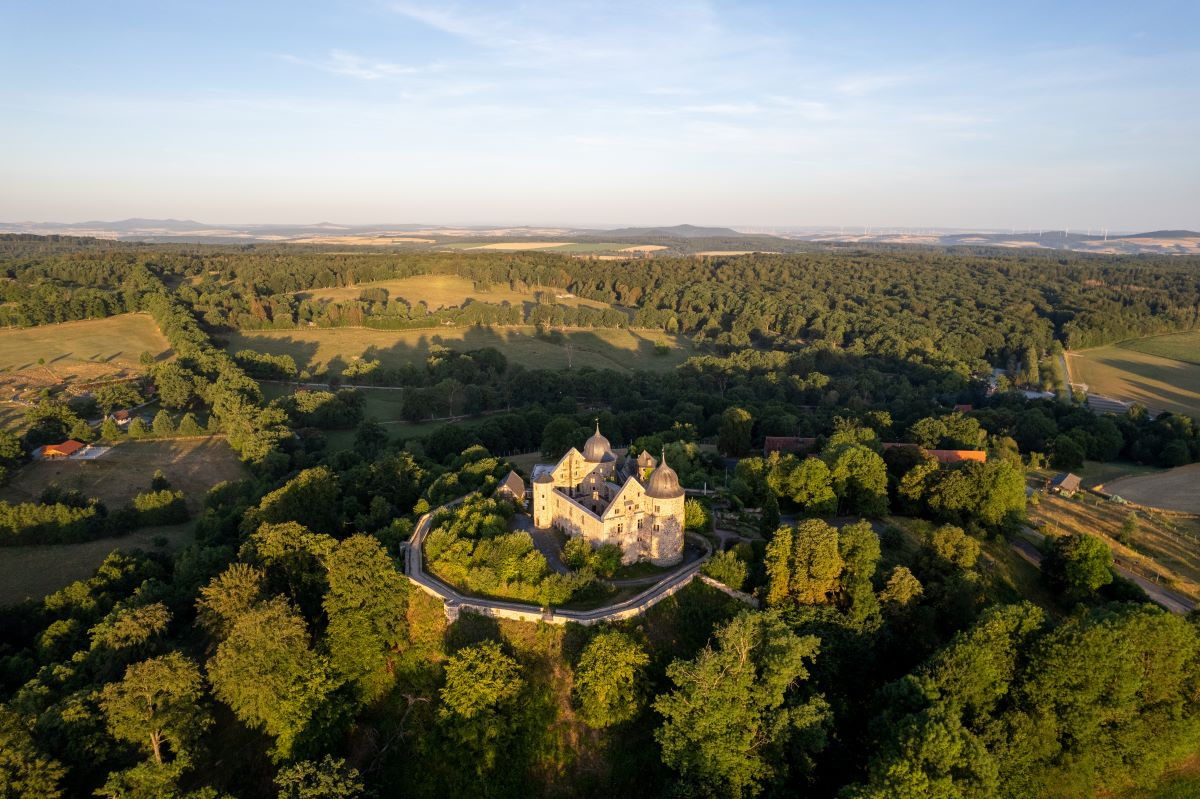
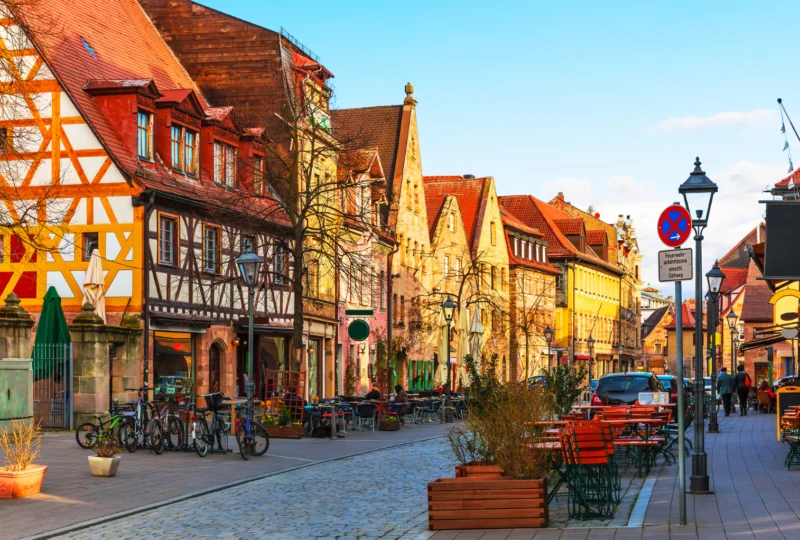
A few stops matter more than the rest. Steinau, a short drive from Hanau, is where the brothers spent their childhood, and its half-timbered old town and Brothers Grimm House museum still look much as they did then. Sababurg Castle, deep in a nature reserve further north, is widely identified as the real setting behind Sleeping Beauty, ivy-covered and genuinely remote enough to explain the story. Trendelburg Castle has its own tower long associated with Rapunzel. Hamelin, further along the route, is where the Pied Piper legend is set, and Bremen closes the route with the Town Musicians, four bronze animals stacked on top of each other outside the town hall.
None of this required Disney’s imagination to make it magical. The route existed in the German landscape first.
King Ludwig II: The Castle Disney Actually Copied
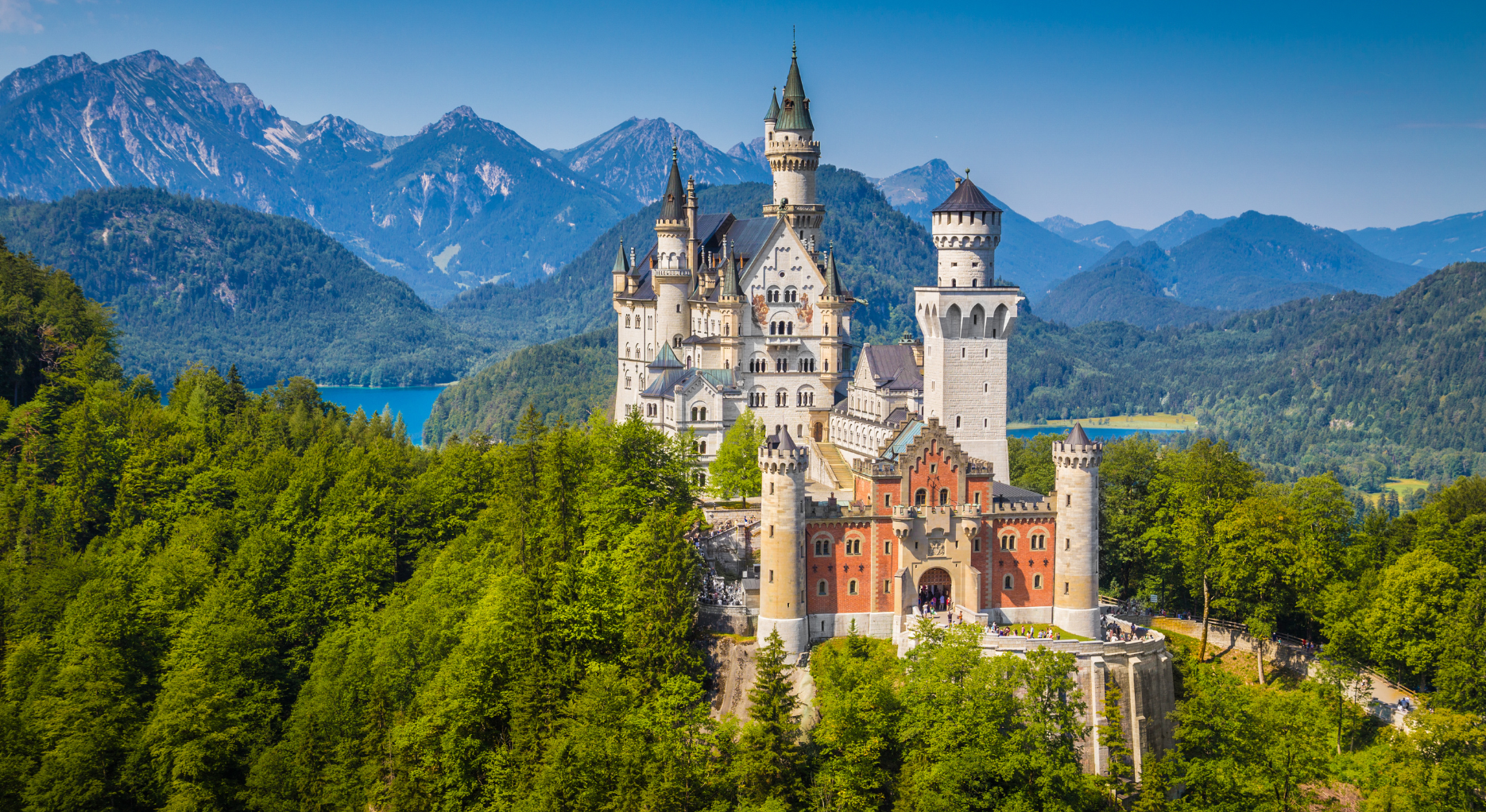
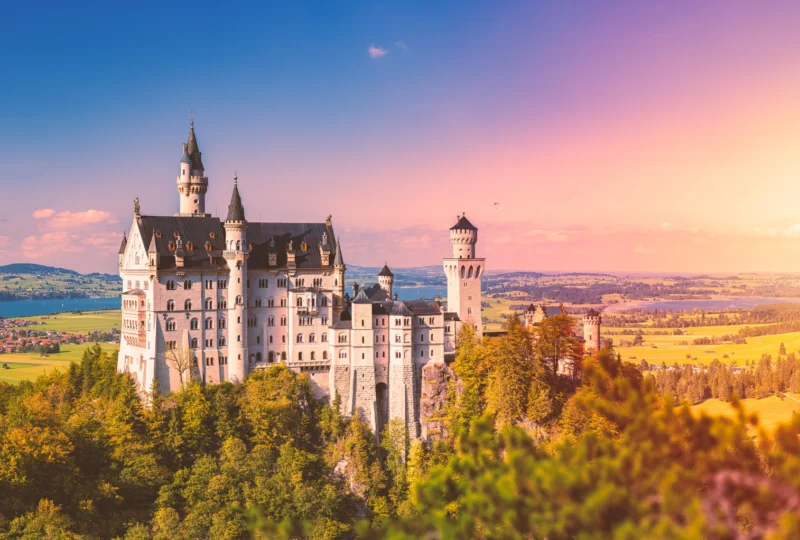
Neuschwanstein, the castle most directly responsible for Disney’s fairy-tale silhouette (Cinderella Castle and Sleeping Beauty Castle both drew from it), sits at the opposite end of the country in Bavaria, and its story is less about folklore than about the man who built it.
Ludwig II became King of Bavaria at eighteen and never married, and historians have long read his private diaries and his close, often anguished relationships with men, including his stable master and a Bavarian cavalry officer, as evidence of a hidden inner life. Homosexuality was a criminal offense in Bavaria throughout his reign, and Ludwig spent much of his adult life withdrawing from public duties into an increasingly private, invented world of castle building. Neuschwanstein was the grandest result, an escape built in stone rather than lived in the open.
Ludwig died in disputed circumstances in 1886, just weeks after being declared unfit to rule and only months after Neuschwanstein’s completion. Walt Disney visited the castle decades later and carried its silhouette directly into his own studio’s visual language, so the fairy-tale castle recognized by children everywhere began as a private refuge for a king who built himself a world because the real one gave him no room to exist in it.
No two trips we plan are the same. Yours will be no exception.
Request a quote →Seeing It for Yourself
Both threads sit within reach of the same trip. Neuschwanstein is a straightforward addition to any Bavaria or Munich itinerary, close enough to Munich Airport for a day trip or an overnight stop on a longer route through the south. The Fairy Tale Route runs further north and works best as its own dedicated few days, ideally by private driver given the distance between towns, taking in Steinau, Sababurg, Trendelburg, and Hamelin before finishing in Bremen.
For LGBTQ+ travelers specifically, Neuschwanstein carries a weight the postcard version doesn’t always show. Standing in Ludwig’s throne room or his artificial grotto, built as a private, otherworldly retreat inside his own home, it’s hard not to read the whole property as the work of someone constructing a life he couldn’t have in public. Germany today offers full legal protection and one of the most established LGBTQ+ travel infrastructures in Europe, which makes visiting Ludwig’s castles feel less like visiting a monument to a distant era and more like tracing how far the country has actually come.
We build both routes as tailor-made itineraries, with private guides who know the history in full rather than the postcard version, and boutique properties throughout that make either trip as comfortable as it is meaningful. Speak to our travel experts to add the Fairy Tale Route, Neuschwanstein, or both to your next trip to Germany.
Why This Trip Hits Differently
For American travelers, there’s something different about seeing this in person rather than on a screen. Disney has spent nearly a century building a version of Europe out of these very stories, castles, and villages, and most people who grew up on those films have never actually stood in the place that started it all.
Walking through Steinau’s half-timbered streets or standing in front of Neuschwanstein is a strange kind of homecoming for a lot of visitors, tracing something that feels distinctly European back to its source, often closer to their own family history than they expected. It’s the rare trip that works as pure bucket-list spectacle and as something quietly personal at the same time, which is exactly why it’s worth doing properly rather than as a rushed day trip bolted onto a bigger itinerary.
On this page
New to Out Of Office?
We are a luxury travel company for LGBTQ+ travelers. Everything we sell is tailor-made, planned by one named member of our team throughout, and nothing on this site is a fixed package unless it says so.
Where exclusivity meets inclusivity
Ten years, hundreds of five-star reviews, and a team who will tell you when a destination is not right for the trip you have in mind.
Suggested Trips
Capitals of Central Europe: Berlin, Prague, Vienna, Budapest
Tailor-made VacationCentral Europe packs an absurd amount into a small stretch of the map. In under two weeks you can stand where a wall once split a city in two, walk streets that survived the twentieth century almost entirely untouched while the rest of the continent rebuilt…
12 days tailor-made from $8,955 per person View trip
Gay Group Trip: Rhine River Cruise from Frankfurt to Basel
Frankfurt to Basel Group TripA brand-new ship, an all-inclusive fare, and seven days sailing through some of the most scenic stretches of Europe. The Rhine has been drawing travelers for centuries, and the reason is visible from the water: vineyard-covered slopes above Mainz, castle ruins rising above the gorge, the Franco-German character of Strasbourg shifting the mood as you cross from one culture into another.
7 days group departure from $5,125 per person View trip
Bavarian Alps and Dolomites Tour
Tailor-made VacationThis bespoke itinerary invites you to discover the soul of southern Germany, Austria, and Italy, weaving together cultural treasures, natural beauty, and gourmet experiences. From the historic streets of Munich to the soaring peaks of the Dolomites, every moment has been beautifully handcrafted. Begin in Munich, where Bavarian traditions come alive.
9 days tailor-made from $7,415 per person View trip
Classic Germany: Berlin, Bavaria and Black Forest
Tailor-made VacationThis beautifully curated adventure invites you to explore Germany's most progressive cities and captivating landscapes, from Berlin's dynamic spirit to the fairytale allure of the Rhine, the romance of Heidelberg, the mystery of the Black Forest, and the refined culture of Munich. Your journey begins in Berlin, where history and innovation entwine. Walk beneath the Brandenburg Gate, trace the path of the Berlin Wall, and uncover the stories of Kreuzberg and Prenzlauer Berg.
10 days tailor-made from $9,540 per person View trip
The Grand European Circuit: London, Paris & Berlin
UK, France, Germany Tailor-made VacationExplore London, Paris, and Berlin on a single tailor-made journey through three of the capitals that have shaped global culture and history for centuries. Between them there's enough to fill a lifetime of trips, so this itinerary is built to hit the major sights, the best tables, and the character of England, France, and Germany without trying to do all three at once. Each city brings something distinct to the trip.
9 days tailor-made from $7,490 per person View tripYour personal travel specialist, from the first conversation to the flight home.
From your first conversation, you’ll have one dedicated expert looking after your trip from start to finish, getting to know you and taking care of every detail along the way. Your journey starts with a complimentary, no-obligation consultation.
Stellar service. Stellar products. Stellar people and it gets so much better when you pick up the phone and call.
Anthony S.
Super client centred service. From first contact I have had warm, efficient, friendly and flexible service.
John
I’m confident in giving Out Of Office a 5-star review! They are one of the leaders in this space without a doubt.
Tiberiu
We plant trees for every booking
For every booking made with Out Of Office we commit to planting trees in your name to help reduce the impact of travel on future generations. You'll even get a link to see where your trees are planted in the world via our partner Ecologi.

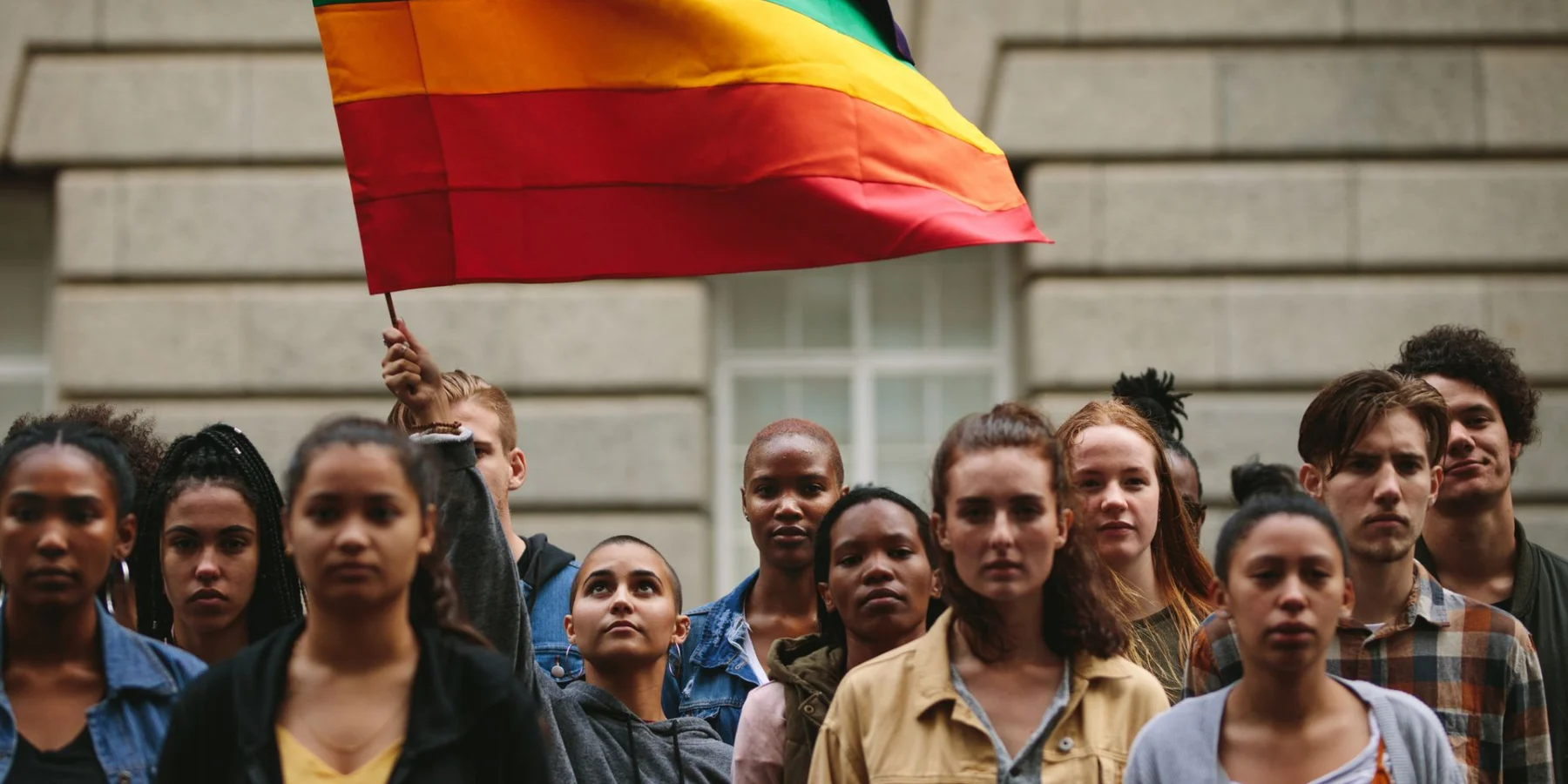
We donate to Rainbow Railroad with every booking
Rainbow Railroad helps LGBTQ+ people escape state-sponsored violence and persecution. A donation goes with every trip we sell, funded by us and never added to your price.

Start Planning Your Trip
Tell us where you would love to go, when you are thinking of traveling and what kind of trip you have in mind. One of our LGBTQ+ travel specialists will create a tailor-made itinerary designed around your destination, style and preferences.
One named specialist, first inquiry to homecoming. No call center, and nothing is charged until you decide to book.