







Moment · Kyoto
A Private Tea Ceremony with a Tea Master in a Kyoto Machiya
Kneel in a quiet townhouse tearoom as a master prepares matcha, and learn the way of tea in an unhurried private session.
One of Japan’s Oldest Living Rituals
Taking tea privately in Kyoto has nothing of the tourist show about it. Chanoyu is among the most ancient rituals still practiced in Japan, and led by a true master in a fitting room, it ranks among the most absorbing experiences the country offers. The tradition’s roots go deepest in this city, where it has been refined for four centuries and more, and you feel that history in every gesture.
The Way of Tea
The ceremony as we know it was shaped in sixteenth-century Kyoto by Sen no Rikyū, who took an extravagant court pastime and distilled it into something austere and precise. His four guiding ideas, wa, kei, sei and jaku, usually rendered as harmony, respect, purity and calm, were never abstractions; they tell you how to walk, how to cradle a bowl, how to give the room your full attention. Beneath everything is ichi-go ichi-e, often translated “one encounter, one chance”: this gathering, this company and this hour are unique and will not come again.
Why Early Autumn Is Special
Tea is served in every season, yet autumn alters the atmosphere in telling ways. The hanging scroll in the alcove is replaced, a different flower appears, sunlight through the paper screens turns softer and lower than in midsummer, and the bowls chosen suit the first chill. It’s also when sightseers flock to the celebrated maple viewpoints, so tearooms in Gion and Nishiki are calmer and the ceremony feels intimate and concentrated, almost as if it were staged for you alone.
See your complete itinerary before you decide.
Request a quote →The Ceremony
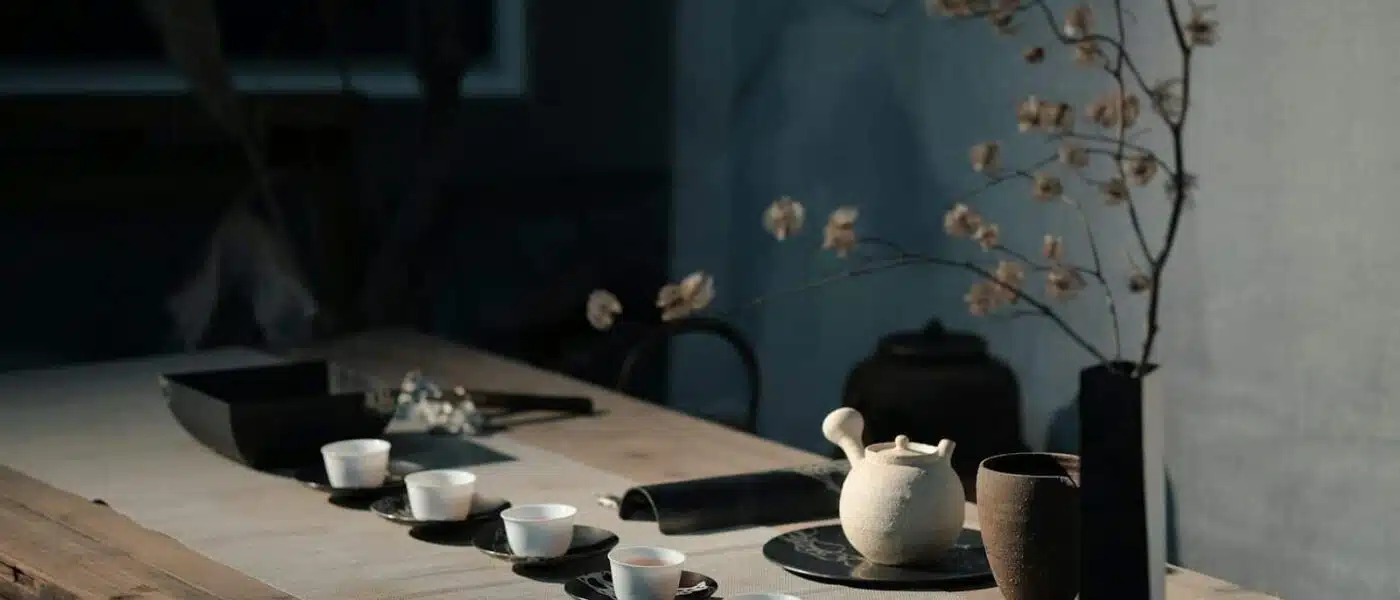
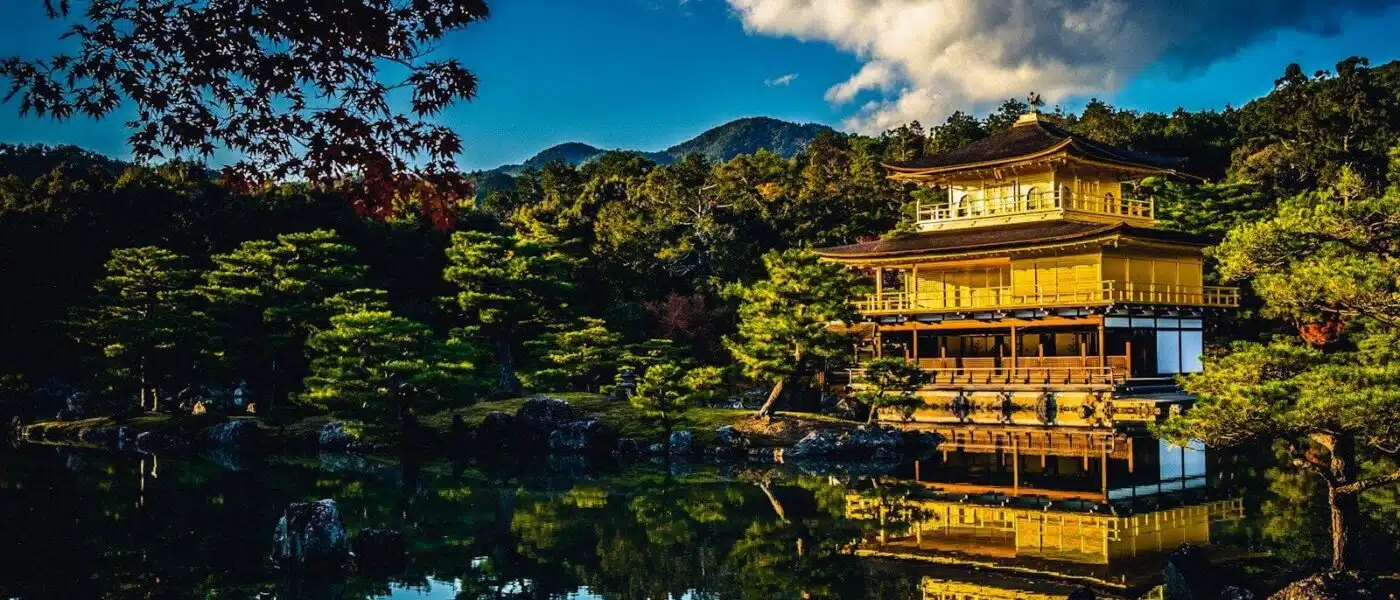
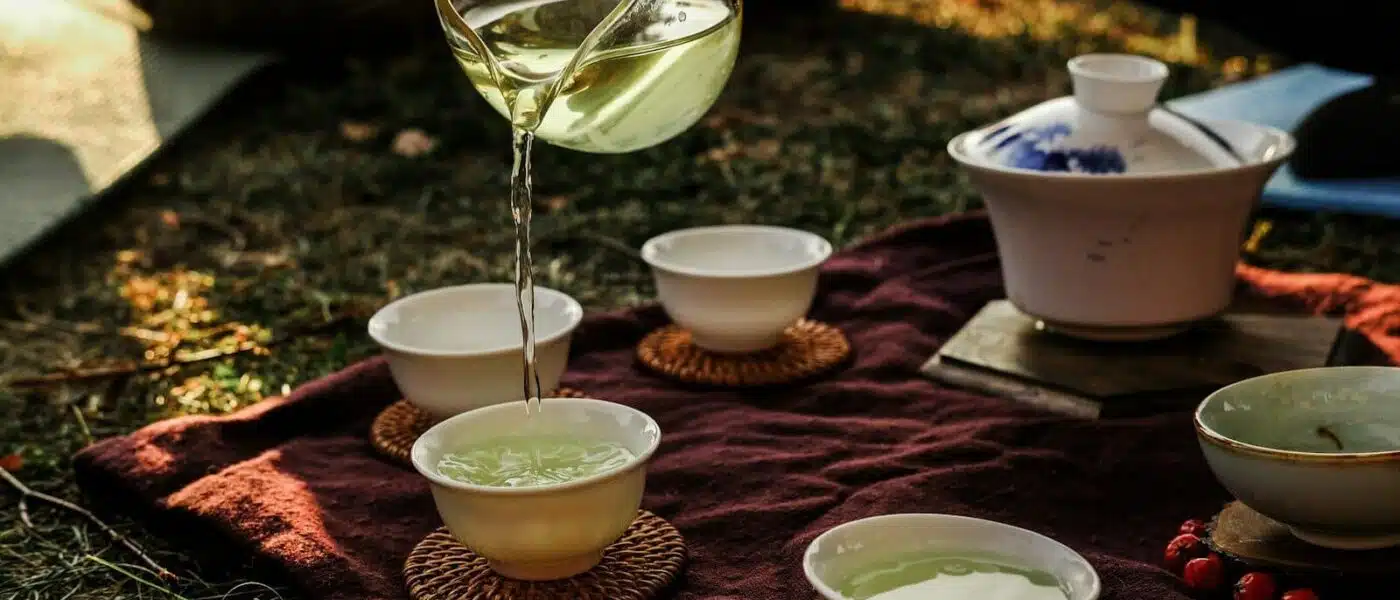
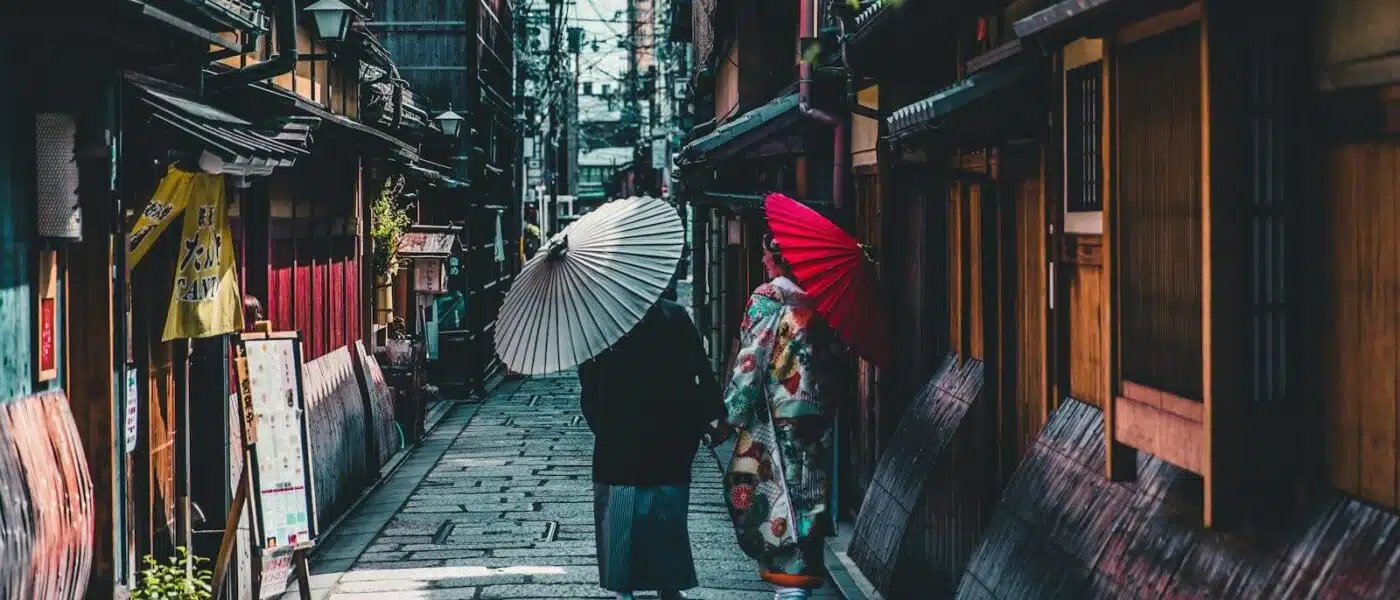
You’ll usually be welcomed at a traditional wooden townhouse tucked along a slender Gion alley or close to Kinkaku-ji, slipping off your shoes at the threshold. Instantly everything slows, and it never speeds up again. Inside the tearoom there’s almost nothing: a hanging scroll, one bloom, the murmur of a kettle warming over charcoal. Your host moves with a precision born of decades of discipline rather than showmanship, each gesture named and meaningful, from creasing the silk fukusa and wiping the chawan to the distinctive rhythm of the bamboo whisk in the tea.
When you receive the bowl, bow, turn it so the patterned side faces away from you, and finish it in a few unhurried mouthfuls; a gentle slurp to close is polite, telling your host you enjoyed it. Afterward you study the bowl and the scroll properly and ask about anything that catches your interest. Privately, this unhurried conversation often lasts as long as the ritual, and it’s frequently the part people treasure most.
Wabi-Sabi in the Details
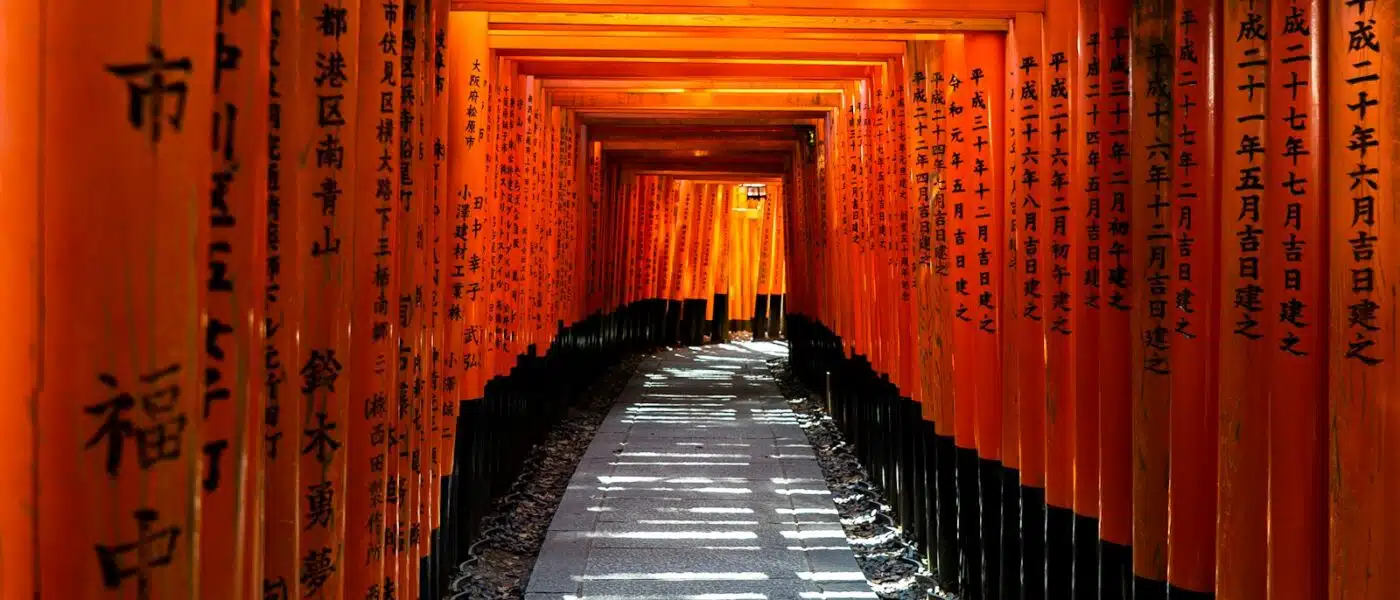
Small things come into focus: the heft of the bowl cupped in your palms, the grassy scent of the mats, the realization that everything in the room has earned its place. All of it rests on wabi-sabi, the Japanese feeling that loveliness lies in what is imperfect and passing: an irregular lip on a cup is intended, a lopsided arrangement is chosen, and seeing that changes how you read the whole space. With no timetable and no other guests to keep pace with, you can give yourself entirely to the ceremony, a calm, shared hour for a couple or a meaningful solo moment.
Beyond the Group Ceremony
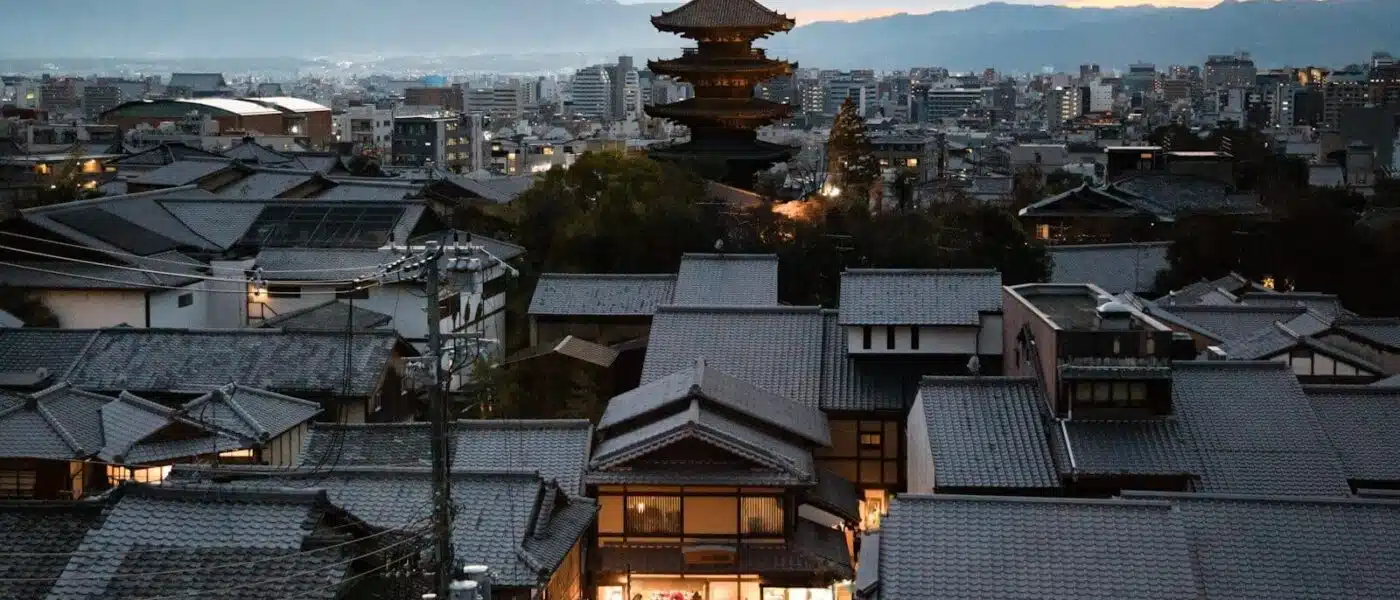
Group sessions teach you the outline, give you the background and serve you fine matcha, which is well worth doing. A private sitting works on another level. Your host moves at the speed that suits you, curiosity is encouraged rather than contained, and the discussion that follows, perhaps about one particular bowl, the lineage of a tea school or a hint of the season hidden in the scroll, is where it becomes truly absorbing. Few travelers ever find this Kyoto; you need to know the right doors to knock on. Your Out Of Office LGBTQ+ travel specialist can arrange the tea master and a welcoming ryokan, and our Japan guide covers LGBTQ+ rights and travel advice.


We know where you will be welcome, and where to take more care.
It shapes the hotels we use, the guides we work with and the routes we suggest.
More Moments in Kyoto
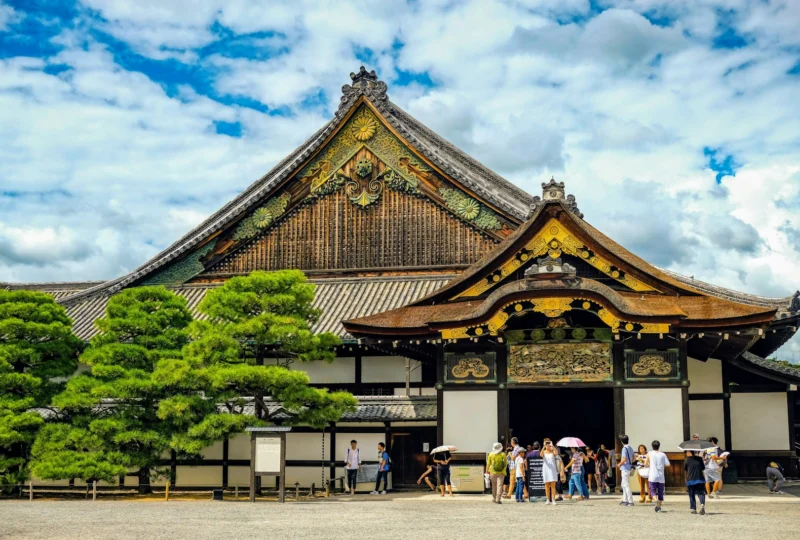
Nijo Castle After Hours in Kyoto, with a Private Guide
The Shogun's House in the Emperor's City Tokugawa Ieyasu, first shogun of the Edo period, built Nijo Castle in 1603 as his Kyoto residence, a statement of shogunate power planted in the imperial city as much as an administrative base. His grandson enlarged it, adding lavish interiors, gardens and decoration designed to show political might rather than to withstand attack. It witnessed one of the turning points of Japanese history.
Discover more
Arashiyama’s Bamboo Grove at First Light, with a Private Photographer
A Courtly Retreat and a Famous Sound Arashiyama became a favorite escape in the Heian period, when members of the imperial court came to flee the summer heat and enjoy nature. The bamboo that defines the grove was first grown for practical things like baskets and fencing, but it gained cultural meaning as nearby temples, including Tenryu-ji, brought it into their practice.
Discover more
Nara’s Deer Park Before the Crowds, on a Private Family Walk
Nara Before Nine Early in the day, the streets are quiet, the park paths wide enough to walk side by side, the air cool near the forest edge and the grass still damp with dew. The deer are already up, standing in loose groups across the lawns, alert but relaxed, grazing or calmly watching you pass. Without mid-morning crowds, they seem measured, almost gentle.
Discover more
We plant trees for every booking
For every booking made with Out Of Office we commit to planting trees in your name to help reduce the impact of travel on future generations. You'll even get a link to see where your trees are planted in the world via our partner Ecologi.


We donate to Rainbow Railroad with every booking
Rainbow Railroad helps LGBTQ+ people escape state-sponsored violence and persecution. A donation goes with every trip we sell, funded by us and never added to your price.


Start Planning Your Trip
Tell us where you would love to go, when you are thinking of traveling and what kind of trip you have in mind. One of our LGBTQ+ travel specialists will create a tailor-made itinerary designed around your destination, style and preferences.
One named specialist, first inquiry to homecoming. No call center, and nothing is charged until you decide to book.